You’ve listed your income, written down your expenses, and tracked spending for 3 days. Now comes the moment of truth — add it all up.
This step isn’t about guilt; it’s about clarity. When you see your full week’s spending total, you finally understand your true cash flow — and where your money naturally goes.
🪙 Step 4 — Add Up Your Weekly Spending
Pull out your list from the past few days and do the math. ✅ Add every transaction, large or small. ✅ Include online orders, bills, subscriptions, and cash payments. ✅ Write down your total weekly spending number.
Now, compare that number to your weekly take-home income (monthly ÷ 4). Ask yourself: Is my spending aligned with what I earn?
If you’re spending more than you make, don’t panic — you’ve just found the first area to improve.
📊 Example
If your monthly take-home pay is $3,800, your weekly income is about $950. After adding your expenses, you discover you spent $1,040 this week — $90 over budget. That $90 doesn’t seem huge, but repeated every week equals $4,680 a year — money that could’ve built your emergency fund or started investing.
Awareness = power.
🌱 Why It Matters
Adding your spending gives you control:
You see where the leaks are.
You understand your real habits instead of your guesses.
You set the stage for next week’s plan — a working budget.
The truth might sting for a moment, but it frees you for life.
🔍 Challenge for Today
Spend 15 minutes adding up every expense from the past 7 days. Write your total at the bottom of your list. Then write this question underneath: “Am I okay with this number?”
Money clarity begins when numbers meet honesty. Adding your weekly total may feel uncomfortable — but it’s also empowering. You can’t steer what you won’t measure.
You Can’t Build Wealth If You Don’t Know What’s Coming In
Before you create a budget, set goals, or invest a single dollar, there’s one simple but powerful step: know your monthly income.
Sounds obvious, right? Yet most people can’t say — with confidence — how much they actually take home each month after taxes, insurance, and retirement deductions. That number — your net income — is the foundation of every financial decision you’ll ever make.
Step 1: Find Your Real Take-Home Pay
Start with your paycheck or salary. Look beyond the “gross income” — the total before taxes and deductions — and focus on your net pay:
✅ Subtract taxes (federal, state, and local) ✅ Subtract Social Security and Medicare (FICA) ✅ Subtract any benefits like health insurance or 401(k) contributions
Example: If your annual salary is $60,000, your gross monthly income is $5,000. But after deductions, your take-home pay might be closer to $3,800. That $3,800 is your real income — the number that determines how much you can save, invest, and spend without guilt.
Why It Matters
Knowing your income is like turning on the lights in a dark room. Suddenly, you can see where everything stands:
You’ll budget with confidence, not guesswork.
You’ll know how much to save for short-term and long-term goals.
You’ll understand your cash flow, making every financial choice intentional.
When you control awareness, you control outcomes.
Challenge for Today
Take 15 minutes today to calculate your true monthly income. Open your latest pay stub or check your online payroll portal. Write down your after-tax, after-deduction amount — that’s your real income.
This is Day 1 of your 365-Day Financial Wellness Journey. Every small step you take will move you closer to financial independence.
As we step into 2025, it’s time to re-evaluate our financial strategies and make smarter decisions to safeguard our hard-earned money. One critical area to address is the impact of inflation on your savings account. If your bank’s interest rate isn’t keeping up with inflation, you’re losing purchasing power—essentially losing money over time.
Let’s explore how you can start the year right by taking actionable steps to grow your savings and stay ahead of inflation.
Why Inflation Matters to Your Savings
Inflation measures the rising cost of goods and services, effectively reducing the purchasing power of money over time. Think of it as the “hidden tax” on your savings—what your money can buy today might not be possible a year from now unless it grows at a rate equal to or greater than inflation.
Imagine you have $100 in your savings account today. If inflation is at 2.7%, it means that in a year, prices for everyday goods and services will rise by 2.7%. As a result, what costs you $100 today will cost $102.70 next year. However, if your savings only grow by a small amount—say 0.24% in a traditional savings account—you’ll have just $100.24. That’s not enough to keep up with rising prices, meaning your $100 won’t stretch as far as it does today.
A Real-Life Illustration of Inflation’s Impact
Imagine you have $10,000 in a traditional savings account that earns 0.24% APY, which is a common rate for standard savings accounts today. Here’s how your savings would grow compared to the impact of inflation:
Year 1:
Savings Growth: Your account earns $24 in interest (0.24% of $10,000), so your total balance is $10,024.
Inflation Impact: Inflation reduces your purchasing power by 2.7%, meaning the real value of your $10,024 is only $9,759 in today’s dollars.
What Are High-Yield Savings Accounts?
High-yield savings accounts (HYSAs) offer a much higher interest rate—some as high as 4.00% APY—allowing you to outpace inflation and grow your money effectively.
But how do banks manage to offer such high rates? Many people wonder how this is possible when traditional accounts offer such low returns.
How Banks Offer Higher Rates in High-Yield Savings Accounts
Banks offering HYSAs often operate differently from traditional brick-and-mortar banks. Here’s how they do it:
Lower Overhead Costs:
Most high-yield savings accounts are offered by online-only banks, which save significantly on costs like maintaining physical branches, utility bills, and in-person staff.
These cost savings are passed on to customers in the form of higher interest rates.
Encouraging Deposits:
By offering higher rates, banks attract more deposits, which they can use to fund loans or other revenue-generating activities.
Essentially, these banks create a win-win situation: customers get higher interest rates, and the bank gets more capital to lend or invest.
No Hidden Fees:
Many HYSAs have little to no fees, which makes them attractive to customers while still maintaining profitability for the banks due to their lean operational models.
Targeting Digital Savvy Customers:
HYSAs appeal to customers who are comfortable managing their finances digitally, allowing banks to streamline processes further and cut costs.
Benefits of High-Yield Savings Accounts
Higher Interest Rates: Grow your savings faster than inflation. For example, $10,000 in a HYSA with a 4.00% APY earns $400 in interest annually, compared to just $24 in a traditional account with 0.24% APY.
Liquidity: Easy access to your funds, perfect for emergency savings or short-term goals.
FDIC-Insured Security: Your money is safe, up to $250,000 per account.
No Hidden Fees: Many HYSAs come with zero maintenance fees or balance requirements.
Sophia’s Smart Money Move: How a High-Yield Savings Account Transformed Her Finances
At 28, Sophia was finally starting to feel financially stable. She had a steady job as a graphic designer, paid off most of her student loans, and was eager to build her savings. But every time she looked at her traditional savings account, she felt frustrated. Earning just 0.24% interest, her money barely grew—and with inflation at 2.7%, she realized she was actually losing purchasing power.
That’s when Sophia discovered the world of High-Yield Savings Accounts (HYSAs). With interest rates around 4.00%, they offered a chance to make her savings work harder. She decided to make the switch, and in just a few months, her financial life became more efficient and rewarding.
Step 1: Setting Up the HYSA
Sophia researched online and chose a reputable HYSA provider offering a competitive 4.00% APY with no monthly fees. The account setup was straightforward and entirely online. Within 10 minutes, she had her HYSA up and running.
To make things simple, Sophia set up direct deposit for her paycheck. Every payday, her employer deposited 30% of her paycheck directly into the HYSA. This automated savings plan ensured she consistently saved without having to think about it.
Step 2: Linking Credit Cards and Loan Payments
Sophia wanted to keep all her finances connected and digital. She linked her HYSA to:
Her Credit Cards: All her credit card payments were automatically scheduled to be paid from her HYSA. She earned points on her cards for everyday purchases, then paid off the balance in full each month, avoiding interest charges while maximizing her savings.
Her Student Loan Payments: Although most of her loans were paid off, she still had a small balance left. She set up automatic payments from her HYSA, ensuring she never missed a due date.
Emergency Expenses: Sophia kept her HYSA as her emergency fund, knowing she could quickly transfer money to her checking account in case of unexpected expenses.
Step 3: Automating and Tracking Expenses
To stay organized, Sophia set up a digital budgeting app that synced with her HYSA and all her linked accounts. This app gave her a clear picture of:
How much she saved each month
Where she spent the most
Her progress toward financial goals
The app also sent her reminders about upcoming payments, keeping her finances stress-free.
Step 4: Watching Her Savings Grow
Thanks to the 4.00% APY on her HYSA, Sophia’s savings started growing noticeably. Over the course of a year:
She earned $400 in interest on her $10,000 savings—compared to just $24 she would have earned with her old account.
She avoided fees or penalties because her HYSA had no minimum balance requirements.
Sophia also noticed the psychological impact: seeing her money grow faster motivated her to save even more.
Step 5: Digital Convenience for a Digital Life
Because Sophia had linked her HYSA to all her financial accounts, everything worked seamlessly:
Direct Deposit: Her paycheck savings went straight into the HYSA.
Credit Card Payments: Scheduled payments kept her cards in good standing.
Loan Repayments: Automation meant no late fees or missed deadlines.
Savings Growth: Interest earned monthly was reinvested automatically.
She rarely needed to visit a physical bank or write checks—all her transactions were digital, secure, and trackable.
Sophia’s Financial Transformation
Within a year, Sophia:
Built a $15,000 emergency fund, earning $600 in interest.
Paid off her remaining student loans ahead of schedule.
Learned to track her spending and save more effectively.
Felt confident about her financial future.
She even started using her HYSA to save for other goals, like a vacation fund and a down payment for her first home.
Final Thoughts
Sophia’s journey shows how a High-Yield Savings Account, combined with automation and digital tools, can transform your financial life. By linking her accounts, automating payments, and maximizing interest, she not only saved money but also gained peace of mind.
What’s stopping you from making the same move? Take the first step today—find a HYSA that works for you, and let your savings work smarter, not harder.
How to Get Started in 2025
Action Item: Make the Switch to a High-Yield Savings Account
Research Your Options: Compare rates and terms from reputable banks.
Open an Account: The process is simple and can usually be done online in minutes.
Automate Savings: Set up automatic transfers to your HYSA to build a strong saving habit.
Monitor Rates and Inflation: Stay informed and switch accounts if better rates become available.
Final Thoughts
Starting 2025 with a focus on smarter savings is one of the best financial resolutions you can make. If you’re still holding your savings in a traditional low-interest account, it’s time to make the switch. High-yield savings accounts offer an excellent opportunity to outpace inflation and grow your money without additional risk.
Remember, every dollar saved and grown is a step closer to achieving your financial goals. Take action today, and let your money work harder for you this year!
Your Mantra for Success: Save Consistently. Invest Smartly. Retire Richly.
Legal Disclaimer for Build Wealth Retire Rich Blog/Website
The information provided on the “Build Wealth Retire Rich” blog/website is for educational purposes only and should not be construed as financial, investment, or legal advice. While every effort is made to ensure the accuracy and reliability of the information presented, Build Wealth Retire Rich and its contributors, including AI tools used in the creation of some content, do not guarantee its completeness or timeliness. Users are encouraged to consult with a qualified financial advisor or legal professional to discuss their specific financial situation and to obtain advice tailored to their individual circumstances.
Build Wealth Retire Rich is not responsible for any decisions made based on the information provided on this website. All financial products, investment strategies, and other content discussed are presented for informational purposes only, and no guarantees are made regarding the performance or suitability of any particular investment or strategy.
The views and opinions expressed on “Build Wealth Retire Rich” are those of the authors and do not necessarily reflect the views of the website’s owner or any affiliated institutions. “Build Wealth Retire Rich” does not endorse or promote any particular investment, financial product, or institution unless explicitly stated.
Risk Disclosure: Investing involves risk, including the potential loss of principal. Past performance is not indicative of future results. Always do your own research and consider your financial goals and risk tolerance before making any financial decisions.
By using this website, you agree that Build Wealth Retire Rich and its affiliates are not liable for any losses or damages incurred as a result of using the information provided. Users are solely responsible for their financial decisions and should seek independent advice when necessary.
When making a car purchase decision, it’s tempting to upgrade to that sleek, high-end model. But before you take the plunge, consider this: what if you chose a modest car and invested the difference instead? Let’s look at how opting for a $25,000 car instead of a $50,000 one could transform your financial future, especially when we think long-term.
The $25,000 Trade-Off: Investing for the Future
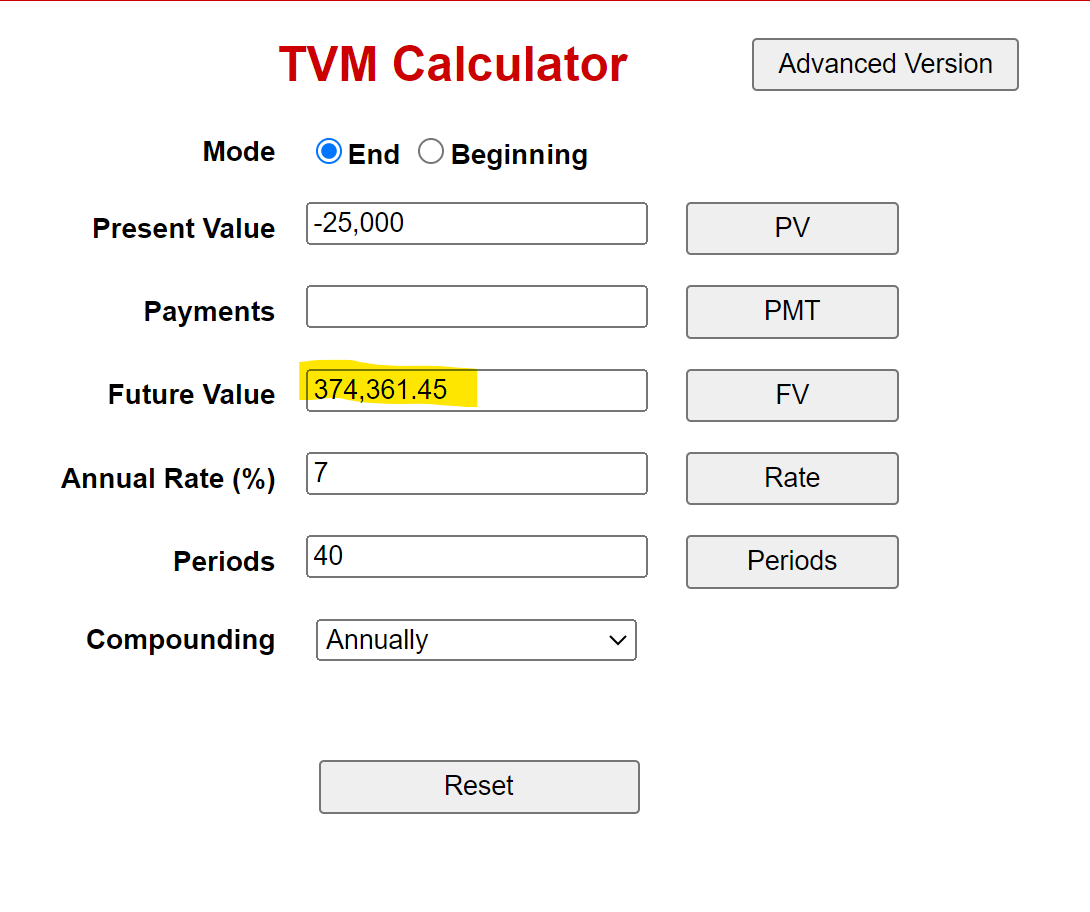
Imagine you buy a $25,000 car instead of a $50,000 one. You’ve saved $25,000 upfront. What happens if you invest this amount instead, letting it grow over 40 years in a diversified retirement portfolio with an average annual return of 7%?
By the end of 40 years, that initial $25,000 could grow to a staggering $374,361.
Breaking Down the Numbers: The Power of Compounding
Using the power of compound interest, that $25,000 would grow steadily each year, eventually turning into $374,361.
This means the opportunity cost of choosing a $50,000 car today — just for a few years of driving pleasure — is nearly $375,000 that you could potentially use for a more secure and enjoyable retirement.
What Does an Extra $374,361 Mean in Retirement?
Let’s put that figure into perspective:
Additional Retirement Income: With a 4% safe withdrawal rate, $374,361 could provide an additional $14,974 per year in retirement income.
Early Retirement: If your goal is to retire early, this amount could shave off years of work.
Legacy and Giving: The extra funds could be used to support causes you care about, set up educational funds for children or grandchildren, or simply create a financial cushion.
Don’t Forget the Hidden Costs of a High-End Car
Choosing a more expensive car doesn’t just mean a higher upfront cost. It also means:
Higher Monthly Payments: This could add stress to your cash flow and reduce your ability to invest.
Greater Depreciation: Luxury cars often depreciate faster, leading to a bigger financial loss.
Costlier Insurance and Maintenance: These recurring expenses could add thousands of dollars over the life of the car.
The Bottom Line: Drive a Car or Drive Your Financial Future?
It’s not about depriving yourself of enjoying life, but about aligning your financial decisions with your long-term goals. Is the satisfaction of driving a high-end car today worth the potential $374,361 you’re giving up in the future?
Next time you’re in the dealership, think beyond the leather seats and premium features. Ask yourself, “Am I investing in my lifestyle, or in my future?” Because while a high-end car may turn heads now, a strong retirement portfolio will pay dividends for decades to come.
So, would you rather drive a luxury car today or enjoy an extra six-figure cushion in your retirement portfolio tomorrow? The choice is yours.
Your Mantra for Success: Save Consistently. Invest Smartly. Retire Richly.
Legal Disclaimer for Build Wealth Retire Rich Blog/Website
The information provided on the “Build Wealth Retire Rich” blog/website is for educational purposes only and should not be construed as financial, investment, or legal advice. While every effort is made to ensure the accuracy and reliability of the information presented, Build Wealth Retire Rich and its contributors, including AI tools used in the creation of some content, do not guarantee its completeness or timeliness. Users are encouraged to consult with a qualified financial advisor or legal professional to discuss their specific financial situation and to obtain advice tailored to their individual circumstances.
Build Wealth Retire Rich is not responsible for any decisions made based on the information provided on this website. All financial products, investment strategies, and other content discussed are presented for informational purposes only, and no guarantees are made regarding the performance or suitability of any particular investment or strategy.
The views and opinions expressed on “Build Wealth Retire Rich” are those of the authors and do not necessarily reflect the views of the website’s owner or any affiliated institutions. “Build Wealth Retire Rich” does not endorse or promote any particular investment, financial product, or institution unless explicitly stated.
Risk Disclosure: Investing involves risk, including the potential loss of principal. Past performance is not indicative of future results. Always do your own research and consider your financial goals and risk tolerance before making any financial decisions.
By using this website, you agree that Build Wealth Retire Rich and its affiliates are not liable for any losses or damages incurred as a result of using the information provided. Users are solely responsible for their financial decisions and should seek independent advice when necessary.
Building wealth requires intentional habits and thoughtful financial decisions. Sometimes, behaviors that seem harmless can significantly hinder progress toward financial freedom. Let’s explore these habits and how to replace them with wealth-building strategies, along with real-world examples.
Focusing on Income Instead of Net Worth
It’s easy to assume that earning a higher salary guarantees financial security. However, research reveals that even households with six-figure incomes often find themselves living paycheck to paycheck. According to a Bank of America analysis, nearly 20% of U.S. households earning over $150,000 dedicate more than 95% of their income to necessities like housing, child care, and utilities. This highlights how high incomes alone don’t translate to wealth.
Example: Consider a household earning $160,000 annually but living in an expensive city with a high mortgage, significant child care costs, and rising utility bills. Despite their income, they have little room for savings or investments because their spending is stretched across necessities and lifestyle inflation.
The Problem with Overspending: Higher earners often purchase larger homes with higher property taxes and utility bills, taking on bigger mortgages with the expectation of future promotions or raises. Inflation further exacerbates this issue by increasing the cost of essentials, leaving many households financially strained despite their income levels.
What to Do Instead: Shift your focus from earning more to saving and growing your net worth. For instance:
Downsize Lifestyle Choices: Instead of a luxury home, choose a property that meets your needs without overextending your budget.
Prioritize Savings: Allocate a percentage of your income to savings and investments first, treating them as non-negotiable expenses.
Reassess Necessities: Evaluate if your spending on essentials, such as private child care or high-end internet packages, can be optimized for savings.
By adopting these strategies, you can ensure that your income contributes to long-term financial growth instead of just covering immediate needs.
2. Keeping Money Idle
Allowing your money to sit in a low-interest savings account can cost you opportunities for growth, especially in the face of inflation. Even a modest improvement in interest rates can make a significant difference over time.
High-Yield Savings Account vs. Regular Savings Account Example: Imagine you have $10,000 in a traditional savings account earning 0.05% interest. After one year, you’ll earn just $5. But if you move the same amount to a high-yield savings account earning 4%, you’ll earn $400 in the same period.
Real-Life Example: John switched his emergency fund from a regular savings account at a big bank to a high-yield savings account offered by an online bank. Over three years, he earned $1,200 in interest instead of the $15 he would have received otherwise.
What to Do Instead: Look for high-yield savings accounts to store your emergency fund. Ensure these accounts are FDIC-insured for security and aim for institutions offering competitive rates. Use savings comparison websites to find the best option.
3. Overlooking Small, Daily Expenses
Small, recurring expenses can add up to a significant drain on your finances over time. Many people underestimate the impact of their daily spending habits.
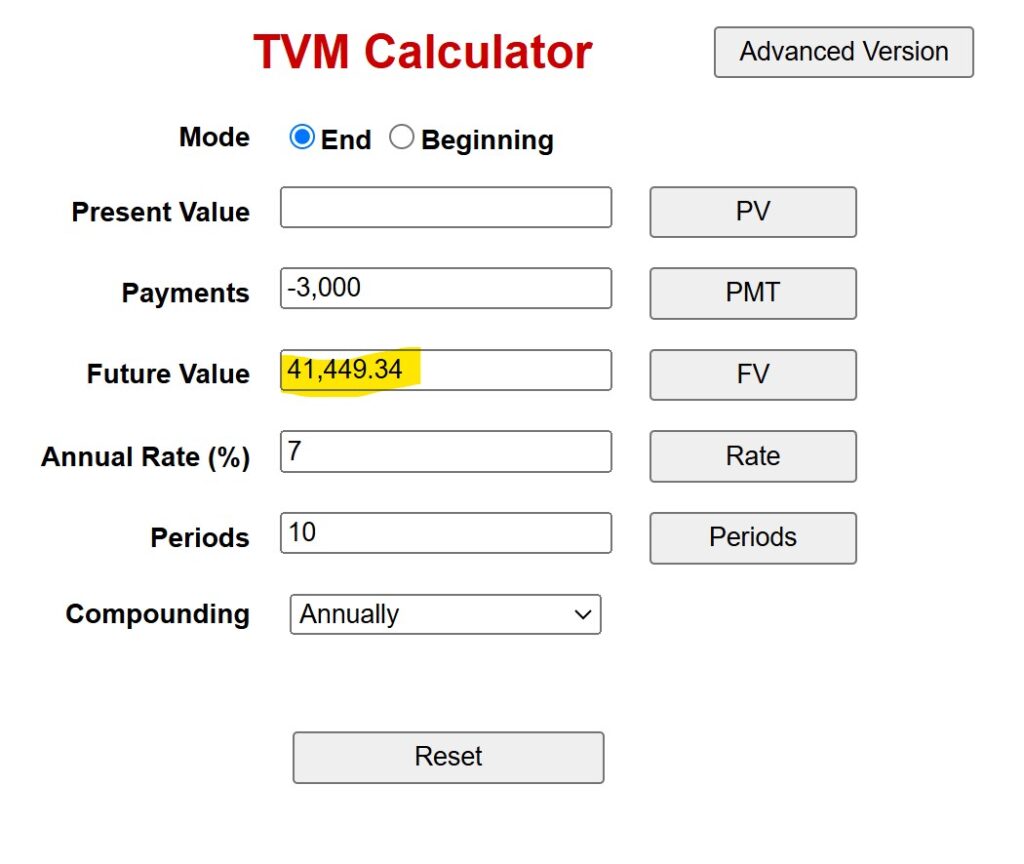
Example: Emma spends $5 on coffee every weekday and $15 on lunch. Over a year, this adds up to $5,200. By making coffee at home and bringing lunch a few times a week, she saves $3,000 annually, which she invests in a diversified index fund. After 10 years, her savings grow to $41,449, assuming a 7% annual return.
What to Do Instead: Conduct a spending audit to identify areas where you can cut back. Budgeting Apps can help track expenses and find savings opportunities. Redirect these savings into investments or a high-yield savings account.
4. Procrastinating on Financial Goals
Delaying financial decisions can lead to missed opportunities. Whether it’s starting an investment account, creating a budget, or paying off debt, waiting often results in smaller returns or higher costs.
Example: Let’s compare two individuals: Sam and Chris. Both plan to retire at age 65 and invest in an account that earns 7% annual interest.
Sam starts saving $100 per month at age 25 and saves for 40 years.
Chris starts saving $100 per month at age 35 and saves for 30 years.
Growth with Compound Interest:
Using a 7% annual return:
Sam’s savings at age 65: After saving $100 per month for 40 years at a 7% annual interest rate, Sam’s total savings grow to approximately $262,481.
Sam contributed only $12,000 more than Chris but ended up with twice as much due to starting earlier.
The extra 10 years of saving and compounding significantly boosted Sam’s final savings.
Starting early allows your money more time to grow, even with smaller contributions.
The earlier you start, the easier it becomes to achieve your financial goals!
What to Do Instead: Set clear financial goals with specific deadlines. Use tools like financial calculators to understand the impact of starting early, and automate contributions to savings or investment accounts to ensure consistent progress.
5. Avoiding Conversations About Money
Many people avoid discussing finances due to discomfort or lack of knowledge. However, avoiding these conversations can lead to missed opportunities, misunderstandings, or financial mistakes.
Example: Tom never discussed salary negotiation with his peers, assuming his offer was standard. When he finally asked around, he discovered that others in similar roles were earning 20% more. Armed with this knowledge, he negotiated a raise that significantly boosted his income and savings potential.
What to Do Instead: Engage in open conversations about money with trusted friends, family, or professionals. Seek advice on investments, budgeting, or salary negotiations. Join communities or forums where people share financial insights to expand your knowledge and perspective.
The Path to Financial Freedom
Building wealth isn’t about perfection—it’s about consistent, intentional actions. By addressing these everyday habits, you can take control of your financial future and achieve long-term success.
Which habit are you ready to tackle today? Let us know in the comments below!
Our Newsletter Can Help You Build Wealth and Retire Rich!
Want actionable tips and expert advice to grow your wealth, save smarter, and retire comfortably? Sign up for the Build Wealth Retire Rich newsletter to receive weekly updates packed with personal finance strategies and insights that are delivered straight to your inbox!
Sign up for our free newsletter!
Thank you for subscribing to our newsletter. You are one step away from financial freedom.
By submitting your information, you`re giving us permission to email you. You may unsubscribe at any time.
In a world where financial decisions shape our futures, adopting the right habits early on can be the key to long-term security and prosperity. At “Build Wealth Retire Rich“, we believe in simplifying financial wisdom into actionable principles that anyone can follow.
Our guiding mantra is clear and concise: “Spend Wisely, Invest Early.”
1. Spend Wisely
The foundation of financial success begins with smart spending. This mantra emphasizes the importance of mindful consumption and prioritizing needs over wants. Here’s how you can adopt this principle in your daily life:
• Create a Budget: Track your income and expenses to identify where your money is going. Tools like spreadsheets or budgeting apps can help you stay organized.
• Distinguish Needs from Wants: Before making a purchase, ask yourself if it’s a necessity or a luxury.
• Avoid Impulse Buying: Give yourself a cooling-off period for major purchases to ensure they align with your financial goals.
• Seek Value, Not Just Price: Opt for quality over quantity when it comes to products and services. Spending on durable items can save money in the long run.
• Eliminate Debt: High-interest debts like credit cards can erode your wealth. Pay them off systematically and avoid accumulating new ones.
Spending wisely doesn’t mean living a life of deprivation—it’s about making informed choices that bring long-term benefits.
2. Invest Early
If spending wisely is the foundation, investing early is the accelerator of financial success. Time is the most valuable asset in investing, thanks to the power of compounding. Here’s why starting early matters:
• Harness the Power of Compounding: When you invest, your returns generate further returns over time. Starting early gives your money decades to grow exponentially.
• Build Wealth Gradually: Even small contributions add up. A monthly investment of $200 starting at age 25 can grow significantly compared to starting at age 40.
• Reduce Financial Stress: Early investments create a safety net for emergencies, retirement, and life goals, reducing financial anxiety.
• Take More Risks: Younger investors have the luxury of time to recover from market fluctuations, allowing them to take calculated risks for higher returns.
Simple Steps to Start Investing Early
1. Set Financial Goals: Define what you’re saving for—retirement, a home, education, or financial independence.
2. Start Small: Begin with an amount you’re comfortable with, even if it’s just $50 a month.
3. Leverage Tax-Advantaged Accounts: Use accounts like IRAs, 401(k)s, or ABLE accounts (for special needs planning) to maximize tax benefits.
4. Diversify Your Portfolio: Spread your investments across various assets like stocks, bonds, and mutual funds to reduce risk.
5. Automate Contributions: Set up automatic transfers to your investment accounts to ensure consistency.
Why These Mantras Work Together
The beauty of “Spend Wisely” and “Invest Early” lies in their interdependence. Wise spending creates the surplus necessary to invest, while early investments multiply your savings. Together, they form a powerful strategy to achieve financial independence.
For instance:
• By cutting unnecessary expenses (spend wisely), you can contribute more to your retirement accounts or save for a dream vacation.
• Starting investments in your 20s instead of your 30s could potentially double or triple your wealth at retirement age.
Conclusion
The “Build Wealth Retire Rich” mantra—“Spend Wisely, Invest Early”—is more than just advice; it’s a way of life that empowers you to take control of your finances. By adopting these principles today, you’re setting yourself up for a future of financial freedom and security.
Take the first step toward financial success. Evaluate your spending habits, set aside an investment fund, and let the journey begin. Remember, the sooner you start, the better your results will be.