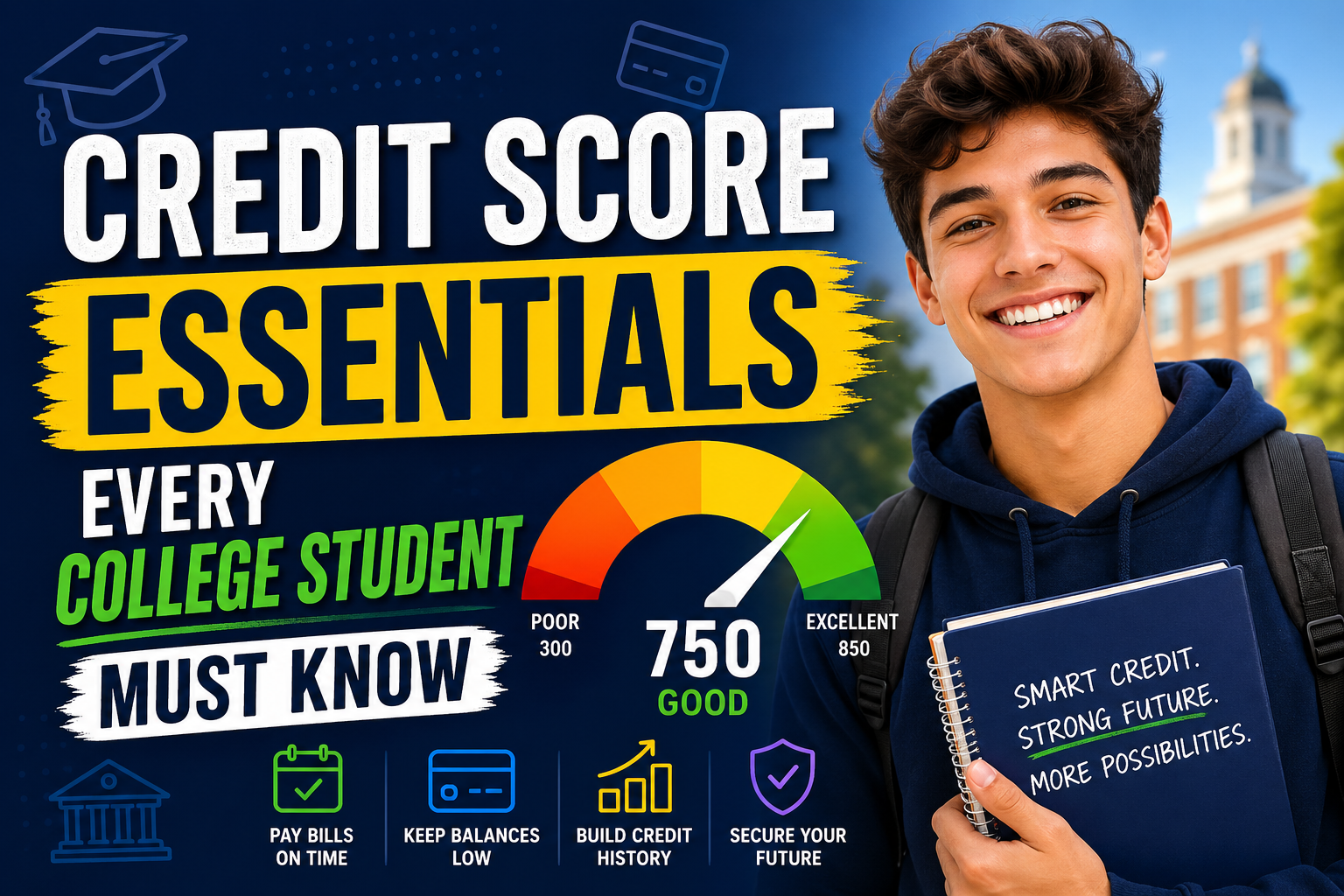
Credit Score Essentials Every College Student Must Know

Categories: Credit Scores
Wishlist Share

About Course

Your credit score quietly influences some of the most important financial decisions in your life. From getting approved for loans to securing lower interest rates, renting an apartment, or even qualifying for certain jobs, your credit profile can open doors—or quietly close them.

Credit Score Essentials Every College Student Must Know is a practical course designed to help you understand exactly how credit scores work and how you can take control of them. Instead of confusing financial jargon, this course breaks down the credit system into clear and simple ideas so you can see what affects your score and what steps will actually improve it.

You will learn how credit reports are structured, how lenders evaluate your credit history, and what the most important scoring factors are. The course also explains common credit mistakes that damage scores and provides simple strategies you can use to start rebuilding or strengthening your credit profile.

Whether you are building credit for the first time, trying to improve a low score, or simply want to manage credit more effectively, this course gives you a clear action plan. Each lesson focuses on practical steps—such as reducing credit utilization, avoiding costly mistakes, monitoring your credit report, and using credit cards responsibly—so you can steadily build a strong financial reputation.

By the end of this course, you will understand how the credit system works and how to manage it confidently. More importantly, you will have a set of strategies you can apply immediately to improve your credit health and position yourself for better financial opportunities in the future.


Show More

What Will You Learn?

  • How credit scores are calculated and why they matter
  • The difference between credit reports and credit scores
  • How credit cards can help or hurt your credit
  • Common credit mistakes college students make
  • How late payments affect your financial future
  • How to build credit from scratch as a student
  • Strategies to keep credit utilization low
  • How to read and understand a credit report
  • How to detect and fix errors on your credit report
  • The smartest way to use credit cards during college
  • How credit affects loans, apartments, and job opportunities
  • How to create a personal plan to build excellent credit

Course Content

Module 1- Credit Score Basics
Your credit score is one of the most important numbers in your financial life. Lenders, landlords, insurance companies, and sometimes even employers use it to evaluate your financial reliability. Understanding how credit scores work is the first step toward building a strong financial foundation. In this module, you learned what a credit score is and why it plays such a powerful role in everyday financial decisions. You explored the major factors that influence your score, including payment history, credit utilization, credit age, types of credit accounts, and new credit inquiries. These five components form the backbone of most scoring models and determine whether your score improves or declines over time. You also examined the difference between the two major credit scoring systems used today—FICO and VantageScore—and how lenders rely on these models when evaluating loan applications. Although the formulas may vary slightly, both systems focus on similar credit behaviors and reward consistent, responsible credit use. Finally, this module highlighted the real-world impact of your credit score. A strong score can help you qualify for loans more easily, secure lower interest rates, and access better financial opportunities. On the other hand, a weak score can make borrowing more expensive or difficult. By completing this module, you now have a clear understanding of how credit scores are calculated and why they matter. This knowledge will help you make smarter financial decisions as you move forward in the course and begin taking steps to build, improve, and protect your credit profile.

  • Lesson 1: Why Credit Scores Matter More Than You Think
  • Lesson 2: The 5 Factors That Shape Your Credit Score
  • Lesson 3: What Is a Good Credit Score?
  • Lesson 4: FICO and VantageScore Explained
  • Lesson 5: How Credit Impacts Loans, Jobs, and Housing

Module 2- Understanding Your Credit Report
Your credit report is the foundation of your credit score. It contains detailed information about your borrowing history, payment behavior, and current credit accounts. Lenders rely on this report to evaluate how responsibly you manage credit, which is why understanding it is an essential part of managing your financial life. In this module, you learned what a credit report is and how it is maintained by the three major credit bureaus: Equifax, Experian, and TransUnion. These agencies collect and organize information about your credit activity, including loans, credit cards, payment history, and account balances. You also explored how to obtain your free credit report and how to read the information it contains. A typical credit report includes sections such as personal information, credit accounts, payment history, credit inquiries, and any public records related to financial obligations. Reviewing these sections helps you understand how lenders see your financial behavior. Another important concept covered in this module is identifying mistakes or inaccuracies. Errors on credit reports can sometimes occur and may negatively affect your credit score. Learning how to spot these issues and dispute incorrect information is an important step in protecting your financial reputation. By the end of this module, you should feel more confident reviewing and understanding your credit report. Monitoring it regularly helps ensure that the information is accurate and allows you to quickly identify potential problems. Developing the habit of checking your credit report periodically is one of the simplest and most effective ways to maintain a healthy credit profile.

Module 3- Building Credit the Smart Way
Building credit is an important step toward financial independence. A strong credit history helps you qualify for loans, obtain better interest rates, and gain access to financial opportunities throughout your life. In this module, you learned practical strategies for establishing and strengthening your credit profile in a responsible way. The module began by explaining how individuals can start building credit even if they have no credit history. Many people begin their credit journey through tools such as secured credit cards, credit builder loans, or by becoming an authorized user on a trusted person’s credit account. These methods help create a credit record that lenders can evaluate. You also explored how responsible credit behavior helps strengthen your credit profile over time. Consistently paying bills on time, keeping balances low relative to credit limits, and avoiding excessive credit applications are key habits that contribute to a healthy credit score. Another important concept discussed in this module is developing a strong credit foundation. Establishing a small number of well-managed credit accounts and maintaining them over time helps demonstrate reliability to lenders. As your credit history grows, it becomes easier to qualify for additional financial products when needed. Finally, this module emphasized the importance of patience and consistency. Building credit does not happen overnight. Instead, it develops gradually as you demonstrate responsible financial behavior over months and years. By the end of this module, you should understand the key strategies for starting and strengthening your credit history. With careful planning and disciplined habits, you can build a credit profile that supports your long-term financial goals.

Module 4- Fixing and Improving Your Credit
Even responsible people can experience credit problems. Missed payments, high balances, identity theft, or simple reporting errors can damage a credit score. The good news is that credit can be repaired and improved with the right strategies and consistent financial habits. This module focuses on understanding how to identify credit issues and take practical steps to strengthen your credit profile over time. The first step in fixing credit is identifying what is hurting your score. This often requires reviewing your credit report carefully. Errors such as incorrect balances, accounts that do not belong to you, or payments mistakenly reported as late can negatively impact your score. Learning how to dispute these mistakes with credit bureaus is an important part of protecting your financial record. Another major factor in credit improvement is reducing outstanding debt. High credit card balances increase your credit utilization ratio, which can lower your score. Strategies such as paying down balances, creating a debt repayment plan, and prioritizing high-interest accounts can help restore healthier credit usage levels. The module also emphasizes the importance of building positive payment history moving forward. Consistently paying bills on time, keeping balances low, and avoiding unnecessary credit inquiries gradually rebuild trust with lenders. Over time, these habits help replace negative credit events with stronger positive credit behavior. Finally, improving credit requires patience and consistency. Credit scores do not change overnight, but steady financial discipline can produce meaningful improvements. By correcting errors, managing debt wisely, and practicing responsible credit habits, individuals can rebuild their credit profile and move toward stronger financial opportunities. By the end of this module, learners will understand how to diagnose credit problems, dispute errors, reduce debt, and develop the habits needed to steadily improve their credit score and financial reputation.

Module 5- Long-Term Credit Mastery
Building a good credit score is an important milestone, but maintaining strong credit over the long term requires ongoing discipline and smart financial habits. Module 5 focuses on helping learners move beyond basic credit building and develop the knowledge needed to manage credit confidently throughout their financial lives. This module emphasizes responsible credit use, consistent monitoring, and strategic planning to maintain a healthy credit profile. The first topic explains how to use credit cards the right way. Credit cards can be powerful financial tools when used responsibly. Paying balances on time, avoiding unnecessary debt, and keeping balances low relative to credit limits help protect and strengthen your credit score. Responsible credit card use also helps establish a strong record of payment history and financial reliability. The module also explores managing multiple credit accounts. As individuals build credit over time, they may accumulate several credit cards or loans. Learning how to organize payment schedules, monitor balances, and avoid excessive debt becomes increasingly important. Proper management of multiple accounts helps maintain a strong credit profile while reducing the risk of missed payments. Another key topic focuses on how often you should check your credit. Regularly reviewing your credit reports and monitoring your credit score helps you track your financial progress and detect potential problems early. Monitoring also allows you to identify errors, signs of identity theft, or changes that may affect your credit score. The module also addresses common credit score myths that cost people money. Many people misunderstand how credit works, which can lead to poor financial decisions. Clearing up misconceptions—such as believing that checking your own credit hurts your score or that carrying a balance helps build credit—helps learners make smarter financial choices. Finally, the module concludes with creating a personal credit improvement plan. This plan encourages learners to apply the knowledge gained throughout the course by setting realistic goals, tracking progress, and developing consistent financial habits. A clear strategy helps individuals maintain strong credit and continue improving their financial stability over time. By the end of this module, learners will understand how to maintain excellent credit habits, manage multiple accounts effectively, avoid common credit misconceptions, and create a long-term strategy for protecting and improving their credit health.

Quiz

Student Ratings & Reviews

No Review Yet
No Review Yet