Saving strategies that work are evidence-based systematic approaches to accumulating wealth proven effective across diverse circumstances—pay yourself first automation, percentage-based allocation, lifestyle inflation prevention, windfall capture, multiple account organization, and goal-based targeting—combining behavioral psychology with mechanical implementation creating reliable wealth building regardless of income level. Unlike vague “spend less save more” advice providing no actionable framework or willpower-dependent approaches failing under real-world pressure, proven saving strategies leverage automation removing decision fatigue, harness psychological principles like mental accounting and commitment devices, and create sustainable systems maintainable indefinitely through integration into natural cash flow rather than requiring constant active discipline impossible to sustain long-term creating inevitable failure.

This article is designed for anyone struggling to save consistently, individuals wanting proven approaches over trial-and-error experimentation, or those seeking comprehensive saving strategy toolkit. You do not need financial expertise, high income, or perfect circumstances to implement effective saving strategies—proven approaches work across income levels through appropriate proportional scaling, though obviously higher incomes enable faster absolute accumulation while lower incomes require more disciplined proportional allocation maintaining realistic expectations about timelines and amounts achievable.
Understanding proven saving strategies matters because ad-hoc approaches lacking systematic framework produce inconsistent results creating frustration and abandonment, willpower-dependent methods fail inevitably under real-world temptation and competing priorities, and ineffective strategies waste time and motivation—while systematic savers using evidence-based approaches achieve reliable consistent accumulation through automated execution, leverage behavioral psychology making saving easier not harder, and build sustainable lifelong wealth through proven frameworks impossible to achieve through willpower alone or undefined “try harder” approaches lacking concrete implementation mechanisms producing guaranteed failure despite good intentions.
Educational disclaimer: This article provides general educational information about saving strategies. Individual circumstances, incomes, expenses, goals, and appropriate approaches vary significantly. Strategies described represent proven approaches—effectiveness depends on consistent implementation and personal situation fit. This is not financial planning or professional advice. Consult qualified financial professionals for personalized guidance.
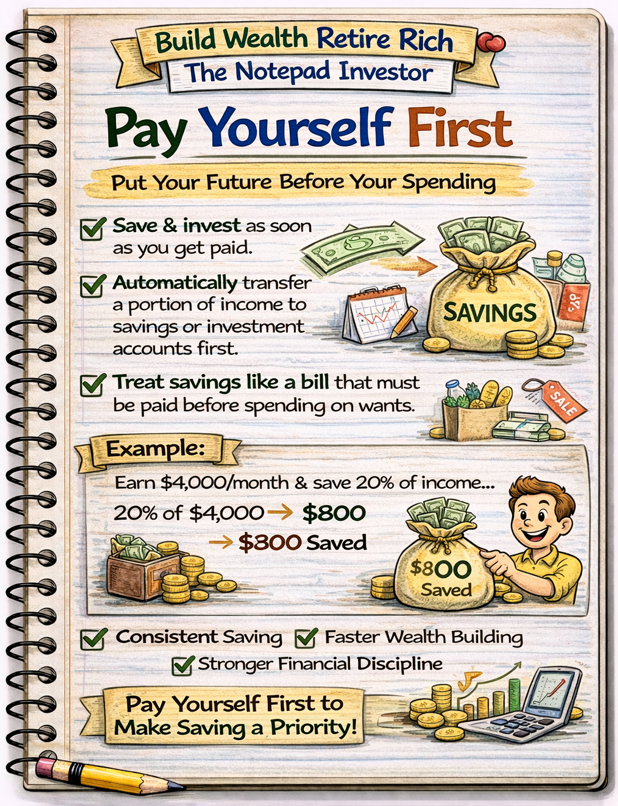
Core Principle: Pay Yourself First
The Foundation of All Successful Saving
Traditional approach (doomed to fail):
- Earn income → Pay bills → Spend on wants → Save what’s left
- Problem: Nothing ever left to save
- Expenses expand to consume available income (Parkinson’s Law)
- Saving becomes optional residual activity competing with infinite wants
Pay yourself first approach (proven effective):
- Earn income → Save first → Pay bills → Spend remainder
- Saving treated as non-negotiable “bill” to yourself
- Happens automatically before spending decisions made
- Remaining money guilt-free spendable (already saved)
Why Pay Yourself First Works
Behavioral psychology principles:
1. Removes willpower dependency:
- Automatic transfer eliminates daily save-or-spend decisions
- Willpower finite resource depleted through use
- Automation bypasses willpower entirely through mechanical execution
2. Leverages adaptation:
- Budget adapts to available income after automatic saving
- Never miss what never reached spending account
- Lifestyle adjusts to post-saving income level naturally
3. Creates positive feedback loop:
- Watch savings grow automatically creating satisfaction
- Success breeds continued commitment to system
- Versus failure cycle of repeatedly failing to save creating discouragement
Implementing Pay Yourself First
Step 1: Calculate target saving rate
- Beginner: 10% of gross income minimum
- Intermediate: 15-20% (accelerated wealth building)
- Advanced: 25-50% (aggressive wealth accumulation)
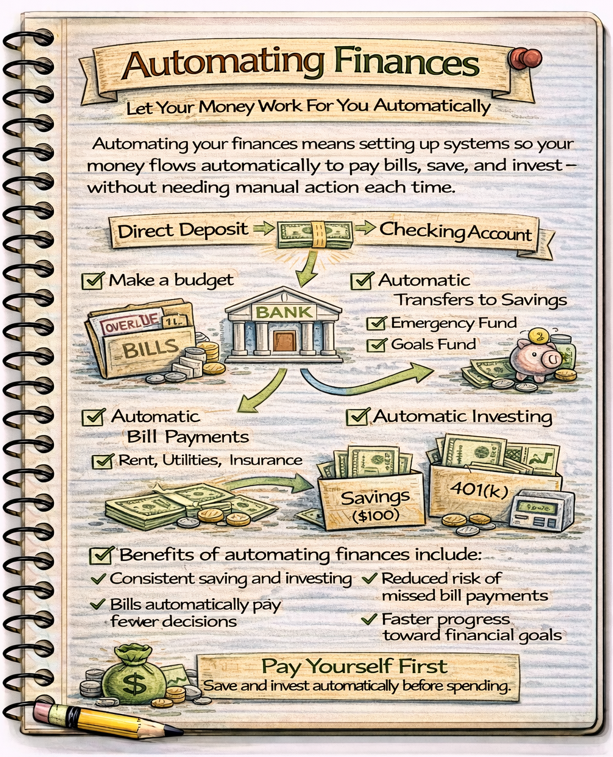
Step 2: Set up automatic transfers
- Day after payday (money comes in, savings immediately out)
- From checking to savings/investment accounts
- Split across goals: Retirement, emergency fund, short-term goals
Example automation (bi-weekly paychecks, 15% saving rate):
- Gross income: $2,500 per paycheck ($5,000 monthly)
- Net income: $2,000 per paycheck ($4,000 monthly)
- 15% gross = $750 monthly = $375 per paycheck
- Automatic transfers day after payday:
- → 401(k): $250 per paycheck (already deducted pre-tax)
- → Emergency fund: $75 per paycheck
- → Short-term goals: $50 per paycheck
- Remaining in checking: $1,625 per paycheck for expenses
Step 3: Live on remainder
- Budget based on post-saving income
- Treat savings transfers as unavailable (already allocated)
- Adjust lifestyle to available funds if needed

Percentage-Based Allocation Strategy
The 50/30/20 Framework
Allocation breakdown:
- 50% Needs: Essential expenses (housing, utilities, food, transportation, minimum debt payments)
- 30% Wants: Discretionary spending (entertainment, dining out, hobbies, non-essentials)
- 20% Savings: All savings and additional debt payments
Example on $5,000 monthly income:
- Needs: $2,500 (rent $1,400, utilities $200, groceries $400, transportation $300, insurance $200)
- Wants: $1,500 (dining $400, entertainment $300, hobbies $200, shopping $300, subscriptions $100, personal care $200)
- Savings: $1,000 (retirement $500, emergency fund $300, goals $200)
Why Percentage-Based Works
Advantages:
- Scales with income: Works at $3,000 or $10,000 monthly through proportional application
- Simple framework: Easy to understand and implement
- Balanced approach: Addresses needs, wants, and savings simultaneously
- Flexibility within categories: Exact allocation within “wants” or “needs” adjustable
Adaptations for different situations:
High cost-of-living areas (60/20/20):
- Needs: 60% (housing consumes larger share)
- Wants: 20% (reduced discretionary)
- Savings: 20% (maintain wealth building)
Aggressive savers (50/15/35):
- Needs: 50% (keep essentials constant)
- Wants: 15% (minimize discretionary)
- Savings: 35% (accelerate wealth building)
Debt payoff focus (50/20/30):
- Needs: 50% (essentials)
- Wants: 20% (moderate discretionary)
- Savings + Extra Debt: 30% (aggressive debt elimination)
Implementation
Step 1: Calculate current allocation
- Track spending 1-3 months determining actual percentages
- Categorize every expense as need, want, or savings
- Calculate: Total in each category ÷ income = current percentage
Step 2: Adjust toward target ratios
- If needs exceed 50%: Reduce housing costs, transportation, or food spending
- If wants exceed 30%: Cut discretionary spending freeing funds for savings
- If savings below 20%: Increase through spending reduction or income growth
Step 3: Automate savings component
- 20% of income automatically to savings accounts
- Remaining 80% funds needs and wants through conscious allocation
Multiple Account Organization Strategy
The Bucket System
Account structure creating forced organization:
Account 1: Income/Bills Checking
- Purpose: Receive income, pay monthly bills
- Typical balance: 1 month’s expenses ($3,000-5,000)
- Activity: High (paychecks in, bills out)
Account 2: Spending Checking
- Purpose: Discretionary spending (groceries, entertainment, shopping)
- Typical balance: $500-1,500 (weekly or bi-weekly allocation)
- Activity: Moderate (regular spending, debit card transactions)
Account 3: Emergency Fund (High-Yield Savings)
- Purpose: 3-6 months expenses, emergencies only
- Balance: $10,000-30,000 (based on expenses)
- Activity: Low (building phase then rarely touched)
Account 4: Short-Term Goals (High-Yield Savings or CD)
- Purpose: Vacation, down payment, big purchases (1-5 years)
- Balance: Variable, accumulating toward goal
- Activity: Regular contributions, occasional goal achievement spending
Account 5: Sinking Funds (High-Yield Savings)
- Purpose: Irregular predictable expenses (insurance, taxes, gifts, maintenance)
- Balance: Variable by category, revolving use
- Activity: Regular contributions, periodic spending when expenses due
Account 6+: Retirement/Investment Accounts
- 401(k), IRA, taxable brokerage
- Long-term wealth building (10+ years)
- Activity: Automatic contributions, rarely touched before retirement
Why Multiple Accounts Work
Mental accounting principle:
- Money in different accounts feels “designated” for different purposes
- Reduces temptation to raid emergency fund for vacation
- Clear purpose per account maintains discipline
Automated forced saving:
- Money automatically distributed to accounts per purpose
- Spending account has limited funds preventing overspending
- Savings accounts accumulate without active decision-making
Progress visibility:
- Watch each goal account grow independently
- Clear tracking of emergency fund, vacation fund, down payment separately
- Satisfaction from seeing multiple goals progressing simultaneously
Money Flow Automation
Paycheck distribution example:
- Gross paycheck: $2,500
- 401(k) contribution (10%): $250 (never touches checking)
- Net to checking: $2,000
Automatic transfers day after payday:
- → Emergency fund: $150
- → Vacation fund: $100
- → Sinking funds: $200
- → Roth IRA: $100
- Total savings: $550
Remaining in bills checking: $1,450
- Weekly transfer to spending checking: $350 (discretionary budget)
- Bills paid from bills checking throughout month
Net result:
- Savings: $800 total (32% gross income)
- Bills: Paid automatically from designated account
- Discretionary: Limited to $350/week preventing overspending
- All mechanical, no willpower required after initial setup
Windfall Capture Strategy
Maximizing Irregular Income
Common windfalls:
- Tax refunds (average $3,000)
- Work bonuses (quarterly, annual)
- Overtime pay
- Gifts and monetary presents
- Inheritance or settlements
- Side hustle income
- Expense reimbursements
The Windfall Allocation Formula
Recommended distribution preventing lifestyle inflation:
50% to savings/debt reduction:
- Emergency fund if below target
- High-interest debt payoff
- Short-term goal acceleration
- Retirement account boost
30% to near-term goals/wants:
- Needed purchases deferred due to budget constraints
- Home improvements
- Quality-of-life upgrades
- Planned but not yet funded wants
20% to guilt-free spending:
- Celebration dinner
- Small splurge or treat
- Entertainment or experience
- Psychological reward maintaining motivation
Example Windfall Allocation
$4,000 tax refund received:
50% savings ($2,000):
- Emergency fund: $1,000 (building to target)
- Roth IRA: $500 (extra contribution)
- Vacation fund: $500 (accelerate goal)
30% near-term needs ($1,200):
- New work laptop needed: $800
- Home repair deferred: $400
20% guilt-free fun ($800):
- Nice dinner celebration: $200
- Concert tickets: $300
- Shopping/personal: $300
Result:
- Substantial progress on financial goals ($2,000)
- Addressed deferred needs ($1,200)
- Enjoyed reward without guilt ($800)
- Prevented full windfall disappearance into lifestyle inflation
Why Windfall Strategy Works
Prevents lifestyle creep:
- Without plan, windfall absorbed into general spending invisibly
- Immediate allocation forces intentional use
- 50% minimum to savings accelerates wealth building
Balances present and future:
- Not 100% to savings (creates resentment)
- Not 100% to spending (wastes opportunity)
- Middle ground sustainable and satisfying
Creates positive association:
- 20% fun spending prevents feeling “punished” by responsible allocation
- Positive experience reinforces commitment to system
- Satisfaction from both enjoyment and progress
Lifestyle Inflation Prevention Strategy
The Raise Allocation Formula
Problem: Income rises, savings don’t
- Get 5% raise
- Spending increases 5%
- Saving rate unchanged
- Never progress despite career advancement
Solution: Automatic raise capture
Formula: 50% lifestyle improvement, 50% savings increase
Example raise allocation:
- Current income: $60,000 annually ($5,000 monthly)
- Current saving: $750 monthly (15%)
- Raise: 5% ($3,000 annually, $250 monthly)
Traditional approach (fails):
- New income: $5,250 monthly
- Saving: Still $750 (14.3%, actually declining percentage)
- Extra spending: $250 monthly absorbed into lifestyle
- No progress despite raise
50/50 raise allocation (succeeds):
- New income: $5,250 monthly
- Savings increase: $125 monthly (50% of raise)
- New saving total: $875 monthly (16.7%, improving)
- Lifestyle increase: $125 monthly (quality of life improvement)
- Both savings and lifestyle improved simultaneously
Long-term impact:
- Over career with regular raises: Saving rate increases from 15% to 25-30%
- Lifestyle improves moderately (50% of raises)
- Wealth accumulation accelerates dramatically
Implementation
Step 1: Immediately adjust automatic transfers
- Day raise takes effect, increase automatic savings transfer
- 50% of net raise amount
- Don’t wait or “try it out first”—immediate automation
Step 2: Enjoy remaining increase
- 50% lifestyle improvement guilt-free
- Upgrade spending in meaningful ways
- No deprivation, genuine quality of life enhancement
Alternative: 75/25 aggressive approach
- 75% of raise to savings (accelerate wealth building)
- 25% to lifestyle (modest improvement)
- For those prioritizing early financial independence
Goal-Based Saving Strategy
Clear Targets Drive Consistent Action
Why vague “save more” fails:
- No concrete target creates no accountability
- Can’t measure progress or know when successful
- Easy to procrastinate indefinitely
- Competing priorities always seem more urgent
Why specific goals work:
- Clear target ($15,000 emergency fund) creates accountability
- Progress measurable ($9,000 saved = 60% complete)
- Deadline creates urgency (achieve in 18 months)
- Psychological power of concrete achievement
SMART Goal Framework for Saving
Specific: Exact amount and purpose
- Bad: “Save for vacation”
- Good: “Save $6,000 for two-week European vacation”
Measurable: Track progress toward target
- Monthly balance check
- Thermometer chart visualization
- Percentage complete calculation
Achievable: Realistic given income and timeline
- $6,000 in 12 months = $500/month
- Can budget afford $500? If not, adjust goal or timeline
Relevant: Aligned with values and priorities
- Truly important goal versus “should” goal
- Meaningful enough to maintain motivation
Time-bound: Specific deadline
- Not “eventually save $6,000”
- “Save $6,000 by June 2027” creates urgency
Multiple Simultaneous Goals
Prioritized allocation across goals:
Example goal portfolio:
- Priority 1: Emergency fund ($15,000 target, currently $8,000)
- Monthly: $400 (highest priority, foundation)
- Timeline: 18 months to complete
Priority 2: Retirement (ongoing)
- Monthly: $500 (401k + IRA)
- Timeline: Continuous throughout career
Priority 3: Down payment ($30,000 target, currently $5,000)
- Monthly: $350
- Timeline: 6 years to complete
Priority 4: Vacation fund ($4,000 target annually)
- Monthly: $200
- Timeline: Revolving annual goal
Total monthly allocation: $1,450
- After emergency fund complete (18 months): Reallocate $400 to down payment
- Accelerates down payment timeline from 6 years to 3.5 years
- Sequential achievement creating momentum
Why These Strategies Work
Without proven saving strategies, ad-hoc approaches produce inconsistent results creating frustration abandoning efforts, willpower-dependent methods fail inevitably under real-world temptation and competing priorities impossible to resist continuously, and lack of systematic framework leaves savers without reliable path forward—while evidence-based strategy users achieve reliable wealth accumulation through automation removing willpower dependency, leverage behavioral psychology making saving natural default behavior not constant struggle, and create sustainable systems maintainable indefinitely through integration into cash flow producing lifelong results impossible through willpower alone regardless of good intentions failing under sustained pressure over extended periods.
Understanding and implementing proven saving strategies enables individuals to:
- Achieve consistent reliable saving through automation not willpower
- Leverage behavioral psychology making saving easier naturally
- Scale approaches proportionally as income grows maintaining progress
- Balance multiple goals simultaneously through organized allocation
- Prevent lifestyle inflation capturing income growth for wealth building
- Maintain motivation through visible progress and milestone achievements
- Build sustainable lifelong wealth systematically regardless of income level
Proven saving strategies transform wealth building from willpower-dependent struggle into automated systematic process producing reliable results through evidence-based approaches impossible to achieve through undefined “try harder” advice lacking concrete implementation framework.
Common Misunderstandings
Many people assume successful saving requires high income making strategies inaccessible to average earners. In reality, proven strategies work proportionally at any income level—10-20% saving rate achievable whether earning $3,000 or $10,000 monthly through appropriate lifestyle calibration, and percentage-based approaches scale automatically, proving strategies income-independent requiring discipline not exceptional earnings when implemented systematically versus assumption that only high earners can save successfully creating self-fulfilling failure prophecy.
Another common misconception is that automation removes personal agency and control over finances. In practice, automation implements decisions already made (save 15%, allocate to these goals) executing chosen priorities consistently without requiring constant active decisions, initial setup requires thoughtful planning determining goals and allocations, and automation serves predetermined intentions not replacing decision-making, proving automation empowers rather than constrains through reliable execution of deliberate choices impossible to maintain through willpower alone over extended periods.
Some believe multiple savings goals create impossible complexity better addressed through single general savings account. However, dedicated goal accounts leverage mental accounting psychology making money feel “designated” reducing temptation to raid for other purposes, clear progress visibility per goal maintains motivation impossible with single undifferentiated pile, and online banks offering unlimited free sub-accounts eliminate complexity through automatic separation, proving organized multi-goal approach superior to single-account ambiguity through clearer purpose and psychological commitment devices enhancing rather than hindering success.
How Saving Strategies Fit Into Financial Success
Effective saving strategies provide essential systematic framework converting good intentions into reliable execution, enable consistent wealth accumulation regardless of income level through proven approaches scalable across circumstances, and create sustainable lifelong patterns through integration into natural cash flow rather than requiring unsustainable constant active discipline, making strategic systematic approach critical difference between those building substantial wealth over time and those earning adequate incomes but perpetually living paycheck-to-paycheck through lack of proven implementation framework regardless of good intentions failing without concrete systematic execution mechanisms.
For example, two professionals both starting careers at $55,000 annually. Person A has good intentions “trying to save more” but no systematic strategy—saves inconsistently when feels like it, no automation, treats saving as residual activity after spending. Average saving: 3-5% of income erratically, some months $200 saved, other months $0, raises absorbed entirely into lifestyle increases. After 20 years age 45: Saved sporadically, modest 401(k) balance $120,000, no emergency fund, living paycheck-to-paycheck despite income rising to $95,000, perpetual financial stress despite adequate earnings. Person B implements proven strategies from day one—pay yourself first automation 15% gross income ($687.50 monthly initially), 50/50 raise allocation, multiple account organization, goal-based targeting. Consistently saves regardless of willpower or motivation through automated execution. After 20 years age 45: Retirement accounts $380,000 (consistent 15% plus growth), emergency fund $25,000 fully funded, paid cash for vehicles through systematic saving, achieved down payment enabling home purchase, current income $95,000 with 22% saving rate ($1,733 monthly) through raise capture strategy, financial stress minimal through systematic preparation, on track for comfortable retirement. Difference: $260,000 more retirement wealth ($380K vs $120K), $25,000 emergency fund versus none, achieved major goals (home, vehicles) versus perpetual struggle. Identical starting incomes, similar career trajectories—difference entirely from systematic proven strategies producing reliable execution versus willpower-dependent good intentions failing inevitably under sustained real-world pressure over decades creating massive wealth gap from implementation framework not income differences.
Saving strategies separate systematic wealth builders achieving consistent progress through proven frameworks from intention-only savers struggling perpetually despite adequate incomes through lack of concrete systematic implementation creating reliable execution impossible through willpower alone regardless of good intentions over extended periods.
Recent Updates and Trends
In recent years, behavioral economics insights have been increasingly applied to personal finance—understanding decision fatigue, mental accounting, commitment devices informing strategy design making saving easier not harder through psychology-aligned approaches versus traditional willpower-dependent methods ignoring human behavioral realities.
Fintech automation capabilities have expanded dramatically—apps like Digit, Qapital, Acorns offering sophisticated automatic saving rules (round-up spare change, percentage-based allocation, goal-based transfers) making implementation easier than ever before though requiring trust in third-party platforms and often small monthly fees creating accessibility versus cost trade-offs.
Employer retirement plan auto-enrollment and auto-escalation have proliferated—companies increasingly automatically enrolling employees at 3-6% contribution rates with annual 1% increases making pay-yourself-first approach default rather than opt-in, dramatically improving retirement saving rates especially among younger workers who might otherwise procrastinate indefinitely.
High-yield savings rates normalizing at 4-5% have enhanced multiple account strategies—dedicated goal accounts now earn meaningful returns during accumulation period versus historical near-zero rates making account proliferation more attractive through both organizational and financial benefits versus minimal earnings on multiple small balances previously.
Fundamental saving strategy principles remain timeless: automation removes willpower dependency enabling consistent execution, percentage-based allocation scales across income levels, multiple dedicated accounts leverage mental accounting psychology, windfall capture prevents lifestyle inflation from irregular income, and goal-based targeting creates accountability driving progress—regardless of fintech innovations, employer plan features, interest rate levels, or behavioral economics recognition, proven systematic approaches produce superior outcomes versus ad-hoc willpower-dependent methods through reliable execution frameworks impossible to sustain through discipline alone over extended periods creating massive long-term wealth differences from implementation consistency not income variations.
3 Things You Can Do Today
Ready to implement proven saving strategies? Here are three simple steps you can take right now:
1. Calculate current saving rate and set target percentage – Review last 3 months spending determining: Total income (gross and net), total saved (retirement contributions, emergency fund, goals, all saving categories). Calculate current rate: Total saved ÷ gross income = percentage. Example: $750 saved monthly, $5,000 gross = 15% rate. Compare to benchmarks: Minimum 10%, comfortable 15-20%, aggressive 25%+. If below target: Identify gap and plan. Example: Currently 8%, target 15%, need $350 more monthly. Where can this come from? Spending cuts identifying specific categories? Income increase through side work? Or graduated approach increasing 2% annually reaching target over time? Write decision: “Current rate 8%, target 15%, will increase 2% annually through raise capture reaching target in ~4 years.” Takes 15 minutes establishing baseline and intentional target versus continuing without awareness of actual rate enabling purposeful improvement.
2. Set up pay-yourself-first automation for at least one savings category – Choose highest priority: Emergency fund if below 3 months expenses, retirement if below 10%, or most important short-term goal. Open dedicated account if needed: High-yield savings for emergency/goals, confirm 401(k) enrollment for retirement. Set up automatic transfer: Day after payday (or increase 401(k) percentage), amount from step 1 calculation, destination account clearly labeled by purpose. Example: “Automatic $300 transfer to ‘Emergency Fund’ account every payday Friday.” This implements pay-yourself-first principle immediately—next paycheck, saving happens automatically before spending decisions made. Takes 20 minutes creating systematic execution removing willpower dependency. Without this automation, saving remains optional competing with infinite wants making consistent execution impossible—automation ensures reliable progress regardless of daily motivation fluctuations.
3. Plan next windfall allocation using 50/30/20 formula – Identify upcoming windfall: Tax refund (typical February-April), annual bonus (whenever scheduled), next overtime paycheck, expected gift. Estimate amount: $3,000 tax refund example. Pre-allocate using formula before money arrives preventing impulsive absorption: 50% savings ($1,500): Emergency fund $800, retirement $400, vacation fund $300. 30% needs ($900): Deferred necessary purchases like needed appliance replacement. 20% fun ($600): Celebration treat guilt-free spending. Write this plan down NOW before windfall arrives: “When $3,000 refund received: $1,500 to savings split across goals, $900 to needed purchases, $600 to celebration/fun.” Commit to plan preventing entire windfall disappearing into lifestyle without intentional benefit. Takes 10 minutes creating intentional allocation producing wealth progress versus unconscious absorption. Most important: Pre-commit BEFORE money arrives when rational thinking clearest not after when temptation highest and discipline weakest.
These actions create systematic saving framework within 45 minutes—calculated current rate establishing baseline with improvement target, automated pay-yourself-first execution for priority savings, and pre-committed windfall plan maximizing irregular income—transforming saving from willpower-dependent struggle into automated systematic process producing reliable wealth building impossible through ad-hoc intentions without concrete implementation mechanisms.
Quick FAQ
What percentage of income should I save?
Minimum: 10% gross income covering basics (retirement, modest emergency fund building). Comfortable: 15-20% enabling strong retirement preparation and goal achievement. Aggressive: 25-40% accelerating financial independence and wealth building. Start where affordable: Even 5% while building to 10%+ better than waiting for “perfect” circumstances. Allocation within savings: Minimum employer 401(k) match (free money), then emergency fund to 3 months expenses, then 10-15% total retirement, then short-term goals. Adjust for circumstances: High debt loads might temporarily reduce to 5-10% while aggressively paying debt, then increase after elimination. Career stage: Younger workers 10-15% acceptable, mid-career 15-20% recommended, late-career 20%+ if behind on retirement.
Is it better to save or pay off debt first?
Prioritization sequence: (1) Employer 401(k) match to maximum (free money, always capture), (2) Starter emergency fund $1,000-2,000 (prevent new debt from minor emergencies), (3) High-interest debt (credit cards >15% APR, payday loans), (4) Full emergency fund 3-6 months expenses, (5) Remaining debt and additional saving simultaneously. Exception: Very low-interest debt (sub-4% mortgage, federal student loans) can be maintained while saving aggressively since opportunity cost of prepayment minimal. Balance: Don’t completely pause saving to attack debt—maintain minimum retirement contributions and small emergency fund while debt payoff preventing financial vulnerability and lost compound growth years. After debt elimination: Redirect payment amounts to saving accelerating wealth building.
How do I maintain saving motivation over long timelines?
Six proven approaches: (1) Automate completely—remove willpower dependency through mechanical execution requiring no ongoing motivation, (2) Visual progress tracking—thermometer charts, percentage complete calculations showing advancement, (3) Milestone celebrations—recognize 25%, 50%, 75% achievements not just 100%, (4) Chunking goals—break overwhelming targets into smaller pieces ($30,000 down payment = thirty $1,000 increments feeling achievable), (5) Connect to purpose—not abstract “retirement” but “financial independence enabling career flexibility and security”, (6) Regular review—quarterly progress checks maintaining awareness and recommitment. Most important: Automation makes motivation less critical—saving happens regardless through systematic process not requiring sustained willpower impossible to maintain indefinitely under real-world pressures and competing priorities over extended periods.
What if my income is irregular (freelance, commission, variable)?
Percentage-based saving works well: Save consistent percentage (15-20%) regardless of income fluctuations—high months contribute more, low months less, averages to target over time. Create artificial smoothing: Estimate annual income ÷ 12 = “monthly paycheck”, save that percentage consistently, let checking account absorb fluctuations through buffer. High month strategy: Save excess above average month entirely preventing lifestyle inflation from temporary spikes. Low month strategy: Maintain minimum savings even if below percentage target maintaining consistency. Build larger emergency fund: 6-9 months expenses versus standard 3-6 providing cushion for income volatility. Sinking funds critical: Smooth irregular expenses preventing compound volatility (irregular income PLUS irregular expenses creates chaos).
Can saving strategies work at low incomes under $40,000?
Yes through proportional scaling: 10% of $30,000 ($3,000 annually, $250 monthly) builds emergency fund over time and enables modest retirement saving. Strategies remain same: Pay yourself first automation, percentage-based allocation, goal-based targeting—implementation identical just smaller absolute amounts. Focus on percentage not absolute dollars: $250 monthly at $30,000 income identical achievement to $750 monthly at $90,000—both 10% representing equal discipline. Priority sequencing critical at lower incomes: Employer match, $1,000 starter fund, high-interest debt, then build from there. Income growth essential: Side hustles, skill development, career advancement enabling increased absolute saving while maintaining percentages. Every dollar saved matters: $250 monthly over 30 years at 7% return = $305,000 retirement—proving low income not excuse for zero saving when approached systematically through proven percentage-based strategies.
Explore More in Money Basics
Disclosure
This article is provided for educational purposes only and does not constitute financial advice or guarantee of specific results. Saving strategies described represent proven general approaches—individual effectiveness depends on consistent implementation and personal situation fit. Percentage recommendations represent typical guidance—appropriate rates vary by circumstances, goals, income levels, and life stages. Examples use simplified scenarios—actual situations more complex. Strategy implementation requires personal adaptation matching specific needs and constraints. High-yield savings rates and investment returns mentioned represent recent typical ranges—actual results vary and not guaranteed. Behavioral psychology principles described represent general findings—individual responses vary. Employer retirement plan features vary significantly—verify specific plan rules. Tax implications not addressed—consult tax professionals. Individual circumstances, incomes, expenses, goals, and priorities differ requiring personalized assessment and planning. Consult qualified financial professionals for personalized guidance tailored to specific situations. Advertisements or sponsored content may appear within or alongside this content. All information presented independently for educational purposes only.