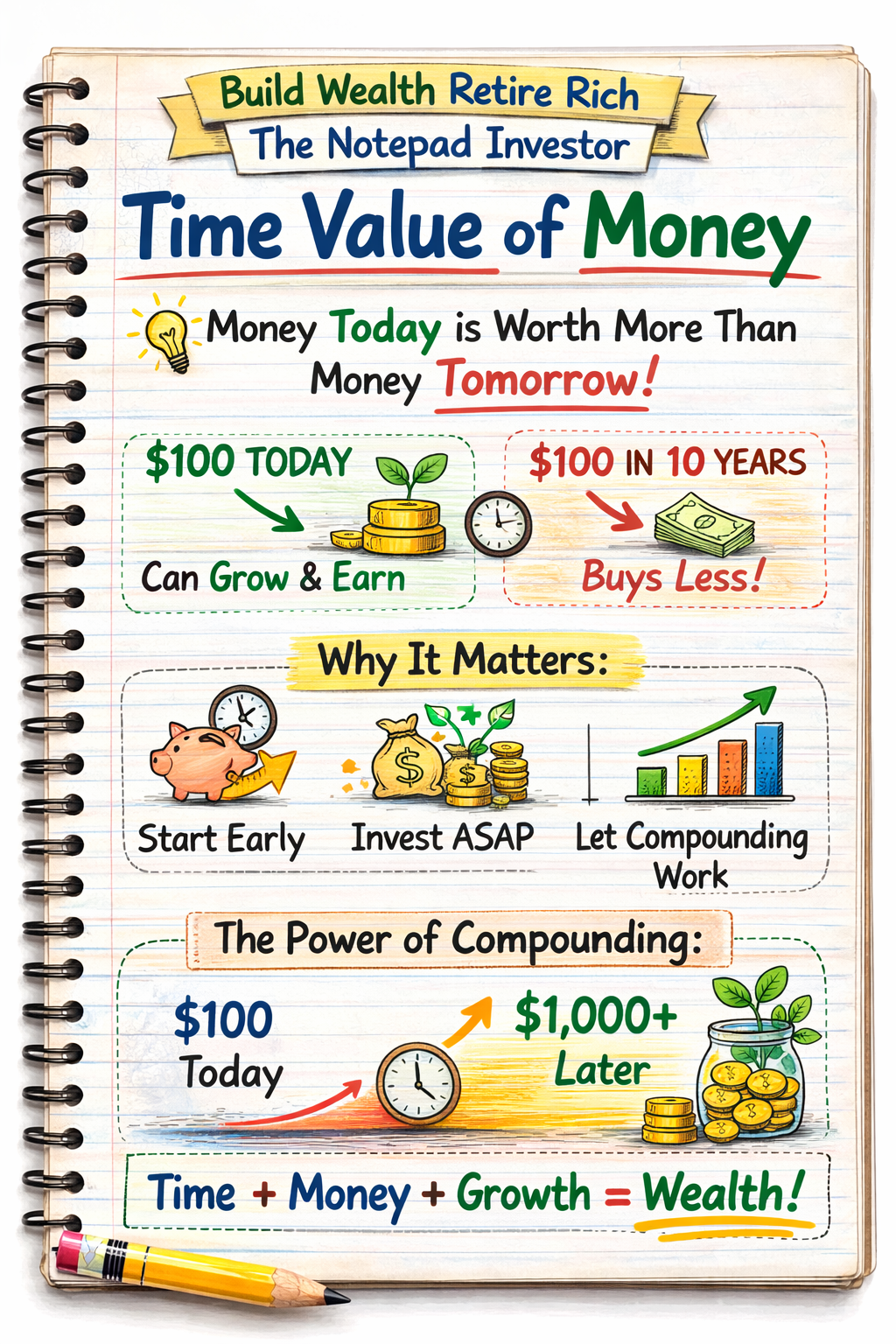
Tag: Compound Interest

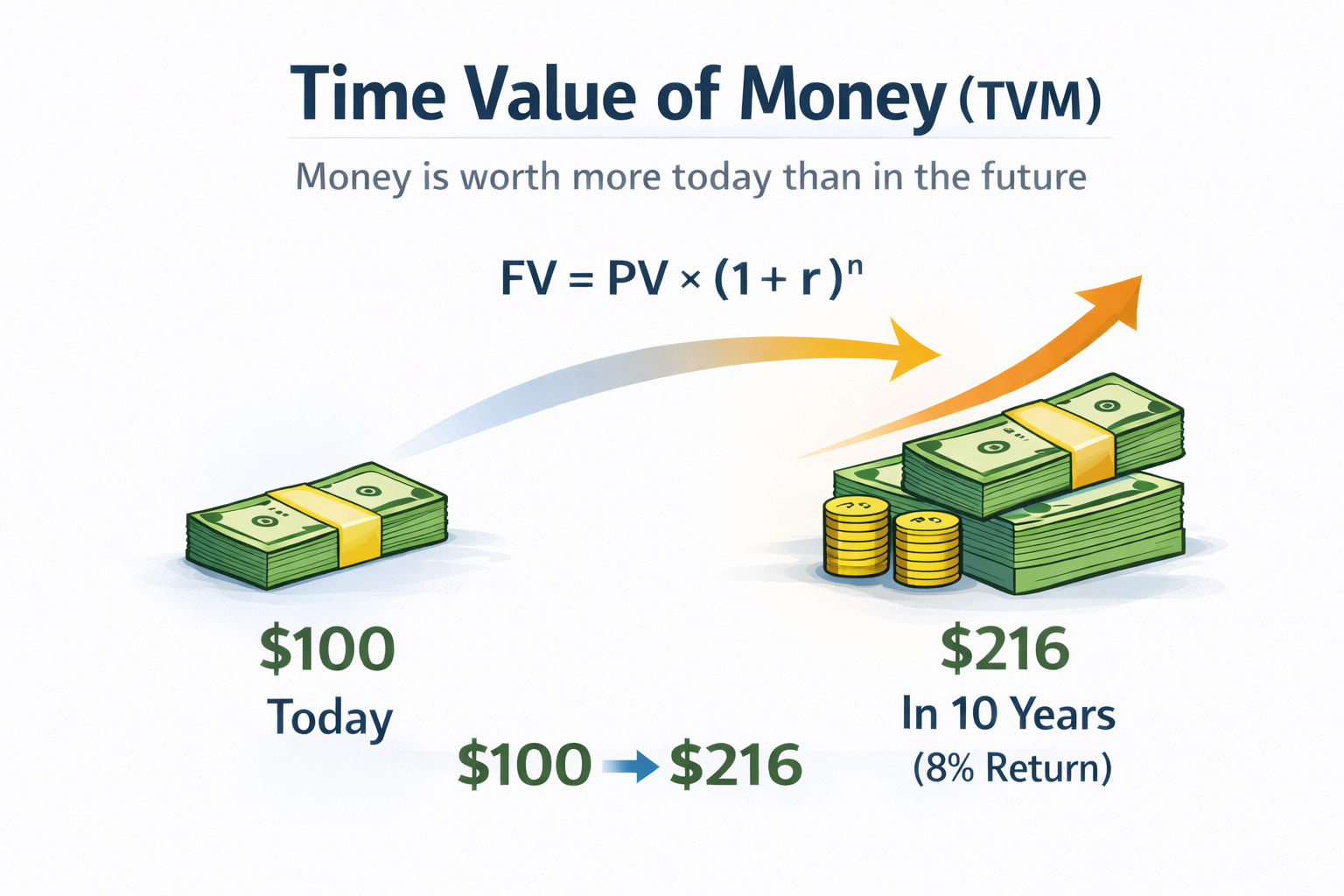
  • Time Value of Money Calculator: A Student’s Guide

    Time Value of Money Calculator: A Student’s Guide

    Time Value of Money Calculator: A Student’s Guide | The Campus Investor
    The Campus Investor
    Build Wealth from Day One
    🧮 Financial Tools  ·  Calculator Guide

    Time Value of Money Calculator: A Student’s Guide

    May 2026 | 8 min read | For College Students

    The Time Value of Money (TVM) Calculator is one of the most powerful financial tools a student can learn to use — and one of the most confusing at first glance. Five variables, a sign convention that trips everyone up, two modes that change your answer, and a compounding dropdown that most people ignore.

    This guide breaks every part of the calculator down — plainly, with real student examples — so you can use it confidently to solve any TVM problem: investment growth, loan payments, savings goals, and more.

    What is the Time Value of Money?

    The core idea behind every TVM calculation is simple: a dollar today is worth more than a dollar tomorrow. Why? Because a dollar you have right now can be invested and grow. A dollar promised to you in the future can’t be invested yet — so it’s worth less in today’s terms.

    This principle underpins almost every financial decision: how much a loan will cost you, how much you need to save to reach a goal, what your investments will be worth at retirement, and whether a lump sum payment or an annuity is the better deal.

    “Time value of money is not just a finance concept. It’s the reason investing early beats investing more — and the reason carrying debt costs you more than the interest rate suggests.”

    The Calculator — Every Field Explained

    Here is what the TVM calculator looks like — with every field labelled so you know exactly what you’re looking at before entering a single number:

    TVM Calculator

    Mode: End Beginning
    Label Value Compute
    Present Value: e.g. -200 PV
    Payments: e.g. -50 PMT
    Future Value: e.g. -1000 FV
    Annual Rate (%): e.g. 10 Rate
    Periods (years): e.g. 5 Periods
    Compounding:
    Annually
    Reset
    Build Wealth Retire Rich: Time Value of Money Calculator

    The logic is always the same: enter any four of the five variables, then click the Compute button for the fifth. The calculator solves for the unknown. The key is knowing what each variable means, what sign to give it, and which mode to use.

    The 5 Variables: PV, PMT, FV, Rate, Periods

    Every TVM problem involves five variables. You always know four of them and solve for the fifth. Here’s exactly what each one means in plain English — with real student contexts:

    PV

    Present Value

    The value of money today — either an amount you have right now, or the current worth of a future cash flow. In borrowing it’s the loan amount. In investing it’s your starting deposit.

    Student examples: $5,000 student loan taken out today $500 you deposit into a Roth IRA today Current value of a $1,000 bond maturing in 5 years
    PMT

    Payments (Annuity)

    A regular recurring payment made at equal intervals — either money going out (loan payments, regular savings contributions) or money coming in (income from an annuity). Enter 0 if there are no recurring payments.

    Student examples: $150/month loan repayment $50/month invested into an index fund $0 (lump-sum problems with no regular payments)
    FV

    Future Value

    The value of money at a specific point in the future, after growth or after a series of payments. This is what you’re solving for when asking “what will my investment be worth in 30 years?” or “how much will I owe at the end of this loan?”

    Student examples: What your Roth IRA will be worth at 65 The final payoff amount on a loan $0 (for a fully amortising loan that ends at zero)
    r

    Annual Rate (%)

    The annual interest rate — entered as a percentage, not a decimal (enter 7, not 0.07). For investments this is your expected annual return. For loans it’s the APR. The calculator adjusts for compounding frequency automatically.

    Student examples: 7 (for 7% average investment return) 6.5 (federal student loan rate) 24 (typical credit card APR)
    N

    Periods (Years)

    The total number of time periods — usually years, but can be months if your payment frequency is monthly. If you’re solving a 30-year mortgage with monthly payments, enter 30 years (the calculator accounts for compounding frequency). If your calculator uses periods in months directly, enter 360 (30 × 12).

    Student examples: 10 years of investing from age 20 to 30 45 years until retirement (age 20 to 65) 5 years on a car loan 4 years of college remaining

    The Sign Convention — Why Negative Numbers Matter

    This is where almost every beginner gets confused — and where most wrong answers come from. TVM calculators use a cash flow sign convention: money flowing out of your pocket is negative; money flowing into your pocket is positive.

    💡 The Sign Convention — Always Think From Your Perspective

    Negative (Money Out)

    Cash that leaves your hands. You invest it, pay it out, or deposit it somewhere. You no longer have this money in your pocket.

    Examples: loan payment you make, deposit into savings, money you invest today

    +
    Positive (Money In)

    Cash that arrives in your hands. You receive it, earn it, or withdraw it. This money is coming into your pocket.

    Examples: loan proceeds you receive, investment payout, cash you withdraw

    The most important rule: PV and FV must have opposite signs when money flows in one direction. If you enter a negative PV (money you invest today), FV will compute as positive (money you receive later). If you enter a positive PV (loan proceeds you receive), FV will compute as negative (amount you owe at the end).

    ⚠️ The Most Common Sign Mistake

    Entering PV and PMT with the same sign when they should have opposite signs is the single most common TVM error. If you’re making regular payments on a loan (PMT is negative — money leaving you), the loan you received (PV) must be positive — money that came to you. If you get an error or an absurd answer, check your signs first.

    End vs Beginning Mode

    The Mode selector at the top of the calculator — End or Beginning — determines when payments occur within each period. For most student problems, End mode is correct.

    End Mode (Ordinary Annuity)

    Payments at the End of Each Period

    The most common setting. Payments are made or received at the end of each period — after the interest for that period has been calculated.

    This is how most loans, mortgages, and regular savings plans work. Your monthly mortgage payment is due at the end of the month, after that month’s interest has accrued.

    ✓ Use for: student loan payments, car loans, monthly savings contributions, most investment problems
    Beginning Mode (Annuity Due)

    Payments at the Start of Each Period

    Less common. Payments occur at the beginning of each period — before interest is calculated for that period. This means each payment earns (or avoids) one extra period of interest.

    Beginning mode produces a slightly higher future value for investments and a slightly lower present value for loans, because money is working for one more period.

    ✓ Use for: rent paid at month start, lease payments, some annuities specified as “due”
    📐 How Much Does Mode Actually Change Your Answer?

    Switching from End to Beginning mode on a $200/month investment at 7% over 30 years changes the result from approximately $244,000 to approximately $245,000 — a difference of about $1,000. The effect grows with the rate and the number of periods. For most homework and real-life problems, End mode is correct unless the problem specifically states “annuity due” or “beginning of period.”

    Compounding Frequency Explained

    The Compounding dropdown controls how many times per year interest is applied to the balance. The more frequently interest compounds, the slightly more you earn (or owe). Here’s how the options compare on a $10,000 balance at 7% over 10 years:

    Compounding Option Times/Year Balance at 10 Years Interest Earned
    Annually $19,672 $9,672
    Semi-annually $19,898 $9,898
    Quarterly $20,016 $10,016
    Monthly Most Common 12× $20,097 $10,097
    Daily 365× $20,136 $10,136

    For most investment problems, select Monthly — this matches how most brokerages, savings accounts, and loan products compound. For problems where the question specifies a different frequency (e.g. “compounded quarterly”), match it exactly. The difference is small but matters for precise answers.

    Step-by-Step Examples for Students

    Here are four common student scenarios — each solved step by step using the TVM calculator.

    Example 1 · Investing

    “What will my $75/month investment be worth in 40 years?”

    You invest $75 every month into a Roth IRA starting at age 22. You expect a 7% average annual return. You want to know your balance at age 62.

    • 1

      PV = 0  — You’re starting with no lump sum today. Just monthly contributions.

    • 2

      PMT = −75  — $75 leaves your pocket each month. Negative because it’s money out.

    • 3

      FV = ?  — This is what you’re solving for. Leave it blank and click Compute FV.

    • 4

      Rate = 7  — Enter 7 for 7% annual return.

    • 5

      Periods = 40  — 40 years from age 22 to 62.

    • 6

      Mode = End  — Monthly contributions at end of each period. Compounding = Monthly.

    ✓ Result: FV ≈ $196,861 — Your $75/month grows to approximately $197,000 over 40 years. You contributed $36,000 — compound interest added ~$161,000.
    Example 2 · Loans

    “What are my monthly payments on a $15,000 car loan at 6% over 5 years?”

    You’re financing a used car. The loan is $15,000 at 6% APR over 5 years. You want to know your monthly payment.

    • 1

      PV = +15,000  — You receive $15,000 from the lender. Positive because money is coming to you.

    • 2

      PMT = ?  — This is what you’re solving for. Click Compute PMT.

    • 3

      FV = 0  — The loan fully pays off (ends at zero balance).

    • 4

      Rate = 6  — Enter 6 for 6% APR.

    • 5

      Periods = 5  — 5-year loan term. Compounding = Monthly.

    • 6

      Mode = End  — Standard loan payments at end of each period.

    ✓ Result: PMT ≈ −$289.99/month — The negative sign confirms money is leaving you each month. You’ll pay approximately $290/month, totalling ~$17,400 over 5 years. The extra $2,400 is interest.
    Example 3 · Savings Goal

    “How much do I need to save monthly to have $10,000 in 3 years?”

    You want $10,000 saved in 3 years for a down payment. You’ll earn 5% APY in a high-yield savings account. How much do you need to save each month?

    • 1

      PV = 0  — Starting from nothing today.

    • 2

      PMT = ?  — What you’re solving for. Click Compute PMT.

    • 3

      FV = +10,000  — The $10,000 you want to receive in 3 years. Positive because it’s money coming to you.

    • 4

      Rate = 5  — 5% APY savings account.

    • 5

      Periods = 3  — 3 years. Compounding = Monthly.

    • 6

      Mode = End  — Monthly deposits at end of each period.

    ✓ Result: PMT = −$258.04/month — You need to save approximately $258 per month to reach $10,000 in 3 years at 5% APY. Without interest you’d need $278/month — the HYSA saves you about $720 in required contributions.
    Example 4 · Interest Rate

    “What interest rate am I actually paying on this loan?”

    You borrowed $2,000 and agreed to pay $95/month for 24 months. What is the actual annual interest rate you’re being charged?

    • 1

      PV = +2,000  — You received $2,000. Positive.

    • 2

      PMT = −95  — You pay $95 per month. Negative.

    • 3

      FV = 0  — Loan fully paid off at end.

    • 4

      Rate = ?  — What you’re solving for. Click Compute Rate.

    • 5

      Periods = 2  — 2-year loan (24 months). Compounding = Monthly.

    • 6

      Mode = End.

    ✓ Result: Rate ≈ 12.9% APR — You’re paying 12.9% annually on this loan. If someone told you it was “only $95 a month,” that hides the true rate. Using the TVM calculator revealed what the actual cost of borrowing is — always check the rate before signing.

    Quick Reference — What to Enter for Common Problems

    Bookmark this. For each type of TVM problem, here’s exactly what to enter and what to solve for:

    PV PMT FV Rate N Solve for Use Case
    0 −monthly amt ? return % years FV Future value of regular investments (e.g. monthly Roth IRA)
    −lump sum 0 ? return % years FV Growth of a one-time deposit (e.g. $500 invested today)
    +loan amt ? 0 APR % years PMT Monthly loan or mortgage payment
    0 ? +goal amt return % years PMT Monthly savings needed to reach a goal
    +loan amt −payment 0 ? years Rate True interest rate on a loan
    0 −monthly amt +goal amt return % ? Periods How many years to reach a savings goal
    ? 0 +future amt rate % years PV Present value of a future amount (what is $50K in 10 years worth today?)
    ◆ ◆ ◆

    TVM Calculator — Common Mistakes to Avoid

    • Wrong signs: PV and FV should almost always have opposite signs. PMT direction matches whichever it flows with — money you pay is negative, money you receive is positive
    • Wrong mode: Default to End mode unless the problem specifically says “beginning of period,” “annuity due,” or “rent paid in advance”
    • Wrong compounding: Match the compounding frequency to the payment frequency or what the problem specifies — Monthly for most loan and savings problems
    • Entering rate as decimal: Enter 7, not 0.07. The field expects a percentage, not a decimal
    • Not clearing previous inputs: Always hit Reset before a new problem — leftover values from a previous calculation will corrupt your answer
    • Forgetting to enter FV = 0 for loans: A fully amortising loan ends at a zero balance — always enter FV = 0 unless the problem specifies a balloon payment

    Frequently Asked Questions

    What does the TVM calculator solve?
    The TVM (Time Value of Money) calculator solves for any one of five variables — PV (present value), PMT (regular payment), FV (future value), Rate (annual interest rate), or N (number of periods) — when you provide the other four. It applies the mathematical relationship between money today and money in the future, accounting for interest rates and compounding frequency.
    Why do I need to use negative numbers in a TVM calculator?
    TVM calculators use a cash flow sign convention: money leaving your pocket is negative, money entering your pocket is positive. This allows the calculator to correctly model the direction of cash flows. If you invest $500 today (money out = negative PV), the calculator knows to return a positive FV (money you’ll receive later). Entering both PV and FV as the same sign would produce an error or an incorrect result.
    What is the difference between End and Beginning mode?
    End mode (ordinary annuity) means payments occur at the end of each period — this is the default and covers most loans, mortgages, and regular investment contributions. Beginning mode (annuity due) means payments occur at the start of each period — used for rent paid in advance or leases. Beginning mode produces a slightly higher future value because each payment has one extra period to grow or save interest.
    Which compounding setting should I use for most problems?
    Use Monthly for most practical problems — it matches the payment frequency for most loans, savings accounts, and investment contributions. If a problem or financial product specifies a different compounding frequency (quarterly, annually, etc.), match it exactly. When comparing products, always make sure you’re using the same compounding setting for a fair comparison.
    How do I use the TVM calculator for student loan repayment?
    Enter: PV = your total loan balance (positive — you received this money), PMT = solve for this (click Compute PMT), FV = 0 (loan fully paid off), Rate = your loan’s annual interest rate, N = repayment period in years. Set Mode to End and Compounding to Monthly. The result will be a negative monthly payment — negative because it’s money leaving your pocket each month.

    The Campus Investor  ·  Financial Tools Guide  ·  TVM Calculator

    Written for students who want to graduate smart — and retire rich.

  • Why You Should Start Investing in Your 20s

    Why You Should Start Investing in Your 20s

    Why You Should Start Investing in Your 20s | The Campus Investor
    The Campus Investor
    Build Wealth from Day One
    📈 Issue No. 07  ·  Investing Series

    Why You Should Start Investing in Your 20s

    May 2026 | 7 min read | For College Students

    Here is a financial truth that nobody tells you loudly enough: your 20s are the single most powerful investing decade of your entire life. Not your 40s when you have more money. Not your 50s when you’re thinking seriously about retirement. Your 20s — right now — when time is working completely in your favor and every dollar you invest is worth more than any dollar you’ll invest later.

    Most people understand this in theory and do nothing about it. They’re waiting for more money, less debt, a better time, more certainty. Every year they wait costs them more than the entire amount they would have invested. This issue is about making that math so clear it becomes impossible to ignore.

    ~$323K
    What $100/month invested at 20 becomes by 65 at 6.5% return
    $160K
    What the same $100/month becomes if you start at 30 instead
    10 yrs
    The gap in start date that cuts your outcome nearly in half

    The Math That Makes Your 20s Irreplaceable

    Compound interest is the engine of wealth building — and it runs on one fuel: time. The longer money stays invested, the more aggressively it compounds. Each year of growth doesn’t just add to your balance — it multiplies it. And the multiplications in your 20s are the most powerful because they have the most future years to keep compounding.

    Here’s the simplest way to see it. A single $1,000 invested at age 20, never touched, grows at 7% average annual return:

    Age 20
    💰 $1,000 invested
    $1,000
    Age 30
    📈 First decade of growth
    ~$1,967
    Age 40
    📈 Two decades of growth
    ~$3,870
    Age 50
    📈 Three decades of growth
    ~$7,612
    Age 60
    📈 Four decades of growth
    ~$14,974
    Age 65
    🏆 45 years compounded
    ~$21,002
    Actively growing One $1,000 investment · 7% average annual return · no additional contributions

    A single $1,000 invested at 20 becomes over $21,000 by 65 — a 21x return — without a single additional dollar contributed. That same $1,000 invested at 40 becomes about $7,600. The money invested in your 20s earns returns for four decades. Money invested at 40 earns them for two and a half. The dollars are identical. The time is not.

    📐 The Rule of 72 — Applied to Your 20s

    At 7% annual return, money doubles every ~10 years. A dollar invested at 20 doubles four times before retirement — $1 → $2 → $4 → $8 → $16. A dollar invested at 40 doubles twice — $1 → $2 → $4. Same dollar. Same return. The difference is entirely when the clock started.

    Two Investors, One Number That Says Everything

    The most powerful way to understand early investing isn’t abstract math — it’s a direct comparison. Meet Alex and Jordan. Same age. Same investment return. Dramatically different outcomes.

    Early Investor
    Alex — Starts at 22
    Monthly contribution
    $100/month
    Investing period
    Age 22 to 65 (43 years)
    Total contributed
    $51,600
    Average annual return
    7%
    Balance at 65: ~$328,000
    Late Starter
    Jordan — Starts at 32
    Monthly contribution
    $300/month
    Investing period
    Age 32 to 65 (33 years)
    Total contributed
    $118,800
    Average annual return
    7%
    Balance at 65: ~$463,000
    Open TVM Calculator

    Jordan invested three times more money every month and contributed $67,200 more overall — yet ended with only about $135,000 more than Alex. Alex invested just $100 per month and still built a portfolio worth nearly $328,000 simply because he started 10 years earlier.

    This example highlights one of the most important lessons in investing: time matters more than the amount you invest early on. Starting sooner gives compound growth more years to work, allowing even smaller contributions to grow significantly over time.

    Now flip the scenario: what if Alex had also invested $300 per month starting at age 22 instead of $100? By age 65, the balance would grow to approximately $983,000. In comparison, Jordan’s balance would still be around $463,000.

    That means delaying investing by 10 years at the same contribution level could reduce potential wealth by more than $500,000. The biggest cost was not poor investing decisions — it was waiting to begin.

    “In investing, time does not just help. It is the primary variable. Everything else — the amount, the account type, the specific fund — is secondary to when you start.”

    6 Reasons Your 20s Are the Best Time to Start

    The math alone should be enough. But there are six additional reasons your 20s specifically are an extraordinary window for investing — reasons that go beyond just the numbers.

    01

    You Have the Longest Time Horizon of Your Life

    Time horizon is the number of years your investment has to grow before you need it. In your 20s, you have 40+ years of runway. This means you can invest almost entirely in growth assets like stock index funds, ride out every market crash, and benefit from the full power of long-term compounding. As you age, your time horizon shrinks and your portfolio needs to become more conservative. Right now, you have the luxury of maximum growth potential.

    02

    Your Tax Bracket Is Probably the Lowest It Will Ever Be

    Most college students and recent graduates are in the 10% or 12% federal tax bracket. A Roth IRA lets you pay tax on contributions now and withdraw everything — contributions and all growth — completely tax-free in retirement. Paying a low tax rate now to lock in decades of tax-free growth is one of the most effective legal tax strategies available. The older you get, the higher your income — and the worse this deal gets.

    03

    You Can Afford to Take More Risk — and Benefit From It

    Risk in investing largely means volatility — the market goes up and down. In your 20s, a market crash is not a disaster. It’s a buying opportunity. You have decades before you need the money, so short-term losses recover and your continued monthly contributions buy more shares at lower prices. Investors in their 20s who hold through market downturns consistently come out ahead. The same crash is devastating for someone who is 62 and about to retire.

    04

    You Build the Habit Before Life Gets Complicated

    Investing in your 20s isn’t just about the money — it’s about building the habit before the demands of adult life multiply. Before a mortgage, a family, aging parents, medical bills, and career pivots. The students who automate $50 a month at 21 tend to keep investing as their income grows — because it’s already part of how they operate. The ones who wait tend to find that life keeps providing new reasons to delay.

    05

    Mistakes Cost Less When Stakes Are Lower

    If you make an investing mistake in your 20s — buy a stock that drops, choose a slightly wrong fund, invest in the wrong account type — the dollar amounts are small and the recovery window is enormous. The same mistake at 55 with your entire life savings is catastrophic. Your 20s are the cheapest possible time to learn how investing works by actually doing it. Every lesson learned now is paid for with small dollars and long recovery time.

    06

    You Create Options — Not Just Money

    A growing investment portfolio in your 20s and 30s doesn’t just build retirement wealth. It creates options. The option to leave a job you hate. The option to take a pay cut to pursue meaningful work. The option to take a year off. The option to retire earlier than your peers. Financial independence isn’t about being rich — it’s about having enough invested that your choices are no longer controlled by your next paycheck. That freedom starts in your 20s or it starts much later.

    The Excuses vs The Reality

    Every reason not to invest in your 20s has a direct answer. Here are the most common ones — and what the math actually says:

    ❌ The Excuse ✓ The Reality
    “I don’t have enough money to invest.” Fidelity and Schwab have zero minimums. $25/month is enough to start. The amount is secondary to starting.
    “I need to pay off my student loans first.” Federal loans at 4–7% interest cost less than the historical 7–10% market return. You can do both. One doesn’t require waiting for the other.
    “I’ll start when I get my first real job.” The average first job starts at 22–23. Each year of delay at that stage costs $20,000–$30,000 in eventual retirement wealth at typical contribution levels.
    “The market is too volatile right now.” The market has always looked scary to someone. Every market high in history once looked like a terrifying new peak before going higher. Time in the market beats timing the market.
    “I don’t know enough about investing yet.” You need to know one thing: open a Roth IRA, buy a total market index fund, automate contributions. That is the entire strategy for most investors under 30.
    “I’ll invest seriously in my 30s when I earn more.” Jordan did this in the comparison above. Invested 3x as much per month starting at 32 — and barely matched Alex who invested $100/month from 22.

    The Real Cost of Waiting — Visualized

    Still not convinced? Here is what five years of waiting actually costs — not in missed contributions, but in the total wealth difference at retirement. These numbers assume $200/month invested at a 7% average annual return until age 65.

    The True Cost of Delaying $200/Month at 7% Return

    Start at Age 20
    Total contributed: $108,000
    Balance at 65: ~$758,000
    45 years of compounding
    Start at Age 25
    Total contributed: $96,000
    Balance at 65: ~$524,000
    Cost of 5-year delay: ~$234,000
    Start at Age 30
    Total contributed: $84,000
    Balance at 65: ~$360,000
    Cost of 10-year delay: ~$398,000
    Start at Age 35
    Total contributed: $72,000
    Balance at 65: ~$244,000
    Cost of 15-year delay: ~$514,000
    Open TVM Calculator

    A 15-year delay between starting at 20 vs 35 costs over $500,000 in retirement wealth — on just $200 a month. That is not the cost of bad investing decisions. It is the cost of doing nothing while life happened. The delay feels free. It isn’t.

    Mini-Case · The $12 a Day Decision

    Sam, Junior — Finance

    Sam was a finance major who understood investing theory perfectly — and still hadn’t opened a Roth IRA by junior year. His excuse was that he was “waiting until he understood it better.” He spent about $12 a day on food delivery and coffee shop runs without tracking it.

    One afternoon he did the math: $12 a day was $360 a month. He redirected $100 of that — cutting two delivery orders a week — into a Fidelity Roth IRA invested in FSKAX. He didn’t feel the difference in his daily life.

    At 7% average return, $100/month started at 21 projects to over $352,000 by age 65 — completely tax-free in his Roth IRA. He’d been walking past that number every day on his way to pick up a delivery order.

    The lesson: The money to start investing is almost always already there. It just isn’t labeled “investing” yet. Sam didn’t change his income — he changed where $100 of it went. The rest is compound interest’s job.

    What to Do This Week

    The gap between knowing this and acting on it is where most people lose. The information is not the barrier. The first step is. So here is the first step, made as small as possible:

    Your Action List — This Week, Not Next Month

    • Open a Roth IRA at Fidelity.com, Vanguard.com, or Schwab.com — free, takes 10 minutes, no minimum balance required
    • Make your first deposit — any amount. $25 is a real start. $50 is better. The number matters less than the account existing
    • Buy a total market index fund: FSKAX (Fidelity), VTI (Vanguard), or SWTSX (Schwab)
    • Set up automatic monthly contributions — even $50 — so it happens without you deciding each month
    • Identify one current spending habit worth $50–$100/month that doesn’t bring proportional value — redirect it
    • Do not check your balance more than once a month. Do not sell when the market drops. Do nothing except keep contributing

    “The best investors aren’t the ones who found the best stocks or timed the market perfectly. They’re the ones who started earliest, stayed consistent the longest, and never let fear or impatience interrupt the process.”

    ◆ ◆ ◆

    Frequently Asked Questions

    Why is investing in your 20s so much better than starting later?
    Because compound interest is exponential, not linear. Money invested in your 20s has 40+ years to double, redouble, and compound again. The same contribution at 35 has 20 fewer years — meaning it doubles only half as many times. A 10-year delay on a $100/month investment at 7% return reduces your retirement balance by approximately $160,000–$200,000 depending on exact timing.
    I have student loans. Should I still invest in my 20s?
    Yes, in most cases. If your federal student loan rate is below 7%, the expected market return outpaces your debt cost — meaning you come out ahead investing while making minimum loan payments. If you have high-interest credit card debt (20%+), pay that off first. For federal loans in the 4–7% range, doing both simultaneously is the mathematically sound approach. Don’t use student loans as a reason to delay investing entirely.
    What if I can only invest $25 or $50 a month as a student?
    Start with exactly that. At 7% return, $25/month started at 20 grows to over $94,000 by 65. $50/month grows to over $189,000. These numbers aren’t impressive in isolation — they’re extraordinary given that a student sacrificed less than the cost of a streaming subscription per week to create them. The habit and the account matter more than the initial amount. Increase contributions as your income grows.
    Is it safe to invest as a college student with limited income?
    As long as your emergency fund and essential expenses are covered first, yes. Only invest money you won’t need for at least 5 years — ideally decades. Never invest your emergency fund or money you might need for rent or tuition. Roth IRA contributions (not earnings) can be withdrawn penalty-free if absolutely necessary, making it safer than most people realize as a long-term vehicle.
    What is the best account for a student who wants to start investing in their 20s?
    A Roth IRA is almost always the best starting point. It offers tax-free growth and tax-free withdrawals in retirement — and since most students are in a low tax bracket now, paying tax on contributions today is cheap compared to the decades of tax-free compounding ahead. Open one at Fidelity, Vanguard, or Schwab. Contribute monthly into a total market index fund. That is the complete strategy for most people under 30.

    The Campus Investor  ·  Issue 07  ·  Investing Series

    Written for students who want to graduate smart — and retire rich.

  • Investing for Students: A Beginner’s Guide

    Investing for Students: A Beginner’s Guide

    Investing for Students: A Beginner’s Guide | The Campus Investor
    The Campus Investor
    Build Wealth from Day One
    📈 Issue No. 06  ·  Investing Series

    Investing for Students: A Beginner’s Guide

    May 2026 | 7 min read | For College Students

    Most college students think investing is something you do later — after the real job, after the debt is paid off, after life feels more settled. That thinking is understandable. It’s also one of the most expensive financial mistakes you can make, because investing is the one area of personal finance where time is the single most valuable ingredient — and you can never get it back.

    You don’t need thousands of dollars to start. You don’t need a finance degree or a brokerage account with a complicated interface. You need to understand four ideas, open one account, and invest one amount consistently. That’s it. This guide walks you through all of it.

    $379K
    What $100/month invested at 20 grows to by age 65 at 7% return
    $180K
    What the same $100/month grows to if you start at 30 instead
    $199K
    The cost of waiting just 10 years to start investing
    Open TVM Calculator

    Those numbers are the entire argument for investing in college. Not starting young doesn’t just cost you some growth — it cuts your outcome nearly in half. The decade between 20 and 30 is the most powerful investing decade of your entire life, and most people spend it doing nothing.

    Why Investing in College Matters More Than You Think

    Investing feels abstract when you’re living on a part-time salary and managing tuition bills. But here’s what most students don’t understand: the stock market doesn’t care how much you invest — it cares how long you invest. A small amount over a long time almost always beats a large amount over a short time.

    Priya invests $80 a month starting at age 20. Her roommate Jordan waits until 30 to start and invests $300 a month — nearly four times as much. At 65, who has more? Priya does. By a lot. Because the decade between 20 and 30 compounded her early dollars into something Jordan’s larger contributions can never fully catch up to.

    “The best time to start investing was when you got your first paycheck. The second best time is today — not after graduation, not after the raise, not when things settle down. Today.”

    The Power of Compound Interest — Explained Simply

    Compound interest means your money earns returns — and then those returns earn returns too. It sounds simple but the math over decades is staggering. Here’s what $50 a month looks like invested at a 7% average annual return across different starting ages:

    $50/Month Invested at 6.5% Average Annual Return — Balance at Age 65

    Start at 20
    $161,000+
    45 years invested
    Start at 25
    $114,000+
    40 years invested
    Start at 30
    $80,000+
    35 years invested
    Start at 35
    $55,000+
    30 years invested
    Start at 40
    $37,000+
    25 years invested

    Same $50 a month. Same 6.5% return. The only variable is when you start. Starting at 20 versus 40 produces more than four times the outcome. Compound interest doesn’t reward effort — it rewards time. College is where that time begins.

    📐 The Rule of 72

    Divide 72 by your expected annual return to find out how many years it takes your money to double. At 7% return: 72 ÷ 7 = approximately 10 years to double. So $1,000 invested at 20 becomes ~$2,000 at 30, ~$4,000 at 40, ~$8,000 at 50, and ~$16,000 at 60 — without adding a single dollar more.

    The Types of Investments Students Should Know About

    You don’t need to understand every investment product on the market. You need to understand four — and for most students, only one of them really matters right now.

    Investment Type 01

    Stocks — Ownership in a Company

    When you buy a stock, you own a tiny piece of a company. If the company grows and becomes more valuable, your shares are worth more. Stocks offer the highest long-term returns but also the most short-term volatility — prices go up and down constantly. Beginners should not pick individual stocks. Instead, use index funds (below) to own hundreds of stocks at once.

    Investment Type 02

    Index Funds — The Smart Beginner’s Choice

    An index fund holds a basket of stocks that mirrors a market index — like the S&P 500 (the 500 largest US companies). Instead of picking winners, you own a slice of everything. This instant diversification means one bad company can’t sink your investment. Index funds have low fees, require no expertise, and historically outperform most actively managed funds over the long run. This is where almost every beginner should start.

    Investment Type 03

    Bonds — Lower Risk, Lower Return

    Bonds are loans you make to governments or corporations in exchange for regular interest payments. They’re safer than stocks but grow much more slowly. At your age, bonds should be a very small part — or no part — of your portfolio. You have decades ahead of you, which means you can afford to ride out stock market dips and benefit from higher long-term growth.

    Investment Type 04

    ETFs — Index Funds You Can Trade Like Stocks

    Exchange-traded funds (ETFs) work like index funds but trade on stock exchanges throughout the day like individual stocks. Many popular index funds come in ETF form — like VTI (Vanguard Total Stock Market ETF) or VOO (Vanguard S&P 500 ETF). For beginners they’re functionally identical to index funds. Low cost, diversified, and simple.

    For most college students, the entire investing strategy is: open a Roth IRA → buy a total market index fund → contribute monthly → don’t touch it. Four steps. Zero complexity. Maximum time in the market.

    Why the Roth IRA Is the Best First Account for Students

    There are many types of investment accounts. For college students, one stands above everything else: the Roth IRA. Here’s why it’s extraordinary — and why starting one in college is one of the best financial decisions you can make.

    Feature Roth IRA Regular Brokerage Account Traditional IRA
    Tax on contributions After-tax (you pay tax now) After-tax Pre-tax (deducted now)
    Tax on growth Tax-Free Forever Taxed Each Year Taxed at Withdrawal
    Tax on withdrawals Zero Tax in Retirement Capital Gains Tax Taxed as Income
    Early withdrawal of contributions Allowed Penalty-Free Allowed Anytime Penalty Before 59½
    Best for students? Yes — Ideal After Roth is Maxed Less Ideal in College

    The Roth IRA’s superpower is tax-free growth. You pay income tax on the money before it goes in — but everything it earns over decades, and every dollar you take out in retirement, is completely tax-free. Since most college students are in a low tax bracket right now, the tax you pay going in is minimal. The tax-free compound growth over 40+ years is enormous.

    📋 Roth IRA Rules to Know

    Eligibility: You must have earned income (wages from a job). Investment returns don’t count.  |  Contribution limit: $7,500 per year (2026).  |  Income limit: Phases out above $150,000 single filer — not a concern for most students.  |  Withdrawal of contributions: Can be taken out penalty-free at any time — making it a flexible long-term savings vehicle, not just a retirement account.

    How to Start Investing in 4 Steps

    This is the practical part. Here are the four steps to go from zero to invested — most students complete all four in under 30 minutes.

    1

    Open a Roth IRA

    Go to Fidelity.com, Vanguard.com, or Schwab.com. Click “Open an Account,” select Roth IRA, and complete the application. You’ll need your Social Security number, bank account details, and about 10 minutes. All three platforms are free with no account minimums.

    2

    Fund It — Even $25

    Link your checking account and make an initial deposit. There is no minimum. $25, $50, $100 — whatever you can do right now. The amount matters less than starting. You can always increase contributions as your income grows.

    3

    Buy One Index Fund

    Search for a total US market index fund: FSKAX (Fidelity), VTSAX or VTI (Vanguard), or SWTSX (Schwab). These funds hold thousands of companies in one investment, have razor-thin fees (often under 0.05%), and require zero expertise to hold.

    4

    Automate Monthly Contributions

    Set up automatic monthly contributions from your checking account — whatever amount fits your budget. Automation means you never have to decide whether to invest. The money moves before you can spend it. Set it, forget it, and let compound interest do its work.

    Mini-Case · Starting Small, Thinking Long

    Keiko, Sophomore — Biology

    Keiko worked 10 hours a week at the campus bookstore — about $360 a month after taxes. After rent, groceries, and her phone bill, she had around $90 left over. She’d been spending it on miscellaneous things each month without tracking it.

    After reading about Roth IRAs, she opened a Fidelity account on a Sunday afternoon. She set up a $60 monthly contribution into FSKAX (Fidelity’s total market index fund) and adjusted her miscellaneous spending down by $60. The whole process took 25 minutes.

    She didn’t feel the difference in her daily life. But over 45 years at a 6.5% average return, that $60 a month started at 20 is projected to grow to over $193,000 — entirely tax-free in a Roth IRA.

    The lesson: $60 a month doesn’t change your lifestyle. It changes your retirement. Keiko didn’t wait until she had “enough” to invest — she started with what she had, and time did the rest.

    The Investing Mistakes Students Make Most

    Knowing what to do is half the battle. Knowing what to avoid is the other half. These are the four most common investing mistakes college students make:

    ⚠️ Mistake 1 — Waiting for the “Right Time”

    There is no right time. The market will always look scary, uncertain, or overpriced to someone. Students who wait for a perfect entry point almost always wait years — and those years are the most expensive thing they never bought. Time in the market beats timing the market. Always. Start now with whatever you have.

    ⚠️ Mistake 2 — Picking Individual Stocks

    Buying individual stocks feels exciting. It’s also how most beginners lose money. Picking stocks requires significant research, expertise, and tolerance for volatility. Even professional fund managers fail to beat the market index consistently over time. Skip the individual stocks entirely and use index funds instead — you’ll outperform most active investors by doing less.

    ⚠️ Mistake 3 — Panic-Selling During Market Dips

    The stock market drops regularly — by 10%, 20%, sometimes more. Every major dip in history has eventually recovered and gone on to new highs. Students who sell when the market drops lock in their losses permanently. Students who hold (or keep contributing) through downturns end up buying more shares at lower prices. Your job during a market dip is to do absolutely nothing.

    ⚠️ Mistake 4 — Not Investing Because of Student Loans

    If your federal student loan interest rate is below 7%, mathematically you are better off investing in the market (historically 7–10% average annual return) than aggressively paying down low-interest debt. This doesn’t mean ignore your loans — it means don’t sacrifice investing entirely for debt that costs you less than the market returns. Both can happen at once.

    ◆ ◆ ◆

    Investing doesn’t require confidence, a large income, or perfect market knowledge. It requires one account, one fund, one automated contribution, and the patience to leave it alone. Every week you wait is a week of compound growth you can’t get back. Every week you’re invested is a week that works for your future self.

    “You don’t build wealth by being the smartest investor in the room. You build it by being the most consistent one — starting earlier than everyone else, and never stopping.”

    Your Investing Action List — Do This This Weekend

    • Open a Roth IRA at Fidelity, Vanguard, or Schwab — free, takes 10 minutes
    • Make an initial deposit — any amount, no minimum required
    • Buy a total market index fund: FSKAX, VTI, or SWTSX
    • Set up an automatic monthly contribution — even $25 or $50
    • Do not check your balance more than once a month — avoid the temptation to react
    • Increase your contribution by $10–$25 every time your income increases

    Frequently Asked Questions

    How much money do I need to start investing as a college student?
    You don’t need a minimum amount. Fidelity, Vanguard, and Schwab all offer Roth IRAs with no account minimums and no fees. You can start with $25. The amount matters far less than starting — compound growth needs time, not a large initial deposit. Starting with $25 a month at 20 beats starting with $500 a month at 35.
    What is the best investment for a college student?
    A total market index fund inside a Roth IRA. The Roth IRA gives you tax-free growth for decades. A total market index fund (like FSKAX, VTI, or SWTSX) gives you instant diversification across thousands of companies with minimal fees. This single combination — available for free at any major brokerage — is the foundation of most successful long-term investment strategies.
    Should I pay off student loans or invest first?
    If your loan interest rate is below 7%, consider doing both — make your minimum loan payments and invest a small amount simultaneously. If your rate is above 7–8%, paying down debt first makes more mathematical sense since the guaranteed “return” of eliminating high-interest debt beats the uncertain market return. High-interest credit card debt (20%+ APR) should always be paid off before investing.
    Is investing risky for college students?
    All investing carries risk, but time dramatically reduces it. The stock market has always recovered from every historical downturn and gone on to new highs over long periods. As a college student investing for 40+ years, short-term volatility is largely irrelevant. The real risk is not investing at all — losing decades of compound growth is far more costly than riding out market fluctuations.
    Can I withdraw money from a Roth IRA if I need it in an emergency?
    Yes — you can withdraw your contributions (the money you put in, not the earnings) from a Roth IRA at any time, for any reason, with no taxes or penalties. This makes it more flexible than most people realize. However, it’s best to treat your Roth IRA as untouchable and build a separate emergency fund for unexpected expenses — so compound growth is never interrupted.

    The Campus Investor  ·  Issue 06  ·  Investing Series

    Written for students who want to graduate smart — and retire rich.

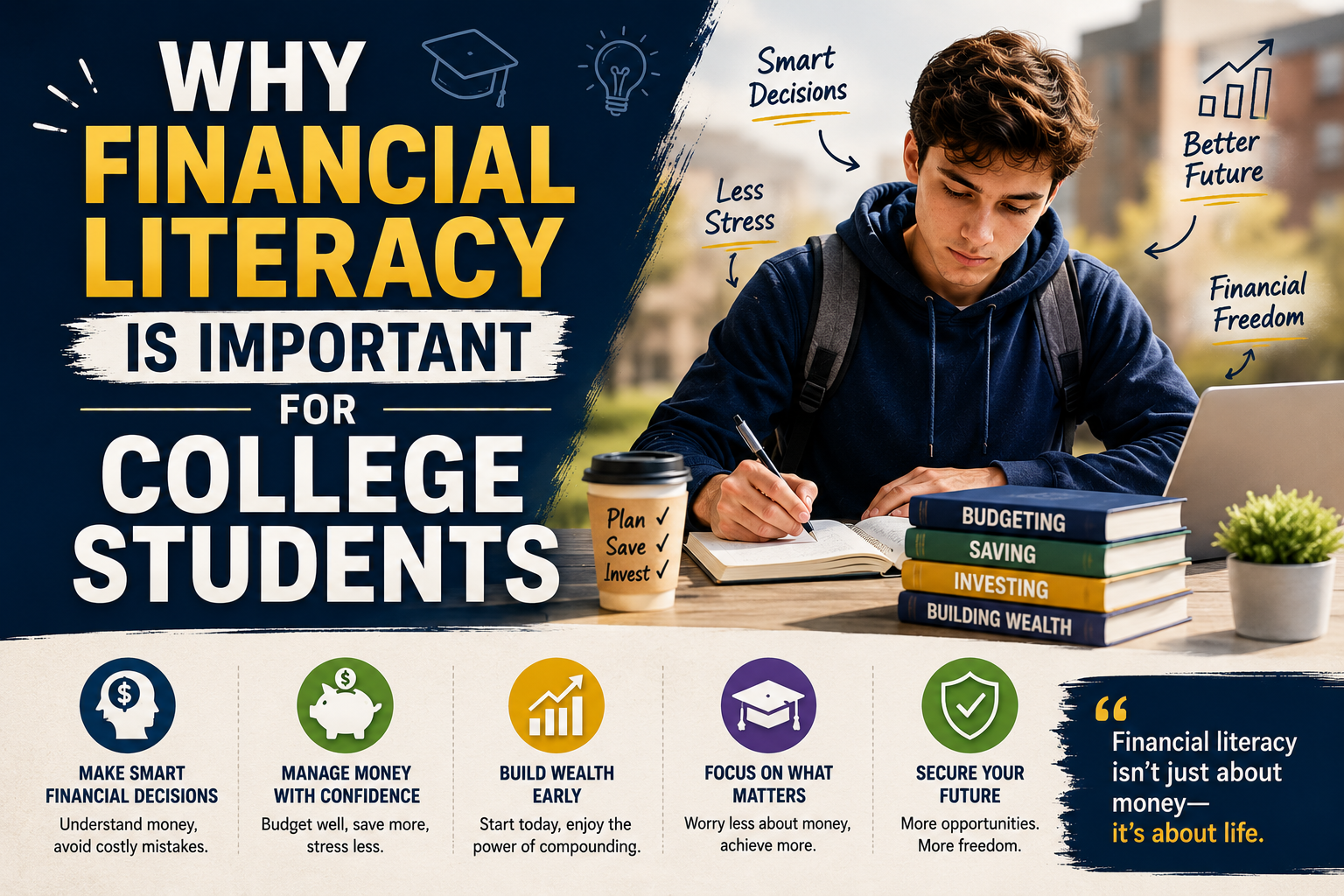
  • Why Financial Literacy is Important for College Students

    Why Financial Literacy is Important for College Students

    Why Financial Literacy is Important for College Students | The Campus Investor
    The Campus Investor
    Build Wealth from Day One
    📚 Issue No. 01  ·  Financial Literacy Series

    Why Financial Literacy is Important for College Students

    May 2026 | 6 min read | For College Students

    You can study four years at a university, earn a degree, and graduate with strong grades — and still have no idea how to manage a credit card, understand a student loan statement, or know the difference between a Roth IRA and a savings account. That’s not a personal failing. That’s a gap in the education system.

    Financial literacy — the ability to understand and apply basic money concepts — is one of the most practical life skills available to you. Yet most college students enter the workforce without it. The result is predictable: debt they didn’t plan for, savings they never started, and financial decisions made by default rather than by design.

    This guide explains exactly why financial literacy matters for college students, what it actually covers, and how you can start building it today — even on a student income.

    $37K
    Average student loan debt per borrower in the U.S.
    65%
    College students who feel financially unprepared after graduation
    1 in 3
    Gen Z adults with zero emergency savings

    What Financial Literacy Actually Means

    Financial literacy is not about being wealthy. It’s not about having a finance degree or reading the Wall Street Journal every morning. It’s simply the ability to understand how money works — and to use that understanding to make better decisions about the money you have.

    A financially literate student knows how to build a monthly budget, understands what an interest rate means, knows the difference between good and bad debt, can read a bank statement, and has a basic grasp of how saving and investing work over time. None of this requires advanced knowledge. All of it requires learning things the school system rarely teaches.

    💡 A Simple Definition

    Financial literacy = the knowledge and skills to manage your money effectively. It’s not about how much you earn — it’s about how confidently and intentionally you handle what you do earn. A student earning $800 a month with financial literacy is better positioned than a graduate earning $60,000 without it.

    Why Financial Literacy Matters Especially in College

    College is the first time most people manage their own money independently. Financial aid arrives in a lump sum. Credit card companies target students aggressively. Student loans are signed with a click. Rent, groceries, textbooks, and social spending all compete for the same limited income. For many students, it’s overwhelming — and without financial literacy, the defaults are expensive.

    Reason 01

    You’re making real financial decisions for the first time

    College is the stage where financial decisions begin to have lasting consequences. The credit habits you build now follow you for years. The student loans you sign without reading are real legal obligations. The savings habit you either develop or skip in college shapes your financial baseline going into your 30s and beyond.

    Reason 02

    Compound interest works for or against you — starting now

    Every year you delay investing is a year of compound growth you can never get back. Every year you carry high-interest credit card debt is a year that compound interest works against you. Financial literacy helps you understand this dynamic early — when the difference between acting and waiting is still relatively small in dollars but enormous in decades.

    Reason 03

    Student loans are one of the largest financial decisions of your life

    The average student borrower graduates with over $37,000 in federal loan debt. Many have significantly more. Yet most students sign their promissory notes each year without reading them, without tracking their running total, and without understanding how repayment works. Financial literacy doesn’t eliminate student loans — it ensures you make informed decisions about how much to borrow and how to manage what you owe.

    Reason 04

    Credit history starts in college — and follows you everywhere

    Your credit score affects your ability to rent an apartment, finance a car, qualify for a mortgage, and sometimes even get a job. Building credit thoughtfully in college — with one card, low utilization, and on-time payments — can get you to a 700+ score by graduation. Ignoring credit, or misusing it, can set you back years. Financial literacy is what makes the difference.

    Reason 05

    The financial gap between your peers starts here

    Two students can graduate from the same program, enter similar jobs, and end up in dramatically different financial positions ten years later — not because of salary differences, but because of the habits, knowledge, and systems they built (or didn’t build) in college. Financial literacy is not a guarantee of wealth. It is the foundation that makes wealth possible.

    What Financial Literacy Covers

    Financial literacy isn’t one skill — it’s a set of interconnected concepts that build on each other. You don’t need to master all of them at once. But knowing what’s included helps you prioritize where to start.

    📋

    Budgeting

    Knowing your income, tracking your spending, and allocating money intentionally before the month begins.

    💳

    Credit & Credit Scores

    Understanding how credit scores work, what affects them, and how to build credit responsibly from day one.

    🏦

    Saving & Emergency Funds

    Building a financial cushion so unexpected expenses don’t become debt. Knowing where to keep savings.

    🧾

    Debt Management

    Distinguishing good debt from bad, understanding interest rates, and knowing how repayment actually works.

    📈

    Investing Basics

    Understanding compound interest, index funds, Roth IRAs, and why starting young changes everything.

    🎯

    Financial Goal Setting

    Knowing how to set specific, measurable financial goals — and how to track and achieve them consistently.

    Mini-Case · No One Told Marcus

    Marcus, Junior — Computer Science

    Marcus got his first credit card freshman year with a $2,000 limit. He used it for takeout, concert tickets, and a new laptop — paying only the $35 minimum each month. Nobody had ever explained how APR worked. Nobody told him that 24% annual interest compounds monthly.

    By junior year his balance was $1,900. He was paying more in monthly interest than he was reducing the principal. The laptop had effectively cost him $1,700 and counting. He wasn’t irresponsible — he was uninformed.

    The lesson: Marcus’s situation wasn’t caused by recklessness. It was caused by a gap in financial education that one afternoon of learning could have prevented. Financial literacy isn’t about being smarter — it’s about having information that changes how you act.

    The Real Cost of Financial Illiteracy

    Financial illiteracy isn’t just an abstract disadvantage. It has concrete, dollar-denominated consequences that compound over years — often without the person realizing what’s happening until the damage is done.

    Mini-Case · High GPA, Empty Account

    Jordan, Recent Graduate — Pre-Law

    Jordan graduated with a strong GPA and $62,000 in student loan debt. His $58,000 starting salary felt like a victory — until he did the math. After taxes, rent, loan payments on the standard 10-year plan, and a car payment he hadn’t properly compared rates on, Jordan had less than $200 left each month.

    He had never made a budget. He didn’t know income-driven repayment plans existed. His car loan carried a 17% interest rate — predatory, but he had signed without reading. His credit card had a $1,200 balance at 22% APR.

    The lesson: A strong academic record and a decent salary don’t equal financial health. Financial literacy is what bridges the gap between earning money and actually keeping — and growing — it.
    Mini-Case · Small Habit, Big Outcome

    Priya, Senior — Communications

    Priya worked 15 hours a week at the campus library — around $450 a month after taxes. After expenses she had $80 left over. Instead of spending it, she read about Roth IRAs one Sunday afternoon, opened a Fidelity account that same day, and set up an $80 monthly automatic contribution into a total market index fund.

    She wasn’t wealthy. She didn’t have a finance degree. She had one afternoon of financial literacy and the discipline to act on it.

    The lesson: At a 8% average annual return, Priya’s $80/month habit has the potential to grow to over $279,000 in 40 years — completely tax-free in her Roth IRA. Financial literacy didn’t require a high income. It required information and one decision.
    Money Management Basics Book Cover
    Explore the Easy Learning Series

    Money Management Basics

    Simple steps to take control of your finances — learn how to track spending, build savings, and reduce debt with clear, practical guidance.

    View on Amazon →
    >

    How to Start Building Financial Literacy Today

    Financial literacy isn’t built in a semester — it’s built in small steps over time. The good news is that the most impactful concepts take very little time to understand, and acting on them early creates disproportionately large results.

    You don’t need to read every personal finance book or take a course. You need five actions, done in order, and one commitment to keep learning as your situation evolves.

    Your 5 Starting Points — This Week

    • Know your number: Add up all your monthly income from every source. Write that number down. It’s your financial baseline — everything else is built on it.
    • Track your spending for one month: Don’t budget yet — just watch. Pull up your last 30 days of transactions and categorize them. You cannot improve what you haven’t measured.
    • Check your credit score: Use Credit Karma, Experian, or your bank app — most offer free access. Know where you stand and what’s affecting your score.
    • Log into StudentAid.gov: Find your exact loan balance, interest rate, and repayment options. Many students have never done this. It takes five minutes and changes how you think about every borrowing decision going forward.
    • Open a high-yield savings account: Move your savings from a traditional bank (0.01% APY) to an online bank offering 4–5% APY. Same money, automatically earning more. Takes 10 minutes.

    “Financial literacy isn’t about knowing everything. It’s about knowing enough to make better decisions than you would have otherwise — and learning one more thing each month for the rest of your life.”

    The students who graduate financially prepared aren’t necessarily the ones who studied finance. They’re the ones who took the time to understand how money works in their own life — and who started that process early enough for the information to actually shape their decisions.

    This series exists to be that starting point. Each issue covers one topic — budgeting, credit, debt, saving, investing, financial goals — in plain language with real student examples. Start here. Keep going.

    ◆ ◆ ◆

    Frequently Asked Questions

    Why is financial literacy important for college students specifically?
    College is when most people make their first independent financial decisions — managing income, signing student loans, opening credit cards, paying rent. These decisions have long-term consequences, yet financial literacy is rarely taught in school. Students who understand money basics in college build credit, avoid unnecessary debt, start saving early, and enter the workforce with a significant financial head start over peers who never learned.
    What does financial literacy include for students?
    Financial literacy for students covers six core areas: budgeting (knowing your income and controlling spending), credit scores (building and protecting your credit history), saving and emergency funds (creating a financial cushion), debt management (understanding student loans and avoiding high-interest traps), investing basics (compound interest, index funds, Roth IRAs), and financial goal setting (turning intentions into specific plans with deadlines and monthly actions).
    How does financial literacy affect a student’s future?
    The financial habits and decisions made in college compound significantly over time. A student who builds good credit, avoids carrying a credit card balance, starts a small Roth IRA, and manages their student loans wisely will have meaningfully different financial outcomes at 35 and 45 than a peer with the same salary who never learned these concepts. Financial literacy doesn’t change income — it changes what you do with income.
    Can you be financially literate on a small student income?
    Yes — and in some ways it’s easier. The core concepts of financial literacy are the same at $900/month as they are at $9,000/month: spend less than you earn, build an emergency fund, avoid high-interest debt, and start investing something consistently. A student earning $900 a month who does all four is more financially literate — and better positioned for the future — than a professional earning $8,000 who does none of them.
    What is the easiest way to start building financial literacy as a student?
    Start with your actual numbers: know your monthly income, look at your last 30 days of spending, and check your credit score and student loan balance. These four actions take under an hour and immediately change how you see your finances. From there, read one personal finance article or watch one explainer video per week — covering budgeting, credit, saving, investing, and debt in that order. Knowledge in use is what builds literacy, not knowledge in theory.

    The Campus Investor  ·  Issue 01  ·  Financial Literacy Series

    Written for students who want to graduate smart — and retire rich.

  • 6.1 What Is Investing? A Beginner’s Guide to Building Wealth

    6.1 What Is Investing? A Beginner’s Guide to Building Wealth

    Investing is allocating money to assets expected to generate returns through appreciation, income, or both over time—purchasing stocks, bonds, real estate, mutual funds, or other securities with expectation that initial capital will grow through price increases, dividends, interest payments, or rental income creating wealth accumulation beyond what savings accounts provide. Unlike saving which preserves purchasing power through minimal interest in guaranteed accounts, investing deliberately accepts risk (potential for loss) in exchange for higher expected returns averaging 8-12% annually for stock market investments versus 0.5-5% for savings accounts, though with volatility creating year-to-year fluctuations including potential losses requiring long-term commitment (5-10+ years minimum) allowing recovery from temporary downturns. Representing essential wealth-building tool enabling retirement security, home purchases, education funding, and financial independence impossible through earned income and savings alone—$500 monthly invested at 8% grows to $745,179.72 over 30 years versus same amount saved at 1% yielding ~$210,000 demonstrating $535,179 compound return differential making investing critical for long-term prosperity despite requiring education, discipline, and risk tolerance unavailable through guaranteed savings vehicles prioritizing capital preservation over growth.
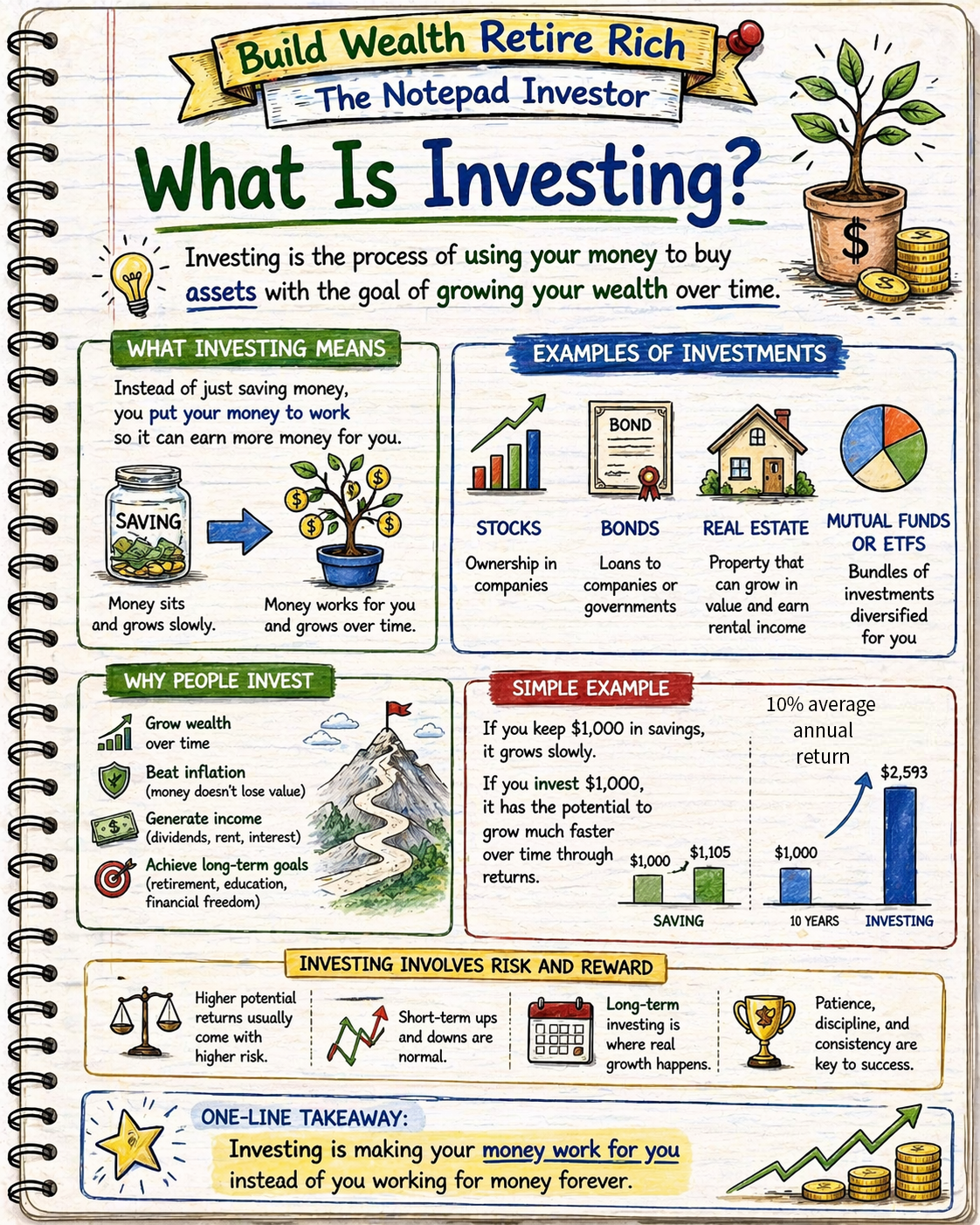
    Notebook sketch explaining personal finance

    This article is designed for investing beginners wanting fundamental understanding, individuals intimidated by stock market complexity seeking accessible explanations, or those questioning whether investing necessary for financial security. You do not need financial expertise to understand investing—basic concepts accessible through clear explanations of returns, risks, asset types, and strategic principles, though requires honest risk assessment recognizing investment values fluctuate creating temporary losses requiring emotional discipline not panicking during downturns, long-term commitment maintaining investments through market cycles despite temptation selling during declines, and realistic expectations understanding 8-10% average annual returns come with volatility including negative years requiring patience impossible when expecting guaranteed steady gains or attempting market timing through frequent trading destroying compound returns through transaction costs and poor timing decisions.

    Understanding what investing is matters because compound returns create wealth impossible through saving or earning alone enabling retirement security and financial goals, early investing start dramatically amplifies results through decades of compounding—$200 monthly at 8% from age 25 grows to $698,201.57 by 65 versus same amount starting age 35 yielding $298,071.89 demonstrating $400,129.68 advantage from 10-year head start, and strategic asset allocation balancing growth and safety determines outcomes separating comfortable retirements from financial struggle—while investment-literate individuals harness compound returns building $500,000-2,000,000 retirement wealth through disciplined long-term investing, versus non-investors relying solely on savings and Social Security facing retirement income inadequacy requiring lifestyle reduction or continued employment impossible to avoid without investment knowledge enabling informed participation in wealth-building markets creating measurable prosperity differences through strategic capital allocation impossible for cash-only savers regardless of income level when inflation erodes purchasing power faster than savings account interest accumulates.

    Educational disclaimer: This article provides general educational information about investing concepts and principles. Individual investment decisions, appropriate strategies, and outcomes vary significantly based on circumstances including age, income, risk tolerance, goals, and time horizon. This is not financial advice, investment recommendation, or guarantee of returns. All investments carry risk including potential loss of principal. Past performance does not guarantee future results. Stock market returns average 8-10% historically but include negative years and significant volatility. Consult qualified financial advisors or investment professionals for personalized guidance matching individual situations and goals.

    Investing Fundamentals

    Investing Versus Saving

    Saving characteristics:

    • Purpose: Short-term needs and emergency reserves (under 5 years)
    • Vehicles: Savings accounts, money market accounts, CDs
    • Returns: 0.5-5% annually depending on account type and rates
    • Risk: Virtually none (FDIC insured up to $250,000)
    • Liquidity: Immediate or near-immediate access
    • Volatility: Stable, no value fluctuation

    Investing characteristics:

    • Purpose: Long-term wealth building and goals (5+ years, preferably 10+)
    • Vehicles: Stocks, bonds, mutual funds, ETFs, real estate
    • Returns: 6-12% average annually (stocks historically 10%)
    • Risk: Principal can decrease, potential temporary or permanent losses
    • Liquidity: Varies (stocks liquid, real estate illiquid)
    • Volatility: Significant year-to-year fluctuation including negative years

    Appropriate use cases:

    Use SAVING for:

    • Emergency fund (3-6 months expenses)
    • Short-term goals under 3 years (vacation, car down payment)
    • Funds needed with certainty within 5 years
    • Capital preservation priority over growth

    Use INVESTING for:

    • Retirement (decades away)
    • Long-term goals 5+ years (home down payment, education)
    • Wealth building beyond inflation
    • Growth priority accepting volatility

    How Investing Creates Wealth

    The compound return principle:

    • Year 1: Invest $10,000, earn 10% = $11,000
    • Year 2: $11,000 earns 10% = $12,100 (earning returns on previous returns)
    • Year 3: $12,100 earns 10% = $13,310
    • Year 10: $25,937 (without adding any money beyond initial $10,000)
    • Year 20: $67,275
    • Year 30: $174,494

    Regular contributions amplify compounding:

    • Monthly investment: $500
    • Return: 8% annually
    • 10 years: $91,473 contributed $60,000, gains $31,473
    • 20 years: $294,510 contributed $120,000, gains $174,510
    • 30 years: $745,180 contributed $180,000, gains $565,180

    Comparison: Investing versus saving same amounts:

    $500 monthly invested at 8% (30 years):

    • Total contributed: $180,000
    • Final value: $745,180
    • Returns gained: $565,180 (307% of contributions)

    $500 monthly saved at 1% (30 years):

    • Total contributed: $180,000
    • Final value: $210,000
    • Returns gained: $30,000 (17% of contributions)

    Wealth difference: $535,180 from investing versus saving

    The Risk-Return Relationship

    Fundamental investment principle: Higher potential returns require accepting higher risk

    Risk-return spectrum:

    • Savings accounts: 0.5-1% return, virtually zero risk
    • CDs and bonds: 3-5% return, minimal to low risk
    • Balanced funds: 6-7% return, moderate risk
    • Stock market index: 8-10% return, moderate-high risk
    • Individual stocks: -100% to +500%+ return, high risk
    • Speculative investments: Unlimited upside/downside, very high risk

    Understanding risk means:

    • Volatility: Value fluctuates daily, monthly, annually
    • Temporary losses: Portfolio may decrease 20-50% during downturns
    • Recovery requirement: Needing years to regain previous values
    • No guarantees: Past performance doesn’t ensure future results

    Historical stock market volatility example:

    • 2008 financial crisis: -37% year
    • 2009 recovery: +26% year
    • Average bull market: +114% over 4-5 years
    • Average bear market: -36% over 1-2 years
    • Long-term average despite volatility: 10% annually
    Advertisement

    Financial Wellness Planner

    Types of Investments

    Stocks (Equities)

    What stocks are:

    • Ownership shares in companies
    • Buy Apple stock = own tiny portion of Apple
    • Value rises/falls with company performance and market sentiment
    • Profits through: Price appreciation (buy $100, sell $150) and dividends (quarterly payments)

    Stock return potential:

    • Historical average: 10% annually (S&P 500 index)
    • Individual stocks: -100% (bankruptcy) to +1,000%+ (exceptional growth)
    • Dividends: 1-4% annually typical for dividend-paying stocks

    Stock risks:

    • High volatility (daily price swings 1-5% common)
    • Company-specific risk (poor management, competition, disruption)
    • Market risk (entire market declines affecting all stocks)
    • No principal guarantee (can lose entire investment)

    Bonds (Fixed Income)

    What bonds are:

    • Loans to governments or corporations
    • Buy bond = lend $1,000 to issuer for set period
    • Receive regular interest payments (coupon)
    • Principal returned at maturity date

    Bond return characteristics:

    • Government bonds: 3-5% annually typical (low risk)
    • Corporate bonds: 4-7% annually (moderate risk)
    • Returns through: Regular interest payments plus principal return
    • Less volatile than stocks but lower returns

    Bond advantages:

    • Predictable income stream
    • Lower volatility than stocks
    • Portfolio balance during stock declines
    • Principal preservation focus

    Mutual Funds and ETFs

    How pooled investments work:

    • Mutual funds/ETFs: Baskets containing dozens to thousands of stocks/bonds
    • Professional management or index tracking
    • Instant diversification (one purchase = hundreds of holdings)
    • Accessible to small investors ($100-1,000 minimums)

    Index funds (most recommended for beginners):

    • Track market indexes (S&P 500, Total Market)
    • Low fees (0.03-0.20% annually typical)
    • Automatic diversification (500-3,000+ stocks)
    • Passive management (no stock picking)
    • Historical returns match market (10% annually long-term)

    Example index fund:

    • Vanguard Total Stock Market Index (VTSAX)
    • Contains 3,500+ U.S. stocks
    • Fee: 0.04% annually ($4 per $10,000 invested)
    • Returns: Matches total U.S. stock market performance
    • Diversification: Instant exposure to entire market

    Real Estate

    Real estate investment approaches:

    • Rental properties: Direct ownership generating rental income
    • REITs (Real Estate Investment Trusts): Stock-like ownership of property portfolios
    • Real estate crowdfunding: Pooled investments in properties

    Real estate advantages:

    • Tangible asset providing shelter utility
    • Leverage potential (mortgages amplifying returns)
    • Income generation through rents
    • Tax benefits (depreciation, deductions)

    Real estate challenges:

    • High capital requirements ($20,000-100,000+ down payments)
    • Illiquidity (months to sell, transaction costs 6-10%)
    • Active management (tenants, maintenance, repairs)
    • Geographic concentration risk

    Why People Invest

    Retirement Security

    The retirement challenge:

    • Life expectancy: 20-30 years in retirement
    • Social Security: $1,500-2,500 monthly typical (insufficient alone)
    • Living expenses: $3,000-5,000+ monthly retirement needs typical
    • Gap: $18,000-30,000 annually requiring personal savings/investments

    Investment necessity for retirement:

    • $1 million retirement goal common for comfortable retirement
    • Achieving through saving alone: Requires $2,800 monthly for 30 years (impossible for most)
    • Achieving through investing: Requires $700 monthly for 30 years at 8% (achievable)
    • Investment returns provide 73% of final value ($700K+ from $252K contributions)

    Beating Inflation

    Inflation impact on cash/savings:

    • Inflation average: 2-3% annually
    • Savings account: 0.5-1% interest
    • Real return: -1.5% annually (losing purchasing power)
    • $100,000 in savings loses 18% purchasing power over 10 years at 2% inflation

    Investment returns outpace inflation:

    • Stock returns: 10% nominal, 7-8% after inflation
    • Bond returns: 4-5% nominal, 2-3% after inflation
    • Maintains and grows purchasing power over time

    Wealth Building Beyond Earned Income

    Income limitations:

    • Salary cap: Maximum earnings limited by hours, position, market
    • Time for money: Income stops when stop working
    • Linear growth: Modest raises 2-5% annually typical

    Investment compound acceleration:

    • Works 24/7 regardless of employment status
    • Exponential growth through compounding
    • Passive income potential (dividends, interest, rents)
    • Eventual financial independence when investments generate sufficient income

    Comparison 30-year wealth building:

    Earned income only ($60,000 salary):

    • 3% annual raises over 30 years
    • Final salary: $145,000
    • Total earnings: $2.7 million
    • Net worth if saved 10%: $450,000

    Earned income + investing:

    • Same salary progression
    • Invest 15% income ($750 monthly initially, increasing with raises)
    • Total invested: $540,000 over 30 years
    • Final investment value at 8%: $1,650,000
    • Net worth: $1,650,000 (3.7x higher through investing)
    Advertisement
    Reserved space for in-content ad

    Investment Vehicles and Accounts

    Retirement Accounts (Tax-Advantaged)

    401(k) (employer-sponsored):

    • Contribution limit: For 2026, the IRS announced that the 401(k) contribution limit for employees increases to $24,500 (up from $23,500 in 2025). Individuals aged 50 and older can make additional catch-up contributions of $8,000, bringing their total potential contribution to $32,500. A special, higher catch-up limit of $11,250 applies for those aged 60 to 63/li>
    • Tax benefit: Pre-tax contributions (reduce current taxable income)
    • Employer match: Free money (50-100% of contributions up to 3-6% salary typical)
    • Investment options: Limited selection chosen by employer (typically 10-30 mutual funds)
    • Withdrawal: Penalty-free after 59½, taxed as ordinary income

    IRA (Individual Retirement Account):

    • Contribution limit: For 2026, the IRA contribution limit increases to $7,500 ($8,600 for age 50 or older). This applies to the combined total of traditional and Roth IRA contributions. Taxpayers must have earned income to contribute, and higher income levels may phase out eligibility to make direct Roth contributions
    • Types: Traditional (pre-tax contributions) or Roth (after-tax contributions)
    • Tax benefit: Traditional reduces current taxes, Roth provides tax-free retirement withdrawals
    • Investment options: Unlimited (any stocks, bonds, funds available)
    • Flexibility: Open at any brokerage, full investment control

    Roth IRA advantages:

    • Tax-free growth and withdrawals in retirement
    • No required distributions at any age
    • Contributions (not earnings) withdrawable anytime penalty-free
    • Ideal for young investors in low tax brackets

    Taxable Brokerage Accounts

    Characteristics:

    • No contribution limits (invest unlimited amounts)
    • No withdrawal restrictions (access anytime without penalties)
    • Capital gains taxes on profits when sold
    • Dividend and interest income taxed annually
    • Use for: Goals before retirement, additional savings beyond retirement limits

    Tax implications:

    • Long-term capital gains (held 1+ years): 0-20% tax depending on income
    • Short-term capital gains (held under 1 year): Taxed as ordinary income
    • Dividends: 0-20% qualified dividend rate

    Common Investment Platforms

    Traditional brokerages:

    • Vanguard: Low-cost index funds, excellent for passive investors
    • Fidelity: Comprehensive options, good tools and research
    • Charles Schwab: Full-service, broad investment selection

    Modern platforms:

    • Robinhood: Simple interface, fractional shares, commission-free
    • M1 Finance: Automated portfolio management, fractional shares
    • Betterment/Wealthfront: Robo-advisors with automated management

    Platform selection considerations:

    • Fees: Prefer $0 commission platforms, low expense ratio funds (under 0.20%)
    • Investment options: Ensure access to low-cost index funds
    • Account types: Verify IRA, Roth IRA, taxable account availability
    • User experience: Choose interface matching comfort level

    Getting Started with Investing

    Prerequisites Before Investing

    Financial foundation requirements:

    • High-interest debt eliminated (credit cards over 8-10% APR)
    • Emergency fund established ($1,000 minimum, 3-6 months ideal)
    • Budget sustainable (spending less than earning consistently)
    • Employer 401(k) match captured (if available)

    Why foundation matters:

    • Credit card at 18% APR costs more than stock market gains (paying 18% versus earning 10% = -8% net)
    • No emergency fund forces selling investments at loss during crisis
    • Budget deficit prevents consistent investing (requires surplus)

    Beginner Investment Strategy

    Recommended starting approach:

    Step 1: Maximize 401(k) match (free money)

    • Contribute minimum required for full employer match
    • Example: Employer matches 50% up to 6% salary = contribute 6% minimum
    • Instant 50-100% return through match

    Step 2: Open Roth IRA and invest in index funds

    • Choose platform: Vanguard, Fidelity, or Schwab
    • Open Roth IRA online (15-30 minutes)
    • Select total market index fund (VTSAX, FSKAX, SWTSX)
    • Set up automatic monthly contributions ($100-500+ depending on budget)

    Step 3: Increase contributions toward 15% total income

    • Combine 401(k) and IRA contributions
    • Goal: 15% gross income to retirement investing
    • Example: $60,000 income = $9,000 annually = $750 monthly

    Beginner portfolio allocation:

    • Ages 20-35: 100% stock index fund (maximize growth, long timeline)
    • Ages 35-50: 90% stocks, 10% bonds (slight stability addition)
    • Ages 50-60: 70-80% stocks, 20-30% bonds (increased stability approaching retirement)
    • Ages 60+: 50-60% stocks, 40-50% bonds (preservation focus)

    Common Beginner Mistakes to Avoid

    Mistake 1: Waiting for “perfect time” to invest

    • Problem: Delaying while trying to time market bottoms
    • Reality: Time in market beats timing market
    • Solution: Start immediately with available funds, invest regularly regardless of market conditions

    Mistake 2: Panic selling during downturns

    • Problem: Selling when portfolio down 20-30% locking in losses
    • Reality: Market recovers over time, selling prevents recovery gains
    • Solution: Maintain long-term perspective, continue investing during declines (buying discounted shares)

    Mistake 3: Chasing hot stocks or trends

    • Problem: Buying individual stocks or sectors after dramatic rises
    • Reality: 80% of active stock pickers underperform index funds long-term
    • Solution: Stick with diversified index funds avoiding speculation

    Mistake 4: Excessive trading and monitoring

    • Problem: Daily checking, frequent buying/selling
    • Reality: Transaction costs and poor timing reduce returns
    • Solution: Set-and-forget approach, check quarterly or annually

    Mistake 5: Investing before emergency fund

    • Problem: All savings in market, forced selling during emergencies
    • Reality: Emergencies occur, selling at loss destroys compound growth
    • Solution: $1,000-3,000 minimum cash buffer before aggressive investing
    Advertisement
    Reserved space for in-content ad

    Why Understanding Investing Matters

    Without understanding what investing is, individuals miss compound return benefits accumulating $500,000-2,000,000 additional lifetime wealth through decades of market participation versus cash-only saving yielding $200,000-400,000 same contributions, lack retirement security relying solely on insufficient Social Security ($1,500-2,500 monthly) versus investment income supplementation ($3,000-5,000 monthly) enabling comfortable lifestyle, and lose purchasing power to inflation eroding savings real value 20-30% over decades—while investment-literate individuals harness 8-10% stock returns building substantial wealth through patient long-term commitment, diversified index fund allocation avoiding individual stock speculation, and disciplined contribution consistency regardless of market volatility, creating retirement security and financial independence impossible for non-investors regardless of income level when earned income alone and cash savings insufficient generating prosperity requiring compound return participation impossible to achieve through labor or guaranteed accounts prioritizing capital preservation over growth necessary for long-term wealth accumulation.

    Understanding what investing is enables individuals to:

    • Distinguish investing from saving recognizing appropriate use cases and return expectations
    • Harness compound returns through long-term market participation creating wealth multiplication
    • Select appropriate investment vehicles (index funds, 401k, IRAs) matching goals and timelines
    • Accept calculated risks understanding volatility temporary requiring patience not panic
    • Start early maximizing compound time advantage creating $100,000-300,000 additional wealth from 10-year head start
    • Avoid common mistakes (timing market, panic selling, excessive trading) destroying returns
    • Build retirement security through systematic investing impossible via earned income alone

    Investment knowledge transforms wealth building from income-dependent impossibility into systematic achievable process through market participation, enabling prosperity and retirement security regardless of salary level when compound returns provide 60-70% of final retirement wealth from contributions representing 30-40% demonstrating investment understanding as essential wealth-building prerequisite impossible for cash-only savers when inflation erodes value faster than savings interest accumulates.

    Common Misunderstandings

    Many people view investing as gambling or speculation requiring luck and market timing. In reality, disciplined long-term index fund investing produces predictable wealth through historical 8-10% average returns over decades despite year-to-year volatility, with time in market and consistent contributions creating reliable compounding—$500 monthly invested over 30 years yields $650,000-850,000 with 95%+ probability based on historical data versus gambling’s negative expected returns and pure chance outcomes, proving systematic investing wealth-building strategy not speculation when diversified across entire markets through index funds avoiding individual stock picking requiring skill or luck.

    Another common misconception is investing requires large amounts making participation impossible for average earners. In practice, modern fractional share investing and low account minimums enable starting with $50-100 monthly building substantial wealth—$100 monthly from age 25-65 grows to ~$349,100 at 8% returns demonstrating accessibility at any income level, with consistency and time more important than contribution size making $100 monthly for 40 years creating more wealth than $1,000 monthly for 10 years ($349K versus $183K) proving early modest start superior to delayed large contributions making investing accessible not exclusive regardless of current income when small consistent amounts compound dramatically over decades.

    Some believe market crashes destroy investment wealth requiring avoidance or selling to prevent losses. However, market recoveries historically occur within 1-5 years with portfolios reaching new highs—2008 crash dropped markets 50% but recovered by 2012 and tripled by 2020, proving patient investors recovered and prospered while panic sellers locked in permanent losses missing recovery gains, demonstrating crashes temporary setbacks not permanent destruction when maintaining long-term investment horizon and continuing contributions buying discounted shares during declines creating superior outcomes versus attempting market timing through selling low and missing recovery buying high making volatility acceptance essential not reason avoiding investing altogether.

    How Investment Understanding Fits Into Financial Success

    Investment understanding enables wealth multiplication through compound returns creating $500,000-2,000,000 retirement security from $200,000-400,000 lifetime contributions, provides purchasing power protection through 7-8% real returns exceeding 2-3% inflation preventing cash erosion, and creates financial independence potential when investment income eventually replaces earned income enabling career flexibility—making investment literacy essential wealth-building component requiring early start maximizing compound time benefits, consistent contributions through market cycles regardless of volatility, and diversified index fund allocation avoiding speculation, transforming retirement from Social Security dependence and continued employment into comfortable security through systematic market participation impossible for cash-only savers when earned income alone insufficient and inflation erodes purchasing power faster than savings interest accumulates creating wealth-building necessity not optional enhancement for comfortable prosperous retirement regardless of income level.

    For example, two individuals both age 25 earning $50,000 annually. Person A lacks investment understanding, fears stock market volatility and complexity, keeps all savings in bank accounts earning 1% interest. Saves diligently $400 monthly for 40 years demonstrating discipline. Age 65: Contributed $192,000 total, final savings value ~$236,000 including $45,000 interest (inflation averaged 2.5% annually meaning purchasing power actually declined in real terms). Social Security provides $2,200 monthly, savings withdrawal $787 monthly ($236,000 ÷ 300 months estimated retirement), total retirement income $2,987 monthly requiring budget reduction from working years, cannot help children or grandchildren financially, outlives savings age 90 forcing sole Social Security reliance final years. Person B understands investing fundamentals, overcomes initial fear through education recognizing long-term market reliability despite volatility. Age 25: Opens Roth IRA at Vanguard, invests $400 monthly in total stock market index fund (VTSAX). Age 26-65: Continues $400 monthly regardless of market ups and downs, Experiences 2008-style crashes and recoveries, maintains discipline never selling during downturns. Age 65: Contributed $192,000 total, final investment value $1,396,403 at 8% average returns despite volatility. Social Security provides $2,200 monthly, investment withdrawal $4,654 monthly (4% safe withdrawal rate from $1,396,403), total retirement income $6,854 monthly enabling comfortable lifestyle, helps grandchildren education $50,000 without impacting retirement security, leaves $800,000 inheritance to family demonstrating generational wealth transfer. Difference: Person A’s cash-only saving created $236,000 with inflation-eroded purchasing power and retirement income inadequacy requiring lifestyle reduction, Person B’s investment understanding created $1,396,403 (5.8x higher) from similar contribution discipline demonstrating $1,160,403 wealth differential plus $3,867 monthly additional retirement income ($6,854 versus $2,987) from understanding compound returns, accepting calculated volatility risk, and maintaining long-term discipline impossible without investment literacy enabling market participation creating prosperity impossible through earned income and cash savings alone when inflation and insufficient returns prevent wealth accumulation regardless of savings discipline.

    Investment understanding separates wealthy comfortable retirees from financially-struggling continued workers, requiring education overcoming fear and complexity, disciplined long-term commitment through volatility, and systematic index fund approach avoiding speculation creating measurable generational wealth differences impossible without investment literacy.

    Recent Updates and Trends

    In recent years, commission-free trading has become universal through platforms like Robinhood, Fidelity, and Schwab eliminating transaction costs that previously deterred small investors, though fundamental long-term index investing strategy unchanged with fee elimination enhancing accessibility not altering core wealth-building principles requiring patient multi-decade commitment versus frequent trading enabled by zero commissions creating false perception of day-trading viability destroying wealth through poor timing and speculation.

    Fractional share investing has expanded enabling $1 investments in expensive stocks previously requiring $100-1,000+ per share, though benefit primarily psychological accessibility rather than strategic advantage when diversified index funds already provided fractional ownership of thousands of companies making single-stock fractional shares marginal improvement versus critical diversification achieved through funds regardless of fractional capability.

    Market volatility has intensified with technology-driven rapid information flow creating sharper faster price movements, though long-term returns unchanged with 8-10% average persisting despite increased short-term fluctuation making volatility acceptance even more critical while fundamental patient investing approach produces identical wealth-building outcomes regardless of intra-year volatility magnitude when maintaining multi-decade holding periods.

    Cryptocurrency and alternative investments have gained mainstream attention creating speculation temptation, though traditional stock/bond portfolios remain optimal wealth-building foundation with 90-95% allocation recommended before considering alternatives representing 5-10% portfolio maximum given volatility and unproven long-term track records making core index fund investing unchanged despite alternative proliferation.

    Fundamental investing principles remain timeless: compound returns create wealth impossible through saving alone, early start dramatically amplifies outcomes through decades of compounding, diversified index funds provide optimal risk-adjusted returns, patient long-term commitment through volatility essential, and systematic contributions regardless of market conditions produce superior results—regardless of commission elimination, fractional share availability, volatility changes, or alternative investment marketing, understanding basic investing mechanics enabling disciplined index fund commitment produces retirement security impossible for non-investors when earned income and cash savings insufficient regardless of technological conveniences or product proliferation not changing fundamental wealth-building requirements.

    3 Things You Can Do Today

    Ready to start investing? Here are three simple steps you can take right now:

    1. Calculate your retirement gap determining investment necessity and contribution target – Estimate retirement expenses: Current monthly spending typically 70-80% of working years (example: spend $4,500 monthly working, need $3,500 retirement). Calculate Social Security estimate: Use SSA.gov calculator entering work history (typical $1,800-2,500 monthly). Determine gap: Monthly retirement need minus Social Security (example: $3,500 – $2,000 = $1,500 monthly gap = $18,000 annually). Calculate required retirement savings: Annual gap × 25 (4% withdrawal rule, example: $18,000 × 25 = $450,000 needed). Determine current age timeline: Years until retirement 65 (example: age 35 = 30 years). Use investment calculator: Enter 0 current savings, goal amount $450,000, years 30, return rate 8%, calculate required monthly contribution (example result: $301 monthly needed). Compare saving versus investing requirement: Same goal through 1% savings requires $1,072 monthly (impossible for most) versus $301 monthly investing (achievable) demonstrating investment necessity. Write commitment: “Retirement gap: $1,500 monthly ($18,000 annual). Savings needed: $450,000. Timeline: 30 years. Required investment: $301 monthly at 8%. Savings-only requirement: $1,072 monthly (unachievable). Conclusion: Investing essential for retirement security.” Takes 20 minutes revealing specific retirement need and monthly investment target creating concrete actionable goal impossible when vaguely “should invest someday” without quantified necessity understanding.

    2. Open Roth IRA at low-cost brokerage and invest first $100-500 in total stock market index fund TODAY – Select brokerage: Choose Vanguard, Fidelity, or Schwab (all excellent low-cost options). Visit website: Navigate to “Open Account” or “Get Started” section. Account type: Select “Roth IRA” (after-tax contributions, tax-free growth). Complete application: Provide SSN, employment, income information (15 minutes online). Fund account: Link checking account, transfer initial $100-500 (or minimum required). Select investment: Search “total stock market index fund” choosing broker’s option (Vanguard VTSAX/VTI, Fidelity FSKAX/ITOT, Schwab SWTSX/VTI). Purchase shares: Enter dollar amount, confirm purchase completing first investment. Set up automatic contributions: Schedule monthly automatic transfer $100-500 (or affordable amount) buying shares automatically. Contribution target: Work toward 15% gross income over time (example: $60,000 salary = $750 monthly goal, start with $200 increasing annually). Investment selection rationale: Total stock market index provides instant diversification across 3,500+ U.S. companies, 0.03-0.04% ultra-low fees maximizing returns, proven long-term 10% historical average, eliminates individual stock selection risk through automatic broad market ownership. Avoid temptation: Do NOT research individual stocks, crypto, or complex strategies initially—total market index optimal for 95% of investors providing superior risk-adjusted returns versus stock picking or sector betting. Write confirmation: “Opened Roth IRA at [Brokerage]. Invested $[amount] in [Fund]. Automatic $[monthly] contributions scheduled. Current allocation: 100% stocks appropriate for age [X]. Next review: [Date one year from now].” Takes 30-60 minutes transforming from investment procrastinator to active investor with actual money working in market impossible when perpetually “planning to invest” without execution creating years of lost compound returns from analysis paralysis.

    3. Commit to long-term hold discipline writing down volatility acceptance pledge reviewed during downturns – Write volatility acknowledgment: “I understand stock market declines 20-50% periodically (every 3-10 years typical). This is NORMAL and TEMPORARY, not crisis requiring selling. Historical crashes (2008, 2020, others) always recovered within 1-5 years reaching new highs. Selling during decline locks in losses preventing recovery gains destroying long-term wealth. My timeline: [X] years until retirement providing abundant recovery time from temporary downturns.” Create commitment pledge: “I commit to: (1) Never selling during market decline regardless of portfolio decrease, (2) Maintaining automatic monthly contributions especially during downturns buying discounted shares, (3) Not checking portfolio more than quarterly preventing panic from daily volatility, (4) Trusting decades of market history showing 10% average returns despite volatility, (5) Reviewing this pledge before any emotional selling decision.” Add perspective reminder: “Example: $100,000 invested drops to $70,000 during crash (painful but temporary). Patient holding recovers to $100,000 in 3 years then $150,000 in 6 years = $50,000 gain. Panic selling at $70,000 locks in $30,000 permanent loss missing recovery creating $80,000 total wealth difference ($50,000 gain versus $30,000 loss) from emotional decision destroying decade of discipline.” Store pledge prominently: Save in phone notes, email to self, print and keep with financial documents, set annual calendar reminder reviewing commitment. Share with accountability partner: Tell spouse/friend/family about investment journey and volatility commitment creating external accountability preventing isolated panic selling. Behavioral preparation: Expect feeling uncomfortable during first market decline, recognize discomfort as normal not actionable crisis, refer to written pledge before any selling decision. Historical perspective building: Review 2008 crash and recovery timeline, 2020 COVID crash (34% drop, full recovery 5 months, tripled by 2021), 2000 dot-com crash (50% drop, recovery 5 years, tripled by 2013) demonstrating recovery certainty when patient making current volatility predictable not unprecedented. Write final commitment: “Investing timeline: [X] years. Strategy: Total stock market index. Commitment: Hold through volatility, never sell during decline, maintain automatic contributions, trust historical recovery pattern. Reviewed: [Date]. Next review: [Annual].” Takes 15 minutes creating psychological foundation preventing emotional destruction of long-term wealth impossible when experiencing first 20-30% decline without pre-commitment and perspective preparation creating panic selling locking in losses destroying years of disciplined accumulation through single emotional decision.

    These actions create investing foundation within 90 minutes—calculated specific retirement need demonstrating investment necessity ($301 monthly required versus $1,072 savings-only alternative), opened actual Roth IRA with real money invested in total stock market index fund beginning compound return journey, and created volatility commitment pledge preventing panic selling during inevitable future downturns—transforming from non-investor to active market participant with systematic approach impossible when perpetually delaying through analysis paralysis or fear preventing wealth accumulation through decades of lost compound returns.

    Quick FAQ

    What’s the difference between investing and saving?
    Saving preserves money in guaranteed accounts (savings, CDs) earning 0.5-5% for short-term needs under 5 years with no principal risk, while investing allocates money to growth assets (stocks, bonds, funds) earning 6-12% average for long-term goals 5+ years accepting volatility and potential temporary losses: Saving purpose—Emergency fund (3-6 months expenses), short-term goals (vacation, car down payment within 3 years), funds needed with certainty soon. Investing purpose—Retirement decades away, long-term goals 5+ years (home down payment, education), wealth building outpacing inflation. Return comparison—$500 monthly over 30 years: Saving at 1% = $209,000 total, Investing at 8% = ~$745,180 total, difference $536,180 demonstrating investment necessity for substantial wealth building. Risk difference—Saving guarantees principal preservation but loses purchasing power to inflation, investing risks temporary declines but historically recovers creating superior long-term outcomes when patient. Liquidity difference—Savings immediately accessible, some investments liquid (stocks sold same day) while others illiquid (real estate requiring months). Appropriate allocation—Maintain 3-6 months expenses in savings (safety), invest remainder for long-term goals (growth). Key insight: Saving and investing complementary not competing, optimal strategy uses both appropriately (savings for safety/short-term, investing for growth/long-term) creating balanced financial foundation impossible when using only one exclusively.

    How much money do I need to start investing?
    Can start investing with $100-500 initially through low-minimum brokerages and fractional shares, though consistency more important than starting amount with $50-200 monthly systematic contributions building substantial wealth over decades: Minimum requirements today—Many brokerages $0 account minimum (Fidelity, Schwab, Robinhood), index fund minimums $1-3,000 initially (Vanguard VTSAX $3,000) BUT ETF versions available for single share price $100-400 (VTI, ITOT), fractional shares enable investing any amount $1+ at some brokerages. Realistic starting approach—If have $500-1,000 available: Open Roth IRA, invest lump sum, add $100-300 monthly automatic contributions. If have under $500: Start with $100-200, add $50-100 monthly, building to larger amounts over time. Contribution target progression—Start: Whatever affordable $50-200 monthly, Goal: 15% gross income over time (example $60,000 = $750 monthly = 15%), increase contributions 1% salary annually approaching goal gradually versus attempting unsustainable large initial amount. Example wealth building—$100 monthly age 25-65 = $349,100 at 8%, demonstrating modest consistent contributions create substantial wealth versus requiring large lump sum. Employer 401(k) consideration—If available, even $50-100 monthly captures partial match providing instant 50-100% return making minimal contributions worthwhile. Key: Start TODAY with available amount (even $50-100) rather than waiting years to save “enough” losing compound time worth far more than initial dollar amount given decades of growth potential.

    What if the stock market crashes right after I invest?
    Continue holding and investing through decline buying discounted shares creating superior long-term wealth versus selling or stopping, as historical crashes always recover within 1-5 years reaching new highs benefiting patient disciplined investors: Crash reality—Market declines 20-50% occur every 3-10 years throughout investing lifetime, inevitable not avoidable, temporary not permanent when maintaining long-term timeline. Historical pattern—2020 COVID: 34% drop March, full recovery August (5 months), +100% by 2021. 2008 financial crisis: 50% drop, full recovery 2012 (4 years), +200% by 2020. 2000 dot-com: 50% drop, recovery 2006 (6 years), +200% by 2019. Every crash followed by recovery proving pattern reliability. Optimal response—Continue automatic monthly contributions buying shares at 30-50% discount (dollar cost averaging), never sell locking in losses, maintain long-term perspective (20-40 year retirement timeline provides abundant recovery time), review volatility commitment pledge reinforcing discipline. Worst case timing—Invest $10,000 at market peak before 50% crash dropping to $5,000, feel terrible seeing loss. Options: (A) Panic sell at $5,000 locking in $5,000 permanent loss never participating in recovery, (B) Hold patiently, recover to $10,000 in 4 years, grow to $20,000 in 10 years, $43,000 in 20 years demonstrating $38,000 wealth difference from discipline ($43,000 versus $5,000) making holding essential. Additional contribution advantage—If continue $500 monthly during crash and recovery: Original $10,000 becomes $43,000, PLUS additional $120,000 contributed over 20 years becomes $280,000 (buying many shares during crash discount) = $323,000 total demonstrating crash as opportunity not crisis for disciplined systematic investors. Protection: Maintain emergency fund ensuring never forced selling investments during decline due to job loss or expense requiring cash, preventing worst-case forced liquidation at bottom. Key: Market timing impossible (cannot predict crashes or recoveries), patient holding through volatility produces superior outcomes versus attempting avoidance missing years of gains waiting for “perfect entry” or panicking during inevitable declines destroying wealth through emotional decisions.

    Should I invest in individual stocks or index funds?
    Index funds strongly recommended for 95% of investors providing superior risk-adjusted returns through diversification, minimal fees, and proven long-term performance versus individual stocks requiring research, accepting concentration risk, and statistically underperforming indexes: Index fund advantages—Instant diversification (own 500-3,500+ companies single purchase), ultra-low fees (0.03-0.20% annually versus 1-2% actively managed funds), match market returns historically 10% average, eliminate stock-picking skill requirement, reduce company-specific bankruptcy risk. Individual stock disadvantages—Concentration risk (company bankruptcy = 100% loss), research requirement (financial statement analysis, industry trends, competitive analysis), emotional attachment creating poor decisions, 80% of professional stock pickers underperform index long-term (if experts fail, individuals face worse odds), time intensive monitoring and decision-making. Performance comparison—$10,000 invested 20 years: S&P 500 index = $67,000 average, active stock pickers = $45,000 average (underperformance from fees and poor picks), lucky individual stock (Amazon, Apple, etc.) = $200,000+ BUT risk of losers (Enron, Lehman = $0) making survivorship bias misleading. Appropriate individual stock use—After building substantial index fund portfolio ($100,000+), can allocate 5-10% to individual stock speculation for learning/entertainment accepting risk, never making individual stocks primary strategy. Recommended approach—Ages 20-60: 100% index funds (total stock market or S&P 500), adding bond index approaching retirement, avoiding individual stock temptation entirely. Exception: Employer stock in 401k creating overconcentration, should diversify rather than hold employer stock beyond 5-10% preventing Enron-style disasters (employees lost retirement when company bankrupt). Key: Index fund “boring” strategy produces superior outcomes through consistency and low costs versus exciting individual stock picking destroying wealth through fees, poor timing, and concentration risk, making simplicity and discipline more valuable than complexity and stock selection attempts.

    When should I start investing?
    Start TODAY (or as soon as high-interest debt eliminated and $1,000 emergency fund established) as every year delayed costs $20,000-100,000+ in lost compound returns making early start dramatically more valuable than contribution amount: Time advantage demonstration—$200 monthly age 25-35 (only 10 years contributing $24,000 total) then stop = $368,185 age 65 at 8%. Same $200 monthly age 35-65 (30 years contributing $72,000 total) = $298,072 age 65. Early starter accumulated $70,113 MORE despite contributing $48,000 LESS proving 10-year head start worth more than tripled contribution period through compound time advantage. Delay cost—Each year delayed age 25-35 costs approximately $50,000-80,000 final retirement wealth, making “starting next year” extremely expensive procrastination. Exception: High-interest debt—If carrying credit cards over 8-10% APR, pay off aggressively first (attacking 18% debt = guaranteed 18% return superior to stock market 10% expected), then start investing avoiding paying 18% while earning 10% creating -8% net result. Minimum foundation—$1,000 emergency fund preventing forced investment liquidation during car repair or medical expense, eliminating high-interest consumer debt, sustainable budget spending less than earning enabling consistent contributions. Starting small perfectly acceptable—$50-100 monthly starting immediately beats $500 monthly starting 5 years later due to compound time advantage, increase contributions annually as income grows versus waiting for “enough money” losing critical early years. Common delay excuses—”Don’t know enough” (total stock market index requires zero stock knowledge), “Markets too high” (impossible to predict, time in market beats timing market), “Will start after [life event]” (life always has events, start today regardless). Real-world 40-year comparison—Start $300 monthly age 25 = $1,047,302 age 65. Delay starting to age 35 same $300 monthly = $447,107 age 65. Delay cost: $600,195 from 10-year procrastination proving immediate start essential regardless of economic conditions or personal circumstances when compound time advantage worth hundreds of thousands creating urgency impossible to recover through higher contributions later.

    Explore More in Investing Basics

    Disclosure

    This article provides general educational information about investing concepts, principles, and strategies. Individual investment decisions, appropriate strategies, asset allocations, and outcomes vary significantly based on personal circumstances including age, income, risk tolerance, financial goals, time horizon, and tax situation. This is not financial advice, investment recommendation, endorsement of specific products or platforms, or guarantee of investment returns or outcomes. All investments carry risk including potential loss of principal invested. Past performance does not guarantee future results and should not be sole basis for investment decisions. Stock market historical returns averaging 8-10% annually include significant year-to-year volatility with negative years occurring regularly—individual experiences may differ substantially. Investment examples and scenarios represent typical situations with assumptions about returns, contribution amounts, and timelines—actual results will vary based on market performance, individual behavior, and economic conditions. Tax implications of different account types vary by individual circumstances—contribution limits, deductibility, and withdrawal rules subject to change. Employer 401(k) match percentages and vesting schedules vary by company. Platform and brokerage comparisons based on current offerings as of article date—features, fees, and available investments change over time. Investment account minimums and fractional share availability vary by platform. Retirement planning calculations require assumptions about Social Security benefits, life expectancy, expenses, and inflation—actual needs differ. 4% safe withdrawal rate represents general guideline not guarantee of sustainable retirement income. Emergency fund recommendations represent general guidance—appropriate amounts vary by individual risk factors and circumstances. Debt elimination timing before investing represents general framework—individual situations may warrant different approaches. Age-based asset allocation suggestions represent common guidelines not personalized recommendations. Cryptocurrency and alternative investments carry additional risks beyond traditional securities. Some investment strategies and products not suitable for all investors. Consult qualified financial advisors, investment professionals, certified financial planners, or tax professionals for personalized guidance matching individual circumstances, goals, and risk tolerance before making investment decisions. Investment success requires sustained discipline, appropriate risk management, and long-term commitment beyond basic knowledge. Advertisements or sponsored content may appear within or alongside this content. All information presented independently for educational purposes only.
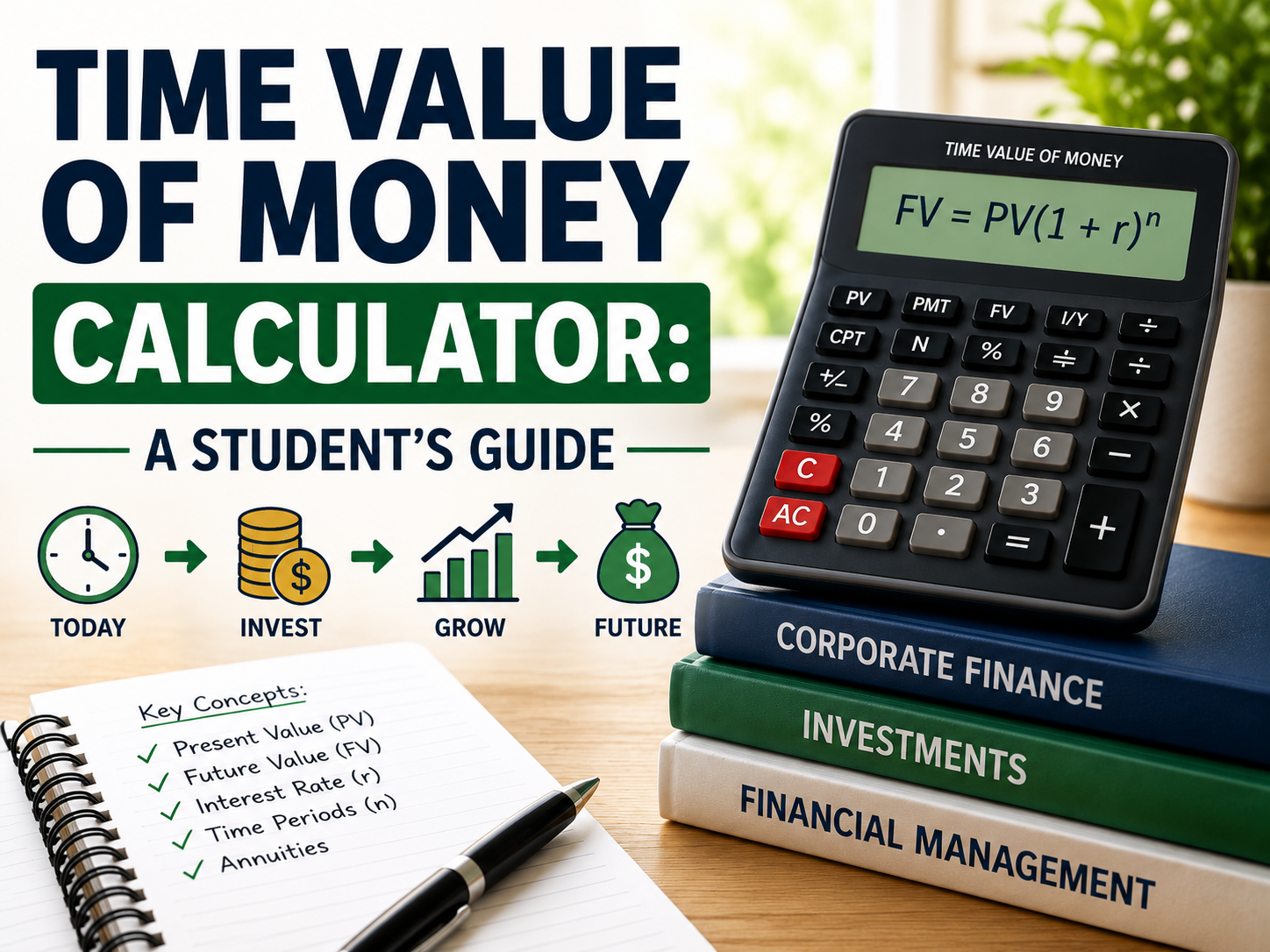

  • 3.1 Why Saving Money Matters More Than You Think (Even If You Earn Less)

    3.1 Why Saving Money Matters More Than You Think (Even If You Earn Less)

    Saving matters because accumulated money provides financial security protecting against unexpected emergencies, enables achievement of important life goals requiring large purchases, and creates freedom allowing pursuit of opportunities impossible while living paycheck-to-paycheck—transforming individuals from financially fragile and dependent on next paycheck into resilient and empowered through cushion of available funds. Unlike spending that provides temporary satisfaction disappearing immediately, saving builds lasting asset base creating compound benefits over time through emergency protection, goal funding, interest earnings, reduced financial stress, and ultimate freedom from mandatory work dependency when savings reach financial independence levels.

    Notebook sketch explaining personal finance

    This article is designed for anyone questioning whether saving is worth the sacrifice, individuals struggling to find motivation for delayed gratification, or those wanting to understand fundamental importance of accumulating wealth. You do not need financial expertise, high incomes, or perfect circumstances to benefit from saving—the principles and benefits apply universally across all income levels with even modest consistent savings producing transformative life improvements, though obviously higher incomes and savings rates accelerate timeline to achieving benefits.

    Understanding why saving matters transforms it from abstract should-do into compelling priority creating genuine motivation sustaining discipline through temptations, provides clear purpose making temporary spending sacrifices psychologically bearable through vision of future benefits, and demonstrates how present restraint enables future abundance proving delayed gratification rational strategy not pointless deprivation—making comprehension of saving’s importance essential foundation for all wealth-building behaviors and financial success impossible without intrinsic understanding of why accumulation matters beyond vague “it’s good to save” platitudes.

    Educational disclaimer: This article provides general educational information about saving benefits and importance. Individual circumstances, income levels, expenses, and appropriate saving strategies vary significantly. Emergency situations may temporarily require spending savings—article addresses general principles not emergency exceptions. This is not financial planning or professional advice. Consult qualified financial professionals for personalized guidance.

    The Fundamental Benefits of Saving

    1. Emergency Protection and Financial Security

    The emergency fund shield:

    • Car repairs ($500-2,000 typical)
    • Medical emergencies and deductibles ($1,000-5,000+)
    • Job loss (3-6 months expenses needed)
    • Home repairs (HVAC, plumbing, roof issues $1,000-10,000)
    • Unexpected travel (family emergency, funeral)

    Without savings: Crisis becomes catastrophe

    • $800 car repair on credit card at 22% APR
    • Can’t afford minimums, late fees accumulate
    • Snowballs into debt crisis
    • Credit score damage
    • Years recovering from single emergency

    With savings: Crisis stays contained

    • $800 car repair paid from emergency fund
    • No debt, no interest, no late fees
    • Replenish fund over 2-3 months
    • Crisis handled, life continues normally
    • No long-term damage

    The transformation: From financially fragile (any disruption creates disaster) to financially resilient (withstands normal life adversities)

    2. Goal Achievement and Major Purchases

    Large goals requiring accumulated funds:

    • Home down payment ($20,000-60,000+ typical)
    • Vehicle purchase ($5,000-30,000)
    • Education costs ($10,000-100,000+)
    • Wedding ($15,000-35,000 average)
    • Starting business ($5,000-50,000)
    • Major travel experiences ($3,000-15,000)

    Without savings: Goals perpetually deferred or debt-funded

    • Can’t save down payment, stuck renting indefinitely
    • Finance car at high interest, years of payments
    • Graduate with crushing student loan burden
    • Put wedding on credit cards, start marriage in debt
    • Dreams remain dreams, never actualized

    With savings: Goals become achievable realities

    • Save $25,000 over 3 years, buy home
    • Save $8,000, buy reliable used car cash
    • Save for education, graduate debt-free or minimal debt
    • Fund wedding from savings, start marriage financially healthy
    • Dreams become concrete plans with timelines

    The transformation: From perpetual wishing to systematic achievement through accumulated resources

    3. Freedom and Flexibility

    Options savings creates:

    • Career flexibility: Can leave toxic job, negotiate from strength, pursue passion work at lower pay
    • Geographic freedom: Can relocate for opportunity or quality of life
    • Relationship choices: Not trapped in bad relationship for financial survival
    • Opportunity pursuit: Can invest in business, education, or ventures requiring capital
    • Risk tolerance: Can take calculated career or business risks impossible without cushion
    • Negotiation power: Not desperate, can walk away from bad deals

    Without savings: Trapped by necessity

    • Must accept any job offer, no negotiating power
    • Can’t leave abusive employer or relationship
    • Stuck in expensive city despite preferring elsewhere
    • Can’t pursue opportunities requiring upfront investment
    • Every decision driven by immediate financial survival

    With savings: Empowered to choose

    • 6 months expenses saved = can leave bad job finding better fit
    • Down payment saved = can move to preferred location
    • Emergency fund = can leave toxic relationship safely
    • Capital saved = can start business or invest in opportunities
    • Decisions driven by values and goals, not desperation

    The transformation: From trapped and desperate to free and empowered through financial cushion

    4. Compound Growth and Wealth Building

    Money saved earns returns creating exponential growth:

    Example: $500 monthly saved invested at 8% annually

    • Year 5: $36,738 (principal $30,000 + growth $6,738)
    • Year 10: $91,473 (principal $60,000 + growth $31,473)
    • Year 20: $294,510 (principal $120,000 + growth $174,510)
    • Year 30: $745,180 (principal $180,000 + growth $565,180)
    • Year 40: $1,745,503 (principal $240,000 + growth $1,505,503)

    The magic: Saved $240,000 over 40 years, ended with $1.75 million through compound growth

    Without saving and investing: Zero wealth accumulation

    • Spend every dollar earned
    • After 40 years working: Net worth $0
    • Must work until unable, depend on insufficient Social Security
    • No generational wealth transfer

    With consistent saving and investing:

    • Systematic accumulation over decades
    • Compound returns amplify contributions
    • After 30-40 years: Substantial seven-figure wealth
    • Retirement security, potential early retirement
    • Generational wealth possible

    The transformation: From paycheck-dependent worker to wealth owner through time and compounding

    5. Reduced Stress and Improved Mental Health

    Financial stress impacts:

    • Sleep problems and anxiety
    • Relationship conflicts (money fights primary divorce cause)
    • Health problems (stress-related conditions)
    • Reduced work performance
    • Depression and hopelessness

    Research findings:

    • Financial stress stronger predictor of mental health issues than income level
    • Emergency savings more correlated with wellbeing than absolute wealth
    • $2,500 emergency fund significantly reduces anxiety even for high earners
    • Sense of financial control matters more than absolute amounts

    Without savings: Chronic financial anxiety

    • Constant worry about “what if” scenarios
    • Every unexpected expense creates panic
    • Relationship tension from money stress
    • Poor sleep and health from ongoing worry
    • Feeling trapped and hopeless

    With savings: Peace of mind

    • Confidence handling emergencies
    • Reduced anxiety about future
    • Better relationships (fewer money fights)
    • Improved sleep and health
    • Sense of control and optimism

    The transformation: From chronically stressed to mentally calm through financial cushion

    Advertisement

    Financial Wellness Planner

    The Cost of Not Saving

    Immediate Costs

    Debt accumulation from emergencies:

    • $2,000 emergency without savings → credit card debt
    • At 22% APR paying $100 monthly: 24 months to pay off, $400 interest paid
    • Multiple emergencies compound: $8,000 debt spiral common
    • Years trapped in debt cycle from lack of emergency cushion

    High-interest financing:

    • Need $800 for car repair, no savings
    • Payday loan: $800 + $120 fee (15% for 2 weeks) = 390% APR
    • Or credit card cash advance: 29% APR + $40 fee
    • Emergency costs 20-50% more without savings

    Overdraft and late fees:

    • Overdraft fees: $35 per transaction, 3-4 monthly = $105-140
    • Late payment fees: $25-40 each
    • Annual cost: $1,500-2,000+ in preventable fees
    • All eliminated with modest buffer savings

    Opportunity Costs

    Missed compound growth:

    • Not saving $300 monthly from age 25-65 (40 years)
    • Lost potential at 8%: $1,047,302
    • This is wealth never built, opportunities never realized
    • Retirement insecurity, continued work dependency

    Deferred or unachieved goals:

    • Never save down payment → rent forever, build no equity
    • Can’t start business → remain employee, cap income potential
    • Can’t invest in education → limit career advancement
    • Goals perpetually “someday” never becoming reality

    Trapped in suboptimal situations:

    • Can’t leave bad job → endure years of misery and stress
    • Can’t relocate → stuck in undesired location
    • Can’t pursue better opportunities → stagnant life trajectory
    • Decades of constrained choices from lack of financial cushion

    Long-Term Consequences

    Retirement insecurity:

    • Reach 65 with minimal savings
    • Depend on insufficient Social Security ($1,500-2,500 monthly typical)
    • Can’t afford to stop working
    • Reduced quality of life in later years
    • Potential burden on children

    Perpetual paycheck dependency:

    • Work 40+ years, still need paycheck at 70
    • No flexibility or freedom even late in life
    • One crisis away from catastrophe always
    • Never achieve financial independence

    Generational impact:

    • Can’t help children with education
    • No inheritance to transfer
    • Children learn poor financial habits
    • Cycle of financial struggle continues

    Overcoming Barriers to Saving

    Barrier 1: “I can’t afford to save”

    Reality check:

    • Most people can find 5-10% through expense optimization
    • Starting with $25-50 monthly better than $0
    • Automatic transfers before spending prevents “can’t afford” excuse
    • Thousands in unconscious waste typically exists (subscriptions, impulse purchases, convenience spending)

    Solutions:

    • Track spending one month identifying waste
    • Cut lowest-value expenses first
    • Start tiny (even $10 weekly = $520 annually)
    • Increase gradually as income grows or expenses optimize

    Barrier 2: “Life is short, I want to enjoy now”

    The false dichotomy:

    • Saving doesn’t require complete deprivation
    • Balanced approach: Save 15-20%, spend 80-85%
    • Strategic spending on high-value items, cut low-value waste
    • Present enjoyment AND future security both possible

    Long-term perspective:

    • Life potentially 80-90 years total
    • Working years: 40-45 years
    • Retirement: 20-30 years
    • Not saving = enjoyable 40s, miserable 60s-80s
    • Saving = slightly constrained 40s, comfortable 60s-80s
    • Which 30-year period prefer being comfortable?

    Barrier 3: “I’ll save when I earn more”

    The income increase trap:

    • Lifestyle inflation typically consumes raises
    • Earning $40,000: “When I make $60,000 I’ll save”
    • Earning $60,000: “When I make $80,000 I’ll save”
    • Earning $80,000: Still not saving, waiting for $100,000
    • Pattern continues indefinitely, never saving at any income

    The habit imperative:

    • Saving is behavior and habit, not income level
    • Someone saving 10% at $40,000 will save 10% at $80,000
    • Someone saving 0% at $40,000 will save 0% at $80,000
    • Start now at current income building habit
    • Raise savings amounts as income grows

    Barrier 4: “Saving small amounts won’t make a difference”

    The compounding reality:

    • $100 monthly seems trivial
    • But $100 monthly for 30 years at 8% = $149,036
    • $50 monthly for 40 years at 8% = $174,550
    • Small consistent amounts become substantial through time and compound growth

    The emergency fund truth:

    • Even $1,000 saved prevents most emergencies from becoming crises
    • $2,500 covers 80% of unexpected expenses without debt
    • $5,000 emergency fund transforms financial security
    • “Small” amounts create massive psychological and practical benefits
    Advertisement
    Reserved space for in-content ad

    Practical Motivation for Saving

    Milestone Motivation

    Celebrate progress markers:

    • First $100 saved: Proven you can do it
    • First $500: Covers many common emergencies
    • First $1,000: Major psychological milestone, substantial protection
    • First $2,500: Covers 80% of emergencies, rarely need debt
    • First $5,000: Full starter emergency fund, major security achieved
    • 3 months expenses: Significant job loss protection
    • 6 months expenses: Complete emergency fund, ultimate security

    Visual Progress Tracking

    Make savings tangible:

    • Thermometer chart showing progress toward goal
    • Graph of net worth over time trending upward
    • Checklist of milestones checking off achievements
    • Jar or envelope filling with cash (if using cash method)
    • Regular review of account balances watching growth

    Connection to Specific Goals

    Abstract “saving” less motivating than concrete goals:

    • Instead of: “I’m saving money”
    • Reframe as: “I’m saving for down payment on home”
    • Or: “I’m building emergency fund so car repair won’t create crisis”
    • Or: “I’m saving so I can leave this job if better opportunity arises”
    • Specific purpose provides meaning making sacrifice worthwhile

    Calculated Trade-Off Awareness

    Understand what you’re trading:

    • $200 monthly dining out vs $200 monthly savings
    • After 10 years: $0 from dining (all consumed) vs $36,000+ saved (plus growth)
    • Question: Would you rather have $36,000 in 10 years or fancy meals today?
    • Not “can’t have nice meals” but “choosing $36,000 over meals”
    • Conscious choice vs unconscious drift

    Why Understanding Saving’s Importance Matters

    Without genuine comprehension of why saving matters, discipline becomes unsustainable deprivation triggering eventual rebellion and abandonment, abstract “should save” advice lacks motivational power creating sporadic inconsistent efforts, and people fail to prioritize future security when present temptations feel more urgent without clear understanding of long-term consequences—while those deeply understanding saving’s importance maintain consistent discipline through temptations powered by intrinsic motivation, make informed trade-offs consciously choosing future benefits over present consumption, and build substantial wealth impossible for those viewing saving as pointless sacrifice rather than rational investment in security, freedom, and future abundance.

    Understanding why saving matters enables individuals to:

    • Develop genuine intrinsic motivation sustaining discipline through temptations
    • Make conscious informed trade-offs choosing future benefits over present consumption
    • Weather temporary setbacks maintaining long-term commitment
    • Resist lifestyle inflation understanding opportunity costs clearly
    • Build emergency protection preventing financial catastrophes
    • Achieve major life goals impossible through spending-focused approaches
    • Create freedom and options unavailable to paycheck-dependent individuals
    • Experience reduced stress and improved wellbeing through financial security

    Understanding transforms saving from abstract obligation into compelling personal priority creating sustained behavioral change impossible through superficial “you should save” advice lacking deep comprehension of fundamental importance.

    Advertisement
    Reserved space for in-content ad

    Common Misunderstandings

    Many people assume saving only matters for retirement making it irrelevant for young people decades from retirement age. In reality, emergency protection and goal achievement benefits matter immediately regardless of age—25-year-old needs emergency fund preventing debt spiral and down payment enabling home purchase within years not decades, proving saving’s importance spans all life stages with benefits accruing continuously not just in distant retirement.

    Another common misconception is that saving requires earning high income making it impossible for modest earners. In practice, saving is percentage-based behavior not absolute amount—someone earning $35,000 saving 10% ($3,500 annually) builds emergency fund and achieves goals identically to someone earning $100,000 saving 10% ($10,000 annually) just at proportional scale, proving principle universal across income levels when approached as percentage of earnings rather than absolute dollar targets requiring wealth.

    Some believe saving means complete spending deprivation making present life miserable for uncertain future. However, balanced saving (15-20% of income) leaves 80-85% for current living enabling present enjoyment while building future security, and strategic spending on high-value items while cutting low-value waste maintains quality of life without sacrifice feeling, proving saving and present enjoyment compatible through thoughtful allocation versus false deprivation-or-consumption dichotomy.

    How Understanding Saving’s Importance Fits Into Financial Success

    Understanding why saving matters provides essential motivation foundation enabling all subsequent wealth-building behaviors, transforms abstract “should” into compelling “want to” creating sustainable discipline, and connects present actions to future outcomes making temporary sacrifices psychologically bearable through clear vision of benefits, making comprehension of saving’s fundamental importance prerequisite for financial success impossible to achieve through obligation-based approaches lacking intrinsic motivation and deep understanding.

    For example, two college friends both age 25 earning $50,000 hear generic advice “you should save 15%.” Person A never understands why beyond vague “it’s good”—tries saving sporadically, month 1 saves $500 feeling proud, month 2 sees new laptop on sale feels saving pointless for small amounts buys laptop, month 3-6 saves nothing distracted by daily life, month 7 emergency happens has no cushion goes into debt, abandons saving entirely feeling it “doesn’t work.” After 10 years: Saved $8,000 total sporadically, mostly consumed by emergencies, net worth near zero, stressed and paycheck-dependent. Person B deeply internalizes why saving matters reading articles, calculating compound growth ($500 monthly becomes $745,000 in 30 years), understanding emergency protection prevents debt spirals, recognizing freedom that financial cushion provides—develops genuine conviction. Commits to automatic $625 monthly (15%), experiences initial tightness but adjusts spending, sees emergency fund grow providing peace of mind reinforcing behavior, watches compound growth in retirement account providing motivation, maintains discipline through temptations powered by understanding future benefits worth present restraint. After 10 years: Saved $75,000 systematically, invested growing to $109,000 through returns, has substantial emergency fund, on track for millionaire status by 55, experiencing reduced stress and increased options. Identical starting point, same advice—Person B succeeded through deep understanding of WHY creating intrinsic motivation and sustained discipline while Person A failed through superficial compliance lacking genuine comprehension of importance.

    Understanding why saving matters separates successful disciplined wealth builders from failed sporadic attempters through intrinsic motivation and clear purpose impossible to sustain through obligation-based approaches lacking fundamental comprehension of saving’s transformative importance.

    Recent Updates and Trends

    In recent years, financial independence movement has popularized extreme saving (50-70% rates) demonstrating aggressive saving enables early retirement in 10-20 years not just comfortable traditional retirement at 65, making saving’s importance more visible and aspirational for younger generations seeing peers achieving freedom through discipline.

    Economic volatility has reinforced emergency savings importance—job market disruptions, inflation spikes, and economic uncertainty making clear those with savings weather storms while those without experience catastrophic setbacks, validating emergency fund’s critical protective role previously dismissed by some as unnecessary during stable periods.

    Rising costs of housing, education, and healthcare have increased major goal savings requirements—down payments, college funds, and medical reserves needing larger amounts than historical norms, making systematic saving more important than ever for achieving life milestones previously more accessible.

    Social Security concerns have heightened retirement savings urgency—program’s long-term funding questions making clear younger generations cannot depend solely on government benefits requiring personal savings for security, increasing individual responsibility for retirement funding through personal accumulation.

    Fundamental saving importance remains timeless: emergency protection prevents financial catastrophes, goal funding enables life milestones, compound growth builds substantial wealth over time, financial cushion creates freedom and reduces stress, and systematic accumulation separates financially secure from perpetually struggling—regardless of FIRE trends, economic conditions, cost increases, or Social Security uncertainties, consistent saving produces security, freedom, and opportunity impossible through consumption-focused approaches leaving individuals vulnerable and dependent regardless of income earned over lifetimes.

    3 Things You Can Do Today

    Ready to embrace saving’s importance? Here are three simple steps you can take right now:

    1. Calculate your specific “why” for saving with concrete goals and timelines – Write down three specific reasons you need savings: Emergency fund ($X amount by Y date preventing debt), Major goal (down payment, vehicle, education—$X by Y), Long-term security (retirement fund reaching $X by age Y). Make these concrete and personal. Example: “I need $5,000 emergency fund by December 2027 so car repair won’t force credit card debt. I want $25,000 down payment by 2030 enabling home purchase. I need $500,000 retirement by age 55 enabling potential early retirement.” This transforms abstract “should save” into personal compelling purposes. Takes 15 minutes creating genuine motivation. Revisit when tempted to skip saving remembering specific purposes.

    2. Calculate compound growth of your potential savings showing long-term outcome – Use online compound interest calculator or simple math. Determine monthly saving amount you can commit to (even $100-200). Calculate growth at 8% annual return over 20, 30, 40 years. Example: $200 monthly for 30 years = $298,072. $500 monthly for 40 years = $1,745,503. Seeing that $200 monthly becomes nearly $300,000 in 30 years makes sacrifice tangible and worthwhile. Calculate your specific numbers. Write them prominently: “$X monthly today becomes $Y in Z years.” This makes future abundance visible justifying present restraint. Takes 10 minutes creating concrete vision. Reference when questioning if small amounts matter—they compound into life-changing sums.

    3. Identify one specific financial disaster savings would have prevented in your past – Reflect on previous 5 years. Recall emergency or unexpected expense that created financial stress, debt, or crisis. Example: Car repair $1,200 went on credit card at 22% APR taking 18 months to pay off with $200 interest paid. Or: Job loss with no emergency fund forced desperate scrambling and suboptimal rushed decisions. Or: Couldn’t pursue opportunity requiring upfront investment missing life-changing chance. Write specific example and emotional impact. This creates visceral understanding of saving’s protective value through personal experience. Knowing you never want to repeat that crisis provides powerful motivation maintaining emergency fund. Takes 5 minutes connecting abstract concept to concrete personal cost of not having savings.

    These actions create genuine internalized understanding of saving’s importance through personal concrete goals, visible long-term compounding outcomes, and emotional connection to past consequences of lacking savings—transforming abstract obligation into compelling personal priority.

    Advertisement
    Reserved space for in-content ad

    Quick FAQ

    How much should I save and is there a minimum that actually matters?
    Minimum: 10-15% of gross income for adequate retirement savings. Emergency fund: $1,000 starter, ultimately 3-6 months expenses. Even “small” amounts matter enormously: $1,000 emergency fund prevents 60% of emergencies becoming debt crises. $100 monthly for 30 years becomes $149,000 through compounding. Start with what’s possible even $25-50 monthly—building habit and proving you can matters more than perfect amount. Increase percentage as income grows or expenses optimize.

    Should I save for emergencies or pay off debt first?
    Both but staged: (1) Save $1,000-2,000 starter emergency fund first preventing new debt from small emergencies, (2) Attack high-interest debt aggressively (credit cards over 15% APR), (3) After debt eliminated, build full 3-6 month emergency fund, (4) Then maximize retirement and other savings. Exception: Always capture employer 401(k) match—free money beats debt payoff math. Starter emergency fund critical—without it unexpected expenses create new debt negating payoff progress creating perpetual cycle.

    What if I’m already behind on retirement—does saving still matter?
    Absolutely—starting late still produces substantial results. Age 40 saving 15% for 25 years produces significant six-figure retirement fund. Age 50 saving 20% for 15 years still builds meaningful security. Strategies: Aggressive rate (20-30% vs 15%), catch-up contributions at 50+ ($7,500 extra 401k, $1,000 extra IRA for 2024), extend working years to 68-70 giving more accumulation time. Every year matters—starting today at any age dramatically better than never starting. Past doesn’t matter, future trajectory from now forward matters.

    How do I stay motivated to save when results seem so far away?
    Five strategies: (1) Milestone celebration—track and reward hitting $1,000, $5,000, $10,000 markers, (2) Visual progress—graph or chart showing growth over time, (3) Connect to specific goals—”down payment fund” more motivating than abstract “savings”, (4) Calculate trade-offs—$200 dining out monthly vs $36,000 in 10 years makes choice clear, (5) Automate completely—remove temptation and decision fatigue through set-and-forget transfers. Also: Emergency fund provides immediate peace of mind benefit—not distant, felt within weeks of building cushion.

    Can I save too much—when should I enjoy life versus save?
    Balance is key: 15-20% savings leaves 80-85% for current living enabling present enjoyment. “Too much” saving (70%+ rates) requires extreme frugality most find unsustainable unless pursuing specific early retirement goal. Evaluate: If current lifestyle genuinely satisfying and savings on track for goals, probably balanced. If miserable from deprivation or falling behind on retirement, adjust. Also consider: Spend strategically on high-value items bringing joy, cut ruthlessly on low-value waste. Quality of life from experiences and relationships more than consumption level—can save aggressively while maintaining meaningful satisfying life through values-aligned spending.

    What’s the difference between saving and investing—which matters more?
    Saving = setting money aside. Investing = putting saved money into assets earning returns. Both critical: Save first (accumulation), invest second (growth). Emergency fund: Save in savings account (liquid, safe). Retirement and long-term goals: Save then invest in stocks (growth potential). Matter equally—saving without investing loses to inflation, investing without saving never builds wealth. Think: Savings rate determines accumulation, investment returns amplify it. Someone saving 0% but getting 10% returns still has $0. Someone saving 15% earning 2% builds wealth slowly. Someone saving 15% earning 8% builds substantial wealth—both required.

    Explore More in Money Basics

    Disclosure

    This article is provided for educational purposes only and does not constitute financial planning or investment advice. Saving benefits and strategies discussed are general principles—individual circumstances vary significantly. Investment return examples use historical average 8% returns—actual market performance varies and is not guaranteed. Emergency situations may temporarily require spending savings—article addresses general principles not emergency exceptions. Appropriate savings rates depend on income, expenses, goals, and life stage. Examples use simplified scenarios—actual situations more complex. Compound growth calculations assume consistent contributions and returns—reality includes market volatility and life disruptions. Consult qualified financial planners and advisors for personalized guidance. Advertisements or sponsored content may appear within or alongside this content. All information is presented independently.

  • 1.5 Time Value of Money Explained: Why $100 Today Is Worth More Than Tomorrow

    1.5 Time Value of Money Explained: Why $100 Today Is Worth More Than Tomorrow

    Time value of money is the financial principle stating that money available now is worth more than the same amount in the future due to its earning potential—$1,000 today can be invested to grow into $2,000+ over a decade while $1,000 received in ten years remains static, making present money more valuable. Unlike treating all dollars equally regardless of when received, time value of money recognizes that money can earn returns through investment, inflation erodes purchasing power over time, and earlier access to funds provides flexibility and opportunity unavailable with delayed receipt.

    Notebook sketch explaining personal finance

    This article is designed for anyone making financial decisions involving time, individuals evaluating investment opportunities, or those planning retirement and long-term financial goals. You do not need mathematics expertise, finance degrees, or complex calculations to understand time value of money—grasping this fundamental concept transforms how you view savings, debt, investment timing, and major life decisions involving money and time trade-offs.

    Understanding time value of money matters because starting retirement savings at 25 versus 35 creates hundreds of thousands in wealth difference through compound growth, paying extra on mortgages saves tens of thousands in interest through time value principles, and ignoring time value leads to poor financial decisions undervaluing future outcomes or overvaluing present consumption—yet most people make financial choices without considering how time affects money’s worth.

    Educational disclaimer: This article provides general educational information about time value of money concepts. Calculations use simplified assumptions—actual investment returns vary and are not guaranteed. Individual circumstances differ significantly. This is not financial, investment, or tax advice. Consult qualified financial professionals for personalized guidance based on specific situations.

    Understanding Time Value of Money

    The Core Principle

    Fundamental concept: A dollar today is worth more than a dollar tomorrow

    Three reasons why:

    1. Earning potential (opportunity to invest):

    • Money received today can be invested immediately
    • Investments generate returns (interest, dividends, appreciation)
    • Earlier investment means longer compounding period
    • $1,000 today invested at 8% becomes $2,159 in 10 years
    • $1,000 received in 10 years remains $1,000

    2. Inflation (purchasing power erosion):

    • Prices increase over time
    • Same dollars buy less in future
    • 3% annual inflation means $1,000 today buys what $744 buys in 10 years
    • Future money worth less in real purchasing power

    3. Risk and uncertainty:

    • Future payment involves uncertainty
    • Circumstances change (bankruptcy, death, default)
    • Money in hand eliminates future receipt risk
    • Guaranteed present value preferred over uncertain future value

    Present Value vs Future Value

    Present Value (PV):

    • Current worth of future money
    • Discounts future amounts to today’s equivalent
    • Question: “How much is $1,000 in 10 years worth today?”
    • Answer depends on discount rate (opportunity cost of capital)

    Future Value (FV):

    • Amount current money will grow to over time
    • Projects today’s amounts to future equivalent
    • Question: “How much will $1,000 today be worth in 10 years?”
    • Answer depends on investment return rate

    The relationship:

    • Present and future values are reciprocals through time and interest rates
    • Higher interest rates = lower present values of future money
    • Longer time periods = lower present values, higher future values

    Simple Example

    Scenario: Win $1,000 today or $1,100 in one year?

    Analysis:

    • If you can invest at 8% annual return:
    • $1,000 today grows to $1,080 in one year
    • $1,100 in one year worth $1,019 today (discounting at 8%)
    • Decision: Take $1,100 in one year (better value)

    If you can invest at 12% annual return:

    • $1,000 today grows to $1,120 in one year
    • $1,100 in one year worth $982 today (discounting at 12%)
    • Decision: Take $1,000 today (better value)

    Key insight: Time value calculations depend on your opportunity cost (what you could earn on money)

    Advertisement
    Reserved space for in-content ad

    Compound Interest: Time Value’s Power

    What Is Compound Interest?

    Definition: Earning returns on both initial investment and accumulated returns

    Simple interest vs compound interest:

    Simple interest (rare in practice):

    • Earn only on initial principal
    • $1,000 at 8% simple: Earn $80 annually forever
    • 10 years: $1,000 + ($80 × 10) = $1,800

    Compound interest (standard for investments):

    • Earn on principal plus accumulated interest
    • $1,000 at 8% compound: Earn $80 year 1, $86.40 year 2, $93.31 year 3, etc.
    • 10 years: $2,159
    • Difference: $359 additional through compounding

    The Rule of 72

    Quick estimation tool: How long to double money at given return rate

    Formula: Years to double = 72 ÷ Annual return rate

    Examples:

    • 6% return: 72 ÷ 6 = 12 years to double
    • 8% return: 72 ÷ 8 = 9 years to double
    • 10% return: 72 ÷ 10 = 7.2 years to double
    • 12% return: 72 ÷ 12 = 6 years to double

    Application: $10,000 invested at 8% doubles every 9 years: $20K (year 9), $40K (year 18), $80K (year 27), $160K (year 36)

    Compound Growth Examples

    $10,000 invested at different rates over time:

    At 6% annual return:

    • 10 years: $17,908
    • 20 years: $32,071
    • 30 years: $57,435
    • 40 years: $102,857

    At 8% annual return:

    • 10 years: $21,589
    • 20 years: $46,610
    • 30 years: $100,627
    • 40 years: $217,245

    At 10% annual return:

    • 10 years: $25,937
    • 20 years: $67,275
    • 30 years: $174,494
    • 40 years: $452,593

    Key observation: Small return rate differences create enormous long-term value differences through compounding

    Monthly Contributions Amplify Growth

    $500 monthly investment at 8% annual return:

    • 10 years: $91,473 (contributed $60,000, earned $31,473)
    • 20 years: $294,510 (contributed $120,000, earned $174,510)
    • 30 years: $745,180 (contributed $180,000, earned $565,180)
    • 40 years: $1,745,503 (contributed $240,000, earned $1,505,503)

    Insight: Contributions of $240,000 over 40 years grow to $1.7+ million through time value and compounding—more than 7x return

    Starting Early: The Ultimate Time Value Advantage

    Scenario: $500 monthly at 8% return

    Starting at age 25, saving until 65 (40 years):

    • Total contributions: $240,000
    • Account value at 65: $1,745,503

    Starting at age 35, saving until 65 (30 years):

    • Total contributions: $180,000
    • Account value at 65: $745,180

    Cost of 10-year delay:

    • Contributed $60,000 less
    • Account value $1,000,000+ less
    • 10-year delay cost: $1 million in lost wealth

    Starting at age 45, saving until 65 (20 years):

    • Total contributions: $120,000
    • Account value at 65: $294,510

    Cost of 20-year delay:

    • Contributed $120,000 less
    • Account value $1,450,000+ less
    • 20-year delay cost: $1.45 million in lost wealth

    Critical lesson: Starting early is most powerful wealth-building tool through time value of money

    Practical Applications

    Retirement Planning

    Question: How much to save for retirement?

    Time value analysis:

    • Need $50,000 annually in retirement (today’s dollars)
    • Retire at 65, life expectancy 90 (25 years retirement)
    • 4% withdrawal rule suggests need $1.25 million ($50K ÷ 4%)
    • Currently age 30 (35 years to retirement)
    • Expected 8% annual return

    Options:

    • Lump sum today: $86,200 grows to $1.25M in 35 years
    • Monthly contributions: $430 monthly grows to $1.25M in 35 years
    • Wait 10 years, start at 40: $1,034 monthly required (2.4x more per month)

    Insight: Earlier start requires dramatically less monthly contribution due to time value

    Debt Payoff Decisions

    Scenario: $10,000 windfall—invest or pay extra on mortgage?

    Option A: Pay extra on 4% mortgage

    • Saves 4% interest guaranteed
    • $10,000 payment reduces interest by ~$6,500 over 15 remaining years
    • Equivalent to 4% guaranteed return

    Option B: Invest in stock market (expected 8% return)

    • $10,000 grows to $31,722 in 15 years at 8%
    • Gain after mortgage savings: $31,722 – $16,500 = $15,222 advantage to investing

    Decision framework:

    • Debt interest rate < expected investment return: Invest instead of extra payments
    • Debt interest rate > expected investment return: Pay debt instead
    • Consider risk tolerance and guaranteed vs uncertain returns

    Large Purchase Timing

    Scenario: Buy $30,000 car now or wait 3 years?

    Option A: Buy now with loan

    • $30,000 at 6% for 5 years
    • Monthly payment: $580
    • Total paid: $34,800
    • Interest cost: $4,800

    Option B: Save and buy in 3 years

    • Invest $500 monthly for 36 months at 8% return
    • Accumulate: $20,097
    • Need additional $9,903 to buy $30,000 car
    • If car depreciates to $24,000 by year 3, only need $3,903 additional

    Time value insight: Delaying purchase while saving produces better outcome through investment returns and depreciation

    Education Funding

    Child born today, college in 18 years

    • Current college cost: $100,000 total
    • Projected cost in 18 years (5% annual increase): $241,000

    Saving strategies:

    Start immediately:

    • $445 monthly at 8% return = $241,000 in 18 years

    Wait 10 years:

    • $1,473 monthly at 8% return = $241,000 in 8 years
    • 3.3x more per month required

    Time value advantage: Early start reduces monthly burden dramatically

    Salary Negotiation and Career Decisions

    Scenario: Job A offers $70,000, Job B offers $75,000

    Simple view: $5,000 annual difference

    Time value view (30-year career):

    • $5,000 difference annually
    • Assume 3% annual raises on base salary
    • Total additional earnings over 30 years: $238,000+
    • If investing 10% of difference: $23,800 invested
    • $23,800 growing at 8% over 30 years: $239,000

    Insight: $5,000 salary difference compounds to ~$500,000 additional lifetime value through time value of money

    Advertisement
    Reserved space for in-content ad

    Common Time Value Mistakes

    Delaying Retirement Savings

    Mistake: “I’ll start saving seriously in my 40s when I earn more”

    Cost: Missing decades of compound growth—10-year delay costs $1+ million in lost wealth

    Solution: Start immediately even with small amounts. $100 monthly starting at 25 beats $500 monthly starting at 45

    Ignoring Inflation in Long-Term Planning

    Mistake: Planning to retire on $50,000 annually without adjusting for inflation

    Cost: $50,000 in 30 years buys what ~$21,000 buys today at 3% inflation

    Solution: Plan retirement needs in today’s dollars but project future costs with inflation

    Paying Only Minimum on High-Interest Debt

    Mistake: Minimum payments on 20% APR credit card while money sits in 1% savings

    Cost: Losing 19% annually (20% debt cost minus 1% savings return)

    Solution: Accelerate high-interest debt payoff—guaranteed 20% “return” beats uncertain investment returns

    Keeping Emergency Fund Too Large

    Mistake: $50,000 emergency fund earning 1% when only need $15,000

    Cost: $35,000 not invested at 8% = $75,000 in 10 years, $240,000 in 20 years

    Solution: Right-size emergency fund (3-6 months expenses), invest excess

    Lifestyle Inflation Preventing Investment

    Mistake: Spending every raise instead of increasing savings

    Cost: $5,000 annual raise spent vs invested at 8% = $575,000 over 30 years

    Solution: Direct 50-100% of raises to savings and investment before lifestyle adjusts

    Analysis Paralysis Delaying Investment

    Mistake: Waiting for “perfect” market timing or investment selection

    Cost: Every year delayed waiting costs 8%+ growth plus compounds over remaining years

    Solution: Start immediately with simple index funds. Imperfect action beats perfect planning.

    Time Value Formulas (Simplified)

    Future Value of Lump Sum

    Formula: FV = PV × (1 + r)^n

    • FV = Future Value
    • PV = Present Value (amount today)
    • r = Annual interest rate (as decimal)
    • n = Number of years

    Example: $10,000 at 8% for 10 years

    • FV = $10,000 × (1.08)^10
    • FV = $10,000 × 2.159
    • FV = $21,590

    Present Value of Future Sum

    Formula: PV = FV ÷ (1 + r)^n

    Example: $50,000 in 20 years, discounted at 8%

    • PV = $50,000 ÷ (1.08)^20
    • PV = $50,000 ÷ 4.661
    • PV = $10,727

    Interpretation: $50,000 in 20 years equals $10,727 today at 8% discount rate

    Note on Calculations

    While formulas provide precision, understanding concepts matters more than calculations. Online calculators and financial tools handle complex math. Focus on principles: time multiplies money through compound growth, earlier investment beats later investment, and small rate differences create enormous long-term value differences.

    Why Time Value of Money Matters

    Without understanding time value of money, people delay retirement savings costing hundreds of thousands in lost compound growth, ignore investment opportunities while keeping cash in low-return accounts, and make poor financial decisions treating present and future money as equivalent when time dramatically affects value—while those understanding time value strategically position investments maximizing compounding periods and returns.

    Understanding time value of money enables individuals to:

    • Start investing early maximizing compound growth benefits
    • Make informed decisions comparing present and future values
    • Evaluate debt payoff versus investment alternatives rationally
    • Plan retirement and long-term goals with realistic projections
    • Negotiate salaries understanding lifetime value implications
    • Allocate resources strategically to highest time-adjusted returns

    Time value awareness transforms financial decision-making from short-term focus to long-term wealth optimization through strategic timing and compounding.

    Advertisement
    Reserved space for in-content ad

    Common Misunderstandings

    Many people assume time value of money only matters for large sums or wealthy individuals. In reality, time value affects all financial decisions regardless of amount—$50 monthly invested over 40 years creates more wealth than $500 monthly invested over 10 years through time value principles, proving timing matters more than amount for building wealth.

    Another common misconception is that waiting to invest until you “have enough money” is prudent. In practice, delaying investment while accumulating lump sum costs more through lost compound growth than starting immediately with small regular contributions—time in market beats timing market, and earlier small investments compound into larger values than later large investments.

    Some believe time value calculations are too complex for practical use. However, understanding basic principles—money grows over time, earlier investment beats later investment, compound growth accelerates with time—enables better financial decisions without mathematical expertise. Simple awareness of time value transforms decision quality dramatically without requiring precise calculations.

    How Time Value Fits Into Financial Success

    Time value of money provides mathematical foundation explaining why starting retirement savings early matters more than contribution amounts, why carrying high-interest debt destroys wealth systematically, and why delaying financial decisions costs exponentially more than immediate action—creating framework for evaluating all financial choices involving time dimensions.

    For example, two people commit to saving $100,000 for retirement. Person A starts at 25 investing $200 monthly at 8% return, reaching $100,000 by age 44 (19 years). Continues until 65 accumulating $351,428 total. Person B waits until 35, needs $380 monthly to reach $100,000 by age 54 (19 years, same timeframe). Continues until 65 accumulating only $265,180 total. Both “saved” for 19 years but Person A started 10 years earlier, resulting in $86,248 additional wealth ($351,428 vs $265,180) despite identical saving periods. Time value advantage from earlier start created $86,000+ difference through compound growth—decade of time worth nearly as much as two decades of contributions through time value principles.

    Time value understanding transforms “I’ll start later” into “I must start now” enabling wealth accumulation impossible through procrastination.

    Recent Updates and Trends

    In recent years, inflation has increased highlighting time value importance—money losing purchasing power at 3-8% annually makes time value considerations more critical for maintaining real wealth versus nominal values.

    Compound interest calculators and visualization tools have made time value concepts more accessible—interactive tools showing growth curves and comparing scenarios make abstract principles concrete and emotionally resonant.

    Low interest rates on savings (1-2%) versus historical market returns (8-10%) have widened opportunity cost of holding excess cash, making time value optimization through proper investment more valuable.

    Retirement age uncertainty and longevity increases have lengthened required investment timeframes—30-40 year horizons make time value of early investment even more dramatic through extended compound periods.

    Fundamental time value principles remain timeless: money can earn returns making present money more valuable than future money, compound growth accelerates over time making early investment disproportionately powerful, and inflation erodes purchasing power making future money worth less in real terms—understanding time value enables strategic positioning maximizing wealth accumulation regardless of market conditions or economic environment.

    3 Things You Can Do Today

    Ready to apply time value of money? Here are three simple steps you can take right now:

    1. Calculate your retirement savings trajectory – Use free compound interest calculator (search “compound interest calculator”). Input: current savings, monthly contribution, years until retirement, expected 8% return. Compare result to retirement needs. If insufficient, calculate what monthly contribution reaches goal. This visualization makes time value concrete—seeing $500 monthly grow to $1+ million over 35 years transforms abstract concept into motivating reality.

    2. Start or increase retirement contribution today—even $50 monthly – If not contributing to retirement account, start with minimum amount today (even $50-100 monthly). If already contributing, increase by $50-100 monthly. $50 monthly at 8% over 30 years = $75,000. Small amounts matter through time value—starting today is more valuable than waiting to contribute larger amounts later. Time in market beats timing market.

    3. Calculate time value cost of one current expense – Choose one regular expense: $150 monthly subscription, $200 dining out, $100 shopping. Calculate 30-year future value at 8% if invested instead (use calculator from step 1). Example: $150 monthly = $224,000 in 30 years. Seeing this single expense’s opportunity cost makes time value personal and actionable. May or may not change spending choice, but creates awareness enabling conscious decisions.

    These actions transform abstract time value concepts into personal financial decisions improving wealth accumulation through compound awareness and strategic timing.

    Advertisement
    Reserved space for in-content ad

    Quick FAQ

    What’s more important: how much I save or when I start?
    When you start matters more initially. $200 monthly from 25-65 (40 years) at 8% = $622,000. $400 monthly from 45-65 (20 years) at 8% = $246,000. Half the monthly amount for double the time creates 2.5x more wealth through time value. However, both timing AND amount matter—ideal: start early AND save aggressively.

    Should I pay off low-interest debt or invest?
    Compare debt interest rate to expected investment return. Debt under 5%: Generally invest instead (expected 8%+ market return). Debt 5-7%: Personal preference balancing guaranteed return (debt payoff) versus potential return (investment). Debt over 8%: Pay off before investing—guaranteed return exceeds uncertain investment returns. Consider risk tolerance and behavior—some prefer debt-free peace of mind.

    How do I account for inflation in time value calculations?
    Use “real return” instead of nominal return. Real return = nominal return – inflation rate. Example: 8% investment return minus 3% inflation = 5% real return. Plan retirement needs in today’s dollars for mental clarity, then calculate using real returns. Alternatively, project future costs with inflation then calculate needed savings with nominal returns.

    Is it ever too late to start investing?
    Never too late—time value still works over any period. Starting at 50 with 15 years to 65: $1,000 monthly at 8% = $348,000. Not millions but substantial. Also, retirement may last 20-30 years providing additional time for growth. Best time to start was 20 years ago; second best time is today. Every year delayed reduces final wealth—start immediately regardless of age.

    What return rate should I use in time value calculations?
    Conservative planning: 6-7% (below historical 8-10% stock market average). Moderate: 8% (historical long-term stock average). Aggressive: 9-10% (optimistic). Bonds: 3-5%. Savings accounts: 1-4%. Use conservative estimates for critical goals like retirement. Actual returns vary—estimates provide planning framework, not guarantees. Adjust plans as actual results differ from projections.

    How does time value of money relate to opportunity cost?
    Time value is specific type of opportunity cost—money spent today costs not just the amount but also the investment returns forgone. Spending $1,000 costs $1,000 plus $9,000 it could have grown to in 30 years at 8% = $10,000 total opportunity cost. Time value quantifies opportunity cost of consumption versus investment through compound growth calculations.

    Explore More in Money Basics

    Disclosure

    This article is provided for educational purposes only and does not constitute financial, investment, or tax advice. Time value calculations use simplified assumptions and hypothetical examples—actual investment returns vary significantly and are not guaranteed. Historical returns do not guarantee future performance. Individual circumstances differ based on age, risk tolerance, financial situation, and goals. Examples use assumed rates of return for illustration—actual returns may be higher or lower affecting outcomes substantially. Inflation rates vary and are unpredictable. Consult qualified financial professionals for personalized guidance considering specific situations, investment horizons, and risk tolerances. Information current as of publication but financial products, market conditions, and tax laws change. Advertisements or sponsored content may appear within or alongside this content. All information is presented independently.

    Interactive Quiz: Time Value of Money

    Choose an answer for each question and click Check Answer to learn why it is right or wrong.

    1. What is the core principle of time value of money?

    2. Which is NOT one of the three main reasons money today is worth more than money later?

    3. What does future value mean?

    4. According to the article, what is a major cost of delaying retirement savings by 10 years?

    5. What does the Rule of 72 help estimate?

    Quiz Score

    0 / 5
  • Day 28: Set a No-Spend Rule for One Category

    Boundaries create clarity.

    A temporary pause in one spending category builds awareness without deprivation. This is not about restriction — it’s about intention.

    Day 28 is about choice.


    Today’s Focus

    Set a no-spend rule for one category.

    Choose one area.
    Set a clear boundary.


    Why This Step Matters

    Boundaries reduce impulse and decision fatigue.

    Intentional limits create freedom.


    This Is Not About Perfection

    This rule isn’t permanent.

    It’s a short experiment.


    Reflection Question

    What do you notice when this boundary is in place?


    What’s Next

    Tomorrow, we’ll reflect on the past year to gain insight.

    For today, intention is enough.

  • Day 26: Identify One Financial Habit to Build

    Change becomes sustainable when it’s focused.

    Trying to improve everything at once creates resistance. One habit, chosen intentionally, builds momentum.

    Day 26 is about choosing wisely.


    Today’s Focus

    Identify one financial habit you want to build.

    Keep it small.
    Make it realistic.


    Why This Step Matters

    Habits shape outcomes more than motivation.

    One clear habit:

    • Improves follow-through
    • Reduces overwhelm
    • Builds consistency

    Focus creates progress.


    This Is Not About Perfection

    You’re not committing forever.

    You’re experimenting intentionally.


    Reflection Question

    Why does this habit matter to you right now?


    What’s Next

    Tomorrow, we’ll identify one habit to release.

    For today, intention is enough.

  • Day 24: Read One Article About Compound Interest

    Compound interest works quietly in the background.

    Whether you understand it or not, it influences savings, investing, and debt. Learning the basics changes how you think about time and patience.

    Day 24 is about perspective.


    Today’s Focus

    Read one article about compound interest.

    No math required.
    Just understanding the concept.


    Why This Step Matters

    Perspective shapes behavior.

    When you understand compounding:

    • Consistency feels more meaningful
    • Time becomes an ally
    • Patience feels purposeful

    Knowledge builds confidence.


    This Is Not About Perfection

    You don’t need to master the topic today.

    One article is enough.


    Reflection Question

    What stood out most about how compound interest works?


    What’s Next

    Tomorrow, we’ll turn inward and reflect on your own money experience.

    For today, perspective is enough.