Investing for Students: A Beginner’s Guide
Most college students think investing is something you do later — after the real job, after the debt is paid off, after life feels more settled. That thinking is understandable. It’s also one of the most expensive financial mistakes you can make, because investing is the one area of personal finance where time is the single most valuable ingredient — and you can never get it back.
You don’t need thousands of dollars to start. You don’t need a finance degree or a brokerage account with a complicated interface. You need to understand four ideas, open one account, and invest one amount consistently. That’s it. This guide walks you through all of it.
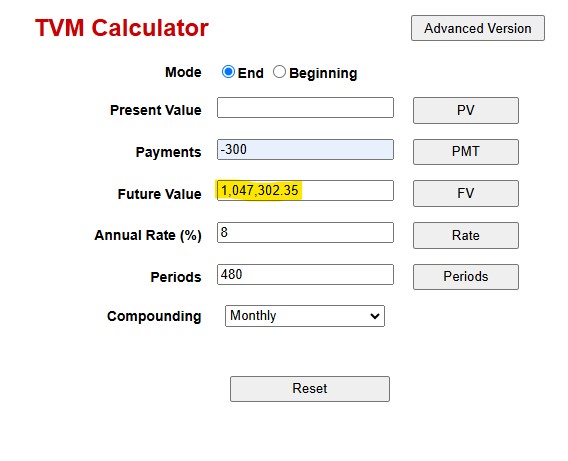
Those numbers are the entire argument for investing in college. Not starting young doesn’t just cost you some growth — it cuts your outcome nearly in half. The decade between 20 and 30 is the most powerful investing decade of your entire life, and most people spend it doing nothing.
Why Investing in College Matters More Than You Think
Investing feels abstract when you’re living on a part-time salary and managing tuition bills. But here’s what most students don’t understand: the stock market doesn’t care how much you invest — it cares how long you invest. A small amount over a long time almost always beats a large amount over a short time.
Priya invests $80 a month starting at age 20. Her roommate Jordan waits until 30 to start and invests $300 a month — nearly four times as much. At 65, who has more? Priya does. By a lot. Because the decade between 20 and 30 compounded her early dollars into something Jordan’s larger contributions can never fully catch up to.
“The best time to start investing was when you got your first paycheck. The second best time is today — not after graduation, not after the raise, not when things settle down. Today.”

The Power of Compound Interest — Explained Simply
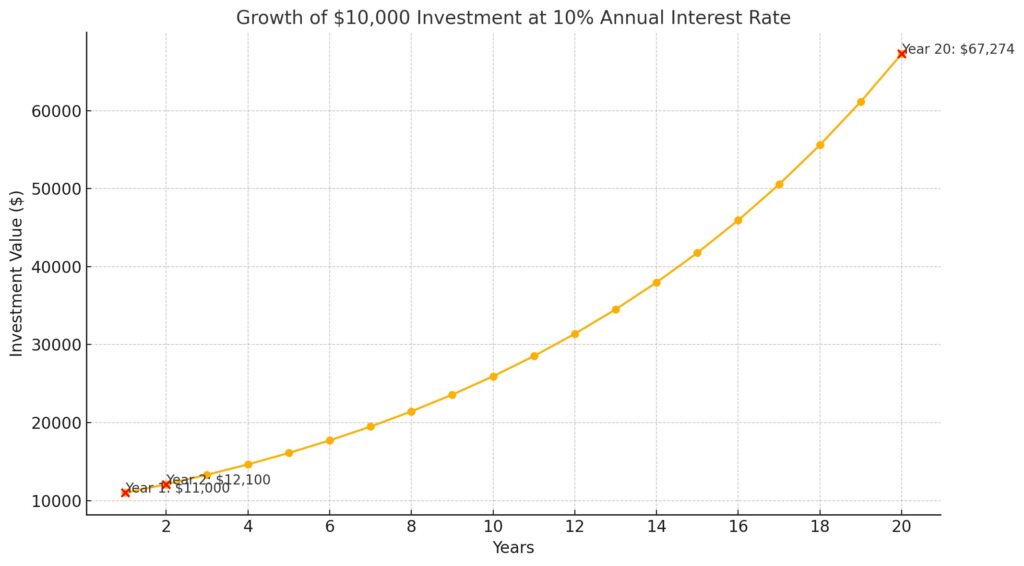
Compound interest means your money earns returns — and then those returns earn returns too. It sounds simple but the math over decades is staggering. Here’s what $50 a month looks like invested at a 7% average annual return across different starting ages:
$50/Month Invested at 6.5% Average Annual Return — Balance at Age 65
Same $50 a month. Same 6.5% return. The only variable is when you start. Starting at 20 versus 40 produces more than four times the outcome. Compound interest doesn’t reward effort — it rewards time. College is where that time begins.
Divide 72 by your expected annual return to find out how many years it takes your money to double. At 7% return: 72 ÷ 7 = approximately 10 years to double. So $1,000 invested at 20 becomes ~$2,000 at 30, ~$4,000 at 40, ~$8,000 at 50, and ~$16,000 at 60 — without adding a single dollar more.
The Types of Investments Students Should Know About
You don’t need to understand every investment product on the market. You need to understand four — and for most students, only one of them really matters right now.
Stocks — Ownership in a Company
When you buy a stock, you own a tiny piece of a company. If the company grows and becomes more valuable, your shares are worth more. Stocks offer the highest long-term returns but also the most short-term volatility — prices go up and down constantly. Beginners should not pick individual stocks. Instead, use index funds (below) to own hundreds of stocks at once.
Index Funds — The Smart Beginner’s Choice
An index fund holds a basket of stocks that mirrors a market index — like the S&P 500 (the 500 largest US companies). Instead of picking winners, you own a slice of everything. This instant diversification means one bad company can’t sink your investment. Index funds have low fees, require no expertise, and historically outperform most actively managed funds over the long run. This is where almost every beginner should start.
Bonds — Lower Risk, Lower Return
Bonds are loans you make to governments or corporations in exchange for regular interest payments. They’re safer than stocks but grow much more slowly. At your age, bonds should be a very small part — or no part — of your portfolio. You have decades ahead of you, which means you can afford to ride out stock market dips and benefit from higher long-term growth.
ETFs — Index Funds You Can Trade Like Stocks
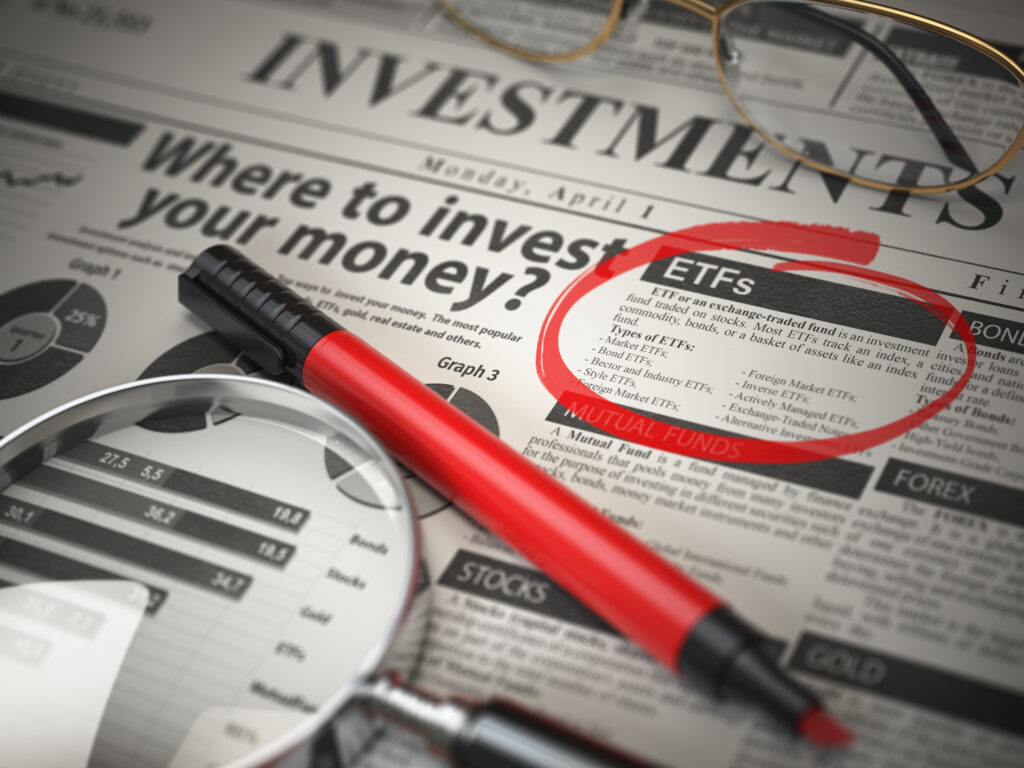
Exchange-traded funds (ETFs) work like index funds but trade on stock exchanges throughout the day like individual stocks. Many popular index funds come in ETF form — like VTI (Vanguard Total Stock Market ETF) or VOO (Vanguard S&P 500 ETF). For beginners they’re functionally identical to index funds. Low cost, diversified, and simple.
For most college students, the entire investing strategy is: open a Roth IRA → buy a total market index fund → contribute monthly → don’t touch it. Four steps. Zero complexity. Maximum time in the market.

Why the Roth IRA Is the Best First Account for Students
There are many types of investment accounts. For college students, one stands above everything else: the Roth IRA. Here’s why it’s extraordinary — and why starting one in college is one of the best financial decisions you can make.
| Feature | Roth IRA | Regular Brokerage Account | Traditional IRA |
|---|---|---|---|
| Tax on contributions | After-tax (you pay tax now) | After-tax | Pre-tax (deducted now) |
| Tax on growth | Tax-Free Forever | Taxed Each Year | Taxed at Withdrawal |
| Tax on withdrawals | Zero Tax in Retirement | Capital Gains Tax | Taxed as Income |
| Early withdrawal of contributions | Allowed Penalty-Free | Allowed Anytime | Penalty Before 59½ |
| Best for students? | Yes — Ideal | After Roth is Maxed | Less Ideal in College |
The Roth IRA’s superpower is tax-free growth. You pay income tax on the money before it goes in — but everything it earns over decades, and every dollar you take out in retirement, is completely tax-free. Since most college students are in a low tax bracket right now, the tax you pay going in is minimal. The tax-free compound growth over 40+ years is enormous.
Eligibility: You must have earned income (wages from a job). Investment returns don’t count. | Contribution limit: $7,500 per year (2026). | Income limit: Phases out above $150,000 single filer — not a concern for most students. | Withdrawal of contributions: Can be taken out penalty-free at any time — making it a flexible long-term savings vehicle, not just a retirement account.
How to Start Investing in 4 Steps
This is the practical part. Here are the four steps to go from zero to invested — most students complete all four in under 30 minutes.
Open a Roth IRA
Go to Fidelity.com, Vanguard.com, or Schwab.com. Click “Open an Account,” select Roth IRA, and complete the application. You’ll need your Social Security number, bank account details, and about 10 minutes. All three platforms are free with no account minimums.
Fund It — Even $25
Link your checking account and make an initial deposit. There is no minimum. $25, $50, $100 — whatever you can do right now. The amount matters less than starting. You can always increase contributions as your income grows.
Buy One Index Fund
Search for a total US market index fund: FSKAX (Fidelity), VTSAX or VTI (Vanguard), or SWTSX (Schwab). These funds hold thousands of companies in one investment, have razor-thin fees (often under 0.05%), and require zero expertise to hold.
Automate Monthly Contributions
Set up automatic monthly contributions from your checking account — whatever amount fits your budget. Automation means you never have to decide whether to invest. The money moves before you can spend it. Set it, forget it, and let compound interest do its work.
Keiko, Sophomore — Biology
Keiko worked 10 hours a week at the campus bookstore — about $360 a month after taxes. After rent, groceries, and her phone bill, she had around $90 left over. She’d been spending it on miscellaneous things each month without tracking it.
After reading about Roth IRAs, she opened a Fidelity account on a Sunday afternoon. She set up a $60 monthly contribution into FSKAX (Fidelity’s total market index fund) and adjusted her miscellaneous spending down by $60. The whole process took 25 minutes.
She didn’t feel the difference in her daily life. But over 45 years at a 6.5% average return, that $60 a month started at 20 is projected to grow to over $193,000 — entirely tax-free in a Roth IRA.

The Investing Mistakes Students Make Most
Knowing what to do is half the battle. Knowing what to avoid is the other half. These are the four most common investing mistakes college students make:
There is no right time. The market will always look scary, uncertain, or overpriced to someone. Students who wait for a perfect entry point almost always wait years — and those years are the most expensive thing they never bought. Time in the market beats timing the market. Always. Start now with whatever you have.
Buying individual stocks feels exciting. It’s also how most beginners lose money. Picking stocks requires significant research, expertise, and tolerance for volatility. Even professional fund managers fail to beat the market index consistently over time. Skip the individual stocks entirely and use index funds instead — you’ll outperform most active investors by doing less.
The stock market drops regularly — by 10%, 20%, sometimes more. Every major dip in history has eventually recovered and gone on to new highs. Students who sell when the market drops lock in their losses permanently. Students who hold (or keep contributing) through downturns end up buying more shares at lower prices. Your job during a market dip is to do absolutely nothing.
If your federal student loan interest rate is below 7%, mathematically you are better off investing in the market (historically 7–10% average annual return) than aggressively paying down low-interest debt. This doesn’t mean ignore your loans — it means don’t sacrifice investing entirely for debt that costs you less than the market returns. Both can happen at once.
Investing doesn’t require confidence, a large income, or perfect market knowledge. It requires one account, one fund, one automated contribution, and the patience to leave it alone. Every week you wait is a week of compound growth you can’t get back. Every week you’re invested is a week that works for your future self.
“You don’t build wealth by being the smartest investor in the room. You build it by being the most consistent one — starting earlier than everyone else, and never stopping.”
Your Investing Action List — Do This This Weekend
- Open a Roth IRA at Fidelity, Vanguard, or Schwab — free, takes 10 minutes
- Make an initial deposit — any amount, no minimum required
- Buy a total market index fund: FSKAX, VTI, or SWTSX
- Set up an automatic monthly contribution — even $25 or $50
- Do not check your balance more than once a month — avoid the temptation to react
- Increase your contribution by $10–$25 every time your income increases
Frequently Asked Questions
Issue 01: Why Financial Literacy Matters More Than Your GPA
Issue 02: Personal Finance for Students — A Complete Beginner’s Guide
Issue 03: Top 10 Money Mistakes Students Make (And How to Avoid Them)
Issue 04: How to Set Financial Goals as a Student (Step-by-Step)
Issue 05: Needs vs Wants — A Simple Guide for College Students
Issue 06: Investing for Students — A Beginner’s Guide