Saving matters because accumulated money provides financial security protecting against unexpected emergencies, enables achievement of important life goals requiring large purchases, and creates freedom allowing pursuit of opportunities impossible while living paycheck-to-paycheck—transforming individuals from financially fragile and dependent on next paycheck into resilient and empowered through cushion of available funds. Unlike spending that provides temporary satisfaction disappearing immediately, saving builds lasting asset base creating compound benefits over time through emergency protection, goal funding, interest earnings, reduced financial stress, and ultimate freedom from mandatory work dependency when savings reach financial independence levels.

This article is designed for anyone questioning whether saving is worth the sacrifice, individuals struggling to find motivation for delayed gratification, or those wanting to understand fundamental importance of accumulating wealth. You do not need financial expertise, high incomes, or perfect circumstances to benefit from saving—the principles and benefits apply universally across all income levels with even modest consistent savings producing transformative life improvements, though obviously higher incomes and savings rates accelerate timeline to achieving benefits.
Understanding why saving matters transforms it from abstract should-do into compelling priority creating genuine motivation sustaining discipline through temptations, provides clear purpose making temporary spending sacrifices psychologically bearable through vision of future benefits, and demonstrates how present restraint enables future abundance proving delayed gratification rational strategy not pointless deprivation—making comprehension of saving’s importance essential foundation for all wealth-building behaviors and financial success impossible without intrinsic understanding of why accumulation matters beyond vague “it’s good to save” platitudes.
Educational disclaimer: This article provides general educational information about saving benefits and importance. Individual circumstances, income levels, expenses, and appropriate saving strategies vary significantly. Emergency situations may temporarily require spending savings—article addresses general principles not emergency exceptions. This is not financial planning or professional advice. Consult qualified financial professionals for personalized guidance.
The Fundamental Benefits of Saving
1. Emergency Protection and Financial Security
The emergency fund shield:
- Car repairs ($500-2,000 typical)
- Medical emergencies and deductibles ($1,000-5,000+)
- Job loss (3-6 months expenses needed)
- Home repairs (HVAC, plumbing, roof issues $1,000-10,000)
- Unexpected travel (family emergency, funeral)
Without savings: Crisis becomes catastrophe
- $800 car repair on credit card at 22% APR
- Can’t afford minimums, late fees accumulate
- Snowballs into debt crisis
- Credit score damage
- Years recovering from single emergency
With savings: Crisis stays contained
- $800 car repair paid from emergency fund
- No debt, no interest, no late fees
- Replenish fund over 2-3 months
- Crisis handled, life continues normally
- No long-term damage
The transformation: From financially fragile (any disruption creates disaster) to financially resilient (withstands normal life adversities)
2. Goal Achievement and Major Purchases
Large goals requiring accumulated funds:
- Home down payment ($20,000-60,000+ typical)
- Vehicle purchase ($5,000-30,000)
- Education costs ($10,000-100,000+)
- Wedding ($15,000-35,000 average)
- Starting business ($5,000-50,000)
- Major travel experiences ($3,000-15,000)
Without savings: Goals perpetually deferred or debt-funded
- Can’t save down payment, stuck renting indefinitely
- Finance car at high interest, years of payments
- Graduate with crushing student loan burden
- Put wedding on credit cards, start marriage in debt
- Dreams remain dreams, never actualized
With savings: Goals become achievable realities
- Save $25,000 over 3 years, buy home
- Save $8,000, buy reliable used car cash
- Save for education, graduate debt-free or minimal debt
- Fund wedding from savings, start marriage financially healthy
- Dreams become concrete plans with timelines
The transformation: From perpetual wishing to systematic achievement through accumulated resources
3. Freedom and Flexibility
Options savings creates:
- Career flexibility: Can leave toxic job, negotiate from strength, pursue passion work at lower pay
- Geographic freedom: Can relocate for opportunity or quality of life
- Relationship choices: Not trapped in bad relationship for financial survival
- Opportunity pursuit: Can invest in business, education, or ventures requiring capital
- Risk tolerance: Can take calculated career or business risks impossible without cushion
- Negotiation power: Not desperate, can walk away from bad deals
Without savings: Trapped by necessity
- Must accept any job offer, no negotiating power
- Can’t leave abusive employer or relationship
- Stuck in expensive city despite preferring elsewhere
- Can’t pursue opportunities requiring upfront investment
- Every decision driven by immediate financial survival
With savings: Empowered to choose
- 6 months expenses saved = can leave bad job finding better fit
- Down payment saved = can move to preferred location
- Emergency fund = can leave toxic relationship safely
- Capital saved = can start business or invest in opportunities
- Decisions driven by values and goals, not desperation
The transformation: From trapped and desperate to free and empowered through financial cushion
4. Compound Growth and Wealth Building
Money saved earns returns creating exponential growth:
Example: $500 monthly saved invested at 8% annually
- Year 5: $36,738 (principal $30,000 + growth $6,738)
- Year 10: $91,473 (principal $60,000 + growth $31,473)
- Year 20: $294,510 (principal $120,000 + growth $174,510)
- Year 30: $745,180 (principal $180,000 + growth $565,180)
- Year 40: $1,745,503 (principal $240,000 + growth $1,505,503)
The magic: Saved $240,000 over 40 years, ended with $1.75 million through compound growth
Without saving and investing: Zero wealth accumulation
- Spend every dollar earned
- After 40 years working: Net worth $0
- Must work until unable, depend on insufficient Social Security
- No generational wealth transfer
With consistent saving and investing:
- Systematic accumulation over decades
- Compound returns amplify contributions
- After 30-40 years: Substantial seven-figure wealth
- Retirement security, potential early retirement
- Generational wealth possible
The transformation: From paycheck-dependent worker to wealth owner through time and compounding
5. Reduced Stress and Improved Mental Health
Financial stress impacts:
- Sleep problems and anxiety
- Relationship conflicts (money fights primary divorce cause)
- Health problems (stress-related conditions)
- Reduced work performance
- Depression and hopelessness
Research findings:
- Financial stress stronger predictor of mental health issues than income level
- Emergency savings more correlated with wellbeing than absolute wealth
- $2,500 emergency fund significantly reduces anxiety even for high earners
- Sense of financial control matters more than absolute amounts
Without savings: Chronic financial anxiety
- Constant worry about “what if” scenarios
- Every unexpected expense creates panic
- Relationship tension from money stress
- Poor sleep and health from ongoing worry
- Feeling trapped and hopeless
With savings: Peace of mind
- Confidence handling emergencies
- Reduced anxiety about future
- Better relationships (fewer money fights)
- Improved sleep and health
- Sense of control and optimism
The transformation: From chronically stressed to mentally calm through financial cushion

The Cost of Not Saving
Immediate Costs
Debt accumulation from emergencies:
- $2,000 emergency without savings → credit card debt
- At 22% APR paying $100 monthly: 24 months to pay off, $400 interest paid
- Multiple emergencies compound: $8,000 debt spiral common
- Years trapped in debt cycle from lack of emergency cushion
High-interest financing:
- Need $800 for car repair, no savings
- Payday loan: $800 + $120 fee (15% for 2 weeks) = 390% APR
- Or credit card cash advance: 29% APR + $40 fee
- Emergency costs 20-50% more without savings
Overdraft and late fees:
- Overdraft fees: $35 per transaction, 3-4 monthly = $105-140
- Late payment fees: $25-40 each
- Annual cost: $1,500-2,000+ in preventable fees
- All eliminated with modest buffer savings
Opportunity Costs
Missed compound growth:
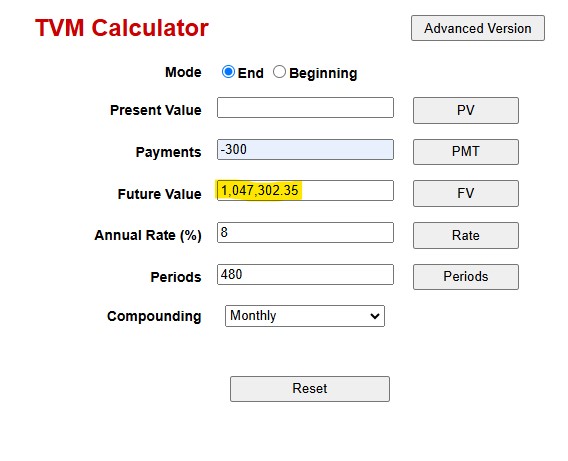
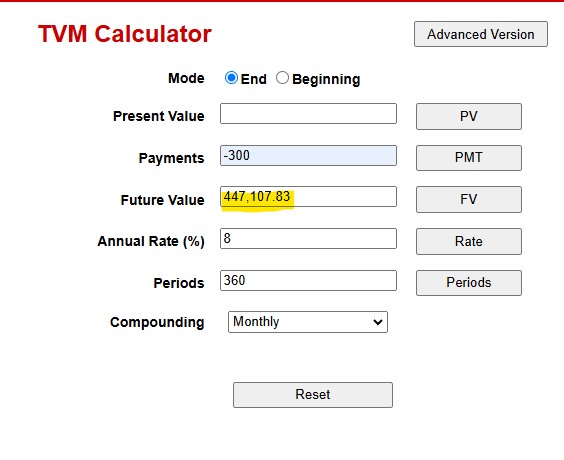
- Not saving $300 monthly from age 25-65 (40 years)
- Lost potential at 8%: $1,047,302
- This is wealth never built, opportunities never realized
- Retirement insecurity, continued work dependency
Deferred or unachieved goals:
- Never save down payment → rent forever, build no equity
- Can’t start business → remain employee, cap income potential
- Can’t invest in education → limit career advancement
- Goals perpetually “someday” never becoming reality
Trapped in suboptimal situations:
- Can’t leave bad job → endure years of misery and stress
- Can’t relocate → stuck in undesired location
- Can’t pursue better opportunities → stagnant life trajectory
- Decades of constrained choices from lack of financial cushion
Long-Term Consequences
Retirement insecurity:
- Reach 65 with minimal savings
- Depend on insufficient Social Security ($1,500-2,500 monthly typical)
- Can’t afford to stop working
- Reduced quality of life in later years
- Potential burden on children
Perpetual paycheck dependency:
- Work 40+ years, still need paycheck at 70
- No flexibility or freedom even late in life
- One crisis away from catastrophe always
- Never achieve financial independence
Generational impact:
- Can’t help children with education
- No inheritance to transfer
- Children learn poor financial habits
- Cycle of financial struggle continues
Overcoming Barriers to Saving
Barrier 1: “I can’t afford to save”
Reality check:
- Most people can find 5-10% through expense optimization
- Starting with $25-50 monthly better than $0
- Automatic transfers before spending prevents “can’t afford” excuse
- Thousands in unconscious waste typically exists (subscriptions, impulse purchases, convenience spending)
Solutions:
- Track spending one month identifying waste
- Cut lowest-value expenses first
- Start tiny (even $10 weekly = $520 annually)
- Increase gradually as income grows or expenses optimize
Barrier 2: “Life is short, I want to enjoy now”
The false dichotomy:
- Saving doesn’t require complete deprivation
- Balanced approach: Save 15-20%, spend 80-85%
- Strategic spending on high-value items, cut low-value waste
- Present enjoyment AND future security both possible
Long-term perspective:
- Life potentially 80-90 years total
- Working years: 40-45 years
- Retirement: 20-30 years
- Not saving = enjoyable 40s, miserable 60s-80s
- Saving = slightly constrained 40s, comfortable 60s-80s
- Which 30-year period prefer being comfortable?
Barrier 3: “I’ll save when I earn more”
The income increase trap:
- Lifestyle inflation typically consumes raises
- Earning $40,000: “When I make $60,000 I’ll save”
- Earning $60,000: “When I make $80,000 I’ll save”
- Earning $80,000: Still not saving, waiting for $100,000
- Pattern continues indefinitely, never saving at any income
The habit imperative:
- Saving is behavior and habit, not income level
- Someone saving 10% at $40,000 will save 10% at $80,000
- Someone saving 0% at $40,000 will save 0% at $80,000
- Start now at current income building habit
- Raise savings amounts as income grows
Barrier 4: “Saving small amounts won’t make a difference”
The compounding reality:
- $100 monthly seems trivial
- But $100 monthly for 30 years at 8% = $149,036
- $50 monthly for 40 years at 8% = $174,550
- Small consistent amounts become substantial through time and compound growth
The emergency fund truth:
- Even $1,000 saved prevents most emergencies from becoming crises
- $2,500 covers 80% of unexpected expenses without debt
- $5,000 emergency fund transforms financial security
- “Small” amounts create massive psychological and practical benefits
Practical Motivation for Saving
Milestone Motivation
Celebrate progress markers:
- First $100 saved: Proven you can do it
- First $500: Covers many common emergencies
- First $1,000: Major psychological milestone, substantial protection
- First $2,500: Covers 80% of emergencies, rarely need debt
- First $5,000: Full starter emergency fund, major security achieved
- 3 months expenses: Significant job loss protection
- 6 months expenses: Complete emergency fund, ultimate security
Visual Progress Tracking
Make savings tangible:
- Thermometer chart showing progress toward goal
- Graph of net worth over time trending upward
- Checklist of milestones checking off achievements
- Jar or envelope filling with cash (if using cash method)
- Regular review of account balances watching growth
Connection to Specific Goals
Abstract “saving” less motivating than concrete goals:
- Instead of: “I’m saving money”
- Reframe as: “I’m saving for down payment on home”
- Or: “I’m building emergency fund so car repair won’t create crisis”
- Or: “I’m saving so I can leave this job if better opportunity arises”
- Specific purpose provides meaning making sacrifice worthwhile
Calculated Trade-Off Awareness
Understand what you’re trading:
- $200 monthly dining out vs $200 monthly savings
- After 10 years: $0 from dining (all consumed) vs $36,000+ saved (plus growth)
- Question: Would you rather have $36,000 in 10 years or fancy meals today?
- Not “can’t have nice meals” but “choosing $36,000 over meals”
- Conscious choice vs unconscious drift
Why Understanding Saving’s Importance Matters
Without genuine comprehension of why saving matters, discipline becomes unsustainable deprivation triggering eventual rebellion and abandonment, abstract “should save” advice lacks motivational power creating sporadic inconsistent efforts, and people fail to prioritize future security when present temptations feel more urgent without clear understanding of long-term consequences—while those deeply understanding saving’s importance maintain consistent discipline through temptations powered by intrinsic motivation, make informed trade-offs consciously choosing future benefits over present consumption, and build substantial wealth impossible for those viewing saving as pointless sacrifice rather than rational investment in security, freedom, and future abundance.
Understanding why saving matters enables individuals to:
- Develop genuine intrinsic motivation sustaining discipline through temptations
- Make conscious informed trade-offs choosing future benefits over present consumption
- Weather temporary setbacks maintaining long-term commitment
- Resist lifestyle inflation understanding opportunity costs clearly
- Build emergency protection preventing financial catastrophes
- Achieve major life goals impossible through spending-focused approaches
- Create freedom and options unavailable to paycheck-dependent individuals
- Experience reduced stress and improved wellbeing through financial security
Understanding transforms saving from abstract obligation into compelling personal priority creating sustained behavioral change impossible through superficial “you should save” advice lacking deep comprehension of fundamental importance.
Common Misunderstandings
Many people assume saving only matters for retirement making it irrelevant for young people decades from retirement age. In reality, emergency protection and goal achievement benefits matter immediately regardless of age—25-year-old needs emergency fund preventing debt spiral and down payment enabling home purchase within years not decades, proving saving’s importance spans all life stages with benefits accruing continuously not just in distant retirement.
Another common misconception is that saving requires earning high income making it impossible for modest earners. In practice, saving is percentage-based behavior not absolute amount—someone earning $35,000 saving 10% ($3,500 annually) builds emergency fund and achieves goals identically to someone earning $100,000 saving 10% ($10,000 annually) just at proportional scale, proving principle universal across income levels when approached as percentage of earnings rather than absolute dollar targets requiring wealth.
Some believe saving means complete spending deprivation making present life miserable for uncertain future. However, balanced saving (15-20% of income) leaves 80-85% for current living enabling present enjoyment while building future security, and strategic spending on high-value items while cutting low-value waste maintains quality of life without sacrifice feeling, proving saving and present enjoyment compatible through thoughtful allocation versus false deprivation-or-consumption dichotomy.
How Understanding Saving’s Importance Fits Into Financial Success
Understanding why saving matters provides essential motivation foundation enabling all subsequent wealth-building behaviors, transforms abstract “should” into compelling “want to” creating sustainable discipline, and connects present actions to future outcomes making temporary sacrifices psychologically bearable through clear vision of benefits, making comprehension of saving’s fundamental importance prerequisite for financial success impossible to achieve through obligation-based approaches lacking intrinsic motivation and deep understanding.
For example, two college friends both age 25 earning $50,000 hear generic advice “you should save 15%.” Person A never understands why beyond vague “it’s good”—tries saving sporadically, month 1 saves $500 feeling proud, month 2 sees new laptop on sale feels saving pointless for small amounts buys laptop, month 3-6 saves nothing distracted by daily life, month 7 emergency happens has no cushion goes into debt, abandons saving entirely feeling it “doesn’t work.” After 10 years: Saved $8,000 total sporadically, mostly consumed by emergencies, net worth near zero, stressed and paycheck-dependent. Person B deeply internalizes why saving matters reading articles, calculating compound growth ($500 monthly becomes $745,000 in 30 years), understanding emergency protection prevents debt spirals, recognizing freedom that financial cushion provides—develops genuine conviction. Commits to automatic $625 monthly (15%), experiences initial tightness but adjusts spending, sees emergency fund grow providing peace of mind reinforcing behavior, watches compound growth in retirement account providing motivation, maintains discipline through temptations powered by understanding future benefits worth present restraint. After 10 years: Saved $75,000 systematically, invested growing to $109,000 through returns, has substantial emergency fund, on track for millionaire status by 55, experiencing reduced stress and increased options. Identical starting point, same advice—Person B succeeded through deep understanding of WHY creating intrinsic motivation and sustained discipline while Person A failed through superficial compliance lacking genuine comprehension of importance.
Understanding why saving matters separates successful disciplined wealth builders from failed sporadic attempters through intrinsic motivation and clear purpose impossible to sustain through obligation-based approaches lacking fundamental comprehension of saving’s transformative importance.
Recent Updates and Trends
In recent years, financial independence movement has popularized extreme saving (50-70% rates) demonstrating aggressive saving enables early retirement in 10-20 years not just comfortable traditional retirement at 65, making saving’s importance more visible and aspirational for younger generations seeing peers achieving freedom through discipline.
Economic volatility has reinforced emergency savings importance—job market disruptions, inflation spikes, and economic uncertainty making clear those with savings weather storms while those without experience catastrophic setbacks, validating emergency fund’s critical protective role previously dismissed by some as unnecessary during stable periods.
Rising costs of housing, education, and healthcare have increased major goal savings requirements—down payments, college funds, and medical reserves needing larger amounts than historical norms, making systematic saving more important than ever for achieving life milestones previously more accessible.
Social Security concerns have heightened retirement savings urgency—program’s long-term funding questions making clear younger generations cannot depend solely on government benefits requiring personal savings for security, increasing individual responsibility for retirement funding through personal accumulation.
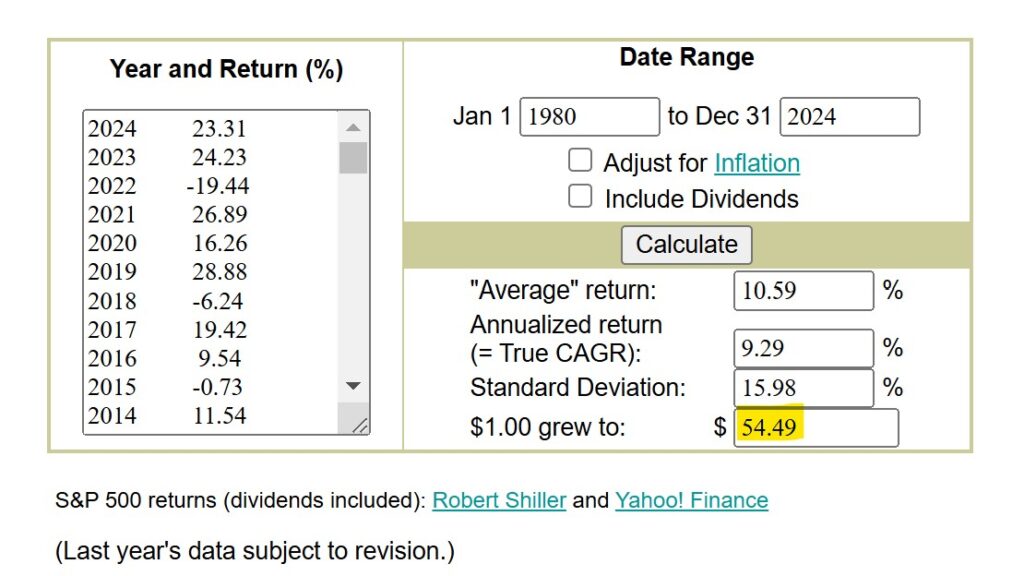
Fundamental saving importance remains timeless: emergency protection prevents financial catastrophes, goal funding enables life milestones, compound growth builds substantial wealth over time, financial cushion creates freedom and reduces stress, and systematic accumulation separates financially secure from perpetually struggling—regardless of FIRE trends, economic conditions, cost increases, or Social Security uncertainties, consistent saving produces security, freedom, and opportunity impossible through consumption-focused approaches leaving individuals vulnerable and dependent regardless of income earned over lifetimes.
3 Things You Can Do Today
Ready to embrace saving’s importance? Here are three simple steps you can take right now:
1. Calculate your specific “why” for saving with concrete goals and timelines – Write down three specific reasons you need savings: Emergency fund ($X amount by Y date preventing debt), Major goal (down payment, vehicle, education—$X by Y), Long-term security (retirement fund reaching $X by age Y). Make these concrete and personal. Example: “I need $5,000 emergency fund by December 2027 so car repair won’t force credit card debt. I want $25,000 down payment by 2030 enabling home purchase. I need $500,000 retirement by age 55 enabling potential early retirement.” This transforms abstract “should save” into personal compelling purposes. Takes 15 minutes creating genuine motivation. Revisit when tempted to skip saving remembering specific purposes.
2. Calculate compound growth of your potential savings showing long-term outcome – Use online compound interest calculator or simple math. Determine monthly saving amount you can commit to (even $100-200). Calculate growth at 8% annual return over 20, 30, 40 years. Example: $200 monthly for 30 years = $298,072. $500 monthly for 40 years = $1,745,503. Seeing that $200 monthly becomes nearly $300,000 in 30 years makes sacrifice tangible and worthwhile. Calculate your specific numbers. Write them prominently: “$X monthly today becomes $Y in Z years.” This makes future abundance visible justifying present restraint. Takes 10 minutes creating concrete vision. Reference when questioning if small amounts matter—they compound into life-changing sums.
3. Identify one specific financial disaster savings would have prevented in your past – Reflect on previous 5 years. Recall emergency or unexpected expense that created financial stress, debt, or crisis. Example: Car repair $1,200 went on credit card at 22% APR taking 18 months to pay off with $200 interest paid. Or: Job loss with no emergency fund forced desperate scrambling and suboptimal rushed decisions. Or: Couldn’t pursue opportunity requiring upfront investment missing life-changing chance. Write specific example and emotional impact. This creates visceral understanding of saving’s protective value through personal experience. Knowing you never want to repeat that crisis provides powerful motivation maintaining emergency fund. Takes 5 minutes connecting abstract concept to concrete personal cost of not having savings.
These actions create genuine internalized understanding of saving’s importance through personal concrete goals, visible long-term compounding outcomes, and emotional connection to past consequences of lacking savings—transforming abstract obligation into compelling personal priority.
Quick FAQ
How much should I save and is there a minimum that actually matters?
Minimum: 10-15% of gross income for adequate retirement savings. Emergency fund: $1,000 starter, ultimately 3-6 months expenses. Even “small” amounts matter enormously: $1,000 emergency fund prevents 60% of emergencies becoming debt crises. $100 monthly for 30 years becomes $149,000 through compounding. Start with what’s possible even $25-50 monthly—building habit and proving you can matters more than perfect amount. Increase percentage as income grows or expenses optimize.
Should I save for emergencies or pay off debt first?
Both but staged: (1) Save $1,000-2,000 starter emergency fund first preventing new debt from small emergencies, (2) Attack high-interest debt aggressively (credit cards over 15% APR), (3) After debt eliminated, build full 3-6 month emergency fund, (4) Then maximize retirement and other savings. Exception: Always capture employer 401(k) match—free money beats debt payoff math. Starter emergency fund critical—without it unexpected expenses create new debt negating payoff progress creating perpetual cycle.
What if I’m already behind on retirement—does saving still matter?
Absolutely—starting late still produces substantial results. Age 40 saving 15% for 25 years produces significant six-figure retirement fund. Age 50 saving 20% for 15 years still builds meaningful security. Strategies: Aggressive rate (20-30% vs 15%), catch-up contributions at 50+ ($7,500 extra 401k, $1,000 extra IRA for 2024), extend working years to 68-70 giving more accumulation time. Every year matters—starting today at any age dramatically better than never starting. Past doesn’t matter, future trajectory from now forward matters.
How do I stay motivated to save when results seem so far away?
Five strategies: (1) Milestone celebration—track and reward hitting $1,000, $5,000, $10,000 markers, (2) Visual progress—graph or chart showing growth over time, (3) Connect to specific goals—”down payment fund” more motivating than abstract “savings”, (4) Calculate trade-offs—$200 dining out monthly vs $36,000 in 10 years makes choice clear, (5) Automate completely—remove temptation and decision fatigue through set-and-forget transfers. Also: Emergency fund provides immediate peace of mind benefit—not distant, felt within weeks of building cushion.
Can I save too much—when should I enjoy life versus save?
Balance is key: 15-20% savings leaves 80-85% for current living enabling present enjoyment. “Too much” saving (70%+ rates) requires extreme frugality most find unsustainable unless pursuing specific early retirement goal. Evaluate: If current lifestyle genuinely satisfying and savings on track for goals, probably balanced. If miserable from deprivation or falling behind on retirement, adjust. Also consider: Spend strategically on high-value items bringing joy, cut ruthlessly on low-value waste. Quality of life from experiences and relationships more than consumption level—can save aggressively while maintaining meaningful satisfying life through values-aligned spending.
What’s the difference between saving and investing—which matters more?
Saving = setting money aside. Investing = putting saved money into assets earning returns. Both critical: Save first (accumulation), invest second (growth). Emergency fund: Save in savings account (liquid, safe). Retirement and long-term goals: Save then invest in stocks (growth potential). Matter equally—saving without investing loses to inflation, investing without saving never builds wealth. Think: Savings rate determines accumulation, investment returns amplify it. Someone saving 0% but getting 10% returns still has $0. Someone saving 15% earning 2% builds wealth slowly. Someone saving 15% earning 8% builds substantial wealth—both required.
Explore More in Money Basics
Disclosure
This article is provided for educational purposes only and does not constitute financial planning or investment advice. Saving benefits and strategies discussed are general principles—individual circumstances vary significantly. Investment return examples use historical average 8% returns—actual market performance varies and is not guaranteed. Emergency situations may temporarily require spending savings—article addresses general principles not emergency exceptions. Appropriate savings rates depend on income, expenses, goals, and life stage. Examples use simplified scenarios—actual situations more complex. Compound growth calculations assume consistent contributions and returns—reality includes market volatility and life disruptions. Consult qualified financial planners and advisors for personalized guidance. Advertisements or sponsored content may appear within or alongside this content. All information is presented independently.