Tag: saving money

  • Needs vs Wants: A Simple Guide for College Students

    Needs vs Wants: A Simple Guide for College Students

    Needs vs Wants: A Simple Guide for College Students | The Campus Investor
    The Campus Investor
    Money Smarts for Real Life
    🛒 Issue No. 05  ·  Financial Literacy Series

    Needs vs Wants: A Simple Guide for College Students

    May 2026 | 6 min read | For College Students

    You get paid. You pay your bills. Then somehow, by the end of the month, there’s almost nothing left — and you can’t quite explain where it went. Sound familiar? The answer almost always comes down to one blurry line: the difference between what you actually need and what you simply want.

    This distinction sounds obvious until you’re standing in line at a coffee shop, talking yourself into a $7 latte because “I need caffeine to study.” Or justifying a new pair of shoes because “I needed something to wear to the interview.” The line between needs and wants isn’t always clean — and that’s exactly the problem.

    This guide gives you a clear framework for telling them apart, a practical way to audit your own spending, and the tools to make smarter decisions every single month.

    34%
    of student spending goes to non-essential “want” categories each month
    $220
    Average monthly amount students spend on dining out beyond meal plans
    60%
    of impulse purchases are regretted within 48 hours

    What Needs and Wants Actually Mean

    The classic definition: a need is something you must have to survive and function. A want is something that improves your life or brings enjoyment but isn’t essential. Simple in theory. Messy in practice — especially for a college student whose entire context is different from a working adult.

    🏠
    NEED
    Essential to function

    Things you genuinely cannot function without — your safety, health, ability to attend class, and basic daily living.

    • Rent or on-campus housing
    • Groceries and basic food
    • Utilities — electricity, water, heat
    • Required textbooks and course materials
    • Transportation to class or work
    • Health insurance and medications
    • Basic clothing appropriate for weather
    • Phone (for safety and class communication)
    • Internet for coursework
    • Minimum debt payments
    🛍️
    WANT
    Nice to have, not essential

    Things that add comfort, entertainment, or enjoyment — but that you could live and study without.

    • Daily coffee shop runs
    • Dining out beyond your meal plan
    • Streaming subscriptions
    • New clothes beyond basic needs
    • Concerts, events, nights out
    • Gaming or hobby purchases
    • Upgraded phone or laptop
    • Gym membership (if campus gym exists)
    • Brand-name vs generic products
    • Convenience food and delivery apps

    Notice that some of these feel debatable. A phone is listed as a need — but a brand-new iPhone is a want. Internet is a need — but a $100/month premium plan when a $40 plan works just as well is a want. The category matters less than your honest answer to: “Could I manage without this specific version of it?”

    Money Management Basics Book Cover
    Explore the Easy Learning Series

    Money Management Basics

    Simple steps to take control of your finances — learn how to track spending, build savings, and reduce debt with clear, practical guidance.

    View on Amazon →

    The Grey Zone — Things That Are Both

    The most expensive financial mistakes students make live in the grey zone — the space between a clear need and a clear want. These are purchases that start as legitimate needs but get upgraded into wants without anyone noticing.

    Item The Need Version The Want Version Verdict
    Food Groceries, meal plan, cooking at home DoorDash 4x a week, restaurant meals, daily Starbucks Depends
    Phone A working phone on a reasonable plan Latest iPhone, $90/month unlimited premium plan Depends
    Laptop A functional laptop for coursework Upgrading a working laptop “because it’s slow” Depends
    Transportation Bus pass, bike, carpool to class Uber everywhere because “it’s faster” Depends
    Clothing Weather-appropriate, interview-ready basics New outfit every month, brand loyalty shopping Depends
    Textbooks Required course materials, library copies, PDFs Buying new when rentals or PDFs exist Depends
    Internet Reliable connection for classes and work $110/month gigabit plan for a single user Depends
    Social spending Occasional meals or events with friends Saying yes to every outing out of FOMO Depends

    “The grey zone is where budgets break down. The need is real — but the version of it you’re buying is a want in disguise.”

    Mini-Case · The Food Budget Illusion

    Sofia, Junior — Nursing

    Sofia told herself she spent around $200 a month on food. She had a partial meal plan, cooked sometimes, and grabbed coffee a few times a week. When she actually pulled her bank statements, the real number was $410 — nearly double her estimate.

    The gap was all grey zone: $80 in delivery apps she’d forgotten about, $55 in coffee shop runs she counted as “study expenses,” and $75 in spontaneous dining out she never tracked. None of it felt like overspending in the moment. Together it was $210 she hadn’t planned for.

    The lesson: Food is absolutely a need. Daily delivery, premium coffee, and spontaneous restaurant meals are wants wearing a need’s clothing. The category is legitimate — the version matters enormously.

    A 4-Question Framework to Decide in Real Time

    The best time to classify a purchase isn’t when you’re budgeting — it’s at the moment of decision, standing in the store or about to hit “place order.” Here are four questions to run through before any non-routine purchase:

    1

    Can I physically function without this today?

    If you’d miss a class, compromise your health, or be unable to complete required work without it — it’s a need. If life goes on normally without it — it’s a want. This is the most honest filter first.

    2

    Is there a cheaper version that serves the same purpose?

    If yes, the need is real but the specific purchase may be a want. You need food — the $14 delivery fee is a want. You need a textbook — the $180 new copy when a $20 rental exists is a want. Always check for the “need version” of the purchase first.

    3

    Am I buying this because I want it, or because I feel like I should?

    Social pressure and FOMO are the hidden drivers behind most student overspending. “Everyone’s going” or “I’d feel left out” are want-based motivations, not need-based ones. Recognizing the difference takes practice — but it’s worth developing.

    4

    Is this in my budget this month?

    Even legitimate wants are fine — if they’re budgeted for. A concert ticket isn’t inherently bad spending. A concert ticket that pushes your grocery budget into a credit card charge is. The question isn’t just need or want — it’s need or want and is it planned for?

    ⏱ The 24-Hour Rule

    For any unplanned purchase over $30, wait 24 hours before buying. If you still want it the next day and it fits your budget — buy it guilt-free. Most impulse purchases disappear in that window. For purchases over $100, make it 48 hours. This one habit alone can save students hundreds of dollars a semester.

    How to Audit Your Own Spending

    Theory is useful. Seeing your own actual numbers is better. A spending audit takes about 20 minutes and will show you more about your financial habits than any quiz or framework ever could.

    Pull up your last 30 days of bank and credit card transactions. Go through each one and sort it into one of three buckets:

    Keep

    Essential needs and planned wants that fit your budget. These stay as-is.

    ✂️

    Trim

    Real needs being met in an expensive way. Find a cheaper version — same result, less cost.

    Cut

    Wants you didn’t plan for, don’t use, or that don’t bring enough value. Eliminate these first.

    Mini-Case · The Audit That Paid Off

    Marcus, Senior — Engineering

    Marcus did his first-ever spending audit during finals week — not the ideal timing, but the results were eye-opening. In 30 minutes he found: two streaming services he’d forgotten about ($28/month), a gym membership he hadn’t used since September ($35/month), daily energy drinks from the campus store ($55/month), and $120 in Uber rides he could have replaced with the free campus shuttle.

    Total identified: $238/month he wasn’t conscious of spending. He cut the gym and one streaming service immediately, switched to making coffee in his dorm, and started using the shuttle. The following month he had $180 more — without changing anything about his actual lifestyle.

    The lesson: The spending audit doesn’t tell you to stop enjoying life. It tells you where your money went without your permission — and gives it back.

    Where Needs and Wants Fit in Your Budget

    Once you understand needs vs wants, they slot directly into the 50/30/20 budget rule covered in Issue 02 of this series. Needs live in the 50% category. Wants live in the 30% category. Savings and debt payoff take the remaining 20%.

    The power of knowing your needs vs wants is that it helps you defend your budget categories under pressure. When you’re tempted to dip into your savings for a want, you know what you’re doing. When a surprise expense hits your needs category, you know where to pull from — your wants budget, not your savings.

    📊 A Rule Worth Remembering

    Wants aren’t the enemy. A budget that has zero room for enjoyment won’t last two weeks. The goal is to make your wants intentional and planned — not to eliminate them. Give yourself a monthly “wants allowance,” spend it freely, and don’t feel guilty about it. The guilt comes from unplanned want spending, not from spending on wants itself.

    The Mindset Shift That Makes It All Easier

    The biggest obstacle to distinguishing needs from wants isn’t knowledge — it’s the story we tell ourselves in the moment. “I deserve this.” “I’ve been stressed.” “Everyone else has one.” “It’s on sale.” These narratives are powerful and they arrive instantly. The framework above gives you a pause — a moment between the impulse and the action where a better decision can live.

    But the deeper shift is this: stop thinking about money as something that runs out and start thinking of it as something you direct. Every dollar you spend on a want you didn’t plan for is a dollar that could have been directed toward a goal you actually care about. The latte isn’t just $7 — it’s $7 that wasn’t going toward your emergency fund, your loan balance, or your first investment.

    That framing isn’t meant to make you feel guilty. It’s meant to give you agency. You’re not deprived when you skip the $7 latte. You’re choosing your goal over your impulse — and that’s a different kind of power entirely.

    “Every want you choose intentionally makes you richer. Every want that sneaks past your budget makes you poorer. The difference is awareness.”

    ◆ ◆ ◆

    Your Needs vs Wants Action List — This Week

    • Pull up your last 30 days of transactions and sort each into Need, Want, or Grey Zone
    • Identify your top three unplanned want categories — these are your budget leaks
    • Find one “grey zone” item you’re spending on the want version of — switch to the need version
    • Set a monthly wants allowance in your budget and stick to it guilt-free
    • Apply the 24-hour rule to every unplanned purchase over $30 this month
    • Review your subscriptions — cancel anything you haven’t used in 30 days

    Frequently Asked Questions

    What is the difference between needs and wants for college students?
    A need is something essential to your health, safety, and ability to function as a student — rent, basic food, utilities, required course materials, transportation to class. A want is anything that improves your comfort or enjoyment but isn’t essential — dining out, streaming services, new clothes beyond basics, daily coffee shop runs. The blurry part is the grey zone: items that are genuine needs being fulfilled in a want-level way, like food via delivery apps instead of cooking.
    How do I stop impulse spending as a college student?
    The single most effective tool is the 24-hour rule: for any unplanned purchase over $30, wait 24 hours before buying. Most impulse purchases disappear in that window. For purchases over $100, wait 48 hours. Combined with a monthly “wants allowance” — a fixed amount you can spend on anything guilt-free — you get both discipline and freedom without feeling deprived.
    Is daily coffee a need or a want for students?
    Coffee itself could be argued as a need for focus and studying — but daily coffee shop runs at $5–$7 each are a want. The need version is making coffee at your dorm or apartment. The want version is the experience, convenience, and specific brand of the coffee shop. At $6 a day, five days a week, that’s $120 a month — $960 over an 8-month academic year — on the want version of a need.
    How do needs and wants fit into a student budget?
    Using the 50/30/20 rule: needs should consume no more than 50% of your monthly income, wants up to 30%, and the remaining 20% goes to savings and debt payoff. The key is giving yourself a planned wants allowance each month — a fixed amount you can spend freely on whatever brings you joy. Guilt comes from unplanned want spending, not from spending on wants itself.
    How do I do a spending audit as a student?
    Pull up your last 30 days of bank and credit card transactions. Go through each one and label it Keep (essential or planned), Trim (real need being met expensively — find a cheaper version), or Cut (unplanned want or unused subscription). Most students find $100–$250 per month in Trim and Cut categories in their first audit — money they were spending without noticing or intending to.

    The Campus Investor  ·  Issue 05  ·  Financial Literacy Series

    Written for students who want to graduate smart — in every sense of the word.

  • How to Set Financial Goals as a Student (Step-by-Step)

    How to Set Financial Goals as a Student (Step-by-Step)

    How to Set Financial Goals as a Student (Step-by-Step) | The Campus Investor
    The Campus Investor
    Money Smarts for Real Life
    🎯 Issue No. 04  ·  Financial Literacy Series

    How to Set Financial Goals as a Student (Step-by-Step)

    May 2026 | 6 min read | For College Students

    Most students don’t lack motivation when it comes to money. They lack direction. They want to save more, spend less, get out of debt — but without a concrete goal attached to a concrete plan, “wanting” never becomes “doing.”

    Financial goals are the bridge between where you are and where you want to be. Set them well and money suddenly has purpose. Skip them and you’ll spend four years reacting to your bank account instead of directing it.

    This guide walks you through exactly how to set financial goals that are realistic, motivating, and built for a student life — step by step.

    78%
    of students have no written financial goals
    2x
    more likely to achieve goals when written down vs. kept in your head
    $0
    average savings of students with no savings goal

    Why Most Students Skip Financial Goals — And Pay For It

    Setting financial goals sounds like something responsible adults do — not something relevant to a student living on dining hall food and a part-time barista salary. That’s the first misconception. Goals aren’t about how much money you have. They’re about telling the money you do have where to go.

    Without a goal, every financial decision gets made in the moment — based on mood, peer pressure, or whatever sale just hit your inbox. That’s how students end up $800 into a semester with no memory of where it went.

    Mini-Case · No Goal, No Direction

    Ryan, Sophomore — Marketing

    Ryan worked 12 hours a week at a campus coffee shop, bringing in around $480 a month after taxes. He wasn’t spending recklessly — a dinner here, a concert ticket there, some new clothes in October. By November he had $14 in his account and no idea what happened.

    When his car needed a $380 repair, he had no choice but to call his parents. The embarrassment led him to finally sit down and write out three specific goals. Within six months he had a $600 emergency fund and was making progress on his credit card balance for the first time.

    The lesson: Ryan didn’t have an income problem. He had a direction problem. Three written goals changed everything — not because he earned more, but because he finally told his money where to go.

    The Three Types of Financial Goals Every Student Needs

    Not all goals are created equal. A strong personal finance plan includes goals across three time horizons — short, mid, and long-term. Each serves a different purpose and keeps you motivated at different stages of your financial journey.

    Short-Term

    1–12 Months

    • Build a $500 emergency fund
    • Pay off one credit card
    • Set up a monthly budget
    • Save $50/month consistently
    • Cancel unused subscriptions
    Mid-Term

    1–4 Years

    • Graduate with under $X in debt
    • Build a 700+ credit score
    • Save 3 months of expenses
    • Open and fund a Roth IRA
    • Pay off all credit card debt
    Long-Term

    5+ Years

    • Be debt-free by age 30
    • Save first home down payment
    • Reach $50K invested by 28
    • Build a 6-month emergency fund
    • Achieve financial independence

    You don’t need goals in all three categories right now. But having at least one goal from each tier gives you something to work toward today, something to build toward this year, and something to stay motivated about for the long haul.

    “A goal without a deadline is just a wish. A goal without a number is just a dream. A real financial goal has both — and a plan attached.”

    Money Management Basics Book Cover
    Explore the Easy Learning Series

    Money Management Basics

    Simple steps to take control of your finances — learn how to track spending, build savings, and reduce debt with clear, practical guidance.

    View on Amazon →

    How to Make Your Goals SMART

    You’ve probably heard of SMART goals in an academic context. The framework works just as well — actually better — for personal finance. Vague goals produce vague results. SMART goals produce specific ones.

    Here’s how it breaks down for a financial goal:

    Letter What It Means Financial Example
    S Specific — Exactly what do you want to achieve? “Save $600 in an emergency fund” not “save more money”
    M Measurable — How will you know you’ve hit it? A dollar amount, a balance, a date — something you can check
    A Achievable — Is this realistic for your income? Saving $75/month is achievable on $900/month income
    R Relevant — Does this goal matter to your life? An emergency fund matters if your car is your only transport
    T Time-bound — When will you reach this goal? “By December 31” beats “eventually” every single time
    💡 Before vs. After SMART

    Before: “I want to save money this semester.”  |  After: “I will save $75 per month for 8 months to build a $600 emergency fund by December 31.” The second version is a goal. The first is a wish.

    The 5-Step Process for Setting Your Goals

    Here is the exact process — five steps, done once at the start of each semester, reviewed once a month. It takes about 45 minutes the first time and 10 minutes each month after that.

    1
    Step One
    Know Your Current Financial Position

    You can’t set a destination if you don’t know where you’re starting. Before writing a single goal, spend 15 minutes getting a clear snapshot of your finances: total monthly income from all sources, total monthly fixed expenses, current bank balance, total debt owed (loans, credit cards), and current savings balance.

    Write these numbers down. Don’t estimate — look them up. This is your financial baseline, and every goal you set will be built on it.

    2
    Step Two
    Identify What Matters Most to You Right Now

    Not every financial goal is equally urgent. A freshman with $1,200 in credit card debt should prioritize paying that off before thinking about long-term investing. A senior with no emergency fund and graduation three months away has a different priority than a sophomore who’s debt-free.

    Ask yourself: what financial problem is causing me the most stress right now? That’s usually where your first goal should live. Solving your biggest pain point first creates momentum for everything else.

    3
    Step Three
    Write One Goal Per Category Using the SMART Framework

    Pick one goal from the short-term, mid-term, and long-term categories. Write each one as a complete SMART goal — specific, measurable, achievable, relevant, and time-bound. Resist the urge to write ten goals. One per category means three total. Three focused goals beat ten vague ones every time.

    Keep them somewhere visible — your phone notes, a sticky note on your laptop, a whiteboard. Out of sight means out of mind.

    4
    Step Four
    Break Each Goal Into Monthly Actions

    A goal without a monthly action is just a wish with a deadline. Once you’ve written your goals, work backward: if you want to save $600 by December and it’s May, that’s 7 months — you need to save $86 a month. Put that $86 in your budget as a fixed line item, not an afterthought.

    This step turns your goals from aspirational to operational. Every goal becomes a monthly number. Every monthly number goes into your budget. Your budget runs on autopilot from there.

    5
    Step Five
    Schedule a Monthly 10-Minute Review

    Set a recurring calendar reminder — first Sunday of every month, 10 minutes. Pull up your goals, check your progress, and adjust if needed. Did you hit your savings target? Did an unexpected expense knock you off course? What needs to change next month?

    The review is what separates students who achieve goals from students who set them and forget them. Ten minutes a month is the entire maintenance cost of a working financial plan.

    How to Track Progress and Stay on Course

    Tracking doesn’t need to be complicated. The simplest system that works is better than the perfect system you abandon after two weeks. Here’s a fill-in template you can copy into your notes app or a notebook right now:

    📋 My Financial Goal Template

    e.g. Short-term / Mid-term / Long-term
    e.g. Save $600 emergency fund
    e.g. $600
    e.g. December 31, 2026
    e.g. Transfer $86 to savings on the 1st
    e.g. $172 saved (Month 2 of 7)
    🔁 Monthly Review Prompt

    Every first Sunday of the month, ask yourself three questions: (1) Did I hit my monthly action this month? (2) What got in the way? (3) What’s one thing I’ll do differently next month? That’s the entire review. Three questions, ten minutes, consistent momentum.

    Real Goal Examples by Year in College

    Not sure where to start? Here are realistic financial goals matched to where you likely are in your college journey:

    Freshman Year

    Just Getting Started

    Short-term: Build a $300 emergency fund by end of first semester. Mid-term: Graduate with a credit score above 680. Long-term: Understand how your student loans work and what you’ll owe at graduation.

    Focus: Build the habit of tracking your money, open a student credit card and use it responsibly, and never borrow more in loans than you’ve looked up and acknowledged.
    Sophomore Year

    Building Momentum

    Short-term: Save $50/month consistently for 6 months. Mid-term: Pay off any credit card balance — zero balance by end of year. Long-term: Open a Roth IRA even if you only contribute $25/month.

    Focus: Lock in the savings habit, get debt-free on revolving credit, and plant the first seed of long-term investing. Small numbers right now, massive impact later.
    Junior Year

    Picking Up Speed

    Short-term: Build a full $1,000 emergency fund. Mid-term: Increase Roth IRA contributions to $50–$100/month. Long-term: Research income-driven repayment options for your student loans.

    Focus: Strengthen your financial cushion, accelerate investing, and get ahead of the student loan reality so graduation doesn’t catch you off guard.
    Senior Year

    Preparing for Launch

    Short-term: Know your exact total loan balance and monthly payment before you graduate. Mid-term: Have 1 month of post-graduation living expenses saved before your last day. Long-term: Draft a post-graduation budget based on your starting salary before you accept a job offer.

    Focus: Transition planning. The students who thrive financially after graduation are the ones who treated the last semester as a financial prep period, not just a finish line.
    ◆ ◆ ◆

    Financial goals aren’t about being perfect with money. They’re about being intentional. One well-written goal, reviewed monthly, acted on consistently, will do more for your financial future than ten vague intentions that never left your head.

    “You don’t need a perfect financial situation to set financial goals. You need a piece of paper, a number, and a date. Everything else follows from that.”

    Your Goal-Setting Action List — Do This Today

    • Write down your current income, expenses, savings balance, and total debt — your financial baseline
    • Identify your single biggest financial stress right now — that’s your first goal
    • Write one SMART goal for short-term, mid-term, and long-term
    • Break each goal into a monthly dollar action and add it to your budget
    • Set a recurring calendar reminder for a 10-minute monthly review
    • Tell one person your most important goal — accountability doubles your chances of success

    Frequently Asked Questions

    What financial goals should a college student set first?
    Start with your biggest pain point — usually the financial stress causing you the most anxiety right now. For most students that’s either building a $500 emergency fund, paying off a credit card balance, or understanding their student loan total. Solve that first. Once you have one win, momentum builds naturally toward mid and long-term goals.
    What are SMART financial goals for students?
    A SMART financial goal is Specific, Measurable, Achievable, Relevant, and Time-bound. Instead of “save more money,” a SMART version is “save $75 per month for 8 months to build a $600 emergency fund by December 31.” The difference is a clear number, a clear deadline, and a monthly action that turns the goal from aspirational to operational.
    How many financial goals should a student have at once?
    Three is the ideal number — one short-term (1–12 months), one mid-term (1–4 years), and one long-term (5+ years). More than three goals at once usually means none get the focused attention they need. Write them down, break each into a monthly dollar action, and review all three once a month. Simple, consistent, and visible beats complex and forgotten every time.
    What is a realistic financial goal for a college freshman?
    Three realistic freshman goals: build a $300–$500 emergency fund by end of the first semester, open a student credit card and pay it in full every month, and log into StudentAid.gov to know your loan balance. These three actions take minimal income and minimal time, but they set you up for every financial decision you’ll make over the next four years.
    How do you stay on track with financial goals in college?
    Schedule a 10-minute monthly review — first Sunday of every month. Check your progress on each goal, ask what worked and what didn’t, and adjust next month’s actions accordingly. Automate whatever you can — automatic savings transfers, automatic credit card payments, automatic investment contributions. Automation removes willpower from the equation entirely, which is the single most effective habit in personal finance.

    The Campus Investor  ·  Issue 04  ·  Financial Literacy Series

    Written for students who want to graduate smart — in every sense of the word.

  • What Is Simple Interest?


    Title: What Is Simple Interest? — The Foundation of Financial Growth
    Meta Description: Learn how simple interest works, how to calculate it, and why it’s the first step toward understanding compound interest and long-term investing.


    💡 Definition: What Is Simple Interest?

    Simple interest is the most basic form of earning or paying interest. It’s calculated only on your original amount — the principal — not on the interest that builds up along the way.

    When you deposit money in a savings account, a bank pays you interest for allowing them to use your funds. When you take a loan, you pay the lender interest for borrowing their money. In both cases, the simple interest formula stays the same:

    🧮 Simple Interest = Principal × Rate × Time

    This predictable structure makes simple interest a great starting point for understanding how money grows (or costs) over time.


    📈 Example: How to Calculate Simple Interest

    Let’s say you deposit $1,000 in a short-term savings product that pays 5% per year.

    • Year 1: 1,000 × 0.05 × 1 = $50
    • Year 2: Another $50
    • After 2 years: You’ve earned $100 total interest

    Your final balance will be $1,100. Notice that the second year earns the same $50 because you’re not earning interest on the interest — only on the original $1,000.

    Simple interest is straightforward: easy to calculate, easy to predict. That’s why it’s commonly used in short-term loans, car financing, and savings certificates.


    🧠 Why Simple Interest Matters

    Understanding simple interest gives you control and confidence over your money. It helps you:

    1. Estimate returns on fixed-term deposits, CDs, and treasury bills.
    2. Compare loans — to see how much total interest you’ll pay.
    3. Build awareness for how your money grows (or your debt accumulates).

    It also prepares you for the next step in wealth building: compound interest — where interest begins earning its own interest, creating exponential growth.

    Knowing how simple interest works ensures you don’t get confused when comparing savings accounts or loan terms. It’s your first step in financial literacy.


    🚀 How to Use Simple Interest in Real Life

    • For Saving: Choose short-term simple-interest products if you value predictability.
    • For Borrowing: Calculate total loan interest upfront — avoid surprises.
    • For Learning: Use simple interest examples to understand time, rate, and principal relationships before moving to compounding.
    • For Planning: If your goal is steady, guaranteed growth for a short period, simple interest is ideal.

    💡 Money Tip: The more time your money is invested, the more important it becomes to switch from simple interest to compound interest to accelerate your growth.


    🌱 Final Thought

    Simple interest is the foundation of financial awareness. It teaches you how money grows in its most basic form — steady, transparent, and easy to calculate.

    Once you master simple interest, the next step is learning how compound interest builds on it — turning simple growth into exponential wealth over time.

    🎥 Read Next: What Is Compound Interest?
    🌐 Learn More: www.buildwealthretirerich.com

  • 5 Everyday Habits That Could Be Holding You Back from Building Wealth

    Building wealth requires intentional habits and thoughtful financial decisions. Sometimes, behaviors that seem harmless can significantly hinder progress toward financial freedom. Let’s explore these habits and how to replace them with wealth-building strategies, along with real-world examples.

    Focusing on Income Instead of Net Worth

    It’s easy to assume that earning a higher salary guarantees financial security. However, research reveals that even households with six-figure incomes often find themselves living paycheck to paycheck. According to a Bank of America analysis, nearly 20% of U.S. households earning over $150,000 dedicate more than 95% of their income to necessities like housing, child care, and utilities. This highlights how high incomes alone don’t translate to wealth.

    Example:
    Consider a household earning $160,000 annually but living in an expensive city with a high mortgage, significant child care costs, and rising utility bills. Despite their income, they have little room for savings or investments because their spending is stretched across necessities and lifestyle inflation.

    The Problem with Overspending:
    Higher earners often purchase larger homes with higher property taxes and utility bills, taking on bigger mortgages with the expectation of future promotions or raises. Inflation further exacerbates this issue by increasing the cost of essentials, leaving many households financially strained despite their income levels.

    What to Do Instead:
    Shift your focus from earning more to saving and growing your net worth. For instance:

    • Downsize Lifestyle Choices: Instead of a luxury home, choose a property that meets your needs without overextending your budget.
    • Prioritize Savings: Allocate a percentage of your income to savings and investments first, treating them as non-negotiable expenses.
    • Reassess Necessities: Evaluate if your spending on essentials, such as private child care or high-end internet packages, can be optimized for savings.

    By adopting these strategies, you can ensure that your income contributes to long-term financial growth instead of just covering immediate needs.

    2. Keeping Money Idle

    Allowing your money to sit in a low-interest savings account can cost you opportunities for growth, especially in the face of inflation. Even a modest improvement in interest rates can make a significant difference over time.

    High-Yield Savings Account vs. Regular Savings Account Example:
    Imagine you have $10,000 in a traditional savings account earning 0.05% interest. After one year, you’ll earn just $5. But if you move the same amount to a high-yield savings account earning 4%, you’ll earn $400 in the same period.

    Real-Life Example:
    John switched his emergency fund from a regular savings account at a big bank to a high-yield savings account offered by an online bank. Over three years, he earned $1,200 in interest instead of the $15 he would have received otherwise.

    What to Do Instead:
    Look for high-yield savings accounts to store your emergency fund. Ensure these accounts are FDIC-insured for security and aim for institutions offering competitive rates. Use savings comparison websites to find the best option.

    3. Overlooking Small, Daily Expenses

    Small, recurring expenses can add up to a significant drain on your finances over time. Many people underestimate the impact of their daily spending habits.

    Example:
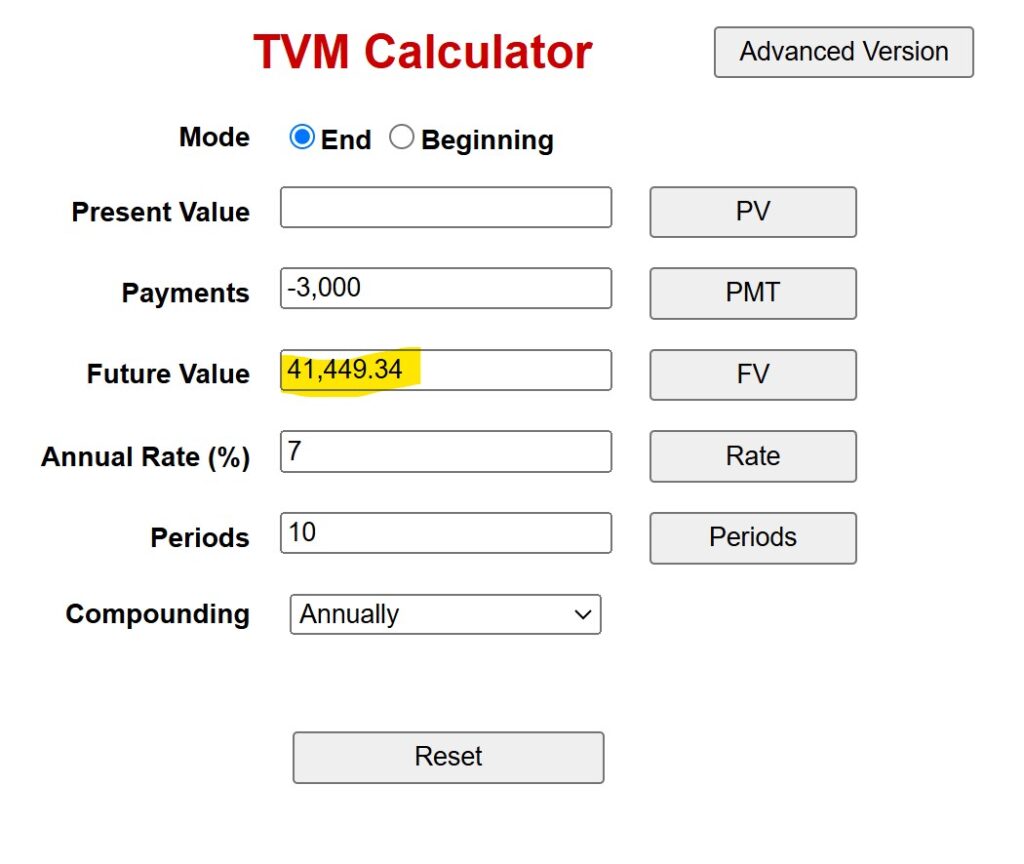
    Emma spends $5 on coffee every weekday and $15 on lunch. Over a year, this adds up to $5,200. By making coffee at home and bringing lunch a few times a week, she saves $3,000 annually, which she invests in a diversified index fund. After 10 years, her savings grow to $41,449, assuming a 7% annual return.

    https://www.fncalculator.com/financialcalculator?type=tvmCalculator

    What to Do Instead:
    Conduct a spending audit to identify areas where you can cut back. Budgeting Apps  can help track expenses and find savings opportunities. Redirect these savings into investments or a high-yield savings account.

    4. Procrastinating on Financial Goals

    Delaying financial decisions can lead to missed opportunities. Whether it’s starting an investment account, creating a budget, or paying off debt, waiting often results in smaller returns or higher costs.

    Example:
    Let’s compare two individuals: Sam and Chris. Both plan to retire at age 65 and invest in an account that earns 7% annual interest.

    • Sam starts saving $100 per month at age 25 and saves for 40 years.
    • Chris starts saving $100 per month at age 35 and saves for 30 years.

    Growth with Compound Interest:

    Using a 7% annual return:

    Sam’s savings at age 65:
    After saving $100 per month for 40 years at a 7% annual interest rate, Sam’s total savings grow to approximately $262,481.

    https://www.fncalculator.com/financialcalculator?type=tvmCalculator

    Chris’s savings at age 65:
    After saving $100 per month for 30 years at the same rate, Chris’s total savings grow to approximately $121,997.

    https://www.fncalculator.com/financialcalculator?type=tvmCalculator

    Key Takeaways:

    1. Sam contributed only $12,000 more than Chris but ended up with twice as much due to starting earlier.
    2. The extra 10 years of saving and compounding significantly boosted Sam’s final savings.
    3. Starting early allows your money more time to grow, even with smaller contributions.

    The earlier you start, the easier it becomes to achieve your financial goals!

    What to Do Instead:
    Set clear financial goals with specific deadlines. Use tools like financial calculators to understand the impact of starting early, and automate contributions to savings or investment accounts to ensure consistent progress.

    5. Avoiding Conversations About Money

    Many people avoid discussing finances due to discomfort or lack of knowledge. However, avoiding these conversations can lead to missed opportunities, misunderstandings, or financial mistakes.

    Example:
    Tom never discussed salary negotiation with his peers, assuming his offer was standard. When he finally asked around, he discovered that others in similar roles were earning 20% more. Armed with this knowledge, he negotiated a raise that significantly boosted his income and savings potential.

    What to Do Instead:
    Engage in open conversations about money with trusted friends, family, or professionals. Seek advice on investments, budgeting, or salary negotiations. Join communities or forums where people share financial insights to expand your knowledge and perspective.

    The Path to Financial Freedom

    Building wealth isn’t about perfection—it’s about consistent, intentional actions. By addressing these everyday habits, you can take control of your financial future and achieve long-term success.

    Which habit are you ready to tackle today? Let us know in the comments below!

    Our Newsletter Can Help You Build Wealth and Retire Rich!

    Want actionable tips and expert advice to grow your wealth, save smarter, and retire comfortably? Sign up for the Build Wealth Retire Rich newsletter to receive weekly updates packed with personal finance strategies and insights that are delivered straight to your inbox!

    Sign up for our free newsletter!

    By submitting your information, you`re giving us permission to email you. You may unsubscribe at any time.