Tag: wealth accumulation

  • Dividend Reinvestment: The Secret to Compounding Growth

    Building wealth is not just about earning high returns—it’s also about making strategic choices that maximize the growth potential of your investments. One such powerful strategy is dividend reinvestment, a simple yet effective way to harness the power of compounding for long-term financial success.

    What Is Dividend Reinvestment?

    Dividend reinvestment is the practice of using dividends earned from stocks or funds to purchase additional shares rather than taking the payout in cash. This creates a snowball effect where the reinvested dividends themselves begin to generate additional returns. Over time, this compounding effect can significantly boost your portfolio’s value.

    The Power of Compounding in Action

    To illustrate the impact of dividend reinvestment, let’s examine the historical growth of the S&P 500 Index from 1980 to 2024:

       •     Without Reinvestment: $1 invested in the S&P 500 grew to $54.49, representing the price appreciation of the index alone.

    http://www.moneychimp.com/features/market_cagr.htm

       •     With Reinvestment: The same $1 grew to an impressive $174.09, thanks to the compounding effect of reinvested dividends.

    http://www.moneychimp.com/features/market_cagr.htm

    This dramatic difference underscores the critical role dividends play in driving long-term growth. While $54.49 is substantial, $174.09 is life-changing—and the key to achieving it lies in reinvesting your dividends.

    Why Dividend Reinvestment Works

          1. Compounding Growth: Each reinvested dividend buys more shares, which then generate additional dividends. Over time, this cycle builds exponential growth.

          2. Dollar-Cost Averaging: By automatically reinvesting dividends, you’re buying shares at different price points, potentially reducing your average cost per share.

          3. Maximized Returns: Dividends account for a significant portion of the total returns from stock investments. Reinvesting them ensures you’re not leaving money on the table.

    How to Start Reinvesting Dividends

    Getting started with dividend reinvestment is straightforward:

          1. Enroll in a Dividend Reinvestment Plan (DRIP): Many companies and brokerages offer these plans, allowing you to automatically reinvest dividends into additional shares.

          2. Choose Dividend-Paying Investments: Focus on high-quality stocks or funds with a strong history of paying and growing dividends.

          3. Be Consistent: Stick with the strategy over time, even during market downturns, to fully benefit from compounding.

    Key Considerations

    While dividend reinvestment is a powerful tool, it’s important to:

       •     Assess Your Cash Flow Needs: If you rely on dividends for income, reinvesting them may not be practical.

       •     Diversify Your Portfolio: Avoid over-concentration in dividend-paying stocks. Maintain a well-balanced investment strategy.

    Final Thoughts

    Dividend reinvestment is a long-term strategy that can significantly amplify your wealth over time. As the S&P 500 example shows, the difference between reinvesting and not reinvesting dividends is staggering. By embracing this strategy, you’re not just growing your investments—you’re compounding your future.

    Start today, and let the power of dividend reinvestment work its magic on your portfolio. After all, the sooner you begin, the greater your rewards will be.

    Want to learn more about building wealth? Visit BuildWealthRetireRich.com for tips and strategies to achieve financial freedom!

    Legal Disclaimer for Build Wealth Retire Rich Blog/Website

    The information provided on the “Build Wealth Retire Rich” blog/website is for educational purposes only and should not be construed as financial, investment, or legal advice. While every effort is made to ensure the accuracy and reliability of the information presented, Build Wealth Retire Rich and its contributors, including AI tools used in the creation of some content, do not guarantee its completeness or timeliness. Users are encouraged to consult with a qualified financial advisor or legal professional to discuss their specific financial situation and to obtain advice tailored to their individual circumstances.

    Build Wealth Retire Rich is not responsible for any decisions made based on the information provided on this website. All financial products, investment strategies, and other content discussed are presented for informational purposes only, and no guarantees are made regarding the performance or suitability of any particular investment or strategy.

    The views and opinions expressed on “Build Wealth Retire Rich” are those of the authors and do not necessarily reflect the views of the website’s owner or any affiliated institutions. “Build Wealth Retire Rich” does not endorse or promote any particular investment, financial product, or institution unless explicitly stated.

    Risk Disclosure: Investing involves risk, including the potential loss of principal. Past performance is not indicative of future results. Always do your own research and consider your financial goals and risk tolerance before making any financial decisions.

    By using this website, you agree that Build Wealth Retire Rich and its affiliates are not liable for any losses or damages incurred as a result of using the information provided. Users are solely responsible for their financial decisions and should seek independent advice when necessary.

  • 7 Steps to 7 Figures: The Roadmap to Building Wealth

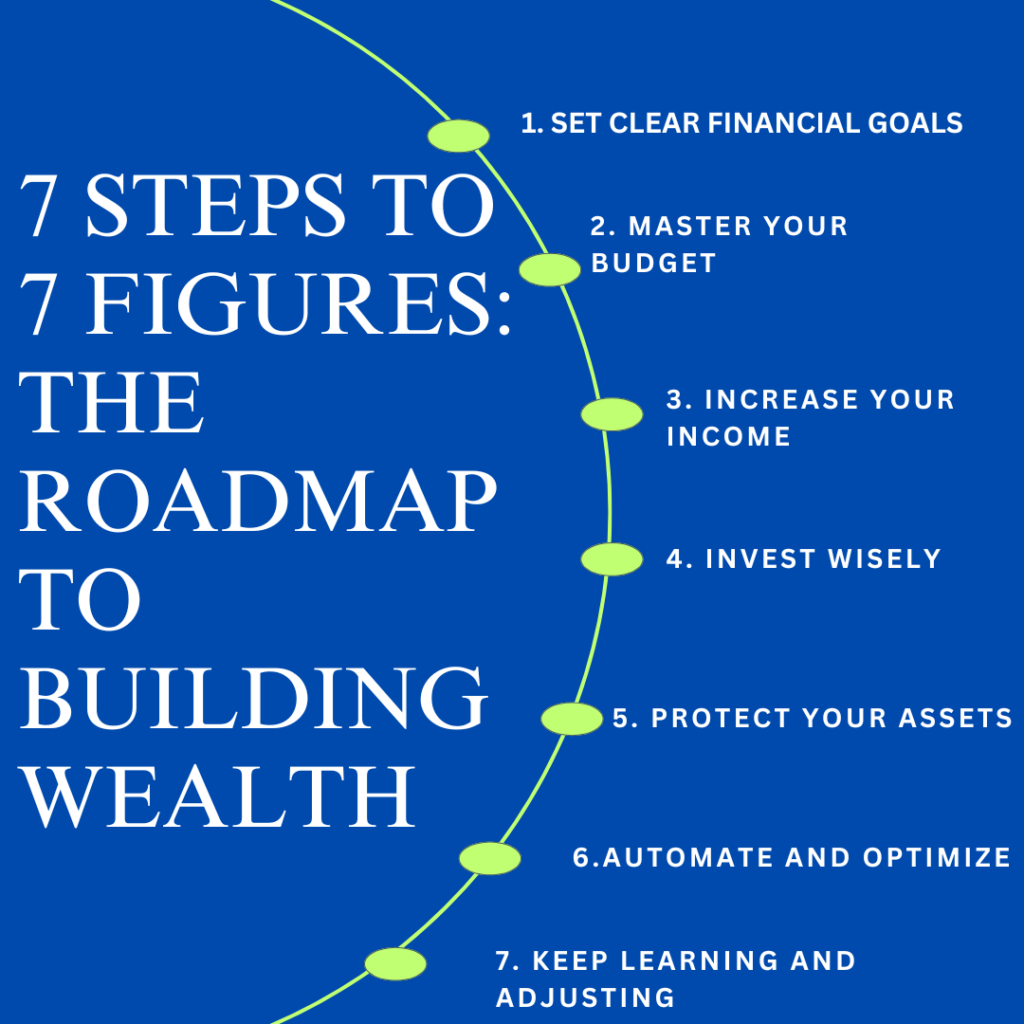
    Achieving a seven-figure net worth may seem like a distant dream, but with discipline, strategy, and consistency, it’s well within your reach. Whether you’re starting from scratch or looking to grow your existing wealth, these seven steps will set you on the path to financial success.

    Step 1: Set Clear Financial Goals

    Before embarking on your journey, define what “7 figures” means to you. Are you aiming for $1 million in liquid assets, investments, or total net worth? Break down your goal into smaller, actionable steps. For instance:

          •     Save your first $10,000 within 6 months.

          •     Invest to grow your wealth by 10% annually.

    A clear vision keeps you motivated and focused.

    Step 2: Master Your Budget

    Building wealth starts with mastering cash flow. Create a budget to track income and expenses. Follow the 50/30/20 rule:

          •     50% for necessities (rent, utilities, groceries)

          •     30% for wants (entertainment, dining out)

          •     20% for savings and investments

    Live below your means, and direct any extra funds toward investments.

    Step 3: Increase Your Income

    Relying on a single income stream slows your progress. Diversify your earnings through:

          •     Side hustles (freelancing, tutoring, or online businesses)

          •     Passive income (real estate rentals, dividends, or royalties)

          •     Career advancement (upskilling, promotions, or changing jobs for higher pay)

    Remember, every additional dollar earned can be invested to compound your wealth.

    Step 4: Invest Wisely

    Saving alone won’t get you to seven figures—investing will. Start early and harness the power of compound interest. Consider:

          •     Stocks and Index Funds: Average annual returns of 7-10% over time.

          •     Real Estate: Rental properties or REITs for long-term appreciation and cash flow.

          •     Business Investments: Entrepreneurship or investing in others’ businesses for potentially high returns.

    Pro tip: Use tax-advantaged accounts like 401(k)s, IRAs, or HSAs to grow your wealth faster while minimizing taxes.

    Step 5: Protect Your Assets

    Building wealth is half the battle—protecting it is equally critical. Safeguard your financial future by:

          •     Creating an emergency fund (3-6 months of expenses)

          •     Getting adequate insurance (health, life, and liability coverage)

          •     Diversifying investments to reduce risk

    Financial security ensures you can weather life’s uncertainties without derailing your progress.

    Step 6: Automate and Optimize

    Remove human error by automating savings and investments. Set up:

          •     Direct deposits into savings or investment accounts

          •     Automatic contributions to retirement funds

          •     Recurring debt payments to avoid penalties

    Automation ensures consistency and keeps your finances on track.

    Step 7: Keep Learning and Adjusting

    Markets change, and so do financial strategies. Commit to lifelong learning by:

          •     Reading books on personal finance (e.g., The Millionaire Next Door)

          •     Attending workshops and seminars

          •     Following experts and staying informed on market trends

    Be flexible. As your wealth grows, your strategy should evolve to align with your goals.

    Final Thoughts

    Reaching 7 figures takes time, patience, and persistence. The earlier you start, the better your results, thanks to the magic of compounding. Stick to these steps, track your progress, and celebrate milestones along the way.

    Your journey to 7 figures starts now. What’s your next move?

    Share your thoughts and goals in the comments below.

    Your Mantra for Success: Save Consistently. Invest Smartly. Retire Richly.

    Legal Disclaimer for Build Wealth Retire Rich Blog/Website

    The information provided on the “Build Wealth Retire Rich” blog/website is for educational purposes only and should not be construed as financial, investment, or legal advice. While every effort is made to ensure the accuracy and reliability of the information presented, Build Wealth Retire Rich and its contributors, including AI tools used in the creation of some content, do not guarantee its completeness or timeliness. Users are encouraged to consult with a qualified financial advisor or legal professional to discuss their specific financial situation and to obtain advice tailored to their individual circumstances.

    Build Wealth Retire Rich is not responsible for any decisions made based on the information provided on this website. All financial products, investment strategies, and other content discussed are presented for informational purposes only, and no guarantees are made regarding the performance or suitability of any particular investment or strategy.

    The views and opinions expressed on “Build Wealth Retire Rich” are those of the authors and do not necessarily reflect the views of the website’s owner or any affiliated institutions. “Build Wealth Retire Rich” does not endorse or promote any particular investment, financial product, or institution unless explicitly stated.

    Risk Disclosure: Investing involves risk, including the potential loss of principal. Past performance is not indicative of future results. Always do your own research and consider your financial goals and risk tolerance before making any financial decisions.

    By using this website, you agree that Build Wealth Retire Rich and its affiliates are not liable for any losses or damages incurred as a result of using the information provided. Users are solely responsible for their financial decisions and should seek independent advice when necessary.
  • The Power of Investing: A Path to Financial Independence

    Investing is more than just a financial activity—it’s a gateway to achieving long-term financial goals, building wealth, and ensuring a secure future. While saving provides a foundation, investing takes your money to the next level by putting it to work and allowing it to grow.


    Why Is Investing Important?

    1. Wealth Accumulation Through Growth
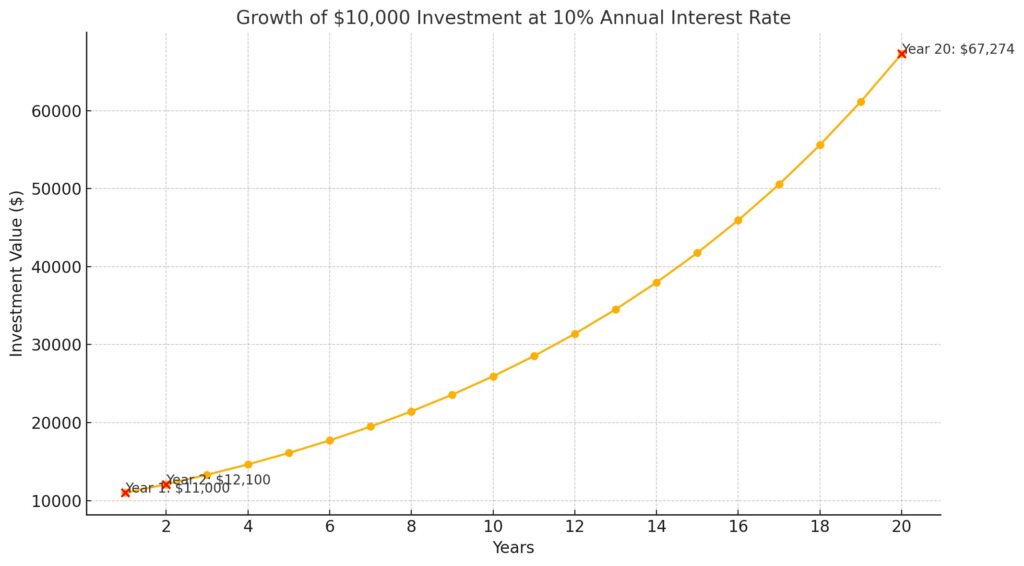
      Investing allows your money to grow significantly over time, thanks to the magic of compounding. When you earn returns on your investments, those returns are reinvested, creating a snowball effect. For example:
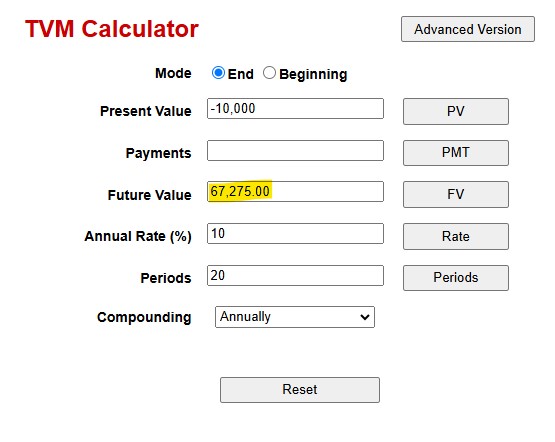
    • If you invest $10,000 at an average annual return of 10%, it can grow to over $67,000 in 20 years.
      This growth far exceeds what a regular savings account would offer.

    https://www.fncalculator.com/financialcalculator?type=tvmCalculator

    2. Protecting Against Inflation
    Inflation gradually decreases the purchasing power of money. By investing in assets with higher returns than inflation, you preserve and increase your real wealth. For instance:

    • If inflation averages 3% annually, a $100 item today will cost approximately $180 in 20 years. Investments in stocks or real estate can help your money keep pace with or surpass inflation.

    3. Achieving Financial Goals
    Investing is a strategic way to reach significant milestones like:

    • Buying a home.
    • Funding your child’s education through 529 college savings plan.
    • Launching a business.
    • Building generational wealth for your family.

    4. Planning for Retirement
    Retirement planning often requires more than just saving in a bank account.

    • Investment vehicles like 401(k)s, IRAs, or even personal portfolios provide opportunities for market growth.
    • Investing through HSA account ensures you have the funds to maintain your desired lifestyle and cover healthcare costs during retirement.

    5. Diversifying Income Streams
    Investments generate income through:

    • Dividends from stocks.
    • Interest from bonds.
    • Real Estate Investment Trust (REIT) funds.

    This reduces dependency on a single source of income, offering financial stability


    Benefits of Investing Early

    Starting early provides a massive advantage due to time and compounding returns. Consider two investors:

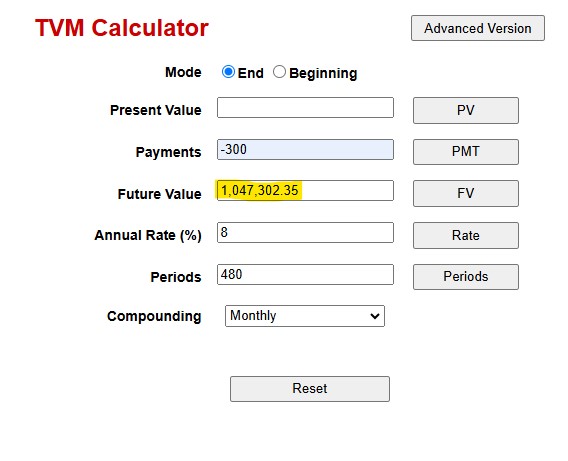
    • Investor A starts at age 25, investing $300 monthly
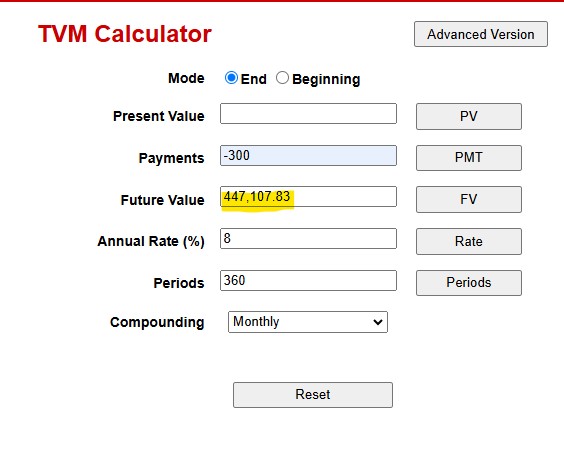
    • Investor B starts at age 35, investing $300 monthly

    At age 65, assuming a 8% annual return:

    • Investor A’s portfolio grows to over $1,000,000.
    • Investor B’s portfolio grows to about $447,000.

    Investor A can retire as a millionaire by taking benefits of investing early.

    https://www.fncalculator.com/financialcalculator?type=tvmCalculator


    Common Investment Options

    1. Stocks
      • High-risk, high-reward investments.
      • Suitable for long-term goals due to potential for substantial growth.
    2. Bonds
      • Lower risk compared to stocks.
      • Provide regular income through interest payments.
    3. Mutual Funds and ETFs
      • Offer diversification by pooling money to invest in multiple assets.
      • Managed by professionals, making them beginner-friendly.
    4. Real Estate Investment Trusts (REIT)
      • Provide rental income
    5. Retirement Accounts (401(k), IRA)
      • Offer tax advantages to boost your savings for retirement.
      • Employer-sponsored accounts often include matching contributions.

    How to Start Investing

    1. Educate Yourself
      Learn the basics of asset classes, risk management, and market behavior. Resources include:
    2. Set Clear Goals
      Define what you’re investing for—retirement, education, or wealth building—and tailor your strategy accordingly.
    3. Determine Your Risk Tolerance
      Understand your comfort level with risk. Stocks are riskier but offer higher returns, while bonds and savings accounts are safer but yield lower returns.
    4. Start Small and Be Consistent
      • Begin with what you can afford. Many brokerage firms allow you to start with as little as $1.
      • Consistency matters more than large investments—set up automatic contributions.
    5. Diversify Your Portfolio
      • Spread your investments across different asset classes to reduce risk.
      • The saying, “Don’t put all your eggs in one basket,” applies strongly in investing.
    6. Consult a Financial Advisor
      If you’re unsure where to start, seek professional advice to create a personalized investment plan.

    Overcoming Common Misconceptions

    1. “I need a lot of money to start.”
      Many brokerage firms allow you to begin investing with minimal amounts.
    2. “Investing is too risky.”
      Risk varies by asset class. Balancing high-risk investments (stocks) with safer options (bonds) can align with your comfort level.
    3. “I don’t know enough.”
      Financial literacy tools, seminar/courses, and advisors are available to help you gain confidence.

    Key Takeaways

    Investing is not just for the wealthy or financially savvy—it’s for anyone with a desire to grow their wealth and secure their future. Here’s why you should start now:

    • Time is your greatest ally in investing.
    • Small, consistent contributions lead to significant long-term gains.
    • Diversifying and understanding your goals reduce risks and improve results.

    Remember, investing is like planting a tree: the sooner you plant it, the sooner it bears fruit. Start today and take control of your financial future.

    Your Mantra for Success: Save Consistently. Invest Smartly. Retire Richly.

    Legal Disclaimer for Build Wealth Retire Rich Blog/Website

    The information provided on the “Build Wealth Retire Rich” blog/website is for educational purposes only and should not be construed as financial, investment, or legal advice. While every effort is made to ensure the accuracy and reliability of the information presented, Build Wealth Retire Rich and its contributors, including AI tools used in the creation of some content, do not guarantee its completeness or timeliness. Users are encouraged to consult with a qualified financial advisor or legal professional to discuss their specific financial situation and to obtain advice tailored to their individual circumstances.

    Build Wealth Retire Rich is not responsible for any decisions made based on the information provided on this website. All financial products, investment strategies, and other content discussed are presented for informational purposes only, and no guarantees are made regarding the performance or suitability of any particular investment or strategy.

    The views and opinions expressed on “Build Wealth Retire Rich” are those of the authors and do not necessarily reflect the views of the website’s owner or any affiliated institutions. “Build Wealth Retire Rich” does not endorse or promote any particular investment, financial product, or institution unless explicitly stated.

    Risk Disclosure: Investing involves risk, including the potential loss of principal. Past performance is not indicative of future results. Always do your own research and consider your financial goals and risk tolerance before making any financial decisions.

    By using this website, you agree that Build Wealth Retire Rich and its affiliates are not liable for any losses or damages incurred as a result of using the information provided. Users are solely responsible for their financial decisions and should seek independent advice when necessary.
  • Retiring a Millionaire: A Simple Path for Everyday People

    It’s easy to think you need a high salary or a glamorous career to retire with a million dollars. But the story of Ronald Read, a Vermont janitor and gas station attendant, proves otherwise. Read quietly amassed an $8 million fortune through disciplined saving, frugal living, and smart investing, surprising even his family and friends upon his death at age 92.

    Read’s story is a testament to the idea that anyone, regardless of income, can achieve financial independence with the right approach. By following simple principles like starting early, saving consistently, and investing wisely, you can also build a seven-figure nest egg for retirement.

    Here’s how to make it happen.

    Start Early: The Magic of Compound Interest

    Compound interest is the most powerful force in wealth building. Starting early allows your money to grow exponentially because you’re earning interest not just on your savings but also on the interest already earned.

    Example 1:
    Imagine Sarah, a 25-year-old who invests $300 per month in a retirement account with an average annual return of 8%. By age 65, Sarah will have over $1,000,000.

    https://www.fncalculator.com/financialcalculator?type=tvmCalculator

    Now consider Jake, who waits until he’s 35 to start saving the same $300 per month. By 65, Jake will only have $447,000, less than half of Sarah’s total—just because he started later.

    The takeaway? Starting early is like giving your money extra years to work for you.

    Consistency is Key: Automate Your Savings

    It’s not about saving big chunks at once—it’s about saving regularly. Automating contributions to your retirement accounts ensures that you’re consistently building wealth without needing to think about it.

    Example 2:
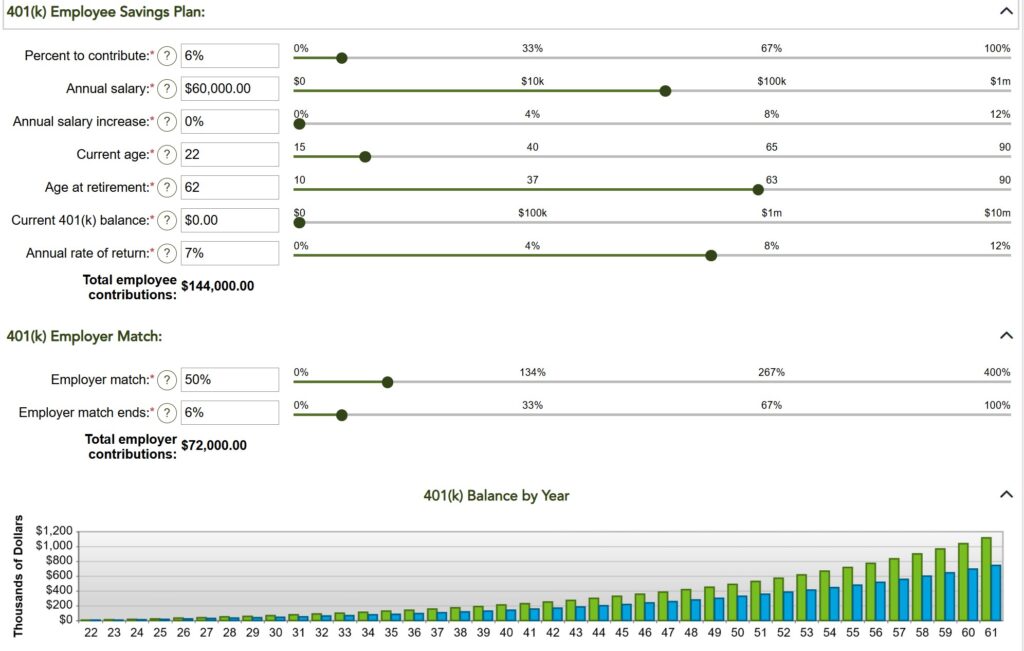
    David earns $60,000 annually and chooses to save 6% of his salary in his 401(k). Over 40 years, with an assumed annual return of 7%, his retirement savings would grow to $1,118,482.41 if his employer matches 50% of his contributions. Without the employer match, his total savings would be $745,654.94.

    https://www.federatedhermes.com/us/calculators/Retire401k.html

    Automating his savings made it easier for David to stick to his plan and take advantage of free money through employer matches.

    Invest Wisely: Keep Costs Low and Diversify

    Choosing the right investments is crucial. Low-cost index funds and ETFs are excellent options because they provide diversification and minimize fees, which can erode your returns.

    Avoid the Debt Trap

    Debt is a significant barrier to wealth. High-interest debt, such as credit card balances, can overshadow even the best investment returns. Paying off debt early frees up more money for savings.

    Example 4:
    Maria has $10,000 in credit card debt with a 20% interest rate. If she only makes the minimum payments, calculated as 3% of the balance, it will take her over 20 years to pay off the debt and cost her more than $12,000 in interest. However, by aggressively paying off the debt, she can save thousands in interest and redirect those savings into her retirement fund.

    https://www.bankrate.com/credit-cards/tools/minimum-payment-calculator


    How Much Do You Need to Save?

    The “4% rule” is a popular guideline for retirement planning. It suggests you can withdraw 4% of your retirement savings annually without running out of money.

    Example 5:
    If John has $1 million saved, he can withdraw $40,000 annually to cover living expenses. Combined with Social Security benefits, this amount could provide a comfortable lifestyle.

    Save More as You Earn More

    As your income grows, increase your savings rate. Bonuses, raises, or additional income can help accelerate your journey to $1 million.

    Example 6:
    Emma earns $50,000 and starts saving 10% of her income. After 5 years, her salary increases to $70,000. Instead of sticking to her original contribution of $5,000 per year, Emma raises it to 15%, or $10,500 annually. This simple adjustment significantly boosts her retirement savings over time.

    Balance Today and Tomorrow

    Saving for the future doesn’t mean sacrificing your quality of life today. The key is prioritizing what brings you joy while minimizing unnecessary expenses.

    Example 7:
    Ryan loves traveling and spends $3,000 a year on trips. To afford this while saving for retirement, he cuts back on dining out, saving $200 per month. This way, Ryan enjoys his travels while still contributing $500 a month to his IRA.

    Real-Life Stories of Millionaire Retirees

    Recent data from Fidelity shows there are now over 497,000 401(k) millionaires and 418,111 IRA millionaires as of September 30, 2024. These individuals weren’t all earning massive salaries—they simply followed consistent savings habits and invested wisely.

    Take Action Today

    Here’s a step-by-step roadmap to retiring a millionaire:

    1. Start Saving Now: The earlier, the better. Even small contributions grow significantly over time.
    2. Use Tax-Advantaged Accounts: Maximize your 401(k), IRA, or Roth IRA contributions.
    3. Take Advantage of Matches: Always contribute enough to get your employer’s full match.
    4. Invest Strategically: Opt for low-cost index funds or ETFs for diversification and lower fees.
    5. Increase Contributions Over Time: Save more as you earn more.
    6. Avoid High-Interest Debt: Focus on paying off debt to free up cash for investing.
    7. Find Balance: Save consistently while enjoying life.

    Becoming a millionaire isn’t about earning a massive salary; it’s about building wealth one step at a time. Whether you’re earning $40,000 or $400,000, the principles remain the same: save early, save often, and invest smartly. With patience and discipline, your dream of a $1 million retirement fund can become a reality.

    Your future self will thank you.

    Our Newsletter Can Help You Build Wealth and Retire Rich!

    Sign up for our free newsletter!

    Want actionable tips and expert advice to grow your wealth, save smarter, and retire comfortably? Sign up for the Build Wealth Retire Rich newsletter to receive weekly updates packed with personal finance strategies and insights—delivered straight to your inbox!Please accept terms and conditions.

    By submitting your information, you`re giving us permission to email you. You may unsubscribe at any time.

    Legal Disclaimer for Build Wealth Retire Rich Blog/Website

    The information provided on the “Build Wealth Retire Rich” blog/website is for educational purposes only and should not be construed as financial, investment, or legal advice. While every effort is made to ensure the accuracy and reliability of the information presented, Build Wealth Retire Rich and its contributors, including AI tools used in the creation of some content, do not guarantee its completeness or timeliness. Users are encouraged to consult with a qualified financial advisor or legal professional to discuss their specific financial situation and to obtain advice tailored to their individual circumstances.

    Build Wealth Retire Rich is not responsible for any decisions made based on the information provided on this website. All financial products, investment strategies, and other content discussed are presented for informational purposes only, and no guarantees are made regarding the performance or suitability of any particular investment or strategy.

    The views and opinions expressed on “Build Wealth Retire Rich” are those of the authors and do not necessarily reflect the views of the website’s owner or any affiliated institutions. “Build Wealth Retire Rich” does not endorse or promote any particular investment, financial product, or institution unless explicitly stated.

    Risk Disclosure: Investing involves risk, including the potential loss of principal. Past performance is not indicative of future results. Always do your own research and consider your financial goals and risk tolerance before making any financial decisions.

    By using this website, you agree that Build Wealth Retire Rich and its affiliates are not liable for any losses or damages incurred as a result of using the information provided. Users are solely responsible for their financial decisions and should seek independent advice when necessary.