
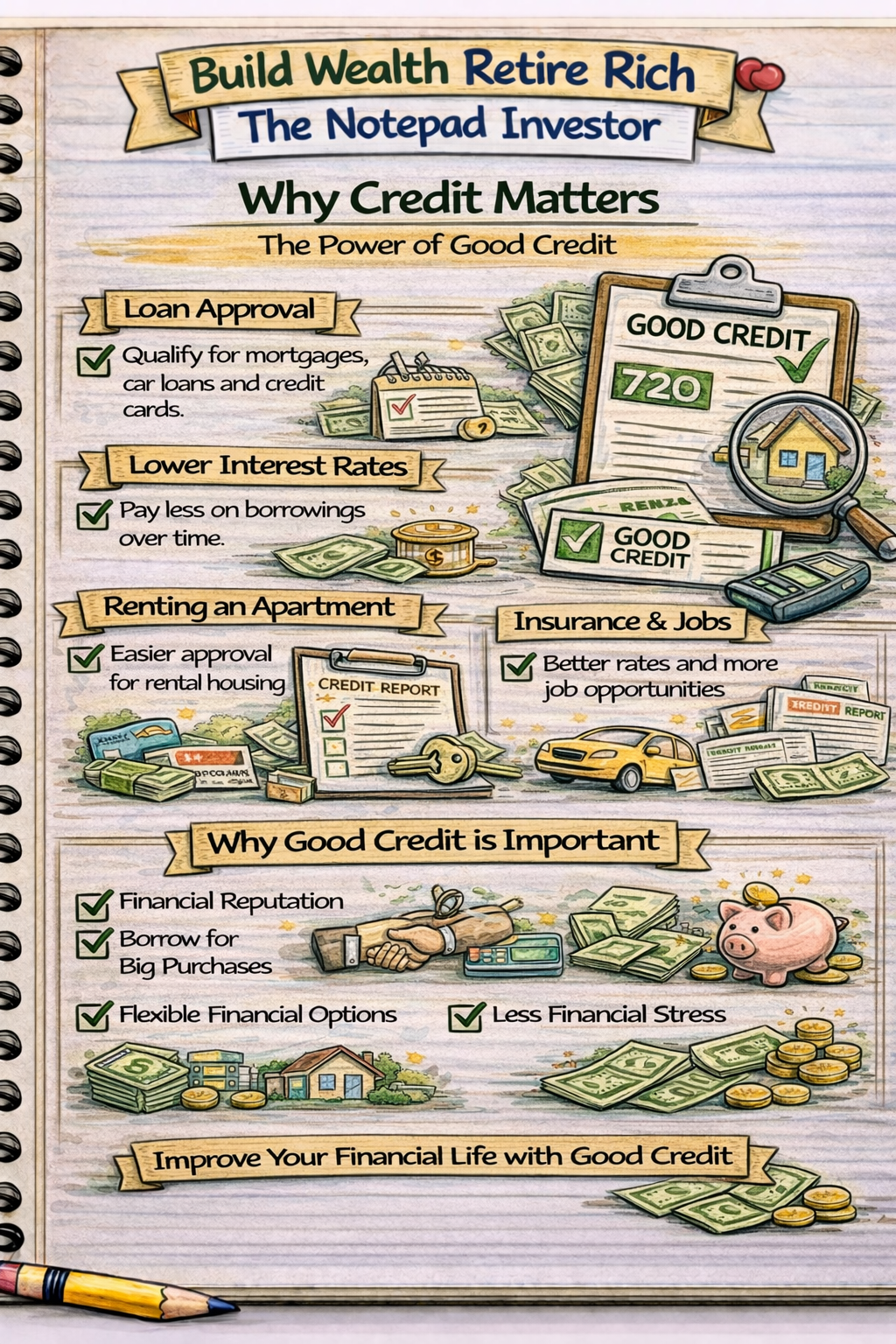
Credit matters because modern financial life fundamentally requires credit access for major purchases like homes and vehicles, employment and housing opportunities increasingly depend on credit standing, and strategic credit use provides substantial financial advantages through lower borrowing costs, valuable rewards, superior fraud protection, and emergency flexibility impossible to replicate through cash-only approaches—while excellent credit scores save tens to hundreds of thousands of dollars in lifetime interest costs, poor or absent credit creates significant barriers to housing, employment, and financial opportunities, and understanding credit transforms it from mysterious threat into powerful tool enabling wealth building and financial flexibility when used strategically rather than avoided through fear or misused through ignorance creating destructive debt patterns.
This article is designed for anyone questioning whether credit matters, individuals considering cash-only approaches, or those wanting comprehensive understanding of credit’s role in financial success. You do not need financial expertise or current credit to understand why credit matters—fundamental principles accessible to everyone regardless of current situation, though requires openness to reconsidering assumptions about debt and credit that may prevent optimal financial outcomes despite well-intentioned beliefs about responsibility and risk avoidance.
Understanding why credit matters enables recognition that credit literacy represents essential modern financial skill not optional luxury, strategic credit use accelerates wealth building through leverage and optimization impossible through exclusive cash use regardless of income level, and credit system participation when done responsibly provides competitive advantages in housing, employment, and financial flexibility creating opportunities unavailable to credit-avoiders despite equal or superior cash resources—making credit understanding and strategic usage fundamental components of comprehensive financial success impossible to achieve fully without credit system participation and optimization in modern economy requiring credit for full opportunity access.
Educational disclaimer: This article provides general educational information about credit’s role in personal finance. Individual circumstances, credit needs, appropriate usage, and risk tolerance vary significantly. Credit carries risks including debt accumulation and financial damage from mismanagement. This is not financial advice or recommendation of specific credit usage. Consult qualified financial professionals for personalized guidance matching individual situations and goals.
Credit Enables Major Life Purchases
Homeownership Requires Credit
Reality of home buying:
- Median home price: $350,000-$450,000 (varies by location)
- 20% down payment: $70,000-$90,000
- Remaining 80%: Requires mortgage ($280,000-$360,000)
- Saving full purchase price in cash: 20-40+ years for most people
Credit requirements for mortgages:
- Minimum credit score: 620 for conventional loans (580 for FHA)
- Credit history: Minimum 2 years established credit
- Payment history: No recent late payments or defaults
- Debt-to-income ratio: Total debt payments under 43% of income typically
Even with large down payment, no credit = no mortgage:
- Example: $100,000 saved for down payment on $350,000 home
- Sufficient for 29% down (well above 20% standard)
- But zero credit history = mortgage denial
- “Credit invisible” status prevents approval despite substantial assets
- Forced to continue renting or delay homeownership years building credit
Alternative scenario with credit:
- Same $100,000 down payment plus established credit history
- Approved for $250,000 mortgage at 6.5% (30 years)
- Monthly payment: $1,580 (principal and interest)
- Builds equity immediately versus rent building landlord’s equity
- After 15 years: $150,000+ equity from payments plus appreciation
Wealth-building impact:
- Homeowner: $350,000 asset, $150,000+ equity after 15 years
- Renter (no credit access): $0 equity, $285,000 paid in rent ($1,580 × 180 months)
- Difference: $150,000+ wealth gap from credit access enabling homeownership
Reliable Transportation and Credit
Vehicle necessity for most Americans:
- 87% of workers commute by personal vehicle (limited public transit most areas)
- Reliable transportation essential for employment access
- New vehicle average: $48,000
- Quality used vehicle: $20,000-$30,000
Cash-only vehicle purchase challenges:
- Saving $25,000 cash: 3-5 years for most people
- Meanwhile: Driving unreliable $3,000-$5,000 vehicle
- Repair costs: $2,000-$4,000 annually on aging vehicles
- Breakdown risk: Employment jeopardy from unreliable transportation
- Safety concerns: Older vehicles lack modern safety features
Credit-enabled vehicle purchase:
- $5,000 down payment + $20,000 auto loan
- 5% APR, 60 months (good credit rate)
- Monthly payment: $377
- Total cost: $22,620 ($20,000 principal + $2,620 interest)
- Immediate reliable transportation enabling employment stability
- Lower repair costs: $500-$1,000 annually on reliable vehicle
- Safety: Modern vehicle with current safety technology
Comparison over 5 years:
- Cash-only approach: $5,000 unreliable car + $15,000 repairs = $20,000 spent, unreliable vehicle at end
- Credit approach: $5,000 down + $22,620 financed = $27,620 spent, owned reliable vehicle worth $12,000 at end
- Net difference: $7,620 more spent but received reliable transportation, employment stability, safety
- Often worth premium for security and opportunity enablement
Education and Career Investment
Higher education costs:
- 4-year public university: $40,000-$100,000 total
- 4-year private university: $150,000-$300,000
- Graduate/professional programs: $50,000-$200,000+
Return on education investment:
- Bachelor’s degree holders earn $1 million+ more lifetime versus high school only
- Professional degrees (law, medicine, MBA): $2-4 million additional lifetime earnings
- Career opportunities and advancement dependent on credentials
Student loans enabling investment:
- Federal student loans: 4-7% interest rates
- Deferred repayment until after graduation
- Income-driven repayment options
- Investment in earning capacity versus consumption
Example productive debt:
- $60,000 student loans for engineering degree
- Starting salary: $75,000 (versus $35,000 without degree)
- Extra earnings year 1: $40,000
- Loan paid off in 3-4 years from differential earnings
- Remaining 35+ career years: $1.5 million+ additional earnings
- ROI: 25:1 or higher on education investment
Credit Scores Impact Borrowing Costs
Massive Lifetime Interest Differences
Mortgage cost comparison by credit score:
Example: $350,000 mortgage, 30-year fixed
Excellent credit (760+ score): 6.0% APR
- Monthly payment: $2,098
- Total paid over 30 years: $755,505
- Total interest: $405,505
Good credit (680 score): 6.75% APR
- Monthly payment: $2,270
- Total paid over 30 years: $817,276
- Total interest: $467,276
- Extra cost vs excellent: $172/month, $61,771 total
Fair credit (620 score): 7.75% APR
- Monthly payment: $2,502
- Total paid over 30 years: $900,720
- Total interest: $550,720
- Extra cost vs excellent: $404/month, $145,215 total
Poor credit (580 score): 8.5% APR (if approved)
- Monthly payment: $2,691
- Total paid over 30 years: $968,760
- Total interest: $618,760
- Extra cost vs excellent: $593/month, $213,255 total
Key insight: Over $200,000 difference between excellent and poor credit on single mortgage
Auto Loan Cost Variations
Example: $30,000 vehicle, 60-month loan
Excellent credit (720+): 4.5% APR
- Monthly payment: $559
- Total paid: $33,540
- Total interest: $3,540
Good credit (660-719): 7.0% APR
- Monthly payment: $594
- Total paid: $35,640
- Total interest: $5,640
- Extra cost: $35/month, $2,100 total
Fair credit (620-659): 10.5% APR
- Monthly payment: $642
- Total paid: $38,520
- Total interest: $8,520
- Extra cost: $83/month, $4,980 total
Poor credit (below 620): 15%+ APR or denial
- Monthly payment: $713+
- Total paid: $42,780+
- Total interest: $12,780+
- Extra cost: $154/month, $9,240 total
Lifetime Borrowing Cost Impact
Typical person’s lifetime major borrowing:
- 2-3 mortgages over lifetime
- 5-8 vehicle loans over working years
- Student loans (if applicable)
- Occasional personal loans or HELOCs
Cumulative credit score impact example:
Person with excellent credit (760+) lifetime:
- 3 mortgages at best rates: Interest saved $150,000 vs fair credit
- 6 auto loans at best rates: Interest saved $25,000 vs fair credit
- Credit cards paid strategically: $0 interest, +$15,000 rewards
- Total advantage: $190,000+ over lifetime
Person with fair/poor credit (620-660) lifetime:
- Paid $150,000 extra mortgage interest
- Paid $25,000 extra auto interest
- Credit card debt interest: $30,000 over years
- Total extra cost: $205,000 lifetime
Difference: Nearly $400,000 lifetime from credit score management alone
Credit Affects Housing and Employment
Rental Applications Require Credit Checks
Standard rental application process:
- Credit check required by most landlords
- Minimum credit score requirements (typically 620-650)
- Recent evictions or collections scrutinized
- Payment history review for responsibility indicators
No credit vs bad credit in rental market:
- No credit (“credit invisible”): Often treated like bad credit
- Landlord perspective: No payment history = unknown risk
- Common requirements for weak/no credit applicants:
- Higher security deposit (2-3 months vs standard 1 month)
- Co-signer requirement (parent, guarantor)
- Prepaid rent (first, last, security = 3+ months upfront)
- Premium rental rates or limited property access
Example rental barrier:
- Desired apartment: $1,500/month
- Applicant with good credit: $1,500 first month + $1,500 security = $3,000 move-in
- Applicant with no/poor credit: $1,500 first + $1,500 last + $3,000 security + $500 application fee = $6,500 move-in
- $3,500 penalty for weak credit status
Employment Background Checks
Credit checks in hiring process:
- 47% of employers conduct credit checks (especially financial services, government, management)
- Legal in most states for certain positions
- Modified credit report (no credit score, just history)
- Looking for: Responsibility indicators, financial stress signs, fraud concerns
Positions commonly requiring credit checks:
- Financial services (banks, investment firms, insurance)
- Executive and management positions
- Government jobs requiring security clearances
- Positions with financial responsibility or access
- Jobs handling cash or valuable inventory
Red flags employers identify:
- Recent bankruptcies (financial stress indicator)
- Collections and charge-offs (payment avoidance)
- Excessive debt relative to income (vulnerability to bribery/theft)
- Pattern of late payments (general irresponsibility)
Career opportunity impact:
- Denied employment despite qualifications due to credit issues
- Security clearance denial preventing government/defense work
- Promotions blocked due to credit concerns in financial responsibility roles
- Career advancement limited by credit standing in certain industries
Insurance Premiums and Credit-Based Scoring
Credit-based insurance scores:
- Auto and homeowner insurance companies use credit-based scores
- Correlation between credit scores and insurance claims (statistical)
- Legal in most states for rate-setting
Premium differences by credit tier:
Auto insurance example (full coverage):
- Excellent credit: $1,200 annually
- Good credit: $1,500 annually ($300 more)
- Fair credit: $1,900 annually ($700 more)
- Poor credit: $2,400+ annually ($1,200+ more)
Lifetime auto insurance cost difference:
- 40 years driving with excellent vs poor credit
- $1,200 annually vs $2,400 = $1,200 annual difference
- Over 40 years: $48,000 extra paid for identical coverage
Strategic Credit Use Provides Benefits
Credit Card Rewards and Cash Back
Typical rewards rates:
- Basic cash back cards: 1-1.5% on all purchases
- Category bonus cards: 2-5% on specific categories (groceries, gas, dining)
- Premium travel cards: 2-3% effective value with optimization
Annual rewards calculation:
- $30,000 annual spending on 2% cash back card
- Rewards earned: $600 annually
- Over 30 years: $18,000 cash back (assuming paid in full monthly, zero interest)
Cash-only alternative:
- Same $30,000 annual spending in cash/debit
- Rewards earned: $0
- Difference: $18,000 forfeited over 30 years from payment method choice alone
Important caveat:
- Rewards only valuable if carrying zero balance (paying in full monthly)
- $600 rewards negated by just 2 months carrying $5,000 balance at 18% APR ($150 interest)
- Disciplined use required for rewards to provide actual benefit
Superior Fraud Protection
Credit card fraud liability:
- Federal law: Maximum $50 liability (most issuers waive entirely)
- Fraudulent charges: Dispute process, temporary credit while investigating
- Zero liability policies: Most major cards offer complete protection
- Your actual funds never touched (credit line used, not bank account)
Debit card fraud liability:
- Report within 2 days: $50 maximum liability
- Report within 60 days: $500 maximum liability
- Report after 60 days: Unlimited liability (total loss possible)
- Funds immediately removed from bank account
- Investigation takes days/weeks while you lack access to money
Real-world fraud scenario:
- $3,000 fraudulent charges
- Credit card: Dispute, temporary credit, keep using card, resolved in 7-10 days, $0 liability
- Debit card: $3,000 withdrawn from checking, bills potentially bounce, overdraft fees, 2-4 weeks investigation, stress and inconvenience
Emergency Financial Flexibility
Credit as emergency backup:
- Unexpected major expense: $5,000 car repair, medical bill, home repair
- Emergency fund depleted or insufficient
- Credit card provides immediate access to needed funds
- Repay over time without crisis decision-making under pressure
Example emergency scenario:
- $4,000 emergency home repair (roof leak)
- Emergency fund: $2,000 available (recently used for medical)
- Without credit: High-interest payday loan, skip repair risking $20,000 damage, borrow from family
- With credit: Charge $4,000, repay $400/month for 11 months, total cost $4,200 (5% effective interest)
- Repair completed immediately preventing larger damage
Purchase Protection and Extended Warranties
Credit card purchase protections:
- Extended warranty: Additional 1-2 years beyond manufacturer warranty
- Purchase protection: Damage/theft coverage 90-120 days
- Return protection: Refund if merchant won’t accept return
- Price protection: Refund if price drops within 60-90 days
Value example:
- $1,500 laptop purchased with credit card
- Manufacturer warranty: 1 year
- Card extended warranty: Additional 1 year (free)
- Laptop fails month 15 (after manufacturer warranty expires)
- Credit card warranty covers $800 repair cost
- Cash/debit purchase: Out-of-pocket $800 or replace laptop
Why Credit Matters
Without credit access and credit literacy, individuals face substantial barriers to homeownership preventing wealth building through equity accumulation, pay dramatically higher interest costs across lifetime borrowing totaling hundreds of thousands of dollars unnecessarily, and miss opportunities in housing, employment, and financial benefits—while credit-savvy individuals with excellent scores access lowest-cost borrowing enabling wealth building, strategically use credit for rewards and protections adding thousands in value, and maintain flexibility and opportunities unavailable to those avoiding or mismanaging credit creating competitive disadvantages in modern financial system requiring credit participation for optimal outcomes regardless of cash resources.
Understanding why credit matters enables individuals to:
- Access homeownership building substantial wealth through equity impossible through renting
- Secure employment in positions requiring credit checks or security clearances
- Save hundreds of thousands in lifetime interest through excellent credit scores
- Earn thousands in rewards through strategic credit card use
- Maintain superior fraud protection versus cash/debit transactions
- Access emergency financial flexibility when needed
- Optimize insurance premiums through credit-based scoring benefits
Credit matters because modern financial success requires credit system participation and optimization—strategic informed credit use creates competitive advantages while avoidance or misuse creates substantial disadvantages in wealth building, opportunity access, and lifetime costs impossible to overcome through cash resources alone.
Common Misunderstandings
Many people assume avoiding all credit represents most responsible financial approach. In reality, strategic credit use enables wealth building through homeownership impossible for cash-only individuals despite larger savings, provides employment access in credit-check positions, and captures rewards and protections worth thousands annually, proving credit avoidance creates disadvantages not financial virtue when executed through fear rather than informed strategic decision-making understanding both benefits and appropriate usage boundaries.
Another common misconception is that only wealthy people benefit from good credit. In practice, excellent credit matters most for middle and lower-income individuals who cannot absorb extra interest costs—$200,000 extra mortgage interest from poor credit represents years of additional work for median earners while barely noticeable to wealthy, proving credit optimization provides greatest relative benefit to those with limited resources making every dollar of interest savings meaningful versus dismissing credit importance as luxury concern for high earners only.
Some believe building credit requires carrying credit card debt and paying interest. However, credit scores improve maximally through active credit card use paid in full monthly combining payment history, low utilization, and account longevity without interest costs—carrying balances wastes money with zero additional score benefit, proving optimal credit building costs nothing beyond strategic account usage discipline versus myth that credit building requires “paying to play” through unnecessary interest charges benefiting only card issuers not consumers.
How Credit Understanding Fits Into Financial Success
Credit understanding provides foundation for optimizing modern financial infrastructure accessing lowest-cost borrowing and maximizing benefits, enables major wealth-building opportunities through homeownership and education impossible through cash-only approaches regardless of savings discipline, and creates competitive advantages in employment, housing, and insurance markets—making credit literacy essential component of comprehensive financial success impossible without understanding credit’s role, maintaining excellent credit standing, and using credit strategically for benefits while avoiding destructive patterns creating long-term damage through misuse or complete avoidance based on misunderstanding.
For example, two high school friends both disciplined savers entering workforce age 22. Friend A believes “all debt is bad” avoiding credit entirely using cash and debit exclusively. Saves diligently, accumulates $50,000 by age 30 through 15% savings rate. Applies for mortgage buying $300,000 home—denied due to no credit history despite substantial down payment and stable income. Continues renting at $1,800 monthly. Age 35: Still renting, saved $80,000 but cannot access homeownership. Applies for better job in financial services—credit check reveals no history, passed over for candidate with established credit (position requires financial responsibility). Auto insurance: $2,000 annually due to no credit-based insurance score. Never earned credit card rewards, misses employer 401(k) match first 2 years due to budgeting without emergency credit backup forcing cash reserve maintenance. After 20 years age 42: Renting, paid $432,000 in rent over 20 years, owns aging vehicle, $200,000 saved (impressive discipline) but no home equity, missed employment advancement, paid $40,000 auto insurance vs $24,000 with good credit, zero rewards earned, total disadvantage $448,000 ($432,000 rent versus $150,000 mortgage principal paid building equity, $16,000 extra insurance, $12,000 missed rewards = $460,000 vs $12,000 actual mortgage interest paid)—net $448,000 disadvantage from credit avoidance despite superior savings discipline. Friend B understands credit importance, opens credit card age 22 using for routine spending paying full monthly building history. Maintains 760+ score. Age 30: Approved for mortgage 6% rate buying $300,000 home with $50,000 down (identical savings as Friend A). Builds equity immediately. Better job application age 35: Credit check shows excellent standing, hired for position advancing career. Auto insurance: $1,200 annually (versus Friend A’s $2,000) due to excellent credit-based scoring. Earns $600 annually credit card rewards ($12,000 over 20 years). Emergency flexibility: Uses credit strategically avoiding payday loans during unexpected expenses. After 20 years age 42: Owns home worth $450,000 with $200,000 equity (appreciation and principal payments), paid $72,000 mortgage interest total (versus $432,000 rent), saved $16,000 insurance costs, earned $12,000 rewards, advanced career enabled by credit check approval—net position $150,000 home equity wealth built through mortgage access enabled by credit versus rental equivalence, plus $28,000 additional benefits creating $178,000 total advantage over Friend A from credit understanding and strategic use. Identical starting circumstances, identical savings discipline, opposite financial outcomes—Friend B’s credit literacy created $400,000+ wealth difference through enabling homeownership, reducing costs, and accessing opportunities impossible for Friend A despite arguably more “responsible” cash-only philosophy creating paradoxical disadvantage.
Credit understanding separates those optimizing modern financial opportunities from those disadvantaged by credit system avoidance or misuse—strategic informed credit participation enables wealth building and opportunity access creating competitive advantages impossible to replicate through cash-only approaches regardless of superior savings discipline when credit literacy absent.
Recent Updates and Trends
In recent years, alternative data credit scoring has expanded—FICO 10 and UltraFICO considering rent payments, utility bills, and banking history enabling those without traditional credit to establish scores, reducing “credit invisible” population though adoption uneven across lenders creating mixed accessibility benefits.
Credit card rewards competition has intensified—cards offering 2-5% cash back, valuable travel points, and enhanced benefits making strategic credit use more rewarding than historical minimal rewards environment, though simultaneously tempting overspending through rewards psychology potentially negating benefits when balances carried creating behavioral challenge.
Credit score access has democratized—free FICO scores through credit card issuers, Credit Karma, and other services versus historical paid-only access enabling better monitoring and optimization, though score proliferation creating confusion about which score matters for specific applications requiring education distinguishing monitoring scores from lending decision scores.
Credit freeze implementation has become instant and free—federal law requiring zero-cost freezes and real-time online implementation enabling better identity theft protection, though requiring proactive management when applying for legitimate credit creating friction potentially causing missed opportunities when forgotten requiring balance between security and accessibility.
Fundamental credit importance remains timeless: modern economy requires credit access for major purchases and opportunities, excellent credit scores save enormous amounts in lifetime borrowing costs justifying optimization efforts, strategic credit use provides benefits impossible through cash-only approaches, and credit literacy represents essential financial skill not optional luxury—regardless of alternative scoring evolution, rewards intensification, free score accessibility, or security measure improvements, understanding credit’s role, maintaining excellent standing, and using strategically while avoiding destructive patterns produces superior lifetime financial outcomes through enabling wealth building and accessing opportunities impossible without credit system participation and optimization.
3 Things You Can Do Today
Ready to optimize credit’s role in your financial success? Here are three simple steps you can take right now:
1. Calculate your lifetime borrowing cost difference between current and excellent credit scores – Check your current credit score (free through credit card issuer, Credit Karma, or similar). Note current score and category: Below 620 poor, 620-679 fair, 680-739 good, 740+ excellent. Visit mortgage and auto loan calculator websites. Input typical borrowing: $300,000 mortgage 30-year, $25,000 auto loan 60-month. Calculate at your current score’s rate versus excellent credit rate (760+). Example current 660 score: Mortgage 7% ($1,995 monthly) vs 760+ score 6% ($1,799 monthly) = $196 monthly difference × 360 months = $70,560 lifetime savings potential. Auto 8% ($507 monthly) vs 760+ 4.5% ($466 monthly) = $41 monthly × multiple vehicles lifetime = $15,000+ savings. Total your lifetime opportunity: Often $100,000-300,000 difference between current and optimal credit standing. Write this number down making invisible cost visible and actionable. Takes 15 minutes creating compelling motivation for credit improvement versus abstract “good credit matters” understanding without personal quantification.
2. If avoiding credit, open first credit card building history OR if established credit, optimize current usage – Credit avoiders: Visit secured credit card comparison sites (Discover, Capital One secured cards common). Apply for secured card requiring $200-500 deposit becoming credit limit. Use for small recurring payment (streaming service, phone bill), set up automatic full payment monthly from checking. This builds credit history with zero risk of debt accumulation through automatic full payment. Within 6-12 months: First credit score appears, graduate to unsecured card, begin building credit enabling future opportunities. Established credit users: Review current credit card usage ensuring pay full balance monthly (avoiding interest), utilization under 30% ideally under 10% (current balance ÷ total limits), on-time payments 100% (set up automatic minimum payments as backup), maintain old accounts even if unused (length of history). If carrying balances: Create aggressive payoff plan calculating interest costs and commitment to elimination. Takes 20-30 minutes beginning credit journey or optimizing existing credit creating foundation for lifetime benefits impossible without credit establishment and proper management.
3. Audit one major area where credit standing costs you money and create improvement plan – Identify highest-cost credit impact: Renting requiring extra deposit due to credit? Calculate extra cost ($1,500 additional security typical). Auto insurance premium elevated? Get quote at excellent credit scenario versus current ($600-1,200 annual difference common). Current loan high interest? Calculate refinance savings potential with improved credit. Employment opportunities limited? Identify positions requiring credit checks in desired field. Choose one area, quantify current cost, research required score improvement (fair to good = 60 points typical, good to excellent = 40 points). Create 6-12 month improvement plan: Pay down credit card balances lowering utilization (fastest impact), dispute any credit report errors (immediate score increase when corrected), maintain perfect payment record (set up automatic payments), become authorized user on family member’s old account if possible (instant history boost). Set target: “Improve score from 650 to 720 in 9 months enabling auto insurance reduction saving $800 annually.” Track monthly progress toward specific financially meaningful outcome versus abstract “better credit” goal lacking concrete benefit motivation. Takes 20 minutes creating targeted improvement plan producing measurable financial benefits impossible without specific goal and action plan beyond general credit awareness.
These actions create credit optimization foundation within 60 minutes—calculated personal lifetime borrowing cost difference making abstract credit importance concrete and quantified, initiated credit building or optimized existing credit creating foundation for benefits, and targeted one specific high-cost area creating focused improvement plan producing measurable financial gains—transforming credit from ignored or feared topic into actively managed component of financial success producing substantial lifetime benefits through strategic understanding and optimization impossible without deliberate attention and action.
Quick FAQ
Can I be financially successful avoiding all credit and debt?
Technically possible but substantially more difficult and limiting: Can save cash for vehicles and rent versus own (foregoing home equity wealth building), maintain large cash emergency reserves versus credit flexibility (opportunity cost of uninvested funds), pay higher insurance premiums (no credit-based scoring benefit), face housing barriers (higher deposits, limited options), miss employment opportunities (positions requiring credit checks), forfeit rewards worth thousands (2% on $30,000 annual spending = $600 yearly), and accept higher lifetime costs overall. Reality: Cash-only succeeds for disciplined savers but requires substantially more saved money achieving same outcomes, limits major wealth building through homeownership, and pays premium through missed benefits and higher costs totaling often $500,000+ lifetime versus strategic credit use. Recommended: Understand credit as tool enabling opportunities when used responsibly not moral failing requiring avoidance.
Does excellent credit really save hundreds of thousands of dollars lifetime?
Yes—calculation: Mortgage on $350,000 home: Excellent credit 6% = $755,505 total paid over 30 years, Poor credit 8.5% = $968,760 total paid, difference $213,255. Multiple vehicles lifetime: 6 vehicles excellent credit 4.5% vs poor credit 12% = $20,000+ difference. Credit card rewards: $600 annually over 40 years = $24,000 (versus $0 cash-only). Lower insurance premiums: $600 annually over 40 years = $24,000. Conservative total: $280,000+ lifetime benefit from excellent versus poor credit on identical purchases and circumstances. High borrowing individuals (expensive homes, locations) see differences exceeding $500,000 lifetime. Single mortgage alone often creates $100,000-200,000 difference proving credit score optimization among highest-ROI financial activities possible requiring only knowledge and discipline not additional money.
If I have no credit history, how quickly can I establish good credit?
Timeline from zero credit: Month 0: Open secured credit card or become authorized user on family member’s account. Month 6: First credit score appears (requires 6 months history minimum), typically 640-680 range with perfect payment record. Month 12: Score reaches 680-720 range (good category) with continued perfect payments and low utilization. Month 24-36: Score reaches 740+ (excellent) with established history and continued responsible use. Accelerators: Authorized user on old account (inherits account age immediately), multiple account types (credit card + installment loan creates credit mix), credit builder loan (small loan specifically for building credit), consistent on-time payments (most important factor 35% of score). Strategy: Start with one secured card, perfect payments for 6 months establishing initial score, then add accounts strategically building history reaching good credit within 12-18 months and excellent within 24-36 months from complete zero.
What if I believe all debt is morally wrong or religiously prohibited?
Respectfully, distinguish between: (1) High-interest consumer debt (credit cards, payday loans) used for lifestyle consumption—arguably problematic financially and potentially morally, (2) Strategic low-interest productive debt (mortgages, education, business) enabling wealth building and opportunity—different category economically and ethically. Additionally: Can build credit without ever carrying debt—use credit card for small purchases, pay full balance immediately, never pay interest but establish payment history and credit scores enabling future opportunities. Can maintain excellent credit without borrowing—authorized user status, credit builder accounts, strategic card use with zero debt all build scores without personal borrowing or interest payment. Even strict debt-avoidance philosophies can accommodate credit score building enabling housing access, employment opportunities, and cost savings without violating principles through distinguishing between credit history (capability to borrow) and actual debt (money owed). Recommended: Consult religious/philosophical advisors about distinction between credit capacity and debt carrying if concerned.
How much does credit really matter compared to income and savings?
All three essential with different roles: Income = ability to save and cover expenses (foundation). Savings = emergency protection and financial security (stability). Credit = access to opportunities and cost optimization (leverage and efficiency). Comparison scenarios: High income + no credit = Limited homeownership access despite ability to afford, higher insurance costs, missed rewards, employment barriers in credit-check positions. High savings + no credit = Cannot leverage savings into homeownership despite $100,000 saved, forced to rent or delay major purchases. Good credit + low income = Access to opportunities (approved for mortgage despite modest income when within debt-to-income limits), lower costs on necessary borrowing, employment access. Optimal: All three working together—sufficient income enabling saving, adequate savings providing security, excellent credit enabling opportunity access and cost optimization. Credit doesn’t replace income/savings but multiplies their effectiveness through enabling leverage and reducing costs impossible without credit participation regardless of cash resources.
Explore More in Money Basics
Disclosure
This article is provided for educational purposes only and does not constitute financial advice or recommendation of specific credit usage strategies. Credit usage carries risks including debt accumulation and financial damage from mismanagement. Individual circumstances, credit needs, appropriate usage, and risk tolerance vary significantly. Interest rate examples represent recent typical ranges—actual rates vary by lender, borrower qualifications, and market conditions. Credit score impact calculations based on general industry data—individual results vary. Lifetime cost comparisons use simplified scenarios for illustration—actual outcomes depend on numerous factors including specific borrowing amounts, terms, rates, and repayment patterns. Employment and rental credit check policies vary by employer and landlord. Insurance premium impacts from credit-based scoring vary by state regulations and insurer practices. Credit card rewards value depends on responsible usage including paying balances in full monthly—carrying balances negates rewards through interest costs. Alternative data credit scoring adoption uneven across lenders. This article does not address all credit implications, uses, or considerations. Consult qualified financial professionals for personalized guidance matching individual situations and goals. Advertisements or sponsored content may appear within or alongside this content. All information presented independently for educational purposes only.

Every College Student Needs to Understand Credit Scores
Your credit score affects your first apartment, car loan, and financial future. This practical booklet gives you a clear 7-chapter roadmap and a powerful 30-day action plan to build credit the right way.
- Understand how credit scores actually work
- Check your credit report and fix errors
- Boost your score with smart strategies
- Follow a simple 30-day improvement plan