Tag: financial planning

  • The Smart Way to Invest: Consistency Through Recurring Plans

    Investing can often seem like a daunting task, especially with fluctuating markets and an overwhelming number of investment choices. The good news? Building wealth doesn’t require timing the market or having expert knowledge. The cornerstone of a successful investing strategy lies in consistency, discipline, and simplicity.

    A recurring investment plan, particularly one focused on a diversified index fund, provides a clear path to financial security. It automates your investments, builds long-term wealth, and minimizes the stress of managing your portfolio. Here’s why this approach works and how you can implement it to secure your financial future.

    1. The Power of Recurring Investments

    Recurring investment plans are about regularly putting money into your investment accounts, like a 401(k), IRA, or brokerage account. Many brokers now allow you to set up recurring investments in tax-advantaged accounts, such as IRAs, with minimum amounts as low as $1.

    These plans are flexible and let you decide how often to invest—daily, weekly, or monthly—making it easy to start even with a small budget. For example, if you set up a recurring plan to invest $5 daily, you could build a significant portfolio over time with very little effort.

    For instance, Sarah, a 20-year-old professional, invests $100 every week in her Roth IRA account. Over 40 years, she contributes a total of $208,700. However, with an average return of 7% per year, her account grows to an impressive $1,156,554.70 by the time she’s 60.
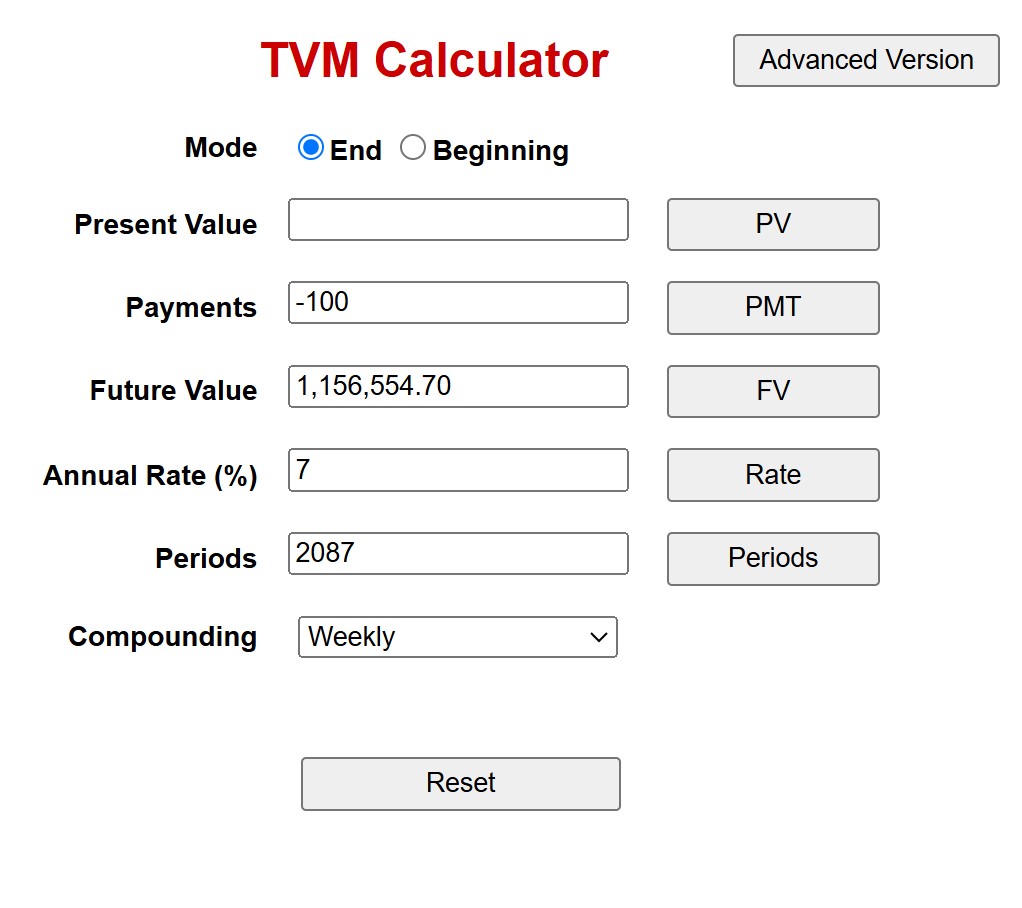
    https://www.fncalculator.com/financialcalculator?type=tvmCalculator

    Automation also helps you avoid procrastination or skipping investments when things feel uncertain. Once you set it up, your money works for you without any extra effort.

    2. Fractional Shares and Zero Commissions: Making Recurring Investments Accessible

    Thanks to advancements in modern investing platforms, fractional shares and zero-commission trading have made recurring investment plans more accessible than ever. Fractional shares allow you to buy a portion of a stock or fund, meaning you don’t need thousands of dollars to invest in expensive funds like those tracking the S&P 500 or companies like Amazon and Alphabet. For example, even with just $10, you can start building a position in high-value investments, making it easier for anyone to get started with investing.

    Zero-commission trading has further reduced barriers by eliminating transaction fees, allowing you to invest small amounts frequently without worrying about costs eating into your returns. Together, these innovations enable you to set up recurring investment plans with minimal amounts, automating contributions to funds that align with your goals. Whether it’s $5 a day or $50 a week, fractional shares and commission-free platforms empower you to steadily grow your wealth, even with a modest budget.

    This accessibility ensures that anyone, regardless of income level, can begin their investment journey and benefit from consistent contributions over time.

    3. Diversification Makes Investing Safer

    Choosing the right investments can feel overwhelming, but diversification makes it easier to build a portfolio that balances growth and stability. Diversification means spreading your investments across different asset classes—such as stocks, bonds, and cash—to reduce the overall risk of your portfolio. By not putting all your eggs in one basket, you minimize the impact of any single investment performing poorly.

    For example, many people invest in a diversified index fund, like one tracking the S&P 500, which gives exposure to 500 of the largest U.S. companies. However, diversification can go a step further by including bonds alongside stocks. Bonds tend to be more stable than stocks and provide a buffer during market downturns, making them a great choice for those seeking to lower overall risk.

    Investing in a fund that blends stocks and bonds—such as a balanced fund or target-date fund—can help align your portfolio with your financial goals and risk tolerance. A younger investor saving for retirement might choose a fund with a higher proportion of stocks for growth, while someone nearing retirement might prefer a fund with more bonds for stability.

    A recurring investment plan can also be set up with a desired fund that matches your goals and risk preferences. This means you can automate your contributions to a specific diversified fund, ensuring consistency and eliminating the need for manual adjustments. Whether you aim for aggressive growth, steady income, or a mix of both, choosing the right fund for your recurring investment plan allows your portfolio to grow while staying aligned with your objectives.

    By combining diversification with the automation of recurring investments, you create a strategy that’s both effective and easy to maintain, helping you achieve long-term financial success.

    4. Rebalancing Your Recurring Investment Plan

    As life changes, so do your financial goals and circumstances. It’s important to periodically review and rebalance your recurring investment plan to ensure it aligns with your current life situation. Rebalancing involves adjusting the allocation of your investments to maintain the right mix of assets, such as stocks, bonds, and cash. For example, a young professional might prioritize higher-growth investments like stocks, while someone nearing retirement might shift to more stable assets like bonds to preserve wealth.

    Additionally, major life events—such as getting married, having children, or receiving a promotion—may require increasing or modifying your contributions. For instance, if your income rises, you can increase your weekly or monthly investment amount to accelerate your wealth-building goals. Conversely, during challenging times, you might reduce contributions temporarily but should aim to stay consistent when possible.

    Rebalancing ensures your investment strategy evolves with your needs, helping you stay on track toward long-term financial security.

    Simple Steps to Start a Recurring Investment Plan

    Getting started is easy:

    1. Pick the Right Account: Decide whether a brokerage account, IRA, or 401(k) aligns with your goals. Many brokers now let you start with as little as $1, making it easy to take the first step.
    2. Choose a Diversified Fund: Look for low-cost index funds or ETFs. They’re simple and effective.
    3. Set Up Automation: Schedule automatic transfers from your bank account or paycheck into your investment account. Decide if you want to invest daily, weekly, or monthly.
    4. Stick to the Plan: Focus on your long-term goals and avoid reacting to short-term market changes.

    Bonus Tips to Grow Your Wealth

    • Reinvest Dividends: Instead of taking dividends as cash, use them to buy more shares. This speeds up growth through compounding.
    • Use Fractional Shares: Invest small amounts in big companies by buying fractions of shares. For example, even with $50, you can own a piece of companies like Amazon.
    • Take Advantage of Zero Fees: Many platforms now offer commission-free trades, so you can invest without extra costs.

    Why Simple Strategies Work

    Investing doesn’t have to be overwhelming. A recurring investment plan reduces the complexity of wealth building, focusing on steady contributions, diversification, and compounding. By removing the stress of market timing and stock picking, you create a sustainable strategy for financial freedom.

    Whether you’re starting with $50, $100, or $1,000 a month, what matters is getting started and staying consistent. Over time, your efforts will pay off, and you’ll be on the path to financial freedom.

    Your Mantra for Success: Save Consistently. Invest Smartly. Retire Richly.

    Legal Disclaimer for Build Wealth Retire Rich Blog/Website

    The information provided on the “Build Wealth Retire Rich” blog/website is for educational purposes only and should not be construed as financial, investment, or legal advice. While every effort is made to ensure the accuracy and reliability of the information presented, Build Wealth Retire Rich and its contributors, including AI tools used in the creation of some content, do not guarantee its completeness or timeliness. Users are encouraged to consult with a qualified financial advisor or legal professional to discuss their specific financial situation and to obtain advice tailored to their individual circumstances.

    Build Wealth Retire Rich is not responsible for any decisions made based on the information provided on this website. All financial products, investment strategies, and other content discussed are presented for informational purposes only, and no guarantees are made regarding the performance or suitability of any particular investment or strategy.

    The views and opinions expressed on “Build Wealth Retire Rich” are those of the authors and do not necessarily reflect the views of the website’s owner or any affiliated institutions. “Build Wealth Retire Rich” does not endorse or promote any particular investment, financial product, or institution unless explicitly stated.

    Risk Disclosure: Investing involves risk, including the potential loss of principal. Past performance is not indicative of future results. Always do your own research and consider your financial goals and risk tolerance before making any financial decisions.

    By using this website, you agree that Build Wealth Retire Rich and its affiliates are not liable for any losses or damages incurred as a result of using the information provided. Users are solely responsible for their financial decisions and should seek independent advice when necessary.

  • What is an IRA?

    Saving for retirement is essential, and Individual Retirement Accounts (IRAs) provide an excellent opportunity to grow your wealth while enjoying tax benefits. Whether you’re supplementing an employer-sponsored plan or starting your savings independently, IRAs are a vital tool in building a secure financial future.


    What is an IRA?

    An IRA is a personal retirement savings account designed to encourage long-term savings with tax advantages. IRAs offer flexibility, allowing you to choose from a variety of investments such as stocks, bonds, mutual funds, and ETFs.

    For those with employer-sponsored retirement plans like 401(k)s, IRAs can provide additional benefits. After maximizing your employer match (if available), an IRA can help diversify your retirement savings and offer access to a broader range of investment options.


    Three Main Types of IRAs

    1. Traditional IRA

    • Tax Benefits: Contributions are often tax-deductible, providing immediate tax savings.
    • Withdrawals: Subject to income tax upon withdrawal in retirement.
    • Required Minimum Distributions (RMDs): Mandatory withdrawals begin at age 73.

    2. Roth IRA

    • Tax Benefits: Contributions are made with after-tax dollars, but withdrawals are tax-free in retirement.
    • No RMDs: Funds can remain in the account indefinitely, making them ideal for estate planning.

    3. Rollover IRA

    • Purpose: Allows you to transfer assets from an employer-sponsored retirement plan, such as a 401(k), into an IRA.
    • Tax Benefits: Preserves the tax-deferred status of the funds, avoiding penalties or immediate taxes.

    Example:
    When Sarah changes jobs, she rolls over $100,000 from her 401(k) into a Rollover IRA, gaining access to a wider range of investment options while maintaining her tax benefits.

    Income Limitations on IRAs

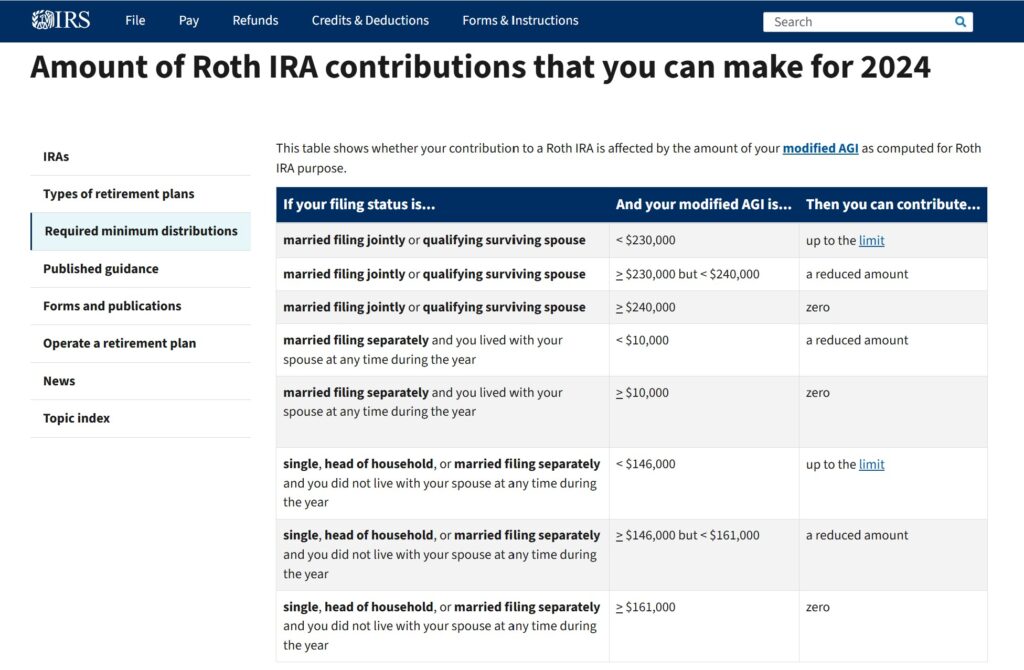
    When contributing to an IRA, it’s important to be aware of the income limitations that may affect your eligibility, particularly for Roth IRAs and the deductibility of Traditional IRA contributions. For Roth IRAs, contributions are phased out if your Modified Adjusted Gross Income (MAGI) exceeds certain limits. For 2024, single filers with a MAGI above $146,000 and joint filers with a MAGI above $230,000 cannot contribute to a Roth IRA.

    Source: https://www.irs.gov/retirement-plans/plan-participant-employee/amount-of-roth-ira-contributions-that-you-can-make-for-2024

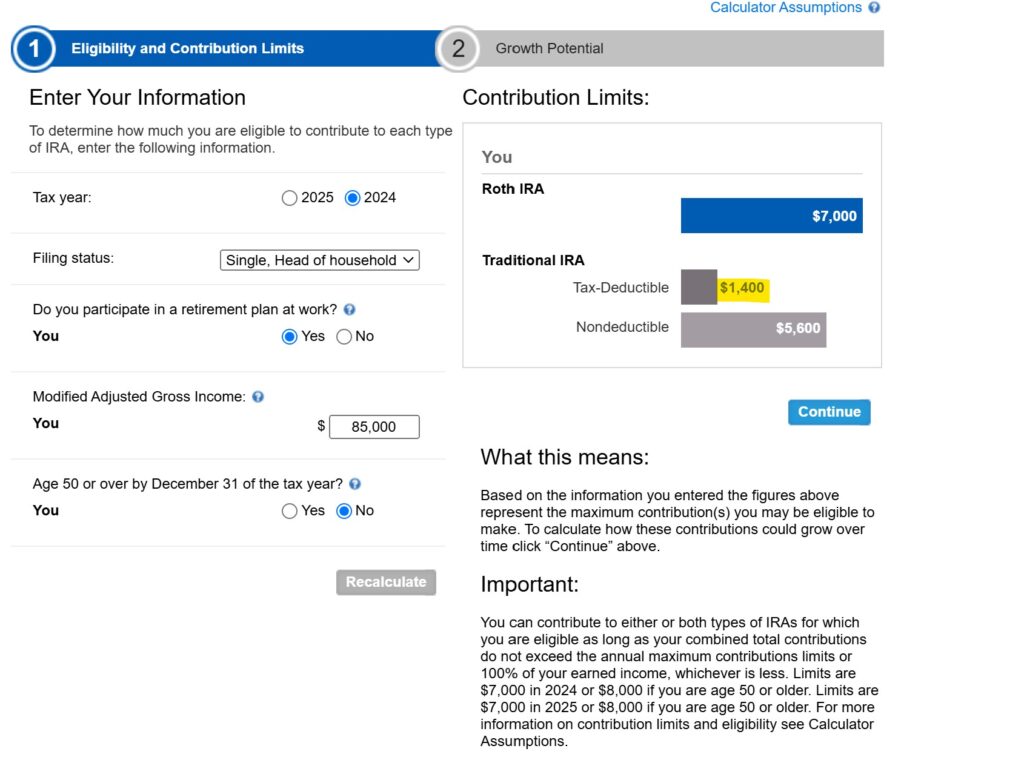
    Traditional IRAs, on the other hand, do not have income restrictions for contributions, but if you or your spouse are covered by a workplace retirement plan, the deductibility of those contributions may be reduced or eliminated based on your MAGI. For example, single filers with a MAGI above $87,000 in 2024 lose the full deductibility of Traditional IRA contributions. Understanding these limits can help you strategically plan your retirement savings and optimize your tax benefits.

    Example 1: Single Filer

    • Income Level: $85,000
    • Filing Status: Single
    • Covered by a Workplace Retirement Plan: Yes
    • 2024 IRA Contribution Limit: $7,000 (under 50)

    Traditional IRA:

    • Deduction Phase-Out Range: $77,000 to $87,000 (2024).
    • Contribution: Allowed up to $7,000, but only a partial deduction can be taken since income is in the phase-out range.
    • Deduction Calculation:
      • MAGI = $85,000
        $85,000 – $77,000 = $8,000 over the lower limit.
        Phase-out percentage: $8,000 ÷ $10,000 = 80%.
        Deductible contribution = $7,000 × (1 – 0.80) = $1,400

    Source: https://www.schwab.com/ira/ira-calculators/roth-vs-traditional

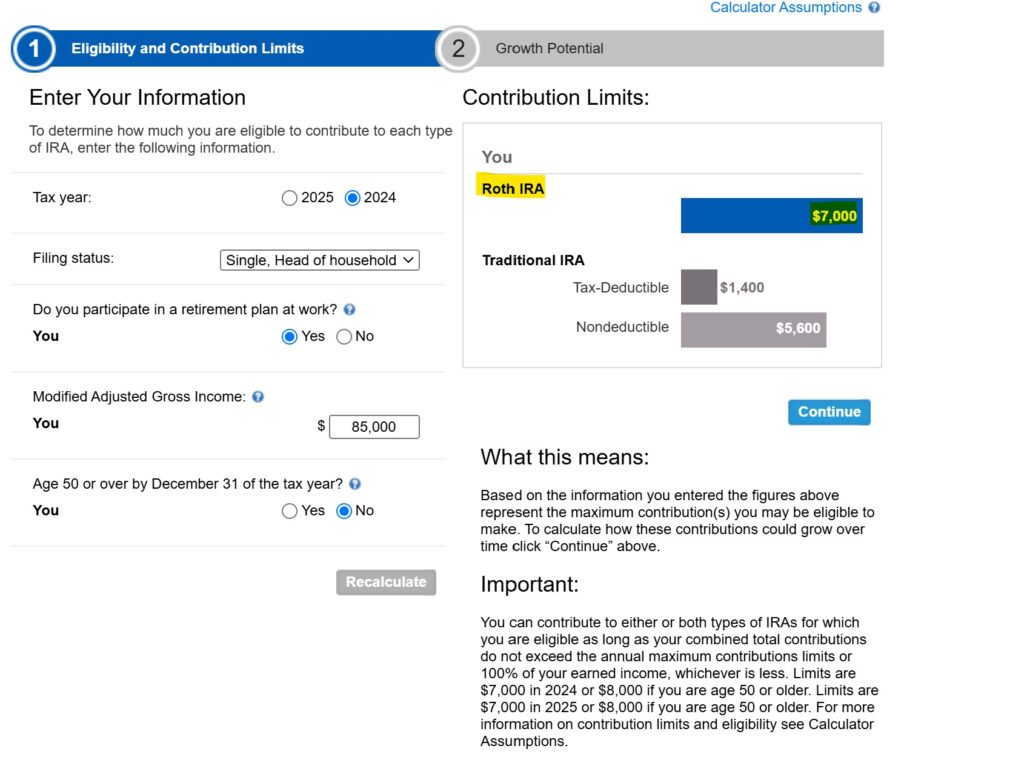
    Roth IRA:

    • Income Eligibility Phase-Out Range: $146,000 to $161,000 (2024).
    • Contribution: Full $7,000 allowed since income is below $146,000.

    source: https://www.schwab.com/ira/ira-calculators/roth-vs-traditional


    Other Types of IRAs

    In addition to the three main types, specialized IRAs cater to specific needs:

    • SIMPLE IRA: Ideal for small businesses, allowing both employer and employee contributions.
    • SEP-IRA: Designed for self-employed individuals or business owners, offering higher contribution limits.
    • Inherited IRA: Used to manage funds received from a deceased individual’s IRA.
    • Custodial IRA: Allows minors with earned income to begin saving for retirement.
    • Spousal IRA: Enables contributions for a non-working spouse under a joint tax return.

    Strategies to Maximize Your IRA

    1. Automate Contributions with Dollar-Cost Averaging

    Setting up a recurring investment plan ensures consistent contributions and takes advantage of dollar-cost averaging (DCA). DCA involves investing a fixed amount regularly, regardless of market conditions, allowing you to buy more shares when prices are low and fewer when prices are high.

    2. Reinvest Dividends

    Dividends can significantly boost your retirement savings when reinvested. By using the dividends to purchase additional shares, you compound your returns over time.

    3. Choose Low-Cost Index Funds

    Index funds are an excellent choice for IRAs due to their low fees, diversification, and historical performance.

    Why Index Funds?

    • Lower Expense Ratios: Keep more of your investment returns.
    • Broad Diversification: Reduce risk by spreading investments across multiple sectors.
    • Proven Growth: Track the performance of the market over the long term.


    Benefits of Starting Early

    Starting your IRA contributions early amplifies the power of compounding, where your returns generate additional returns over time.

    Example:
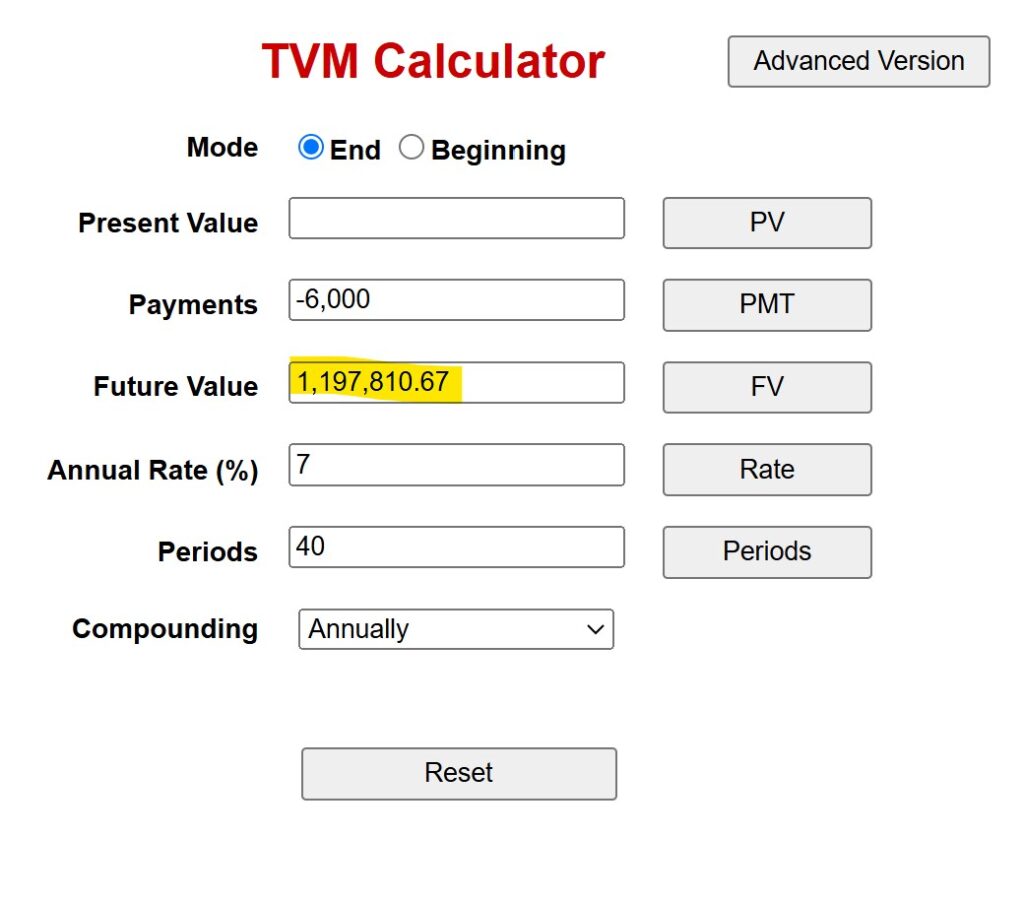
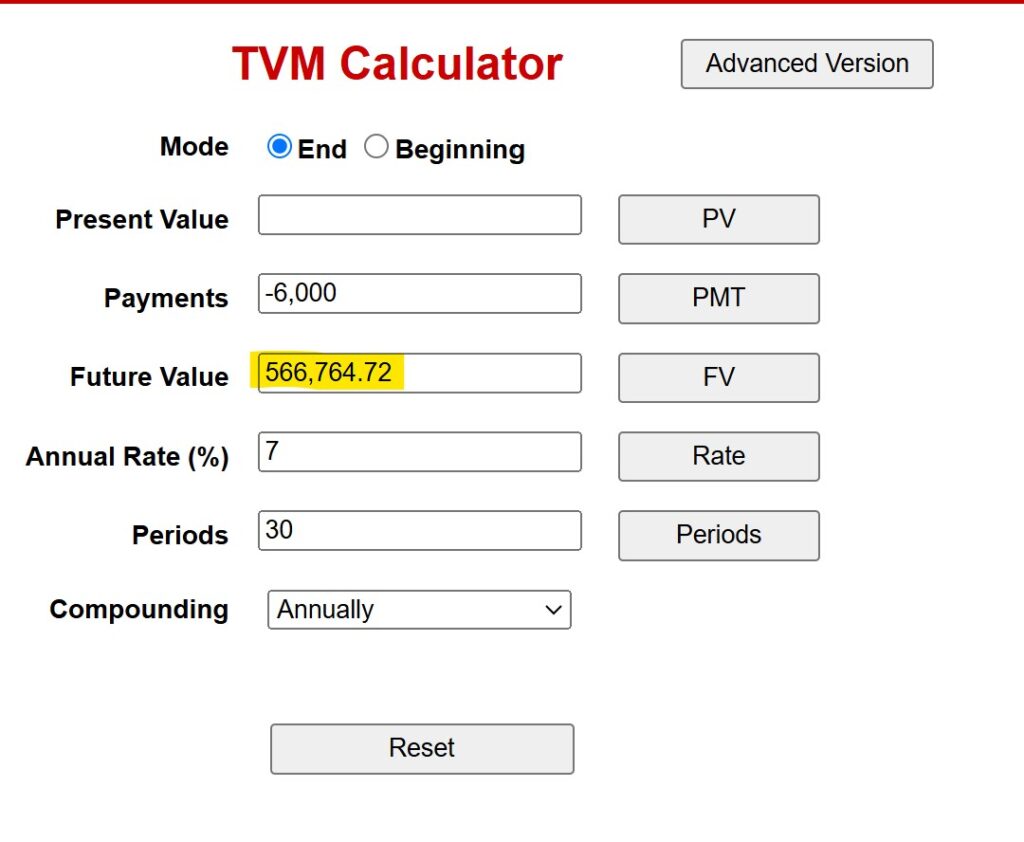
    Anna begins contributing $6,000 annually to her IRA at age 25, while Ben starts at 35. By age 65, Anna’s account is worth almost $1.2 million, while Ben’s grows to about $566,000, assuming a 7% annual return.

    Anna Portfolio in 40 years

    TVM Calculator source: https://www.fncalculator.com/financialcalculator?type=tvmCalculator

    Ben Portfolio in 30 years

    TVM Calculator source: https://www.fncalculator.com/financialcalculator?type=tvmCalculator


    How to Get Started

    1. Choose the Right IRA: Evaluate your current income, tax preferences, and retirement goals.
    2. Open an Account: Many financial institutions offer easy online account setup.
    3. Select Investments: Build a diversified portfolio with low-cost funds or ETFs.
    4. Automate Contributions: Set up recurring transfers to ensure consistent savings.
    5. Monitor and Adjust: Review your investments periodically to ensure they align with your goals.

    Conclusion

    IRAs are a cornerstone of a well-rounded retirement strategy. By understanding the different types, leveraging recurring contributions, reinvesting dividends, and selecting low-cost investments, you can maximize your savings and achieve long-term financial success.

    Start today to take control of your financial future and pave the way for a comfortable retirement. For more insights and actionable advice, visit https://wallstreetsim.com/wealth-talks/

    Your Mantra for Success: Save Consistently. Invest Smartly. Retire Richly.

    Legal Disclaimer for Build Wealth Retire Rich Blog/Website

    The information provided on the “Build Wealth Retire Rich” blog/website is for educational purposes only and should not be construed as financial, investment, or legal advice. While every effort is made to ensure the accuracy and reliability of the information presented, Build Wealth Retire Rich and its contributors, including AI tools used in the creation of some content, do not guarantee its completeness or timeliness. Users are encouraged to consult with a qualified financial advisor or legal professional to discuss their specific financial situation and to obtain advice tailored to their individual circumstances.

    Build Wealth Retire Rich is not responsible for any decisions made based on the information provided on this website. All financial products, investment strategies, and other content discussed are presented for informational purposes only, and no guarantees are made regarding the performance or suitability of any particular investment or strategy.

    The views and opinions expressed on “Build Wealth Retire Rich” are those of the authors and do not necessarily reflect the views of the website’s owner or any affiliated institutions. “Build Wealth Retire Rich” does not endorse or promote any particular investment, financial product, or institution unless explicitly stated.

    Risk Disclosure: Investing involves risk, including the potential loss of principal. Past performance is not indicative of future results. Always do your own research and consider your financial goals and risk tolerance before making any financial decisions.

    By using this website, you agree that Build Wealth Retire Rich and its affiliates are not liable for any losses or damages incurred as a result of using the information provided. Users are solely responsible for their financial decisions and should seek independent advice when necessary.
  • Exploring Retirement Plans and Smart Savings Strategies

    Planning for retirement is one of the most critical steps in achieving long-term financial security. With so many options available, finding the right retirement plan can feel overwhelming. At Build Wealth, Retire Rich, we believe that understanding your choices is the first step toward a prosperous future. Here, we break down the most common retirement plans and accounts to help you make informed decisions.


    Understanding Retirement Plans

    Retirement plans fall into two primary categories: employer-sponsored plans and individual accounts. Depending on your employment status and financial goals, certain plans might be better suited for you. Let’s explore the key options.


    Employer-Sponsored Retirement Plans

    1. 401(k) Plans

    A 401(k) is the most common employer-sponsored retirement plan.

    • Tax Advantages: Contributions are pre-tax, lowering your current taxable income. Your savings grow tax-deferred until withdrawal.
    • Employer Matching: Many employers offer matching contributions—essentially free money for your retirement.
    • High Contribution Limits: In 2024, you can contribute up to $23,000, with an additional $7,500 if you’re 50 or older.
    • Ease of Use: Automatic payroll deductions make saving effortless.

    Example of Tax Savings in a 401(k)

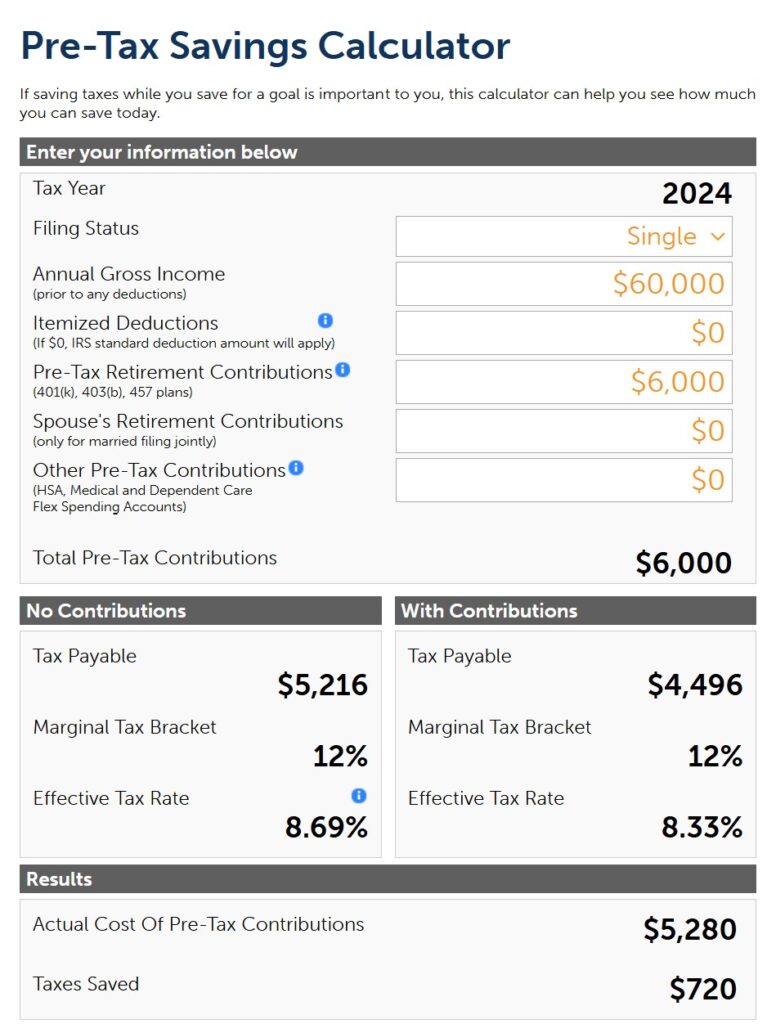
    Let’s say you are single and your annual salary is $60,000, and you contribute 10% of your salary ($6,000) to your 401(k). Here’s how it affects your taxes:

    • Before Contribution: Your taxable income is $60,000.
    • After Contribution: Your taxable income is reduced to $54,000 ($60,000 – $6,000).
    • Tax Savings: In 2024, you will save $720 in federal taxes.

    Source: https://ffcalcs.com/pretax_savings

    By contributing to a 401(k), you’re not only saving for retirement but also reducing your current tax liability—a win-win situation!

    Example of Employer Matching

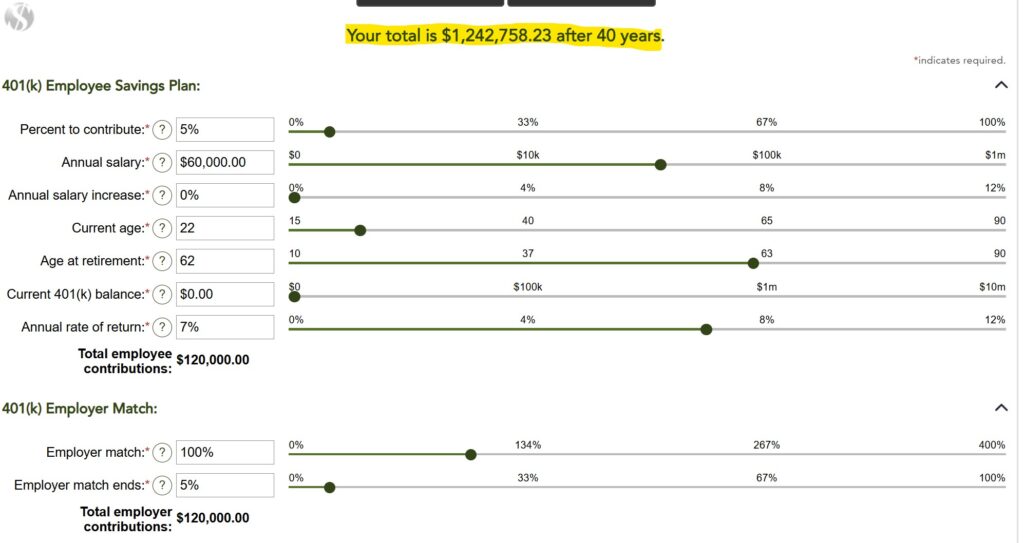
    Imagine you earn $60,000 annually and your employer offers a 100% match on the first 5% of your salary you contribute to the 401(k). Here’s what happens:

    Imagine you earn $60,000 annually and your employer offers a 100% match on the first 5% of your salary you contribute to the 401(k). Over 40 years, with an assumed annual return of 7%, your retirement savings would grow to over $1,200,000 if his employer matches 100% of his contributions. Without the employer match, his total savings would be $621,379.12

    Source: https://www.federatedhermes.com/us/calculators/Retire401k.html

    • Your Contribution over 40 years: $120,000
    • Employer Match over 40 years: $120,000
    • Total Contribution: $240,000

    With the employer match, your contribution is effectively doubled. Over time, this additional contribution can significantly boost your retirement savings, especially when combined with compound growth.

    2. 403(b) Plans

    Designed for nonprofit and public sector employees, 403(b) plans share many similarities with 401(k)s.

    • Unique Perks: Some plans offer a 15-year service catch-up provision for long-term employees.
    • Flexibility: You can often contribute to both a 403(b) and a 457(b) plan simultaneously, boosting your savings potential.

    3. Thrift Savings Plan (TSP)

    Available to federal employees and military personnel, the TSP is one of the most cost-effective retirement plans.

    • Employer Matching: Federal employees receive a 5% match on their contributions.
    • Low Fees: The TSP is known for its low administrative costs, leaving more money in your account.

    4. 457(b) Plans

    Ideal for state and local government employees, 457(b) plans offer unique benefits.

    • No Early Withdrawal Penalty: You can withdraw funds without penalties before age 59½ if you separate from service.
    • Additional Savings: Contributions can be made alongside a 403(b) or 401(k) plan.

    Plans for Small Businesses and Self-Employed Individuals

    5. SIMPLE IRA

    Perfect for small businesses with 100 or fewer employees.

    • Tax Advantages: Contributions reduce taxable income and grow tax-deferred.
    • Employer Contributions: Employers can match up to 3% of employee compensation or provide a 2% non-elective contribution.
    • Contribution Limits: $16,000 for 2024, with a $3,500 catch-up contribution for those 50+.

    6. SEP IRA

    A Simplified Employee Pension (SEP) IRA is ideal for self-employed individuals and small businesses.

    • Flexible Contributions: Employers can decide how much to contribute each year.
    • High Limits: Contributions can reach up to $69,000 in 2024, depending on income.

    7. Solo 401(k)

    Tailored for self-employed individuals, Solo 401(k)s offer high contribution limits.

    • Dual Contributions: You can contribute as both employee and employer, maximizing your retirement savings.
    • Roth Option: Post-tax contributions grow tax-free.
    • Limits: Up to $69,000 in 2024, or $76,500 if you’re 50 or older.

    Individual Retirement Accounts (IRAs)

    Traditional IRA

    • Tax Deductibility: Contributions may be tax-deductible, depending on your income.
    • Growth: Funds grow tax-deferred until withdrawal.

    Roth IRA

    • Tax-Free Withdrawals: Contributions are post-tax, but withdrawals in retirement are tax-free.
    • Flexibility: Contributions can be withdrawn anytime without penalties.

    Other Savings Tools

    Health Savings Accounts (HSAs)

    • Triple Tax Advantage: Contributions are pre-tax, growth is tax-deferred, and withdrawals for qualified expenses are tax-free.

    Brokerage Accounts

    • Unlimited Contributions: Invest as much as you want with no income restrictions.
    • Tax Efficiency: Long-term gains are taxed at lower rates than regular income.

    Tips for Choosing the Right Plan

    1. Leverage Employer Matching: Always contribute enough to receive your employer’s full match.
    2. Start Early: Time is your greatest asset. The earlier you save, the more your money can grow.
    3. Diversify: Consider using multiple accounts, such as a 401(k) and an IRA, to maximize tax benefits.
    4. Plan for Taxes: Roth accounts offer tax-free withdrawals, providing flexibility in retirement.

    Final Thoughts

    Retirement planning is a journey, not a sprint. By understanding your options and taking advantage of the right tools, you can build wealth and retire rich. At Build Wealth, Retire Rich, we’re here to guide you every step of the way. Start today—your future self will thank you!

    Legal Disclaimer for Build Wealth Retire Rich Blog/Website

    The information provided on the “Build Wealth Retire Rich” blog/website is for educational purposes only and should not be construed as financial, investment, or legal advice. While every effort is made to ensure the accuracy and reliability of the information presented, Build Wealth Retire Rich and its contributors, including AI tools used in the creation of some content, do not guarantee its completeness or timeliness. Users are encouraged to consult with a qualified financial advisor or legal professional to discuss their specific financial situation and to obtain advice tailored to their individual circumstances.

    Build Wealth Retire Rich is not responsible for any decisions made based on the information provided on this website. All financial products, investment strategies, and other content discussed are presented for informational purposes only, and no guarantees are made regarding the performance or suitability of any particular investment or strategy.

    The views and opinions expressed on “Build Wealth Retire Rich” are those of the authors and do not necessarily reflect the views of the website’s owner or any affiliated institutions. “Build Wealth Retire Rich” does not endorse or promote any particular investment, financial product, or institution unless explicitly stated.

    Risk Disclosure: Investing involves risk, including the potential loss of principal. Past performance is not indicative of future results. Always do your own research and consider your financial goals and risk tolerance before making any financial decisions.

    By using this website, you agree that Build Wealth Retire Rich and its affiliates are not liable for any losses or damages incurred as a result of using the information provided. Users are solely responsible for their financial decisions and should seek independent advice when necessary.
  • Understanding Social Security Benefits: A Comprehensive Guide

    Social Security is one of the most critical safety nets in the United States, providing financial assistance to millions of Americans. While it is often associated with retirement, it offers a broad range of benefits, including disability, survivor, and dependent benefits. This blog will walk you through the essential aspects of Social Security, from eligibility requirements to various benefit types. By the end, you’ll have a solid understanding of how Social Security works and what it means for you and your family.

    What is Social Security?

    Social Security is a federal program designed to provide financial assistance to retirees, disabled individuals, and families of deceased workers. Funded by payroll taxes, the program ensures a basic level of income for individuals who meet specific work and earning requirements.

    Social Security benefits are typically categorized into the following:

    • Retirement Benefits
    • Disability Benefits
    • Survivor Benefits
    • Dependent Benefits

    Who Qualifies for Social Security?

    Eligibility for Social Security depends on a worker’s employment history and earnings. Workers earn Social Security credits based on their annual income. In 2024, a worker receives 1 credit for every $1,730 earned, up to a maximum of 4 credits per year. A worker is fully insured for life once they accumulate 40 credits. However, different benefits have additional requirements, particularly for younger workers or those who become disabled.

    Understanding the Benefits:

    1. Retirement Benefits:Social Security retirement benefits are the most well-known type of benefit. A fully insured worker can start receiving these benefits as early as age 62. However, opting for early retirement will result in reduced benefits. Full retirement age (FRA) varies depending on your birth year, typically ranging between 66 and 67. Waiting until the full retirement age, or even delaying benefits until age 70, results in a higher monthly payment.
      • Example: John, a 67-year-old retiree, worked consistently throughout his life and accumulated 40 credits by the time he turned 40. He is now eligible for full Social Security retirement benefits based on his average indexed monthly earnings.
    2. Spousal Benefits:Spousal benefits provide support to spouses who may not have earned enough credits on their own. The spousal benefit can be up to 50% of the primary worker’s benefit amount if the spouse claims it at full retirement age. Spouses can also be eligible for benefits if they care for a minor or disabled child.
      • Example: Sarah, John’s wife, never worked outside the home. When John claims his retirement benefits, Sarah is eligible for 50% of his benefit amount, provided she waits until her FRA.
    3. Survivor Benefits:Survivor benefits support the family members of deceased workers who were fully or currently insured. These benefits can be paid to the deceased worker’s spouse, minor children, or even dependent parents.
      • Widow/Widower Benefit: A surviving spouse aged 60 or older can receive survivor benefits based on the deceased worker’s earnings.
      • Widow/Widower Caring for a Minor Child: A spouse caring for a dependent child under age 16 is eligible for benefits regardless of age.
      • Example: Mark passed away at age 58. His wife, Julie, who is now 62, can claim survivor benefits. If she had been caring for their 12-year-old son when Mark passed, she could have started receiving benefits immediately.
    4. Disability Benefits:Disability benefits are designed to assist workers who are severely impaired and unable to perform any substantial gainful activity. To qualify, the worker must have accumulated sufficient credits based on their age and must meet the recent work test. For workers over age 31, at least 20 of the most recent 40 credits (10 years) must have been earned prior to becoming disabled.
      • Example: Anna, a 42-year-old nurse, became disabled due to a severe car accident. Since she worked consistently for the past 10 years and earned more than 20 credits, she qualifies for Social Security Disability Insurance (SSDI).
    5. Dependent Child Benefits:If a fully insured worker has dependent children, those children may be eligible for benefits. The dependent benefit is typically up to 50% of the parent’s full retirement or disability benefit and continues until the child turns 18 or 19 (if still in high school).
      • Example: David, a retired engineer, receives Social Security benefits. His 15-year-old daughter, Emily, is eligible for a monthly dependent benefit until she graduates high school.
    6. Dependent Parent Benefit:A less commonly known benefit, the dependent parent benefit is available when a fully insured worker has passed away, leaving a parent who was financially dependent. To qualify, the parent must be 62 or older and must have received at least half of their support from the deceased worker.
      • Example: Nancy passed away at age 55, leaving behind her 65-year-old mother, Carol. Because Carol was financially dependent on Nancy, she qualifies for the dependent parent benefit.
    7. Lump-Sum Death Benefit:When a fully insured worker dies, a one-time lump-sum death benefit of $255 may be paid to the surviving spouse or child. While this amount is relatively small, it can help with immediate expenses following the worker’s death.
      • Example: Tom, who was fully insured, passed away at age 64. His wife, Susan, received a one-time death benefit of $255 to help cover immediate expenses.

    Key Takeaways:

    • Understanding Your Insured Status: Being fully insured means you have earned at least 40 credits. This status qualifies you for a range of benefits, including retirement, spousal, and dependent benefits.
    • Recent Work Test for Disability: If you become disabled, having 40 credits alone is not enough. You must also have recent work credits, especially if you are between ages 31 and 42.
    • Planning for Survivor Benefits: Survivor benefits can provide crucial support to family members after a worker’s death. Make sure your spouse and children understand what they are entitled to.
    • Maximizing Spousal Benefits: Spousal benefits can significantly increase a family’s retirement income. Understanding how to coordinate benefits can result in higher monthly payments.
    • Dependent Child and Parent Benefits: These lesser-known benefits can provide additional financial support for families with dependent children or elderly parents.

    Social Security is a complex program, but understanding its key features and benefits can help you make informed decisions for yourself and your family. Whether you are planning for retirement, considering disability options, or thinking about how your family would fare in your absence, knowing your eligibility and options is crucial. Always consult with a financial professional or Social Security representative for personalized advice based on your specific situation.

    Final Thought:

    Understanding Social Security is not just about knowing when to claim retirement benefits. It’s about ensuring financial security for yourself and your loved ones throughout life’s many stages. Take time to review your Social Security Statement and speak with a financial planner to align your benefits with your overall financial goals.

    Our Newsletter Can Help You Build Wealth and Retire Rich!

    Sign up for our free newsletter!

    Want actionable tips and expert advice to grow your wealth, save smarter, and retire comfortably? Sign up for the Build Wealth Retire Rich newsletter to receive weekly updates packed with personal finance strategies and insights—delivered straight to your inbox!

    By submitting your information, you`re giving us permission to email you. You may unsubscribe at any time.

    Legal Disclaimer for Build Wealth Retire Rich Blog/Website

    The information provided on the “Build Wealth Retire Rich” blog/website is for educational purposes only and should not be construed as financial, investment, or legal advice. While every effort is made to ensure the accuracy and reliability of the information presented, Build Wealth Retire Rich and its contributors, including AI tools used in the creation of some content, do not guarantee its completeness or timeliness. Users are encouraged to consult with a qualified financial advisor or legal professional to discuss their specific financial situation and to obtain advice tailored to their individual circumstances.

    Build Wealth Retire Rich is not responsible for any decisions made based on the information provided on this website. All financial products, investment strategies, and other content discussed are presented for informational purposes only, and no guarantees are made regarding the performance or suitability of any particular investment or strategy.

    The views and opinions expressed on “Build Wealth Retire Rich” are those of the authors and do not necessarily reflect the views of the website’s owner or any affiliated institutions. “Build Wealth Retire Rich” does not endorse or promote any particular investment, financial product, or institution unless explicitly stated.

    Risk Disclosure: Investing involves risk, including the potential loss of principal. Past performance is not indicative of future results. Always do your own research and consider your financial goals and risk tolerance before making any financial decisions.

    By using this website, you agree that Build Wealth Retire Rich and its affiliates are not liable for any losses or damages incurred as a result of using the information provided. Users are solely responsible for their financial decisions and should seek independent advice when necessary.
  • Congratulations, College Students! Your Next Milestone: Becoming a 401(k) Millionaire

    Graduating college is a monumental achievement, marking the culmination of years of dedication and hard work. As you step into the next chapter of life, it’s time to set your sights on another milestone—becoming a 401(k) millionaire. While the number might sound daunting, it’s absolutely achievable with the right plan and mindset.

    Here’s how you can turn your first paycheck into a foundation for financial independence and a future filled with opportunities.


    Why Aim for a 401(k) Millionaire Status?

    A 401(k) plan is one of the most powerful tools for building wealth over time. By contributing regularly, taking advantage of employer matching, and letting compound interest work its magic, you can grow your retirement savings significantly. Becoming a 401(k) millionaire doesn’t just mean retiring in comfort; it means having the freedom to live life on your terms.

    Here’s why aiming for $1 million in your 401(k) is a practical goal:

    • Compound Growth: Investing early allows your money to grow exponentially over time.
    • Tax Advantages: Contributions to a traditional 401(k) are pre-tax, reducing your taxable income today, while Roth 401(k) contributions grow tax-free.
    • Employer Matching: Many employers contribute additional funds to your 401(k), supercharging your savings.

    How to Get Started

    1. Sign Up for Your Employer’s 401(k) Plan Immediately
      • As soon as you start your first job, make enrolling in your company’s 401(k) plan a priority.
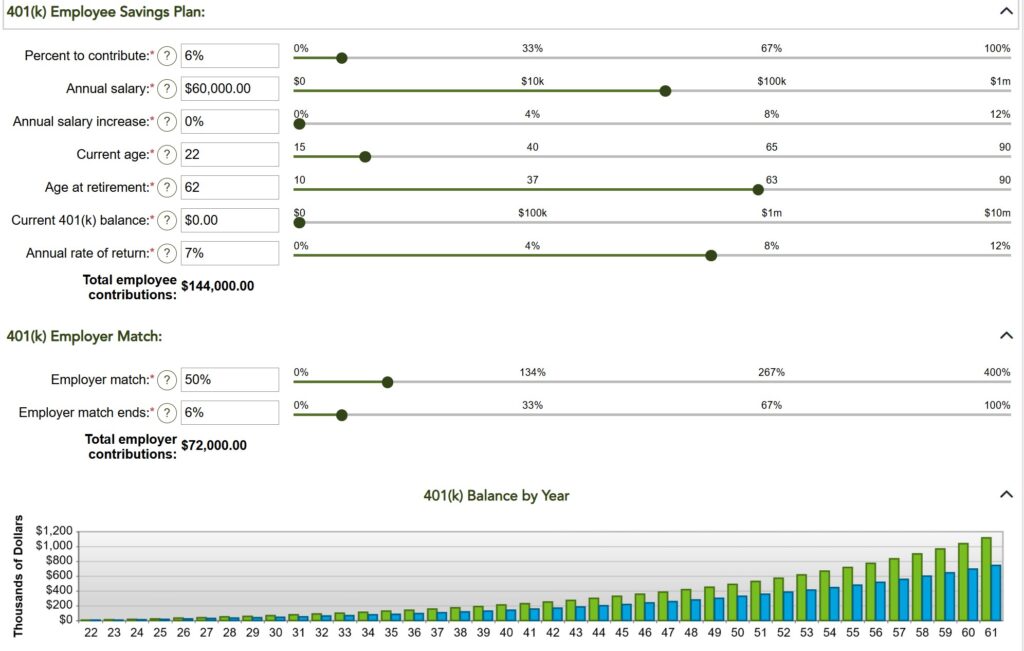
      • Many employers offer matching contributions—essentially free money. For example, if your employer matches 50% of contributions up to 6% of your salary, contributing at least that amount ensures you don’t leave money on the table.
      • Example: David earns $60,000 annually and chooses to save 6% of his salary in his 401(k). Over 40 years, with an assumed annual return of 7%, his retirement savings would grow to $1,118,482.41 if his employer matches 50% of his contributions. Without the employer match, his total savings would be $745,654.94. Read the article for calculation on the benefits of company matching https://wallstreetsim.com/retiring-a-millionaire-a-simple-path-for-everyday-people/
    2. Start Small but Stay Consistent
      • If you can’t contribute the maximum right away, don’t worry. Start with 5%-10% of your paycheck and increase it annually or when you get a raise.
      • Remember, even a small amount can grow significantly over time thanks to compound interest.
    3. Choose Investments Wisely
      • Most 401(k) plans offer target-date funds, which automatically adjust your investments based on your retirement timeline.
      • If you prefer to choose your investments, consider a mix of index funds that balance growth and risk.
    4. Maximize Contributions
      • For 2024, the elective deferral limit for 401(k) plans is $23,000. If you’re under 50, aim to contribute as much as you can afford.
      • If you’re self-employed, look into a Solo 401(k) plan for even higher contribution limits.
    5. Understand the Power of Compounding
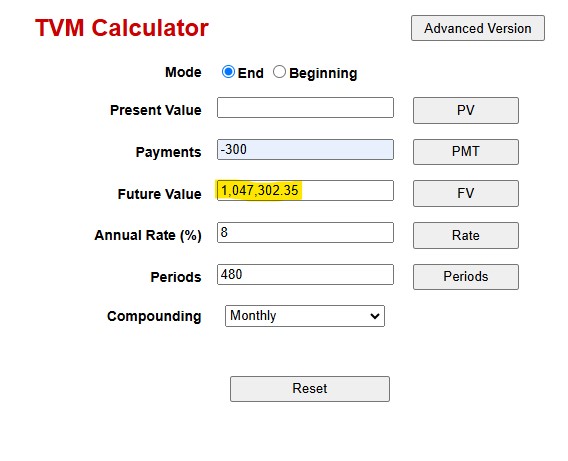
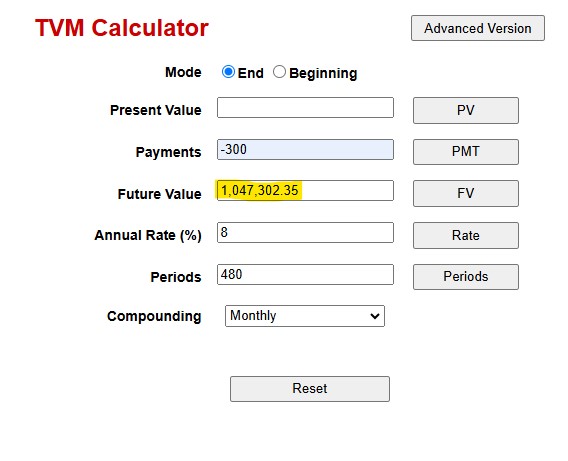
      • Contributing $300 per month starting at age 22 can grow to more than $1 million by the time you turn 62, assuming an average annual return of 8%.
      • The earlier you start, the less you’ll need to contribute over time.

    https://www.fncalculator.com/financialcalculator?type=tvmCalculator


    Overcoming Common Challenges

    • Student Loan Payments: Make paying off high-interest debt a priority, but don’t delay saving for retirement entirely. Even a small contribution early on can have a big impact.
    • Lifestyle Inflation: Resist the urge to upgrade your lifestyle as your income increases. Instead, funnel raises and bonuses into your 401(k).
    • Market Volatility: It’s normal for markets to fluctuate. Stay focused on your long-term goals and avoid the temptation to pull your money out during downturns.

    Celebrate the Milestones Along the Way

    Reaching $1 million in your 401(k) might seem far off, but setting smaller milestones—like your first $10,000 or $100,000—can keep you motivated. Celebrate these achievements and remind yourself that every contribution brings you closer to financial freedom.


    Inspiring Statistics

    • According to Fidelity, the number of 401(k) accounts with balances of $1 million or more reached an all-time high in 2024, climbing to 544,000 accounts, up 9.5% from 497,000 in the previous quarter.
    • The average contribution rate for 401(k) plans, including both employee and employer contributions, stands at 14.1%, comprising 9.4% from employees and an average employer match of 4.7%. This strong savings behavior has played a key role in the growth of 401(k) balances, contributing to the record number of millionaire accounts in 2024.

    Final Words: Your Future Starts Today

    As a college graduate, you’ve already proven your ability to work hard and achieve great things. Building a robust 401(k) is your next big goal, and it starts now. Whether you’re dreaming of early retirement, starting your own business, or traveling the world, a well-funded retirement account can make it possible.

    Remember: “The best time to start was yesterday. The second-best time is today.” So take that first step and set yourself up for a financially secure future. Congratulations, and here’s to your journey toward becoming a 401(k) millionaire!

    Our Newsletter Can Help You Build Wealth and Retire Rich!

    Sign up for our free newsletter!

    Want actionable tips and expert advice to grow your wealth, save smarter, and retire comfortably? Sign up for the Build Wealth Retire Rich newsletter to receive weekly updates packed with personal finance strategies and insights—delivered straight to your inbox!

    By submitting your information, you`re giving us permission to email you. You may unsubscribe at any time.

    Legal Disclaimer for Build Wealth Retire Rich Blog/Website

    The information provided on the “Build Wealth Retire Rich” blog/website is for educational purposes only and should not be construed as financial, investment, or legal advice. While every effort is made to ensure the accuracy and reliability of the information presented, Build Wealth Retire Rich and its contributors, including AI tools used in the creation of some content, do not guarantee its completeness or timeliness. Users are encouraged to consult with a qualified financial advisor or legal professional to discuss their specific financial situation and to obtain advice tailored to their individual circumstances.

    Build Wealth Retire Rich is not responsible for any decisions made based on the information provided on this website. All financial products, investment strategies, and other content discussed are presented for informational purposes only, and no guarantees are made regarding the performance or suitability of any particular investment or strategy.

    The views and opinions expressed on “Build Wealth Retire Rich” are those of the authors and do not necessarily reflect the views of the website’s owner or any affiliated institutions. “Build Wealth Retire Rich” does not endorse or promote any particular investment, financial product, or institution unless explicitly stated.

    Risk Disclosure: Investing involves risk, including the potential loss of principal. Past performance is not indicative of future results. Always do your own research and consider your financial goals and risk tolerance before making any financial decisions.

    By using this website, you agree that Build Wealth Retire Rich and its affiliates are not liable for any losses or damages incurred as a result of using the information provided. Users are solely responsible for their financial decisions and should seek independent advice when necessary.
  • Retiring a Millionaire: A Simple Path for Everyday People

    It’s easy to think you need a high salary or a glamorous career to retire with a million dollars. But the story of Ronald Read, a Vermont janitor and gas station attendant, proves otherwise. Read quietly amassed an $8 million fortune through disciplined saving, frugal living, and smart investing, surprising even his family and friends upon his death at age 92.

    Read’s story is a testament to the idea that anyone, regardless of income, can achieve financial independence with the right approach. By following simple principles like starting early, saving consistently, and investing wisely, you can also build a seven-figure nest egg for retirement.

    Here’s how to make it happen.

    Start Early: The Magic of Compound Interest

    Compound interest is the most powerful force in wealth building. Starting early allows your money to grow exponentially because you’re earning interest not just on your savings but also on the interest already earned.

    Example 1:
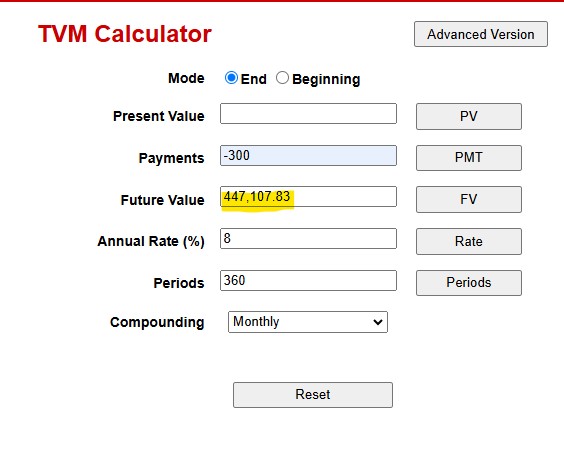
    Imagine Sarah, a 25-year-old who invests $300 per month in a retirement account with an average annual return of 8%. By age 65, Sarah will have over $1,000,000.

    https://www.fncalculator.com/financialcalculator?type=tvmCalculator

    Now consider Jake, who waits until he’s 35 to start saving the same $300 per month. By 65, Jake will only have $447,000, less than half of Sarah’s total—just because he started later.

    The takeaway? Starting early is like giving your money extra years to work for you.

    Consistency is Key: Automate Your Savings

    It’s not about saving big chunks at once—it’s about saving regularly. Automating contributions to your retirement accounts ensures that you’re consistently building wealth without needing to think about it.

    Example 2:
    David earns $60,000 annually and chooses to save 6% of his salary in his 401(k). Over 40 years, with an assumed annual return of 7%, his retirement savings would grow to $1,118,482.41 if his employer matches 50% of his contributions. Without the employer match, his total savings would be $745,654.94.

    https://www.federatedhermes.com/us/calculators/Retire401k.html

    Automating his savings made it easier for David to stick to his plan and take advantage of free money through employer matches.

    Invest Wisely: Keep Costs Low and Diversify

    Choosing the right investments is crucial. Low-cost index funds and ETFs are excellent options because they provide diversification and minimize fees, which can erode your returns.

    Avoid the Debt Trap

    Debt is a significant barrier to wealth. High-interest debt, such as credit card balances, can overshadow even the best investment returns. Paying off debt early frees up more money for savings.

    Example 4:
    Maria has $10,000 in credit card debt with a 20% interest rate. If she only makes the minimum payments, calculated as 3% of the balance, it will take her over 20 years to pay off the debt and cost her more than $12,000 in interest. However, by aggressively paying off the debt, she can save thousands in interest and redirect those savings into her retirement fund.

    https://www.bankrate.com/credit-cards/tools/minimum-payment-calculator


    How Much Do You Need to Save?

    The “4% rule” is a popular guideline for retirement planning. It suggests you can withdraw 4% of your retirement savings annually without running out of money.

    Example 5:
    If John has $1 million saved, he can withdraw $40,000 annually to cover living expenses. Combined with Social Security benefits, this amount could provide a comfortable lifestyle.

    Save More as You Earn More

    As your income grows, increase your savings rate. Bonuses, raises, or additional income can help accelerate your journey to $1 million.

    Example 6:
    Emma earns $50,000 and starts saving 10% of her income. After 5 years, her salary increases to $70,000. Instead of sticking to her original contribution of $5,000 per year, Emma raises it to 15%, or $10,500 annually. This simple adjustment significantly boosts her retirement savings over time.

    Balance Today and Tomorrow

    Saving for the future doesn’t mean sacrificing your quality of life today. The key is prioritizing what brings you joy while minimizing unnecessary expenses.

    Example 7:
    Ryan loves traveling and spends $3,000 a year on trips. To afford this while saving for retirement, he cuts back on dining out, saving $200 per month. This way, Ryan enjoys his travels while still contributing $500 a month to his IRA.

    Real-Life Stories of Millionaire Retirees

    Recent data from Fidelity shows there are now over 497,000 401(k) millionaires and 418,111 IRA millionaires as of September 30, 2024. These individuals weren’t all earning massive salaries—they simply followed consistent savings habits and invested wisely.

    Take Action Today

    Here’s a step-by-step roadmap to retiring a millionaire:

    1. Start Saving Now: The earlier, the better. Even small contributions grow significantly over time.
    2. Use Tax-Advantaged Accounts: Maximize your 401(k), IRA, or Roth IRA contributions.
    3. Take Advantage of Matches: Always contribute enough to get your employer’s full match.
    4. Invest Strategically: Opt for low-cost index funds or ETFs for diversification and lower fees.
    5. Increase Contributions Over Time: Save more as you earn more.
    6. Avoid High-Interest Debt: Focus on paying off debt to free up cash for investing.
    7. Find Balance: Save consistently while enjoying life.

    Becoming a millionaire isn’t about earning a massive salary; it’s about building wealth one step at a time. Whether you’re earning $40,000 or $400,000, the principles remain the same: save early, save often, and invest smartly. With patience and discipline, your dream of a $1 million retirement fund can become a reality.

    Your future self will thank you.

    Our Newsletter Can Help You Build Wealth and Retire Rich!

    Sign up for our free newsletter!

    Want actionable tips and expert advice to grow your wealth, save smarter, and retire comfortably? Sign up for the Build Wealth Retire Rich newsletter to receive weekly updates packed with personal finance strategies and insights—delivered straight to your inbox!Please accept terms and conditions.

    By submitting your information, you`re giving us permission to email you. You may unsubscribe at any time.

    Legal Disclaimer for Build Wealth Retire Rich Blog/Website

    The information provided on the “Build Wealth Retire Rich” blog/website is for educational purposes only and should not be construed as financial, investment, or legal advice. While every effort is made to ensure the accuracy and reliability of the information presented, Build Wealth Retire Rich and its contributors, including AI tools used in the creation of some content, do not guarantee its completeness or timeliness. Users are encouraged to consult with a qualified financial advisor or legal professional to discuss their specific financial situation and to obtain advice tailored to their individual circumstances.

    Build Wealth Retire Rich is not responsible for any decisions made based on the information provided on this website. All financial products, investment strategies, and other content discussed are presented for informational purposes only, and no guarantees are made regarding the performance or suitability of any particular investment or strategy.

    The views and opinions expressed on “Build Wealth Retire Rich” are those of the authors and do not necessarily reflect the views of the website’s owner or any affiliated institutions. “Build Wealth Retire Rich” does not endorse or promote any particular investment, financial product, or institution unless explicitly stated.

    Risk Disclosure: Investing involves risk, including the potential loss of principal. Past performance is not indicative of future results. Always do your own research and consider your financial goals and risk tolerance before making any financial decisions.

    By using this website, you agree that Build Wealth Retire Rich and its affiliates are not liable for any losses or damages incurred as a result of using the information provided. Users are solely responsible for their financial decisions and should seek independent advice when necessary.

  • How to Achieve Early Retirement: Tips from a Financial Planner


    © stock.adobe.com

    Achieving early retirement isn’t just a dream—it’s a goal that many people are turning into a reality with the right financial strategies. Here are some proven tips inspired by a financial planners who help clients retire early:

    1. Start Saving Early

    Time is your greatest asset. The earlier you start saving, the more you benefit from the power of compound interest. Even small, consistent contributions can grow into a substantial nest egg over time.

    Let’s compare two individuals: Sam and Chris. Both plan to retire at age 65 and invest in an account that earns 7% annual interest.

    • Sam starts saving $100 per month at age 25 and saves for 40 years.
    • Chris starts saving $100 per month at age 35 and saves for 30 years.

    Growth with Compound Interest:

    Using a 7% annual return:

    Sam’s savings at age 65:
    After saving $100 per month for 40 years at a 7% annual interest rate, Sam’s total savings grow to approximately $262,481.

    Chris’s savings at age 65:
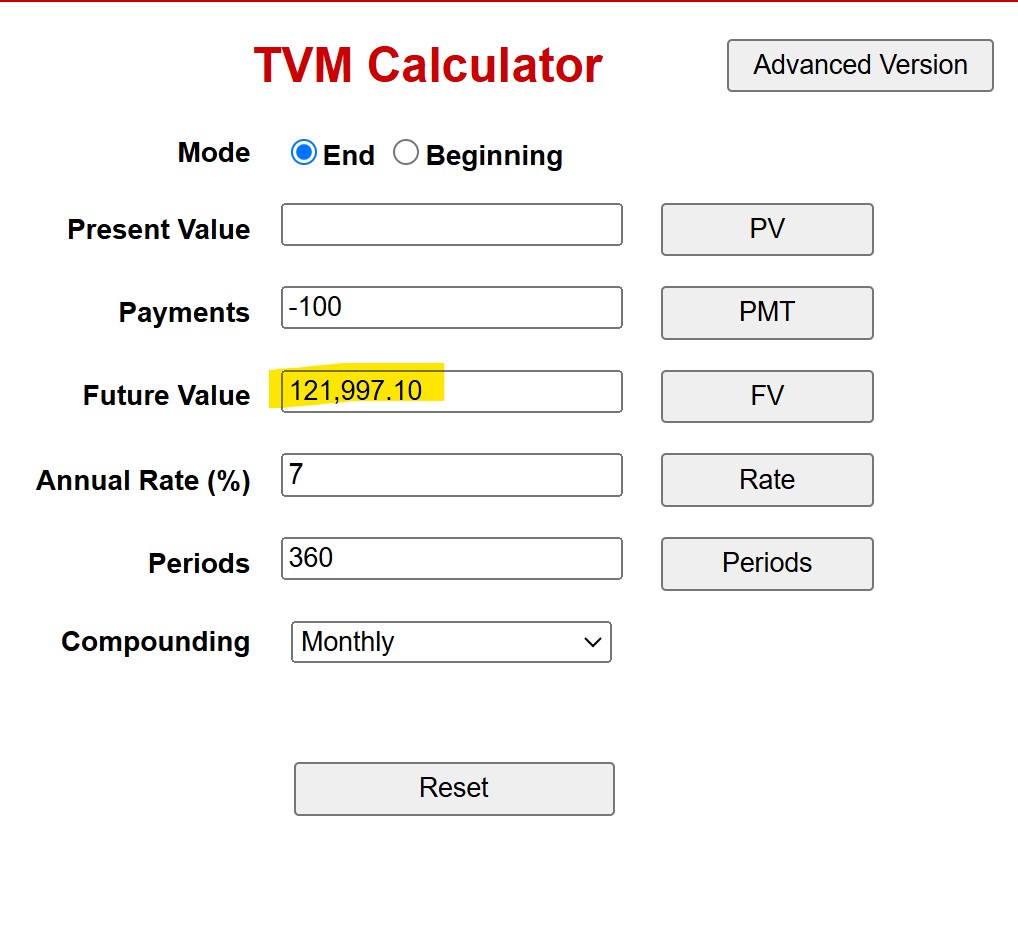
    After saving $100 per month for 30 years at the same rate, Chris’s total savings grow to approximately $121,997.

    Calculator: https://www.fncalculator.com/financialcalculator?type=tvmCalculator

    Key Takeaways:

    1. Sam contributed only $12,000 more than Chris but ended up with twice as much due to starting earlier.
    2. The extra 10 years of saving and compounding significantly boosted Sam’s final savings.
    3. Starting early allows your money more time to grow, even with smaller contributions.

    The earlier you start, the easier it becomes to achieve your financial goals!

    2. Save Aggressively

    Early retirees often save a significant portion of their income—sometimes 50% or more. This may require prioritizing savings over discretionary spending, but the payoff is worth it. Every dollar saved brings you closer to financial independence.

    3. Invest Wisely

    Choose investments that balance growth and risk. Low-cost index funds, stocks, and bonds are excellent choices for long-term growth. A diversified portfolio ensures stability, even during market fluctuations.

    4. Live Below Your Means

    Avoid lifestyle inflation, even as your income grows. Focus on needs, not wants, and find satisfaction in financial security over material possessions.

    5. Maximize Tax-Advantaged Accounts

    Take full advantage of retirement accounts like 401(k)s and IRAs. Not only do these accounts offer tax benefits, but they also allow your savings to grow faster. If you’re 50 or older, make catch-up contributions to boost your savings further.

    6. Pay Off High-Interest Debt

    Debt, especially high-interest debt like credit cards, can derail your financial goals. Eliminating debt frees up more resources for saving and investing.

    7. Prepare for Healthcare Costs

    Healthcare is a significant expense in retirement. If you’re eligible, use a Health Savings Account (HSA) to save for medical costs. These accounts offer triple tax advantages: contributions, growth, and withdrawals for qualified expenses are tax-free.

    8. Delay Social Security

    For those who plan to partially retire early, delaying Social Security can increase your monthly benefits when you do claim them. This provides more financial security in your later years.

    9. Review and Adjust Your Plan

    Life and markets change. Regularly review your financial plan to ensure it aligns with your goals. Adjust investments, savings rates, or spending habits as needed.

    Why Early Retirement?

    Early retirement isn’t just about quitting your job—it’s about financial freedom. It allows you to pursue passions, spend time with loved ones, or explore hobbies without the stress of earning a paycheck.

    These strategies, when followed consistently, can turn your dream of early retirement into a reality. Remember, the journey requires discipline, but the reward is living life on your terms.

    What’s your biggest challenge or question about planning for early retirement? Let’s discuss in the comments!


    Our Newsletter Can Help You Build Wealth and Retire Rich!

    Want actionable tips and expert advice to grow your wealth, save smarter, and retire comfortably? Sign up for the Build Wealth Retire Rich Newsletter to receive weekly updates packed with personal finance strategies and insights—delivered straight to your inbox!

    Sign up for our free newsletter!

    By submitting your information, you`re giving us permission to email you. You may unsubscribe at any time.