Tag: Retirement Planning

  • Understanding Index Funds: The Power of Passive Investing

    Introduction

    Investing in the stock market can be overwhelming, especially with the wide range of choices available. Index funds have emerged as one of the simplest yet most effective investment strategies for building long-term wealth. These funds offer a low-cost, diversified, and hassle-free way to participate in market growth. In this guide, we’ll explore what index funds are, why they’re popular among investors, and how they can fit into your financial strategy.


    What Are Index Funds?

    An index fund is a type of mutual fund or exchange-traded fund (ETF) that aims to replicate the performance of a specific stock market index, such as:

    • S&P 500 Index (SPY, VOO, IVV) – Tracks the 500 largest U.S. companies.
    • Dow Jones Industrial Average (DIA) – Follows 30 blue-chip U.S. stocks.
    • NASDAQ 100 (QQQ) – Focuses on the largest non-financial companies listed on NASDAQ.
    • Total Stock Market Index (VTI, FZROX) – Invests in the entire U.S. stock market.

    Unlike actively managed funds, index funds do not attempt to outperform the market; instead, they simply mirror its performance.


    Why Choose Index Funds?

    Index funds have gained massive popularity for several reasons:

    • Low fees: Index funds have lower expense ratios than actively managed funds.
    • Diversification: They spread investments across hundreds or thousands of stocks, reducing risk compared to picking individual stocks.
    • Market performance over time: Historically, index funds outperform most actively managed funds.
    • Simplicity and passive growth: No need to monitor the market daily, making them ideal for investors who prefer a “set-it-and-forget-it” approach.

    Index Funds vs. Actively Managed Funds

    FeatureIndex FundsActively Managed Funds
    GoalMatch market performanceBeat the market
    Management StylePassiveActive
    Expense RatiosLow (0.03%–0.20%)Higher (0.50%–2.00%)
    Tax EfficiencyHigh (low turnover)Lower (frequent buying/selling)
    PerformanceOften exceeds active funds over timeInconsistent returns

    How to Invest in Index Funds

    Step 1: Choose Your Investment Account

    • 401(k) or IRA: Great for retirement tax benefits.
    • Taxable Brokerage Account: Ideal for general investing.

    Step 2: Pick an Index Fund

    • Look for funds with low expense ratios (e.g., Vanguard, Fidelity, Schwab).
    • Consider what index you want to track (S&P 500, Total Stock Market, International, etc.).

    Step 3: Decide on a Contribution Plan

    • Invest consistently using dollar-cost averaging (DCA).
    • Automate contributions to grow your portfolio over time.

    Step 4: Hold for the Long Term

    • Avoid market timing and short-term trading.
    • Let compounding work in your favor.

    Latest Trends in ETFs and Index Funds

    As of 2024, assets under management (AUM) in ETFs worldwide have surpassed $10 trillion, with the U.S. market accounting for the majority of these assets. Some of the largest index ETFs by AUM include:

    • SPDR S&P 500 ETF (SPY) – Over $500 billion in assets
    • Vanguard Total Stock Market ETF (VTI) – Over $300 billion in assets
    • iShares Core S&P 500 ETF (IVV) – Over $400 billion in assets

    The popularity of ETFs continues to grow, driven by increasing demand for low-cost, passive investing options. Investors are shifting away from high-fee active management in favor of index funds that provide diversified exposure with minimal costs.


    Common Myths About Index Funds

    • “Index funds are boring.” True wealth-building is about long-term growth, not excitement.
    • “I can beat the market by picking stocks.” Studies show that most investors underperform the market over time.
    • “They’re only for beginners.” Even professional investors allocate significant portions of their portfolios to index funds.

    Real-World Example: The Power of Passive Investing

    If you invested $10,000 in an S&P 500 index fund in 1980, it would be worth over $1.3 million today, assuming dividends were reinvested. This demonstrates the power of long-term investing and compounding growth.


    Who Should Invest in Index Funds?

    • Beginners: Ideal for those new to investing.
    • Busy professionals: Great for those who don’t have time to research stocks.
    • Long-term investors: Perfect for retirement and wealth-building.
    • Anyone who wants low-cost, market-tracking returns.

    Conclusion: A Simple Yet Powerful Strategy

    Index funds are one of the easiest and most effective ways to build wealth over time. With low costs, diversification, and market-beating performance, they are a go-to investment for both beginners and experienced investors.

    Key Takeaways:

    • Index funds track market performance and outperform most actively managed funds.
    • They offer low fees, diversification, and tax efficiency.
    • The best approach is to invest consistently and hold for the long term.

    Your Mantra for Success: “Keep it simple. Invest passively. Build long-term wealth.”

    Legal Disclaimer for Build Wealth Retire Rich Blog/Website

    The information provided on the “Build Wealth Retire Rich” blog/website is for educational purposes only and should not be construed as financial, investment, or legal advice. While every effort is made to ensure the accuracy and reliability of the information presented, Build Wealth Retire Rich and its contributors, including AI tools used in the creation of some content, do not guarantee its completeness or timeliness. Users are encouraged to consult with a qualified financial advisor or legal professional to discuss their specific financial situation and to obtain advice tailored to their individual circumstances.

    Build Wealth Retire Rich is not responsible for any decisions made based on the information provided on this website. All financial products, investment strategies, and other content discussed are presented for informational purposes only, and no guarantees are made regarding the performance or suitability of any particular investment or strategy.

    The views and opinions expressed on “Build Wealth Retire Rich” are those of the authors and do not necessarily reflect the views of the website’s owner or any affiliated institutions. “Build Wealth Retire Rich” does not endorse or promote any particular investment, financial product, or institution unless explicitly stated.

    Risk Disclosure: Investing involves risk, including the potential loss of principal. Past performance is not indicative of future results. Always do your own research and consider your financial goals and risk tolerance before making any financial decisions.

    By using this website, you agree that Build Wealth Retire Rich and its affiliates are not liable for any losses or damages incurred as a result of using the information provided. Users are solely responsible for their financial decisions and should seek independent advice when necessary.


  • Closing the Retirement Reality Gap: Practical Steps with Real-World Examples

    The recent survey by the Bipartisan Policy Center highlights a concerning disconnect between retirement expectations and reality.

    Here’s a more detailed guide, enriched with practical examples, to help you take charge of your retirement planning.

    Key Survey Insights:

    1. Overestimating the Role of Personal Savings

    Expectation: 48% of workers expect personal savings, such as 401(k) or IRA accounts, to be a major source of retirement income.

    Reality: Only 36% actively contribute to these accounts. Without regular contributions and strategic investing, personal savings may fall short of expectations.

    2. Misjudging Employment Income

    Expectation: 19% of workers anticipate part-time work to provide significant retirement income.

    Reality: Only 7% of retirees depend on part-time work. Health issues, caregiving responsibilities, or limited opportunities often make this difficult.

    3. Confidence Gap

    • Over half of Americans doubt their ability to retire comfortably. This lack of confidence is especially evident among workers aged 45–54, who are nearing retirement but may not feel financially prepared.

    Source: BPC’s American Savings Education Council (ASEC) Survey

    Actionable Steps to Strengthen Your Retirement Readiness

    1. Maximize Employer Contributions

    Employer-sponsored retirement plans are a powerful tool to build retirement wealth. One key advantage is that contributions are deducted from your paycheck before you even see it, ensuring you “pay yourself first.” Additionally, these plans often offer significant tax benefits, reducing your taxable income and allowing your investments to grow tax-deferred.

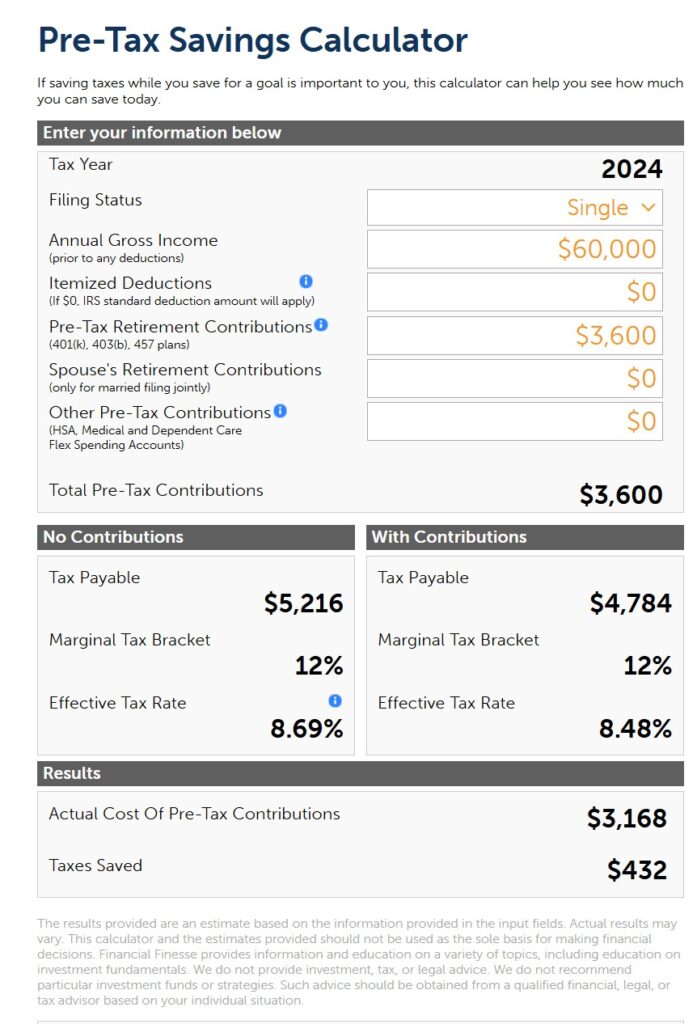
    Contributing to a 401(k) using pre-tax dollars significantly lowers the actual cost of your contributions due to tax savings. For example, if you earn $60,000 annually and contribute $3,600 to your 401(k), your taxable income is reduced to $56,400, lowering the amount of federal taxes you owe. This reduction in taxable income results in immediate tax savings—$432 in this case—effectively reducing the real cost of your $3,600 contribution to just $3,168. By taking advantage of these pre-tax contributions, you can save for retirement while minimizing the impact on your take-home pay.

    https://ffcalcs.com/pretax_savings

    By contributing enough to receive the full employer match, you can effectively double a portion of your savings instantly, making it one of the smartest financial moves you can make early on.

    Example: Sarah earns $60,000 annually, and her employer offers a 50% match on contributions up to 6% of her salary. If Sarah contributes $3,600 (6%), her employer adds $1,800, giving her $5,400 in total annual contributions.

    Takeaway: Not contributing enough to receive the full match is like leaving part of your salary behind.

    2. Contributions in an Individual Retirement Account (IRA)

    In addition to contributing consistently to your employer-sponsored retirement plan, opening a Roth IRA can provide significant benefits, especially when it comes to diversifying the tax impact in retirement. Unlike 401(k) contributions, which are pre-tax, Roth IRA contributions are made with after-tax dollars, allowing your investments to grow tax-free and enabling tax-free withdrawals in retirement. This tax diversification can be a game-changer, as it provides flexibility to manage your tax liability in retirement. Furthermore, Roth IRAs often offer a wider range of investment options compared to employer-sponsored plans, giving you more control over how your money is invested. By consistently contributing to both a 401(k) and a Roth IRA, you can maximize your retirement savings while balancing your current tax savings and future tax-free income.

    3. Commit to Consistent Investing

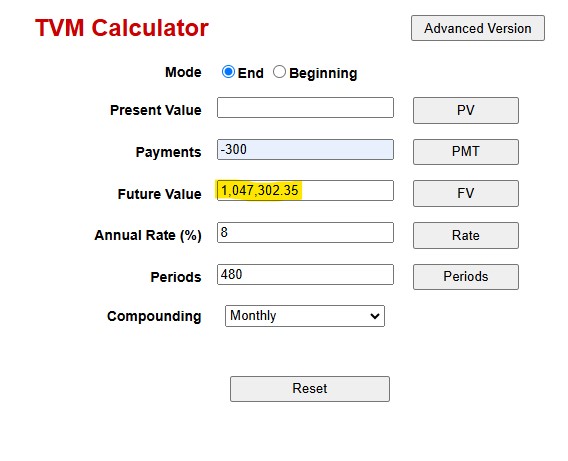
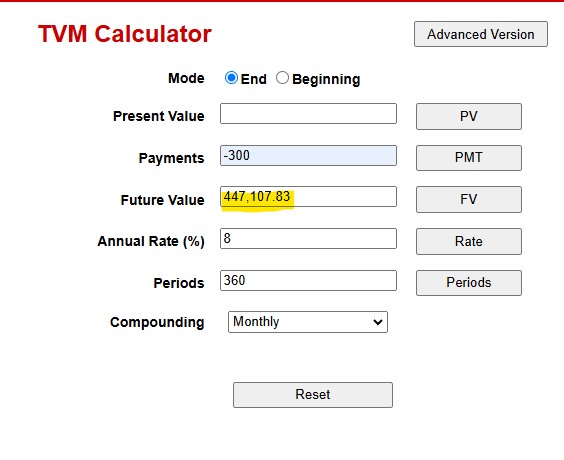
    Example: John starts investing $300 in an IRA account per month at age 25 in a retirement account earning an average 8% annual return. By age 65, he has nearly $1,000,000. If he starts at 35, the same monthly contribution only grows to about $445,000.

    $300 a month at 8% for 40 years

    https://www.fncalculator.com/financialcalculator?type=tvmCalculator

    $300 a month at 8% in 30 years

    https://www.fncalculator.com/financialcalculator?type=tvmCalculator

    Takeaway: Consistency and starting early harness the power of compounding to grow wealth exponentially.

    4. Reinvest Dividends for Compounding Growth

    Dividend reinvestment is a powerful strategy that allows investors to use dividends earned from stocks or funds to purchase additional shares, instead of taking the cash. This approach enables the investor to benefit from compounding growth over time, as reinvested dividends generate their own returns.

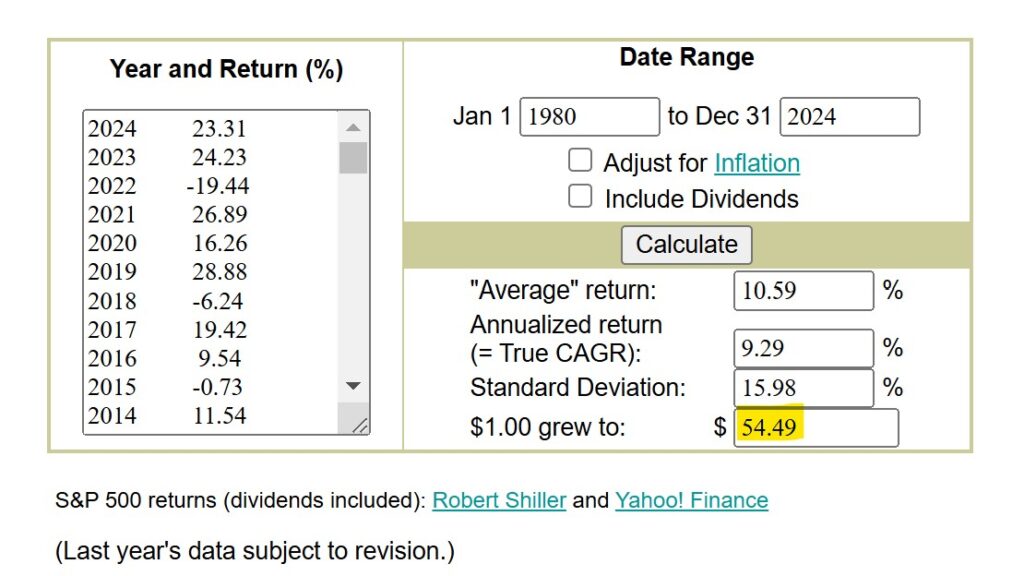
    Example: Growth of $1 in S&P 500 Index with and without dividend reinvestment

    Over the period from 1980 to 2024, the growth of $1 invested in the S&P 500 demonstrates the significant impact of dividends on long-term returns. Without reinvesting dividends, $1 grew to $54.49, reflecting the price appreciation of the index alone. However, when dividends were reinvested, the same $1 grew to an impressive $174.09, highlighting the power of compounding returns through dividend reinvestment. This stark difference underscores the critical role dividends play in maximizing investment growth over time.

    Source: http://www.moneychimp.com/features/market_cagr.htm

    Takeaway: Reinvesting dividends accelerates growth over the long term.

    5. Stay Invested for the Long Term

    Remaining invested through market fluctuations is essential for maximizing long-term growth. Market timing—trying to predict and capitalize on short-term market movements—can significantly reduce returns and increase risk. By staying invested, you allow your portfolio to recover from downturns and benefit from periods of strong growth, ensuring steady progress toward your financial goals. Patience and consistency are key to leveraging the full potential of the market over time.

    Takeaway: Market timing is risky. Staying invested through market ups and downs ensures you benefit from long-term growth.

    6. Rebalance Your Portfolio Regularly

    Example: David’s portfolio was initially 60% stocks and 40% bonds. After a strong year for stocks, his allocation shifted to 70% stocks and 30% bonds. Rebalancing back to 60/40 protects David from taking on more risk than he intended.

    Takeaway: Rebalancing helps maintain your desired risk-reward profile and ensures diversification.

    Additional Strategies for a Secure Retirement

    1. Automate Savings

    • Set up automatic contributions to your retirement account to ensure you’re consistently saving without the temptation to spend.

    2. Diversify Investments

    • A well-diversified portfolio, including stocks, bonds, and other assets, reduces risk and improves the likelihood of steady returns over time.

    Example: A portfolio with 70% stocks and 30% bonds might be ideal for someone in their 30s, but a retiree might shift to 50% stocks and 50% bonds to reduce risk.

    3. Plan for Healthcare Costs

    • According to Fidelity, a 65-year-old couple retiring today can expect to spend over $300,000 on healthcare costs in retirement. Investing in an HSA (Health Savings Account) can help.

    Example: With an HSA, you can save tax-free for medical expenses. If you contribute $8,550 annually (family limit in 2025) and invest the funds, you could have a significant tax-free healthcare fund by retirement.

    The Power of Starting Now

    It’s easy to feel overwhelmed by retirement planning, but small steps today make a big difference tomorrow.

    Start Small but Stay Consistent: Even $50 or $100 per month adds up over time.

    Review Your Plan Annually: Check your contributions, portfolio, and retirement goals to stay on track.

    Seek Professional Guidance: A financial advisor can provide tailored advice and help optimize your plan.

    The Importance of Financial Education

    Understanding the principles of investing and personal finance is a crucial step toward building long-term wealth. Financial education empowers individuals to make informed decisions, avoid common pitfalls, and develop strategies aligned with their goals. Whether it’s learning about the benefits of staying invested, the power of dividend reinvestment, or the risks of market timing, financial literacy provides the confidence and knowledge needed to navigate the complexities of the financial world. By prioritizing financial education, individuals can create a solid foundation for achieving financial security and independence.

    By taking these steps, you can bridge the gap between retirement expectations and reality. Whether you’re 25, 45, or 55, it’s never too early—or too late—to start building a secure financial future.

    Remember, retirement isn’t just a dream—it’s a goal you can achieve with intentional planning and action.

    Your Mantra for Success: Save Consistently. Invest Smartly. Retire Richly.

    Legal Disclaimer for Build Wealth Retire Rich Blog/Website

    The information provided on the “Build Wealth Retire Rich” blog/website is for educational purposes only and should not be construed as financial, investment, or legal advice. While every effort is made to ensure the accuracy and reliability of the information presented, Build Wealth Retire Rich and its contributors, including AI tools used in the creation of some content, do not guarantee its completeness or timeliness. Users are encouraged to consult with a qualified financial advisor or legal professional to discuss their specific financial situation and to obtain advice tailored to their individual circumstances.

    Build Wealth Retire Rich is not responsible for any decisions made based on the information provided on this website. All financial products, investment strategies, and other content discussed are presented for informational purposes only, and no guarantees are made regarding the performance or suitability of any particular investment or strategy.

    The views and opinions expressed on “Build Wealth Retire Rich” are those of the authors and do not necessarily reflect the views of the website’s owner or any affiliated institutions. “Build Wealth Retire Rich” does not endorse or promote any particular investment, financial product, or institution unless explicitly stated.

    Risk Disclosure: Investing involves risk, including the potential loss of principal. Past performance is not indicative of future results. Always do your own research and consider your financial goals and risk tolerance before making any financial decisions.

    By using this website, you agree that Build Wealth Retire Rich and its affiliates are not liable for any losses or damages incurred as a result of using the information provided. Users are solely responsible for their financial decisions and should seek independent advice when necessary.

  • The Power of Investing: A Path to Financial Independence

    Investing is more than just a financial activity—it’s a gateway to achieving long-term financial goals, building wealth, and ensuring a secure future. While saving provides a foundation, investing takes your money to the next level by putting it to work and allowing it to grow.


    Why Is Investing Important?

    1. Wealth Accumulation Through Growth
      Investing allows your money to grow significantly over time, thanks to the magic of compounding. When you earn returns on your investments, those returns are reinvested, creating a snowball effect. For example:
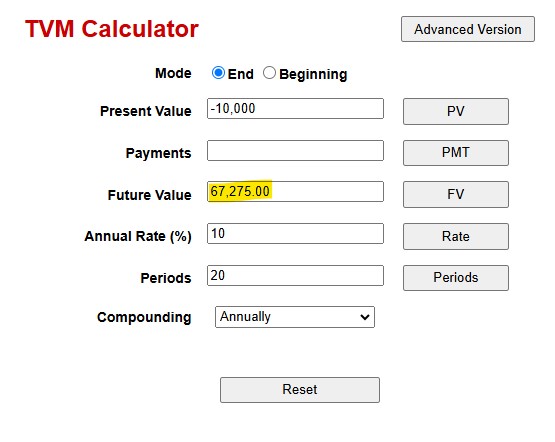
    • If you invest $10,000 at an average annual return of 10%, it can grow to over $67,000 in 20 years.
      This growth far exceeds what a regular savings account would offer.

    https://www.fncalculator.com/financialcalculator?type=tvmCalculator

    2. Protecting Against Inflation
    Inflation gradually decreases the purchasing power of money. By investing in assets with higher returns than inflation, you preserve and increase your real wealth. For instance:

    • If inflation averages 3% annually, a $100 item today will cost approximately $180 in 20 years. Investments in stocks or real estate can help your money keep pace with or surpass inflation.

    3. Achieving Financial Goals
    Investing is a strategic way to reach significant milestones like:

    • Buying a home.
    • Funding your child’s education through 529 college savings plan.
    • Launching a business.
    • Building generational wealth for your family.

    4. Planning for Retirement
    Retirement planning often requires more than just saving in a bank account.

    • Investment vehicles like 401(k)s, IRAs, or even personal portfolios provide opportunities for market growth.
    • Investing through HSA account ensures you have the funds to maintain your desired lifestyle and cover healthcare costs during retirement.

    5. Diversifying Income Streams
    Investments generate income through:

    • Dividends from stocks.
    • Interest from bonds.
    • Real Estate Investment Trust (REIT) funds.

    This reduces dependency on a single source of income, offering financial stability


    Benefits of Investing Early

    Starting early provides a massive advantage due to time and compounding returns. Consider two investors:

    • Investor A starts at age 25, investing $300 monthly
    • Investor B starts at age 35, investing $300 monthly

    At age 65, assuming a 8% annual return:

    • Investor A’s portfolio grows to over $1,000,000.
    • Investor B’s portfolio grows to about $447,000.

    Investor A can retire as a millionaire by taking benefits of investing early.

    https://www.fncalculator.com/financialcalculator?type=tvmCalculator


    Common Investment Options

    1. Stocks
      • High-risk, high-reward investments.
      • Suitable for long-term goals due to potential for substantial growth.
    2. Bonds
      • Lower risk compared to stocks.
      • Provide regular income through interest payments.
    3. Mutual Funds and ETFs
      • Offer diversification by pooling money to invest in multiple assets.
      • Managed by professionals, making them beginner-friendly.
    4. Real Estate Investment Trusts (REIT)
      • Provide rental income
    5. Retirement Accounts (401(k), IRA)
      • Offer tax advantages to boost your savings for retirement.
      • Employer-sponsored accounts often include matching contributions.

    How to Start Investing

    1. Educate Yourself
      Learn the basics of asset classes, risk management, and market behavior. Resources include:
    2. Set Clear Goals
      Define what you’re investing for—retirement, education, or wealth building—and tailor your strategy accordingly.
    3. Determine Your Risk Tolerance
      Understand your comfort level with risk. Stocks are riskier but offer higher returns, while bonds and savings accounts are safer but yield lower returns.
    4. Start Small and Be Consistent
      • Begin with what you can afford. Many brokerage firms allow you to start with as little as $1.
      • Consistency matters more than large investments—set up automatic contributions.
    5. Diversify Your Portfolio
      • Spread your investments across different asset classes to reduce risk.
      • The saying, “Don’t put all your eggs in one basket,” applies strongly in investing.
    6. Consult a Financial Advisor
      If you’re unsure where to start, seek professional advice to create a personalized investment plan.

    Overcoming Common Misconceptions

    1. “I need a lot of money to start.”
      Many brokerage firms allow you to begin investing with minimal amounts.
    2. “Investing is too risky.”
      Risk varies by asset class. Balancing high-risk investments (stocks) with safer options (bonds) can align with your comfort level.
    3. “I don’t know enough.”
      Financial literacy tools, seminar/courses, and advisors are available to help you gain confidence.

    Key Takeaways

    Investing is not just for the wealthy or financially savvy—it’s for anyone with a desire to grow their wealth and secure their future. Here’s why you should start now:

    • Time is your greatest ally in investing.
    • Small, consistent contributions lead to significant long-term gains.
    • Diversifying and understanding your goals reduce risks and improve results.

    Remember, investing is like planting a tree: the sooner you plant it, the sooner it bears fruit. Start today and take control of your financial future.

    Your Mantra for Success: Save Consistently. Invest Smartly. Retire Richly.

    Legal Disclaimer for Build Wealth Retire Rich Blog/Website

    The information provided on the “Build Wealth Retire Rich” blog/website is for educational purposes only and should not be construed as financial, investment, or legal advice. While every effort is made to ensure the accuracy and reliability of the information presented, Build Wealth Retire Rich and its contributors, including AI tools used in the creation of some content, do not guarantee its completeness or timeliness. Users are encouraged to consult with a qualified financial advisor or legal professional to discuss their specific financial situation and to obtain advice tailored to their individual circumstances.

    Build Wealth Retire Rich is not responsible for any decisions made based on the information provided on this website. All financial products, investment strategies, and other content discussed are presented for informational purposes only, and no guarantees are made regarding the performance or suitability of any particular investment or strategy.

    The views and opinions expressed on “Build Wealth Retire Rich” are those of the authors and do not necessarily reflect the views of the website’s owner or any affiliated institutions. “Build Wealth Retire Rich” does not endorse or promote any particular investment, financial product, or institution unless explicitly stated.

    Risk Disclosure: Investing involves risk, including the potential loss of principal. Past performance is not indicative of future results. Always do your own research and consider your financial goals and risk tolerance before making any financial decisions.

    By using this website, you agree that Build Wealth Retire Rich and its affiliates are not liable for any losses or damages incurred as a result of using the information provided. Users are solely responsible for their financial decisions and should seek independent advice when necessary.
  • Would You Rather Drive a High-End Car for a Few Years or Retire Early With an Extra Six Figures in Your Portfolio?

    When making a car purchase decision, it’s tempting to upgrade to that sleek, high-end model. But before you take the plunge, consider this: what if you chose a modest car and invested the difference instead? Let’s look at how opting for a $25,000 car instead of a $50,000 one could transform your financial future, especially when we think long-term.

    The $25,000 Trade-Off: Investing for the Future

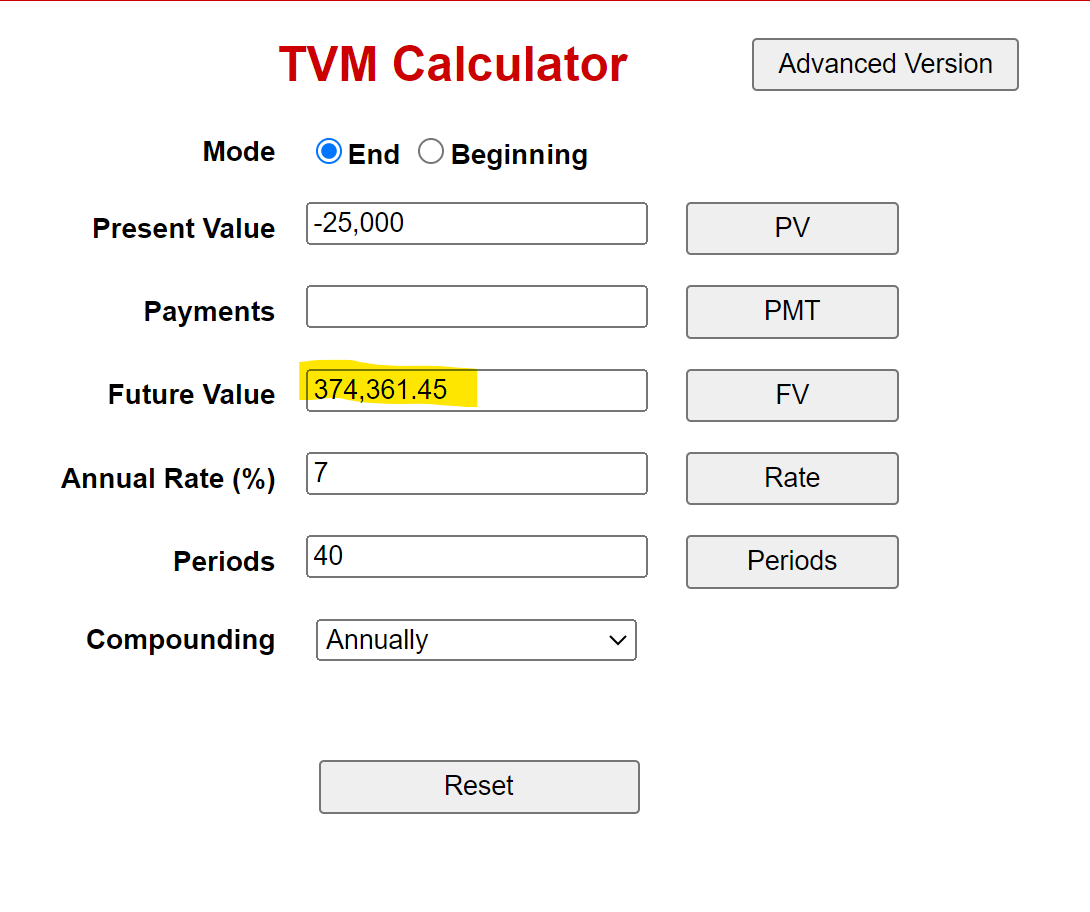
    Imagine you buy a $25,000 car instead of a $50,000 one. You’ve saved $25,000 upfront. What happens if you invest this amount instead, letting it grow over 40 years in a diversified retirement portfolio with an average annual return of 7%?

    By the end of 40 years, that initial $25,000 could grow to a staggering $374,361.

    Breaking Down the Numbers: The Power of Compounding

    • Initial Investment: $25,000
    • Annual Rate of Return: 7%
    • Investment Period: 40 years

    Calculator reference: https://www.fncalculator.com/financialcalculator?type=tvmCalculator

    Using the power of compound interest, that $25,000 would grow steadily each year, eventually turning into $374,361.

    This means the opportunity cost of choosing a $50,000 car today — just for a few years of driving pleasure — is nearly $375,000 that you could potentially use for a more secure and enjoyable retirement.

    What Does an Extra $374,361 Mean in Retirement?

    Let’s put that figure into perspective:

    • Additional Retirement Income: With a 4% safe withdrawal rate, $374,361 could provide an additional $14,974 per year in retirement income.
    • Early Retirement: If your goal is to retire early, this amount could shave off years of work.
    • Legacy and Giving: The extra funds could be used to support causes you care about, set up educational funds for children or grandchildren, or simply create a financial cushion.

    Don’t Forget the Hidden Costs of a High-End Car

    Choosing a more expensive car doesn’t just mean a higher upfront cost. It also means:

    • Higher Monthly Payments: This could add stress to your cash flow and reduce your ability to invest.
    • Greater Depreciation: Luxury cars often depreciate faster, leading to a bigger financial loss.
    • Costlier Insurance and Maintenance: These recurring expenses could add thousands of dollars over the life of the car.

    The Bottom Line: Drive a Car or Drive Your Financial Future?

    It’s not about depriving yourself of enjoying life, but about aligning your financial decisions with your long-term goals. Is the satisfaction of driving a high-end car today worth the potential $374,361 you’re giving up in the future?

    Next time you’re in the dealership, think beyond the leather seats and premium features. Ask yourself, “Am I investing in my lifestyle, or in my future?” Because while a high-end car may turn heads now, a strong retirement portfolio will pay dividends for decades to come.

    So, would you rather drive a luxury car today or enjoy an extra six-figure cushion in your retirement portfolio tomorrow? The choice is yours.

    Your Mantra for Success: Save Consistently. Invest Smartly. Retire Richly.

    Legal Disclaimer for Build Wealth Retire Rich Blog/Website

    The information provided on the “Build Wealth Retire Rich” blog/website is for educational purposes only and should not be construed as financial, investment, or legal advice. While every effort is made to ensure the accuracy and reliability of the information presented, Build Wealth Retire Rich and its contributors, including AI tools used in the creation of some content, do not guarantee its completeness or timeliness. Users are encouraged to consult with a qualified financial advisor or legal professional to discuss their specific financial situation and to obtain advice tailored to their individual circumstances.

    Build Wealth Retire Rich is not responsible for any decisions made based on the information provided on this website. All financial products, investment strategies, and other content discussed are presented for informational purposes only, and no guarantees are made regarding the performance or suitability of any particular investment or strategy.

    The views and opinions expressed on “Build Wealth Retire Rich” are those of the authors and do not necessarily reflect the views of the website’s owner or any affiliated institutions. “Build Wealth Retire Rich” does not endorse or promote any particular investment, financial product, or institution unless explicitly stated.

    Risk Disclosure: Investing involves risk, including the potential loss of principal. Past performance is not indicative of future results. Always do your own research and consider your financial goals and risk tolerance before making any financial decisions.

    By using this website, you agree that Build Wealth Retire Rich and its affiliates are not liable for any losses or damages incurred as a result of using the information provided. Users are solely responsible for their financial decisions and should seek independent advice when necessary.
  • What is Compound Interest, and How Can You Use It to Build Wealth?

    When it comes to building wealth, compound interest is one of the most powerful tools available. Albert Einstein once called it the “eighth wonder of the world,” and for good reason—it can turn small, steady investments into a large amount of money over time. In this post, we’ll explain what compound interest is, how it works, and how you can use it to grow your wealth and secure your financial future.


    What is Compound Interest?

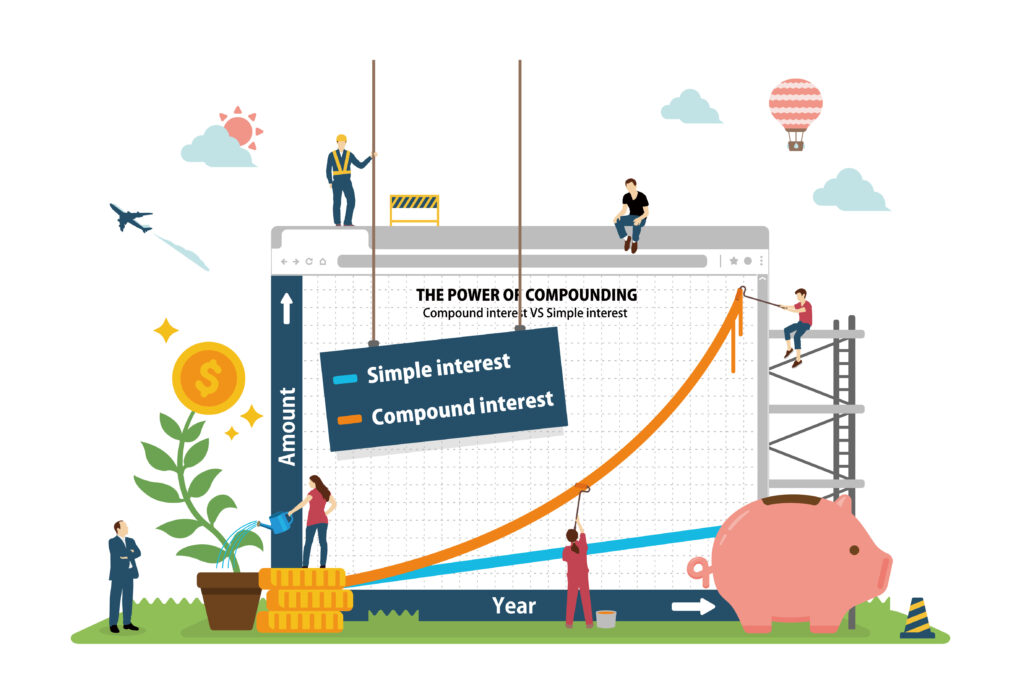
    Compound interest means earning interest on your money and then earning interest on that interest. It’s different from simple interest, which only grows based on your original amount (called the principal).

    How It Works

    Imagine you put $1,000 in a savings account that earns 5% interest per year. At the end of the first year, you earn $50 in interest, so you now have $1,050. In the second year, you earn 5% on $1,050—not just $1,000—so your interest grows to $52.50. Over time, this snowball effect gets bigger and bigger.


    Why Compound Interest is So Powerful

    1. The Time Factor

    Time is the single most important element in maximizing the effects of compound interest. The earlier you start saving or investing, the longer your money has to grow exponentially. Even modest contributions can turn into substantial sums over decades.

    Example:

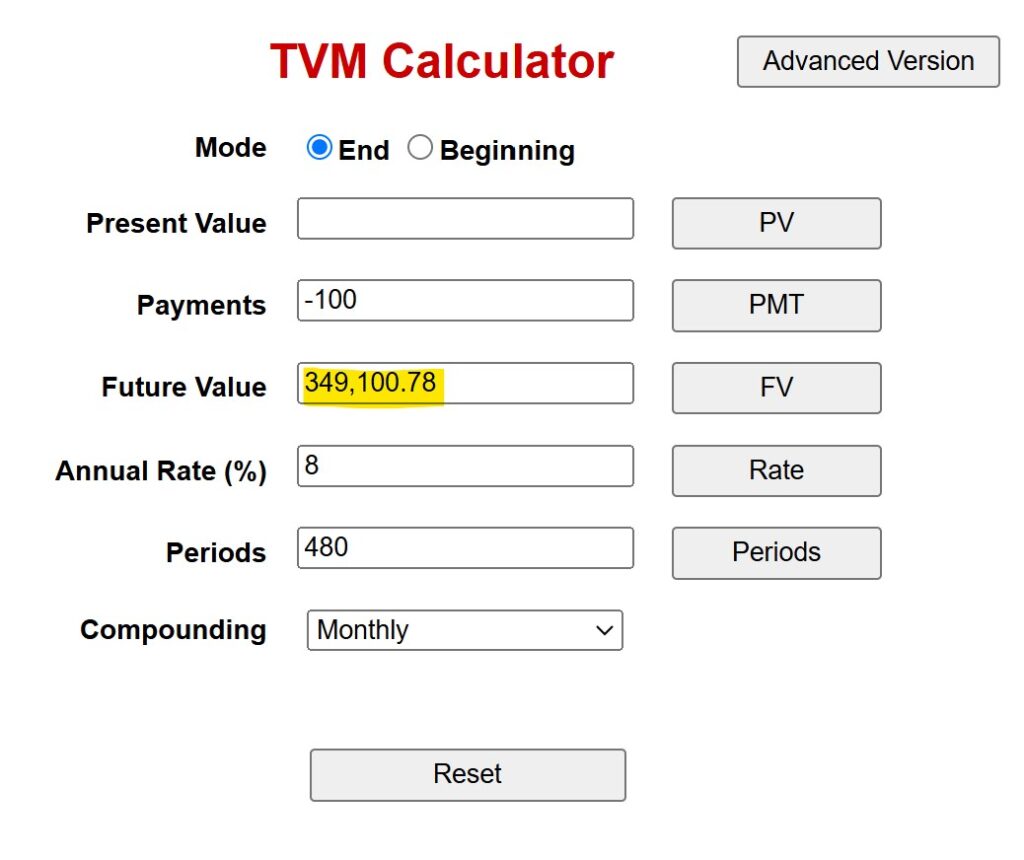
    Scenario 1: Sarah starts saving $100 a month at age 25, earning 8% annually. By age 65, she’ll have accumulated nearly $349,000.

    Calculator source: https://www.fncalculator.com/financialcalculator?type=tvmCalculator

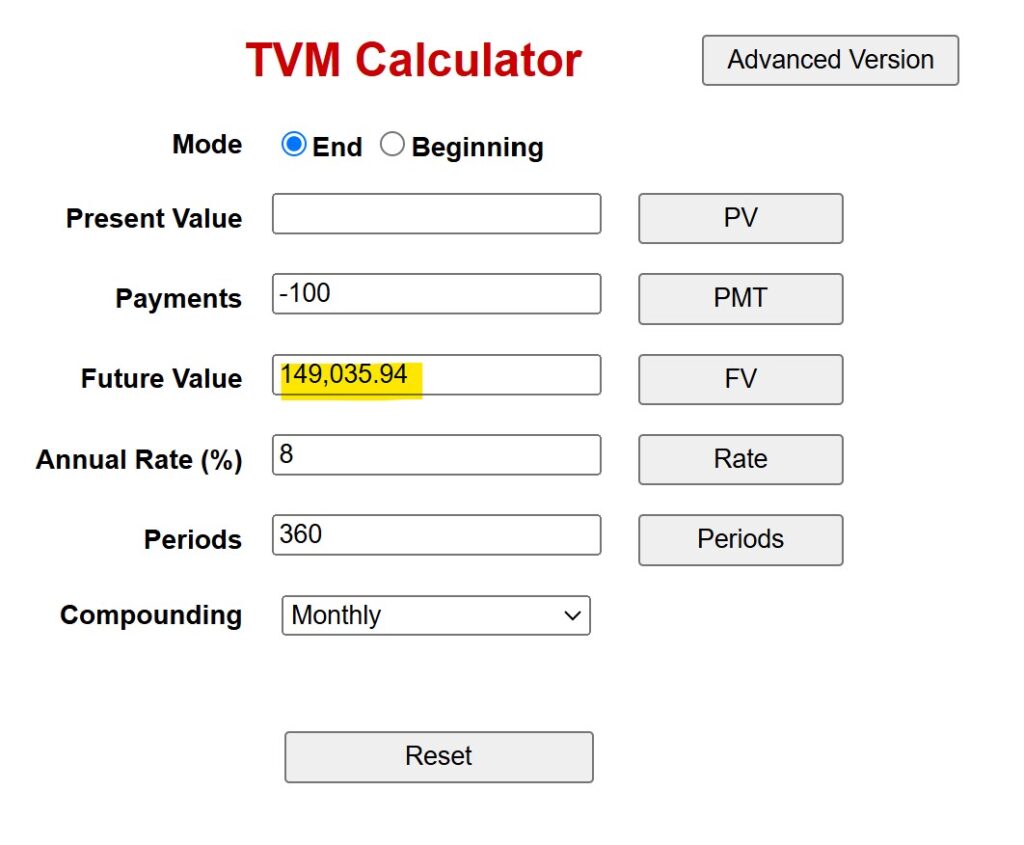
    Scenario 2: John starts saving the same $100 a month at age 35. By age 65, he’ll only have around $149,000—less than half of Sarah’s total.

    https://www.fncalculator.com/financialcalculator?type=tvmCalculator

    Starting early gives Sarah an extra decade for compounding to work its magic, which makes a massive difference.


    2. Exponential Growth Over Time

    The compounding effect becomes more significant as time passes. In the early years, your growth might seem slow, but over time, the growth accelerates. This is why compound interest is often referred to as “interest on interest.”

    Example:
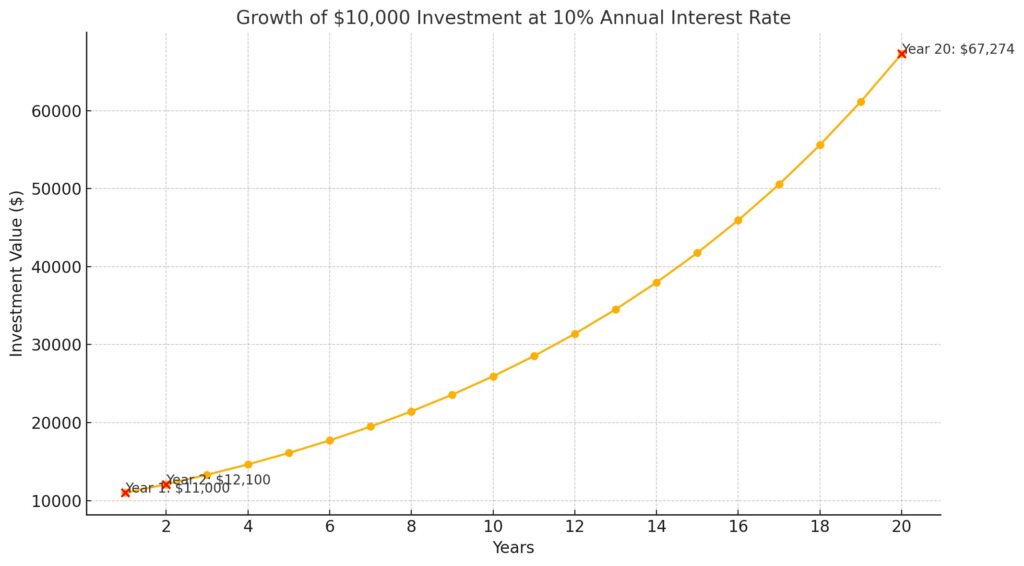
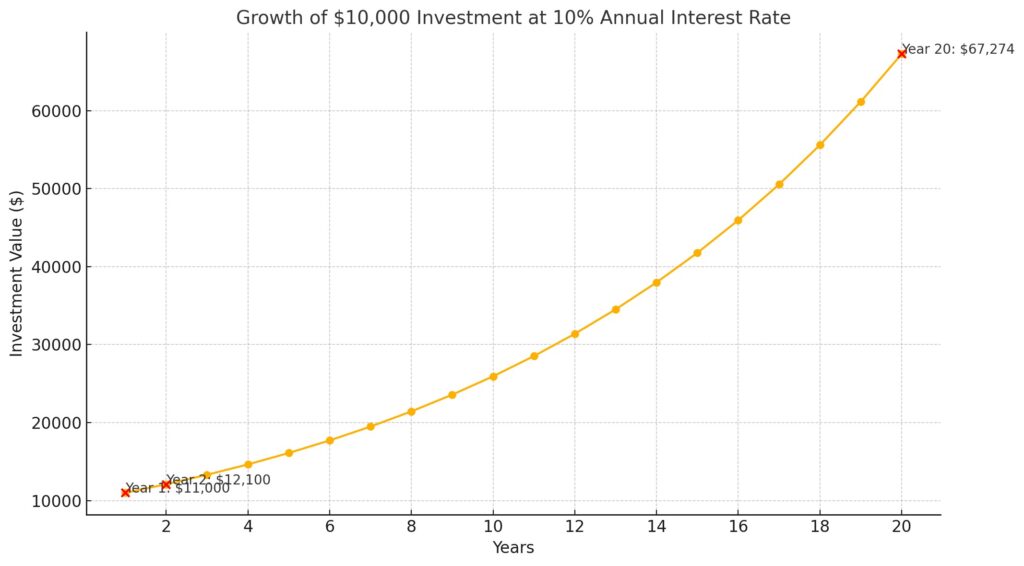
    Let’s say you invest $10,000 at a 10% annual interest rate:

    • Year 1: $11,000
    • Year 2: $12,100
    • Year 20: Over $67,000
    • This demonstrates the power of compound interest over time

    Here’s a chart showing the growth of a $10,000 investment at a 10% annual interest rate over 20 years. It highlights key points:


    How to Leverage Compound Interest to Build Wealth

    1. Start Saving or Investing Early

    The earlier you start, the more powerful the compounding effect becomes. Even if you start small, the impact of compounding over decades can be monumental.

    Pro Tip: Encourage young adults to save early—even a few years of delay can have a significant impact on long-term growth.


    2. Make Regular Contributions

    Consistency is key to maximizing the benefits of compounding. Setting up automatic contributions to your savings or investment accounts ensures you’re continuously adding to your principal.

    Example:

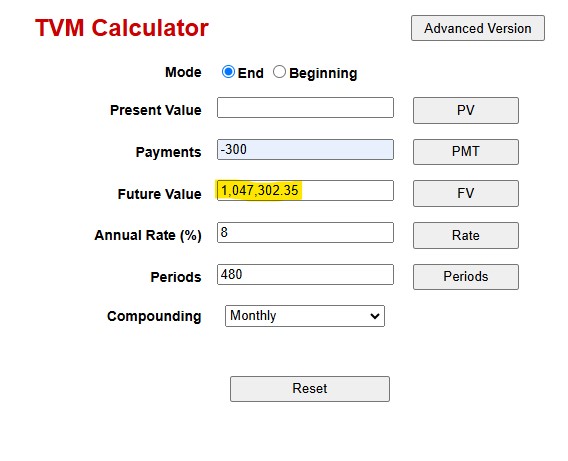
    • Investing $300 per month at an 8% annual return will grow to $1,047,302.35 in 40 years.

    https://www.fncalculator.com/financialcalculator?type=tvmCalculator


    3. Reinvest Earnings

    Whether you’re earning dividends from stocks or interest from bonds, reinvesting those earnings allows them to generate additional returns. This reinvestment is crucial to achieving exponential growth.


    4. Use Tax-Advantaged Accounts

    Accounts like 401(k)s, Roth IRAs, 529 College Savings Plan and Health Savings Accounts (HSAs) allow your investments to grow either tax-free or tax-deferred. By minimizing taxes, you retain more of your earnings, accelerating the compounding process.


    5. Focus on Long-Term Investments

    The stock market can be volatile in the short term, but historically, it has delivered solid long-term returns. By staying invested and avoiding the temptation to withdraw during market downturns, you allow compounding to work uninterrupted.


    6. Take Advantage of Employer Contributions

    Many employers offer matching contributions for retirement accounts like 401(k)s. This is essentially free money that grows with compound interest. Always contribute enough to maximize your employer match.


    7. Be Patient

    Compounding takes time, and the biggest rewards come later in the journey. Avoid withdrawing your funds prematurely or chasing short-term gains. Staying disciplined and patient is key to unlocking the full potential of compound interest.


    Common Pitfalls to Avoid

    • Delaying Your Start: Waiting just a few years can drastically reduce your wealth-building potential.
    • Not Reinvesting Earnings: Spending your earnings prevents them from contributing to future growth.
    • Ignoring Inflation: Ensure your investments outpace inflation to maintain purchasing power.
    • High Fees: Investment fees can erode returns over time. Opt for low-cost index funds or ETFs when possible.

    Final Thoughts

    Compound interest is a true game-changer for building wealth, but it requires three key ingredients: time, consistency, and patience. Whether you’re saving for retirement, your child’s education, or financial independence, starting early and staying consistent can help you achieve your goals.

    Remember, building wealth isn’t about overnight success—it’s about leveraging the tools at your disposal to create sustainable, long-term growth. By understanding and using compound interest, you’re setting yourself on the path to financial security and freedom.

    Your Mantra for Success: Save Consistently. Invest Smartly. Retire Richly.

    Legal Disclaimer for Build Wealth Retire Rich Blog/Website

    The information provided on the “Build Wealth Retire Rich” blog/website is for educational purposes only and should not be construed as financial, investment, or legal advice. While every effort is made to ensure the accuracy and reliability of the information presented, Build Wealth Retire Rich and its contributors, including AI tools used in the creation of some content, do not guarantee its completeness or timeliness. Users are encouraged to consult with a qualified financial advisor or legal professional to discuss their specific financial situation and to obtain advice tailored to their individual circumstances.

    Build Wealth Retire Rich is not responsible for any decisions made based on the information provided on this website. All financial products, investment strategies, and other content discussed are presented for informational purposes only, and no guarantees are made regarding the performance or suitability of any particular investment or strategy.

    The views and opinions expressed on “Build Wealth Retire Rich” are those of the authors and do not necessarily reflect the views of the website’s owner or any affiliated institutions. “Build Wealth Retire Rich” does not endorse or promote any particular investment, financial product, or institution unless explicitly stated.

    Risk Disclosure: Investing involves risk, including the potential loss of principal. Past performance is not indicative of future results. Always do your own research and consider your financial goals and risk tolerance before making any financial decisions.

    By using this website, you agree that Build Wealth Retire Rich and its affiliates are not liable for any losses or damages incurred as a result of using the information provided. Users are solely responsible for their financial decisions and should seek independent advice when necessary.
  • 529 College Savings Plans: Building Wealth for Education and Retirement

    SECURE 2.0 Act: Addressing Overfunding Concerns

    A 529 college savings plan is one of the most effective tools available to families planning for the ever-increasing costs of education. This tax-advantaged plan not only helps you save but also provides multiple strategies to make your funds work smarter for you. Let’s explore the full potential of 529 plans, from harnessing compound interest to mitigating overfunding concerns through SECURE 2.0 provisions.


    What Is a 529 College Savings Plan?

    A 529 college savings plan is a state-sponsored investment account designed to encourage saving for educational expenses. It comes with these key advantages:

    • Tax-Free Growth: Your investments grow tax-free, and withdrawals for qualified expenses are tax-exempt.
    • Qualified Expenses: Funds can be used for tuition, fees, books, supplies, room and board, and even certain tech tools like laptops.
    • State Tax Benefits: Many states offer tax deductions or credits for contributions, boosting your savings further.
    • Ownership and Control: Unlike custodial accounts, the account owner retains control of the funds, even if the beneficiary decides not to attend college.

    The account’s flexibility and tax advantages make it a cornerstone of education funding for millions of families.


    The Magic of Compound Interest

    Starting early is the secret weapon in education savings. Compound interest—the process of earning returns on both your initial investment and the returns it generates—can make a significant difference over time.

    Stocks have historically outperformed bonds in terms of returns, making them a strong choice for long-term growth. However, managing risk is essential. The S&P 500 has delivered an average annual return of approximately 7% to 8% after adjusting for inflation.

    Example:
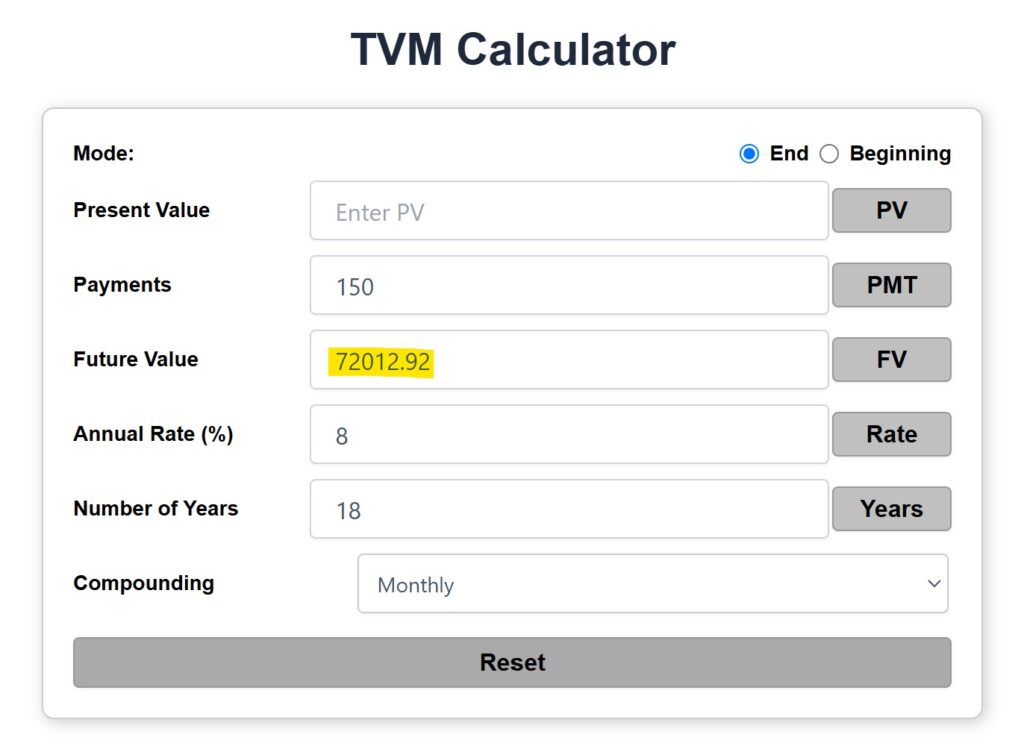
    Imagine you start investing $150 a month into a 529 plan when your child is born. Assuming a 8% average annual return:

    • At age 18, the account reaches approximately $72,000, with approximately $40,000 in earnings.

    https://wallstreetsim.com/tvm/

    This example illustrates how small, consistent contributions, combined with time, can lead to substantial savings.


    SECURE 2.0 Act: Addressing Overfunding Concerns

    One common question parents ask is: What if I save too much? Previously, overfunding a 529 plan could lead to taxes and penalties on unused funds. However, the SECURE 2.0 Act introduced a groundbreaking provision to ease this worry.

    529 to Roth IRA Rollovers
    Starting in 2024, parents can roll over unused 529 funds into a Roth IRA for the beneficiary under these conditions:

    • 15-Year Rule: The 529 account must have been open for at least 15 years.
    • Recent Contributions Ineligible: Contributions made in the past five years (and their earnings) cannot be rolled over.
    • Lifetime Cap: A maximum of $35,000 can be rolled over per beneficiary.
    • Annual Contribution Limits Apply: Rollovers count toward the annual Roth IRA contribution limit (The IRA contribution limits for 2024 are $7,000 for those under 50 and $8,000 for those 50 or older.)
    • Beneficiary Must Have Income: The beneficiary must have earned income during the rollover year.
    • No Roth Income Limits: Income restrictions for regular Roth contributions don’t apply to these rollovers.

    These rollovers provide an excellent safety net, ensuring excess funds can still contribute to the beneficiary’s long-term financial well-being without penalties.

    Example: Transferring Funds from a 529 Plan to a Roth IRA Under SECURE 2.0

    Let’s take a practical example to understand how the SECURE 2.0 provisions work for rolling over unused 529 funds into a Roth IRA.


    Scenario

    Sarah and John started a 529 plan for their daughter, Emily, when she was born. Over the years, they contributed regularly, and the account now has $45,000. Emily received a full scholarship to college, leaving $20,000 unused in the 529 plan after covering all education expenses. Sarah and John want to avoid penalties and taxes on the unused funds.


    Step-by-Step Application of SECURE 2.0

    1. Account Age Verification:
      • The 529 plan has been open for 18 years, meeting the 15-year requirement.
    2. Eligible Funds:
      • Sarah and John contributed $3,000 in the past five years. Assuming these contributions generated $500 in earnings, this $3,500 (contributions + earnings) is excluded from the rollover.
      • Eligible Amount:
      • $20,000 (total unused funds) – $3,500 (ineligible recent contributions and their earnings) = $16,500 potentially eligible for rollover.
    3. Lifetime Cap:
      • The maximum lifetime amount that can be rolled over to a Roth IRA is $35,000. Since Emily’s eligible funds are below this cap, the entire $16,500 can be considered.
    4. Annual Contribution Limit:
      • Roth IRA contributions are subject to the annual limit ($7,000 in 2024 for those under age 50).
      • Sarah and John decide to roll over $7,000 in the first year and plan to roll over the remaining $9,500 in subsequent years, subject to the annual limits.
    5. Earned Income Requirement:
      • Emily has a part-time job earning $12,000 per year, satisfying the earned income requirement.
    6. Roth IRA Income Limits:
      • Roth income limits do not apply to this rollover, so Emily qualifies regardless of her income level.

    Outcome

    • In Year 1, Sarah and John roll over $7,000 to Emily’s Roth IRA. The remaining $9,500 will be rolled over in future years until the entire eligible amount is transferred.
    • Emily now has a jumpstart on her retirement savings, with the funds benefiting from decades of tax-free growth.
    • No penalties or taxes are incurred, and the 529 funds are repurposed effectively.

    Key Benefits

    • The unused 529 funds support Emily’s retirement, turning what could have been a financial penalty into a long-term wealth-building opportunity.
    • By starting early, Emily gains the advantage of compound interest in her Roth IRA.
      Example: If the $16,500 grows at an average annual return of 7% for 40 years, it could grow to over $247,000, entirely tax-free!

    This example illustrates how the SECURE 2.0 provisions make 529 plans even more flexible, ensuring that every dollar saved can be utilized meaningfully.


    Flexibility for Families

    529 plans offer unparalleled flexibility, allowing families to adapt to changing circumstances:

    • Multiple Beneficiaries: Funds can be transferred to siblings, cousins, or other eligible family members if one child doesn’t use the money.
    • K-12 Education: Some states allow 529 funds to be used for private K-12 tuition (up to $10,000 per year).
    • Student Loan Repayment: Up to $10,000 can be used to repay student loans for the beneficiary or their siblings.
    • Apprenticeship Programs: Funds can also cover expenses for qualified apprenticeship programs, making 529 plans viable for non-college career paths.

    Maximizing Your 529 Savings

    To get the most out of your 529 plan:

    1. Start Early: Time is your ally. The earlier you begin, the more you benefit from compound interest.
    2. Make Consistent Contributions: Even modest amounts can add up significantly over 18 years.
    3. Take Advantage of State Tax Benefits: Research whether your state offers tax incentives for contributions.
    4. Reassess Investment Options: As your child nears college age, consider shifting to more conservative investments to protect your savings.
    5. Monitor Costs: Understand the costs associated with your 529 plan, such as management fees, which can affect long-term growth.

    Considerations Beyond Education

    While 529 plans are tailored for education savings, their versatility can also complement long-term financial goals:

    • Retirement Savings: With SECURE 2.0, unused funds can support retirement through Roth IRA rollovers.
    • Generational Wealth: These plans can be passed down, ensuring future generations benefit from your savings.

    The Bottom Line

    A 529 college savings plan is a smart, tax-efficient way to save for education while leveraging the power of compound interest. The SECURE 2.0 Act further enhances the appeal of these plans, providing a safety net for unused funds. Whether you’re starting early or catching up, a 529 plan can be a cornerstone of your family’s financial strategy.

    Start today to secure your child’s future and take advantage of the peace of mind these plans offer. If you’re unsure how to get started, consult a financial advisor to develop a plan tailored to your needs.

    Your Mantra for Success: Save Consistently. Invest Smartly. Retire Richly.

    Legal Disclaimer for Build Wealth Retire Rich Blog/Website

    The information provided on the “Build Wealth Retire Rich” blog/website is for educational purposes only and should not be construed as financial, investment, or legal advice. While every effort is made to ensure the accuracy and reliability of the information presented, Build Wealth Retire Rich and its contributors, including AI tools used in the creation of some content, do not guarantee its completeness or timeliness. Users are encouraged to consult with a qualified financial advisor or legal professional to discuss their specific financial situation and to obtain advice tailored to their individual circumstances.

    Build Wealth Retire Rich is not responsible for any decisions made based on the information provided on this website. All financial products, investment strategies, and other content discussed are presented for informational purposes only, and no guarantees are made regarding the performance or suitability of any particular investment or strategy.

    The views and opinions expressed on “Build Wealth Retire Rich” are those of the authors and do not necessarily reflect the views of the website’s owner or any affiliated institutions. “Build Wealth Retire Rich” does not endorse or promote any particular investment, financial product, or institution unless explicitly stated.

    Risk Disclosure: Investing involves risk, including the potential loss of principal. Past performance is not indicative of future results. Always do your own research and consider your financial goals and risk tolerance before making any financial decisions.

    By using this website, you agree that Build Wealth Retire Rich and its affiliates are not liable for any losses or damages incurred as a result of using the information provided. Users are solely responsible for their financial decisions and should seek independent advice when necessary.
  • The Smart Way to Invest: Consistency Through Recurring Plans

    Investing can often seem like a daunting task, especially with fluctuating markets and an overwhelming number of investment choices. The good news? Building wealth doesn’t require timing the market or having expert knowledge. The cornerstone of a successful investing strategy lies in consistency, discipline, and simplicity.

    A recurring investment plan, particularly one focused on a diversified index fund, provides a clear path to financial security. It automates your investments, builds long-term wealth, and minimizes the stress of managing your portfolio. Here’s why this approach works and how you can implement it to secure your financial future.

    1. The Power of Recurring Investments

    Recurring investment plans are about regularly putting money into your investment accounts, like a 401(k), IRA, or brokerage account. Many brokers now allow you to set up recurring investments in tax-advantaged accounts, such as IRAs, with minimum amounts as low as $1.

    These plans are flexible and let you decide how often to invest—daily, weekly, or monthly—making it easy to start even with a small budget. For example, if you set up a recurring plan to invest $5 daily, you could build a significant portfolio over time with very little effort.

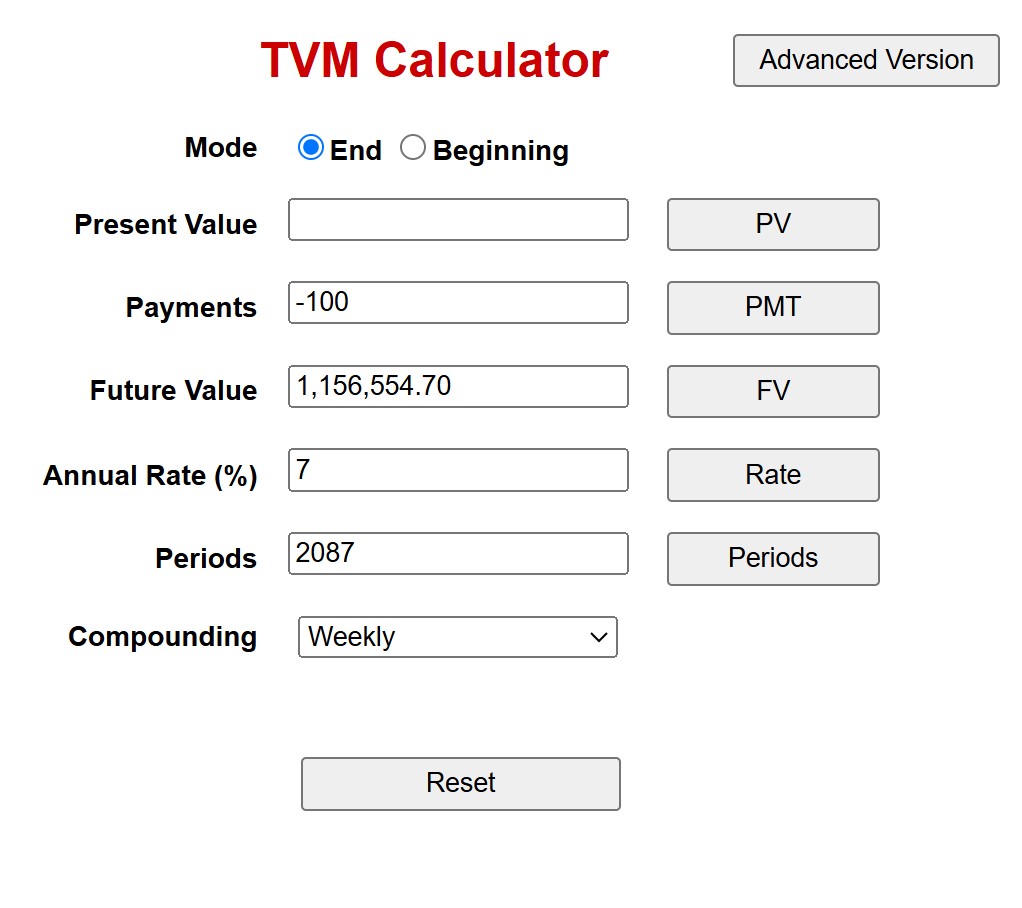
    For instance, Sarah, a 20-year-old professional, invests $100 every week in her Roth IRA account. Over 40 years, she contributes a total of $208,700. However, with an average return of 7% per year, her account grows to an impressive $1,156,554.70 by the time she’s 60.

    https://www.fncalculator.com/financialcalculator?type=tvmCalculator

    Automation also helps you avoid procrastination or skipping investments when things feel uncertain. Once you set it up, your money works for you without any extra effort.

    2. Fractional Shares and Zero Commissions: Making Recurring Investments Accessible

    Thanks to advancements in modern investing platforms, fractional shares and zero-commission trading have made recurring investment plans more accessible than ever. Fractional shares allow you to buy a portion of a stock or fund, meaning you don’t need thousands of dollars to invest in expensive funds like those tracking the S&P 500 or companies like Amazon and Alphabet. For example, even with just $10, you can start building a position in high-value investments, making it easier for anyone to get started with investing.

    Zero-commission trading has further reduced barriers by eliminating transaction fees, allowing you to invest small amounts frequently without worrying about costs eating into your returns. Together, these innovations enable you to set up recurring investment plans with minimal amounts, automating contributions to funds that align with your goals. Whether it’s $5 a day or $50 a week, fractional shares and commission-free platforms empower you to steadily grow your wealth, even with a modest budget.

    This accessibility ensures that anyone, regardless of income level, can begin their investment journey and benefit from consistent contributions over time.

    3. Diversification Makes Investing Safer

    Choosing the right investments can feel overwhelming, but diversification makes it easier to build a portfolio that balances growth and stability. Diversification means spreading your investments across different asset classes—such as stocks, bonds, and cash—to reduce the overall risk of your portfolio. By not putting all your eggs in one basket, you minimize the impact of any single investment performing poorly.

    For example, many people invest in a diversified index fund, like one tracking the S&P 500, which gives exposure to 500 of the largest U.S. companies. However, diversification can go a step further by including bonds alongside stocks. Bonds tend to be more stable than stocks and provide a buffer during market downturns, making them a great choice for those seeking to lower overall risk.

    Investing in a fund that blends stocks and bonds—such as a balanced fund or target-date fund—can help align your portfolio with your financial goals and risk tolerance. A younger investor saving for retirement might choose a fund with a higher proportion of stocks for growth, while someone nearing retirement might prefer a fund with more bonds for stability.

    A recurring investment plan can also be set up with a desired fund that matches your goals and risk preferences. This means you can automate your contributions to a specific diversified fund, ensuring consistency and eliminating the need for manual adjustments. Whether you aim for aggressive growth, steady income, or a mix of both, choosing the right fund for your recurring investment plan allows your portfolio to grow while staying aligned with your objectives.

    By combining diversification with the automation of recurring investments, you create a strategy that’s both effective and easy to maintain, helping you achieve long-term financial success.

    4. Rebalancing Your Recurring Investment Plan

    As life changes, so do your financial goals and circumstances. It’s important to periodically review and rebalance your recurring investment plan to ensure it aligns with your current life situation. Rebalancing involves adjusting the allocation of your investments to maintain the right mix of assets, such as stocks, bonds, and cash. For example, a young professional might prioritize higher-growth investments like stocks, while someone nearing retirement might shift to more stable assets like bonds to preserve wealth.

    Additionally, major life events—such as getting married, having children, or receiving a promotion—may require increasing or modifying your contributions. For instance, if your income rises, you can increase your weekly or monthly investment amount to accelerate your wealth-building goals. Conversely, during challenging times, you might reduce contributions temporarily but should aim to stay consistent when possible.

    Rebalancing ensures your investment strategy evolves with your needs, helping you stay on track toward long-term financial security.

    Simple Steps to Start a Recurring Investment Plan

    Getting started is easy:

    1. Pick the Right Account: Decide whether a brokerage account, IRA, or 401(k) aligns with your goals. Many brokers now let you start with as little as $1, making it easy to take the first step.
    2. Choose a Diversified Fund: Look for low-cost index funds or ETFs. They’re simple and effective.
    3. Set Up Automation: Schedule automatic transfers from your bank account or paycheck into your investment account. Decide if you want to invest daily, weekly, or monthly.
    4. Stick to the Plan: Focus on your long-term goals and avoid reacting to short-term market changes.

    Bonus Tips to Grow Your Wealth

    • Reinvest Dividends: Instead of taking dividends as cash, use them to buy more shares. This speeds up growth through compounding.
    • Use Fractional Shares: Invest small amounts in big companies by buying fractions of shares. For example, even with $50, you can own a piece of companies like Amazon.
    • Take Advantage of Zero Fees: Many platforms now offer commission-free trades, so you can invest without extra costs.

    Why Simple Strategies Work

    Investing doesn’t have to be overwhelming. A recurring investment plan reduces the complexity of wealth building, focusing on steady contributions, diversification, and compounding. By removing the stress of market timing and stock picking, you create a sustainable strategy for financial freedom.

    Whether you’re starting with $50, $100, or $1,000 a month, what matters is getting started and staying consistent. Over time, your efforts will pay off, and you’ll be on the path to financial freedom.

    Your Mantra for Success: Save Consistently. Invest Smartly. Retire Richly.

    Legal Disclaimer for Build Wealth Retire Rich Blog/Website

    The information provided on the “Build Wealth Retire Rich” blog/website is for educational purposes only and should not be construed as financial, investment, or legal advice. While every effort is made to ensure the accuracy and reliability of the information presented, Build Wealth Retire Rich and its contributors, including AI tools used in the creation of some content, do not guarantee its completeness or timeliness. Users are encouraged to consult with a qualified financial advisor or legal professional to discuss their specific financial situation and to obtain advice tailored to their individual circumstances.

    Build Wealth Retire Rich is not responsible for any decisions made based on the information provided on this website. All financial products, investment strategies, and other content discussed are presented for informational purposes only, and no guarantees are made regarding the performance or suitability of any particular investment or strategy.

    The views and opinions expressed on “Build Wealth Retire Rich” are those of the authors and do not necessarily reflect the views of the website’s owner or any affiliated institutions. “Build Wealth Retire Rich” does not endorse or promote any particular investment, financial product, or institution unless explicitly stated.

    Risk Disclosure: Investing involves risk, including the potential loss of principal. Past performance is not indicative of future results. Always do your own research and consider your financial goals and risk tolerance before making any financial decisions.

    By using this website, you agree that Build Wealth Retire Rich and its affiliates are not liable for any losses or damages incurred as a result of using the information provided. Users are solely responsible for their financial decisions and should seek independent advice when necessary.

  • What is an IRA?

    Saving for retirement is essential, and Individual Retirement Accounts (IRAs) provide an excellent opportunity to grow your wealth while enjoying tax benefits. Whether you’re supplementing an employer-sponsored plan or starting your savings independently, IRAs are a vital tool in building a secure financial future.


    What is an IRA?

    An IRA is a personal retirement savings account designed to encourage long-term savings with tax advantages. IRAs offer flexibility, allowing you to choose from a variety of investments such as stocks, bonds, mutual funds, and ETFs.

    For those with employer-sponsored retirement plans like 401(k)s, IRAs can provide additional benefits. After maximizing your employer match (if available), an IRA can help diversify your retirement savings and offer access to a broader range of investment options.


    Three Main Types of IRAs

    1. Traditional IRA

    • Tax Benefits: Contributions are often tax-deductible, providing immediate tax savings.
    • Withdrawals: Subject to income tax upon withdrawal in retirement.
    • Required Minimum Distributions (RMDs): Mandatory withdrawals begin at age 73.

    2. Roth IRA

    • Tax Benefits: Contributions are made with after-tax dollars, but withdrawals are tax-free in retirement.
    • No RMDs: Funds can remain in the account indefinitely, making them ideal for estate planning.

    3. Rollover IRA

    • Purpose: Allows you to transfer assets from an employer-sponsored retirement plan, such as a 401(k), into an IRA.
    • Tax Benefits: Preserves the tax-deferred status of the funds, avoiding penalties or immediate taxes.

    Example:
    When Sarah changes jobs, she rolls over $100,000 from her 401(k) into a Rollover IRA, gaining access to a wider range of investment options while maintaining her tax benefits.

    Income Limitations on IRAs

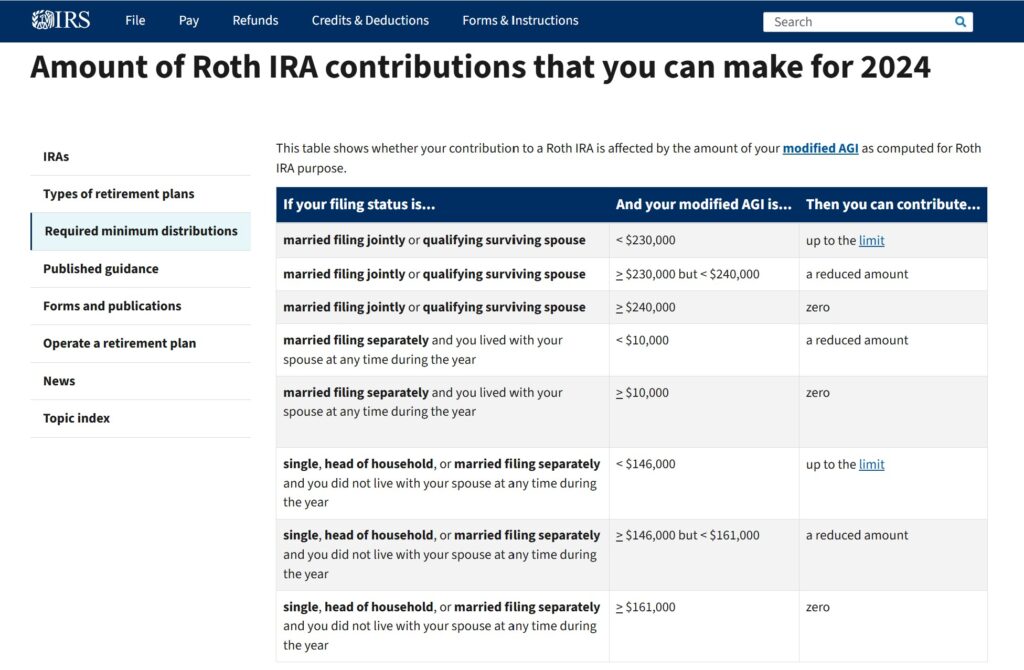
    When contributing to an IRA, it’s important to be aware of the income limitations that may affect your eligibility, particularly for Roth IRAs and the deductibility of Traditional IRA contributions. For Roth IRAs, contributions are phased out if your Modified Adjusted Gross Income (MAGI) exceeds certain limits. For 2024, single filers with a MAGI above $146,000 and joint filers with a MAGI above $230,000 cannot contribute to a Roth IRA.

    Source: https://www.irs.gov/retirement-plans/plan-participant-employee/amount-of-roth-ira-contributions-that-you-can-make-for-2024

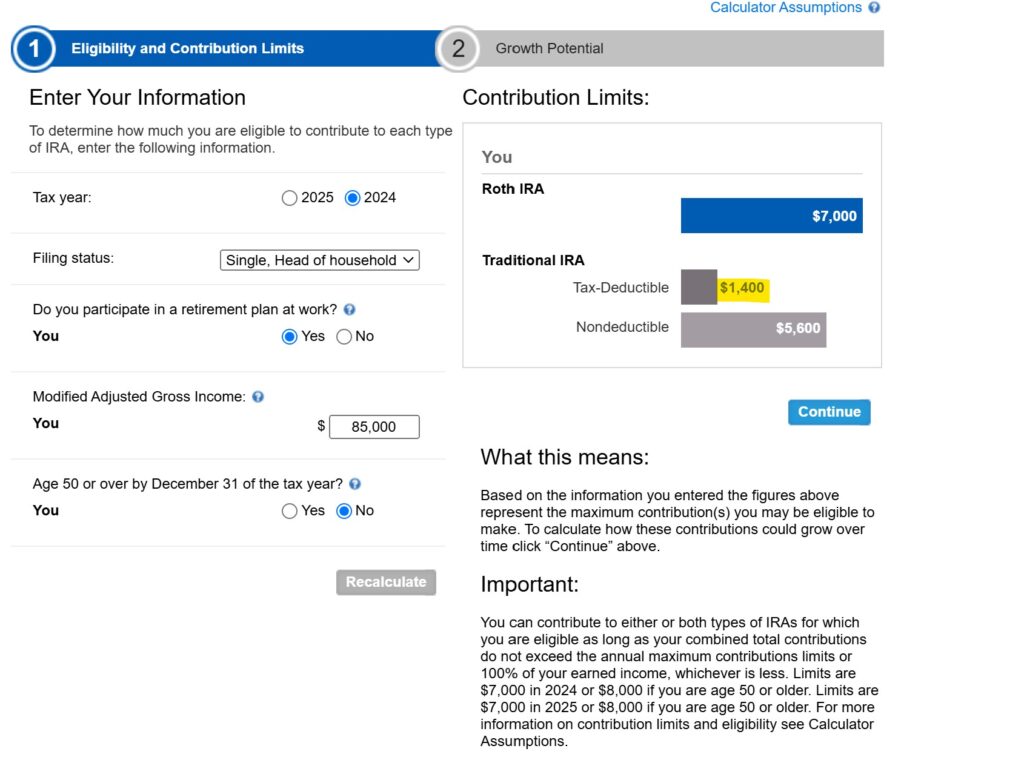
    Traditional IRAs, on the other hand, do not have income restrictions for contributions, but if you or your spouse are covered by a workplace retirement plan, the deductibility of those contributions may be reduced or eliminated based on your MAGI. For example, single filers with a MAGI above $87,000 in 2024 lose the full deductibility of Traditional IRA contributions. Understanding these limits can help you strategically plan your retirement savings and optimize your tax benefits.

    Example 1: Single Filer

    • Income Level: $85,000
    • Filing Status: Single
    • Covered by a Workplace Retirement Plan: Yes
    • 2024 IRA Contribution Limit: $7,000 (under 50)

    Traditional IRA:

    • Deduction Phase-Out Range: $77,000 to $87,000 (2024).
    • Contribution: Allowed up to $7,000, but only a partial deduction can be taken since income is in the phase-out range.
    • Deduction Calculation:
      • MAGI = $85,000
        $85,000 – $77,000 = $8,000 over the lower limit.
        Phase-out percentage: $8,000 ÷ $10,000 = 80%.
        Deductible contribution = $7,000 × (1 – 0.80) = $1,400

    Source: https://www.schwab.com/ira/ira-calculators/roth-vs-traditional

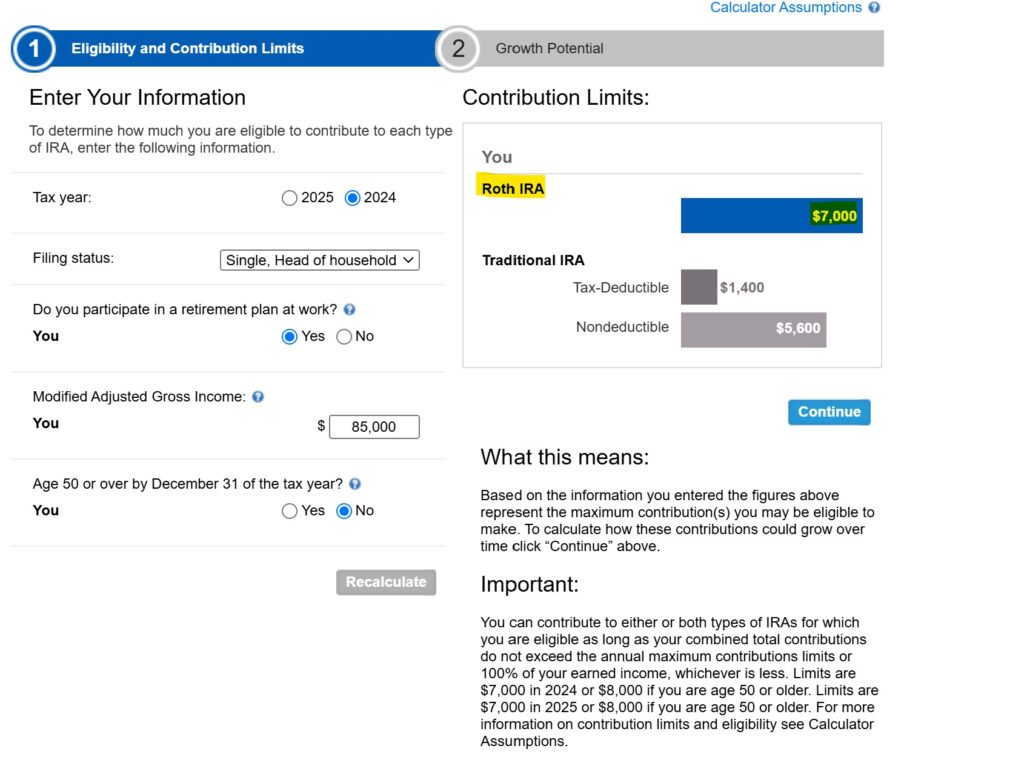
    Roth IRA:

    • Income Eligibility Phase-Out Range: $146,000 to $161,000 (2024).
    • Contribution: Full $7,000 allowed since income is below $146,000.

    source: https://www.schwab.com/ira/ira-calculators/roth-vs-traditional


    Other Types of IRAs

    In addition to the three main types, specialized IRAs cater to specific needs:

    • SIMPLE IRA: Ideal for small businesses, allowing both employer and employee contributions.
    • SEP-IRA: Designed for self-employed individuals or business owners, offering higher contribution limits.
    • Inherited IRA: Used to manage funds received from a deceased individual’s IRA.
    • Custodial IRA: Allows minors with earned income to begin saving for retirement.
    • Spousal IRA: Enables contributions for a non-working spouse under a joint tax return.

    Strategies to Maximize Your IRA

    1. Automate Contributions with Dollar-Cost Averaging

    Setting up a recurring investment plan ensures consistent contributions and takes advantage of dollar-cost averaging (DCA). DCA involves investing a fixed amount regularly, regardless of market conditions, allowing you to buy more shares when prices are low and fewer when prices are high.

    2. Reinvest Dividends

    Dividends can significantly boost your retirement savings when reinvested. By using the dividends to purchase additional shares, you compound your returns over time.

    3. Choose Low-Cost Index Funds

    Index funds are an excellent choice for IRAs due to their low fees, diversification, and historical performance.

    Why Index Funds?

    • Lower Expense Ratios: Keep more of your investment returns.
    • Broad Diversification: Reduce risk by spreading investments across multiple sectors.
    • Proven Growth: Track the performance of the market over the long term.


    Benefits of Starting Early

    Starting your IRA contributions early amplifies the power of compounding, where your returns generate additional returns over time.

    Example:
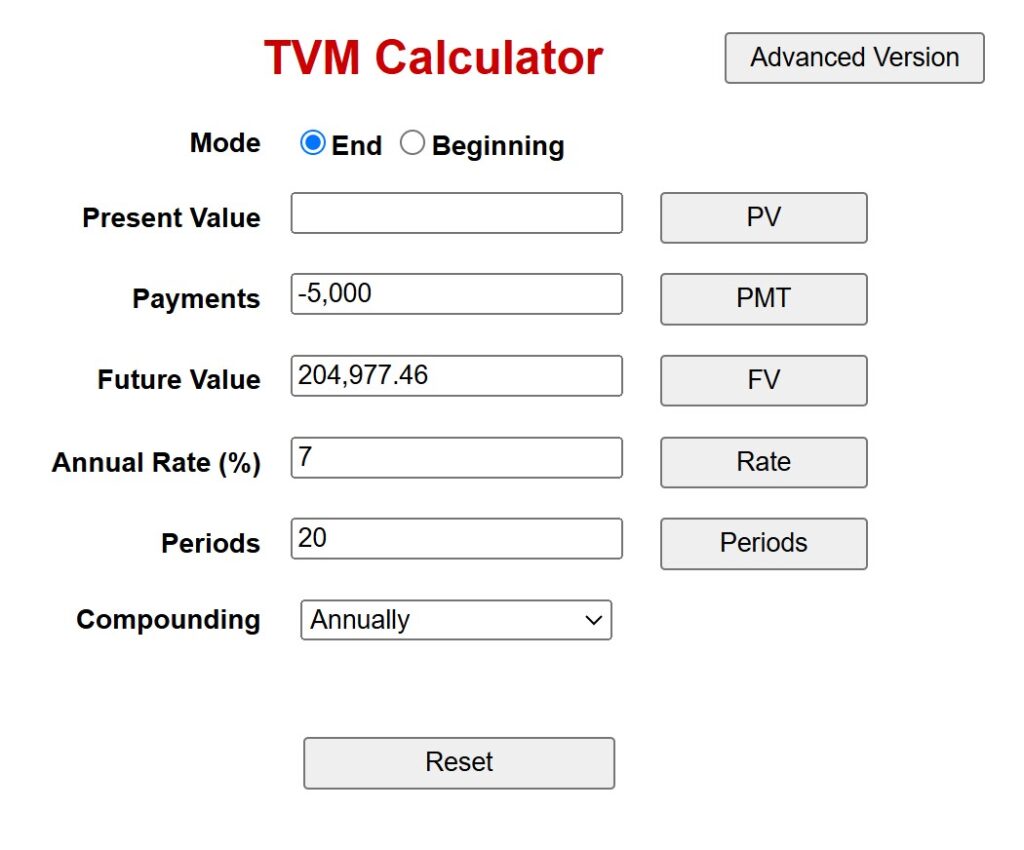
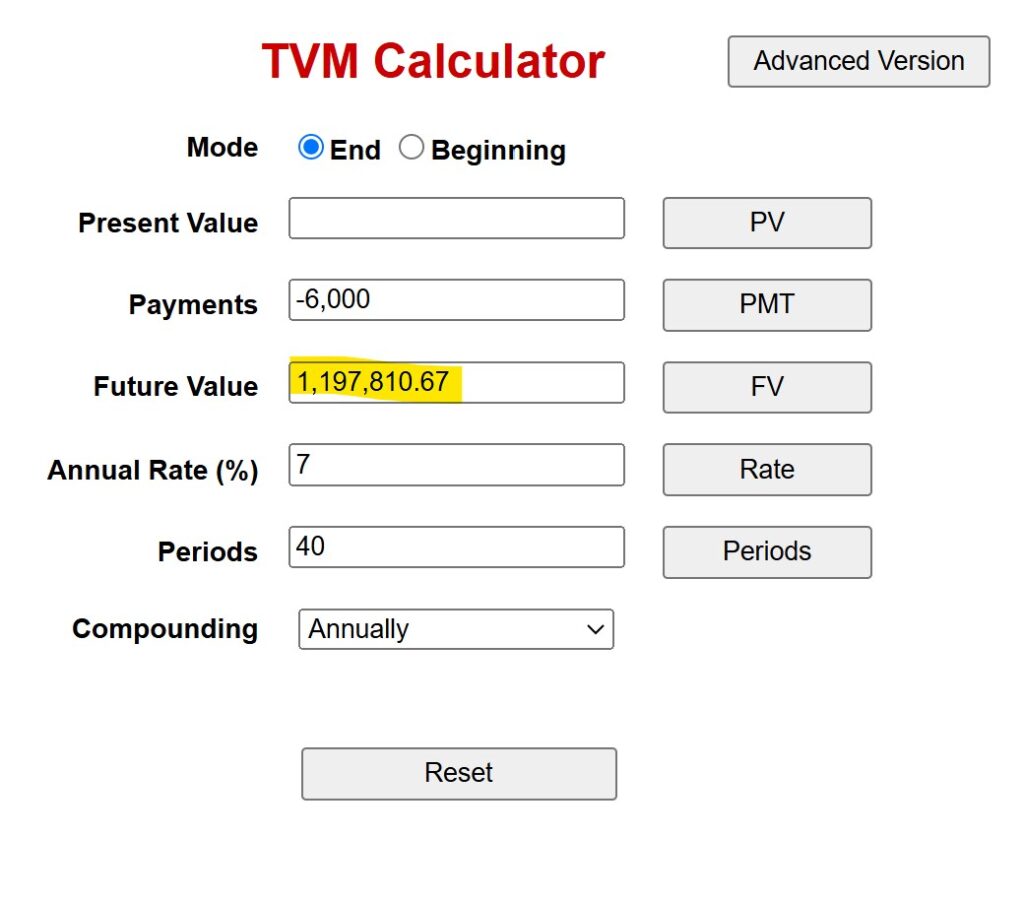
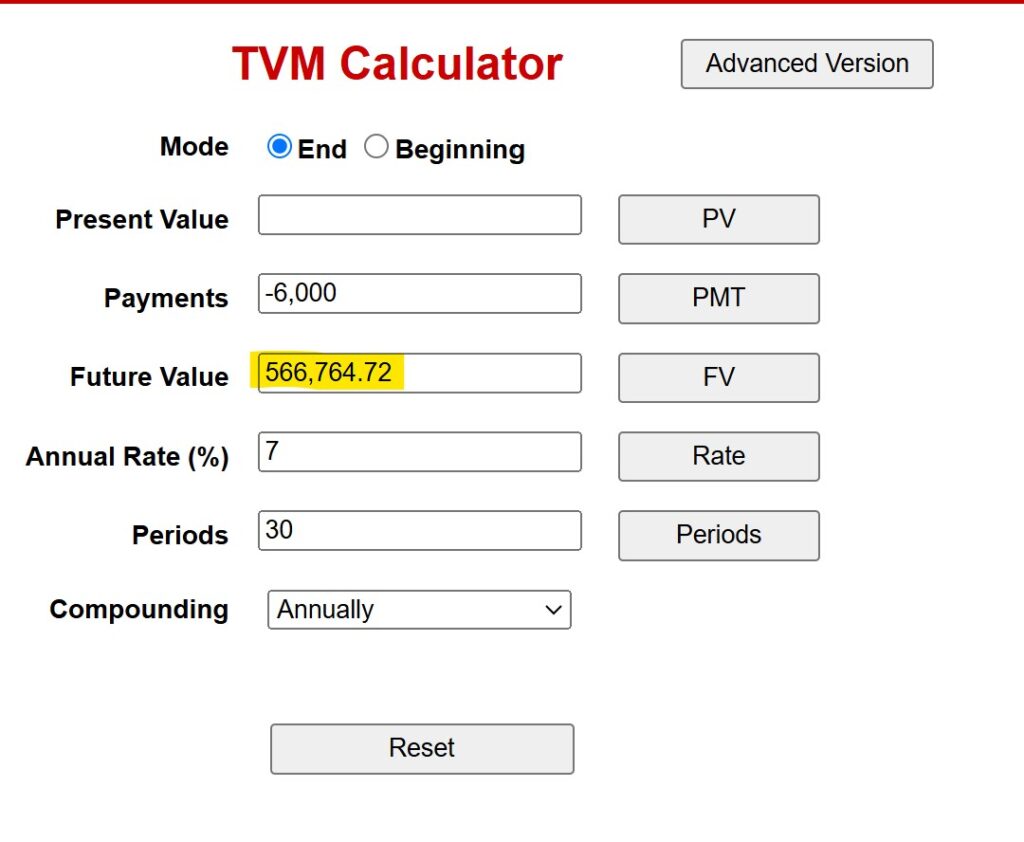
    Anna begins contributing $6,000 annually to her IRA at age 25, while Ben starts at 35. By age 65, Anna’s account is worth almost $1.2 million, while Ben’s grows to about $566,000, assuming a 7% annual return.

    Anna Portfolio in 40 years

    TVM Calculator source: https://www.fncalculator.com/financialcalculator?type=tvmCalculator

    Ben Portfolio in 30 years

    TVM Calculator source: https://www.fncalculator.com/financialcalculator?type=tvmCalculator


    How to Get Started

    1. Choose the Right IRA: Evaluate your current income, tax preferences, and retirement goals.
    2. Open an Account: Many financial institutions offer easy online account setup.
    3. Select Investments: Build a diversified portfolio with low-cost funds or ETFs.
    4. Automate Contributions: Set up recurring transfers to ensure consistent savings.
    5. Monitor and Adjust: Review your investments periodically to ensure they align with your goals.

    Conclusion

    IRAs are a cornerstone of a well-rounded retirement strategy. By understanding the different types, leveraging recurring contributions, reinvesting dividends, and selecting low-cost investments, you can maximize your savings and achieve long-term financial success.

    Start today to take control of your financial future and pave the way for a comfortable retirement. For more insights and actionable advice, visit https://wallstreetsim.com/wealth-talks/

    Your Mantra for Success: Save Consistently. Invest Smartly. Retire Richly.

    Legal Disclaimer for Build Wealth Retire Rich Blog/Website

    The information provided on the “Build Wealth Retire Rich” blog/website is for educational purposes only and should not be construed as financial, investment, or legal advice. While every effort is made to ensure the accuracy and reliability of the information presented, Build Wealth Retire Rich and its contributors, including AI tools used in the creation of some content, do not guarantee its completeness or timeliness. Users are encouraged to consult with a qualified financial advisor or legal professional to discuss their specific financial situation and to obtain advice tailored to their individual circumstances.

    Build Wealth Retire Rich is not responsible for any decisions made based on the information provided on this website. All financial products, investment strategies, and other content discussed are presented for informational purposes only, and no guarantees are made regarding the performance or suitability of any particular investment or strategy.

    The views and opinions expressed on “Build Wealth Retire Rich” are those of the authors and do not necessarily reflect the views of the website’s owner or any affiliated institutions. “Build Wealth Retire Rich” does not endorse or promote any particular investment, financial product, or institution unless explicitly stated.

    Risk Disclosure: Investing involves risk, including the potential loss of principal. Past performance is not indicative of future results. Always do your own research and consider your financial goals and risk tolerance before making any financial decisions.

    By using this website, you agree that Build Wealth Retire Rich and its affiliates are not liable for any losses or damages incurred as a result of using the information provided. Users are solely responsible for their financial decisions and should seek independent advice when necessary.