Tag: Wealth Building

  • Would You Rather Drive a High-End Car for a Few Years or Retire Early With an Extra Six Figures in Your Portfolio?

    When making a car purchase decision, it’s tempting to upgrade to that sleek, high-end model. But before you take the plunge, consider this: what if you chose a modest car and invested the difference instead? Let’s look at how opting for a $25,000 car instead of a $50,000 one could transform your financial future, especially when we think long-term.

    The $25,000 Trade-Off: Investing for the Future

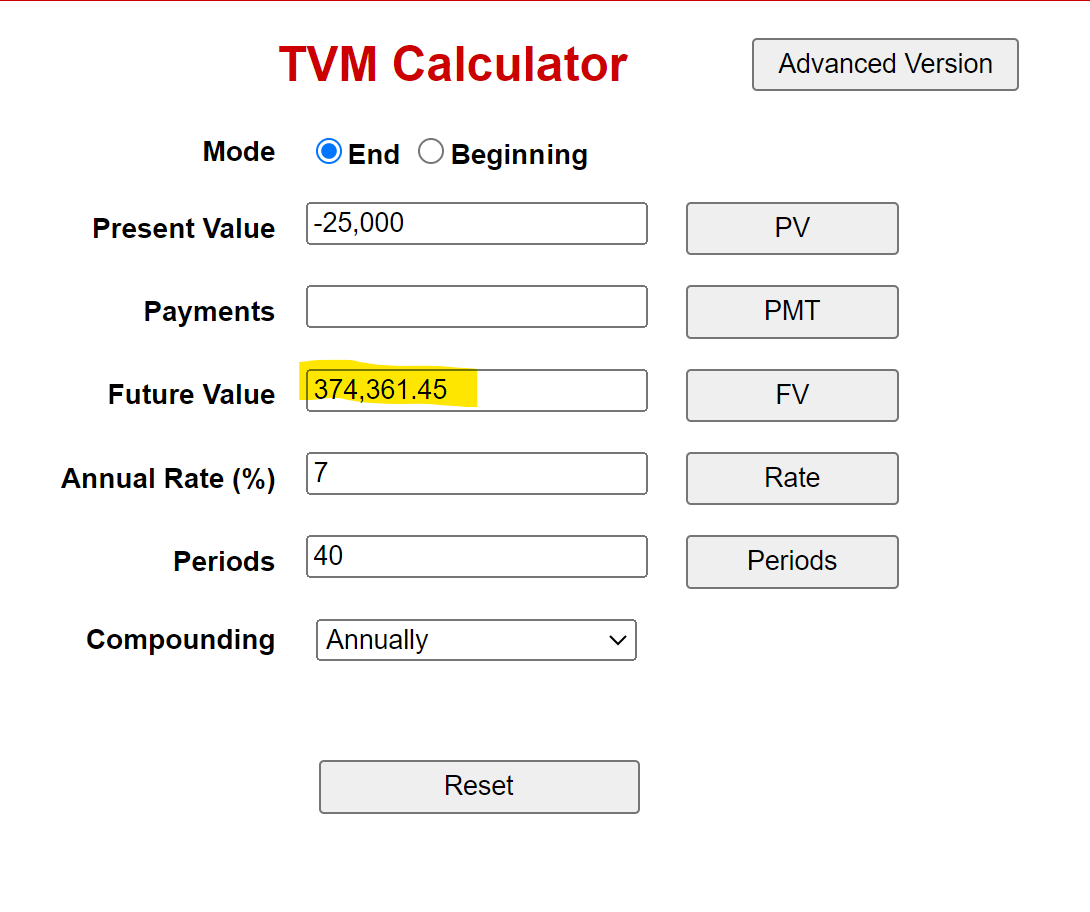
    Imagine you buy a $25,000 car instead of a $50,000 one. You’ve saved $25,000 upfront. What happens if you invest this amount instead, letting it grow over 40 years in a diversified retirement portfolio with an average annual return of 7%?

    By the end of 40 years, that initial $25,000 could grow to a staggering $374,361.

    Breaking Down the Numbers: The Power of Compounding

    • Initial Investment: $25,000
    • Annual Rate of Return: 7%
    • Investment Period: 40 years

    Calculator reference: https://www.fncalculator.com/financialcalculator?type=tvmCalculator

    Using the power of compound interest, that $25,000 would grow steadily each year, eventually turning into $374,361.

    This means the opportunity cost of choosing a $50,000 car today — just for a few years of driving pleasure — is nearly $375,000 that you could potentially use for a more secure and enjoyable retirement.

    What Does an Extra $374,361 Mean in Retirement?

    Let’s put that figure into perspective:

    • Additional Retirement Income: With a 4% safe withdrawal rate, $374,361 could provide an additional $14,974 per year in retirement income.
    • Early Retirement: If your goal is to retire early, this amount could shave off years of work.
    • Legacy and Giving: The extra funds could be used to support causes you care about, set up educational funds for children or grandchildren, or simply create a financial cushion.

    Don’t Forget the Hidden Costs of a High-End Car

    Choosing a more expensive car doesn’t just mean a higher upfront cost. It also means:

    • Higher Monthly Payments: This could add stress to your cash flow and reduce your ability to invest.
    • Greater Depreciation: Luxury cars often depreciate faster, leading to a bigger financial loss.
    • Costlier Insurance and Maintenance: These recurring expenses could add thousands of dollars over the life of the car.

    The Bottom Line: Drive a Car or Drive Your Financial Future?

    It’s not about depriving yourself of enjoying life, but about aligning your financial decisions with your long-term goals. Is the satisfaction of driving a high-end car today worth the potential $374,361 you’re giving up in the future?

    Next time you’re in the dealership, think beyond the leather seats and premium features. Ask yourself, “Am I investing in my lifestyle, or in my future?” Because while a high-end car may turn heads now, a strong retirement portfolio will pay dividends for decades to come.

    So, would you rather drive a luxury car today or enjoy an extra six-figure cushion in your retirement portfolio tomorrow? The choice is yours.

    Your Mantra for Success: Save Consistently. Invest Smartly. Retire Richly.

    Legal Disclaimer for Build Wealth Retire Rich Blog/Website

    The information provided on the “Build Wealth Retire Rich” blog/website is for educational purposes only and should not be construed as financial, investment, or legal advice. While every effort is made to ensure the accuracy and reliability of the information presented, Build Wealth Retire Rich and its contributors, including AI tools used in the creation of some content, do not guarantee its completeness or timeliness. Users are encouraged to consult with a qualified financial advisor or legal professional to discuss their specific financial situation and to obtain advice tailored to their individual circumstances.

    Build Wealth Retire Rich is not responsible for any decisions made based on the information provided on this website. All financial products, investment strategies, and other content discussed are presented for informational purposes only, and no guarantees are made regarding the performance or suitability of any particular investment or strategy.

    The views and opinions expressed on “Build Wealth Retire Rich” are those of the authors and do not necessarily reflect the views of the website’s owner or any affiliated institutions. “Build Wealth Retire Rich” does not endorse or promote any particular investment, financial product, or institution unless explicitly stated.

    Risk Disclosure: Investing involves risk, including the potential loss of principal. Past performance is not indicative of future results. Always do your own research and consider your financial goals and risk tolerance before making any financial decisions.

    By using this website, you agree that Build Wealth Retire Rich and its affiliates are not liable for any losses or damages incurred as a result of using the information provided. Users are solely responsible for their financial decisions and should seek independent advice when necessary.

  • The Smart Way to Invest: Consistency Through Recurring Plans

    Investing can often seem like a daunting task, especially with fluctuating markets and an overwhelming number of investment choices. The good news? Building wealth doesn’t require timing the market or having expert knowledge. The cornerstone of a successful investing strategy lies in consistency, discipline, and simplicity.

    A recurring investment plan, particularly one focused on a diversified index fund, provides a clear path to financial security. It automates your investments, builds long-term wealth, and minimizes the stress of managing your portfolio. Here’s why this approach works and how you can implement it to secure your financial future.

    1. The Power of Recurring Investments

    Recurring investment plans are about regularly putting money into your investment accounts, like a 401(k), IRA, or brokerage account. Many brokers now allow you to set up recurring investments in tax-advantaged accounts, such as IRAs, with minimum amounts as low as $1.

    These plans are flexible and let you decide how often to invest—daily, weekly, or monthly—making it easy to start even with a small budget. For example, if you set up a recurring plan to invest $5 daily, you could build a significant portfolio over time with very little effort.

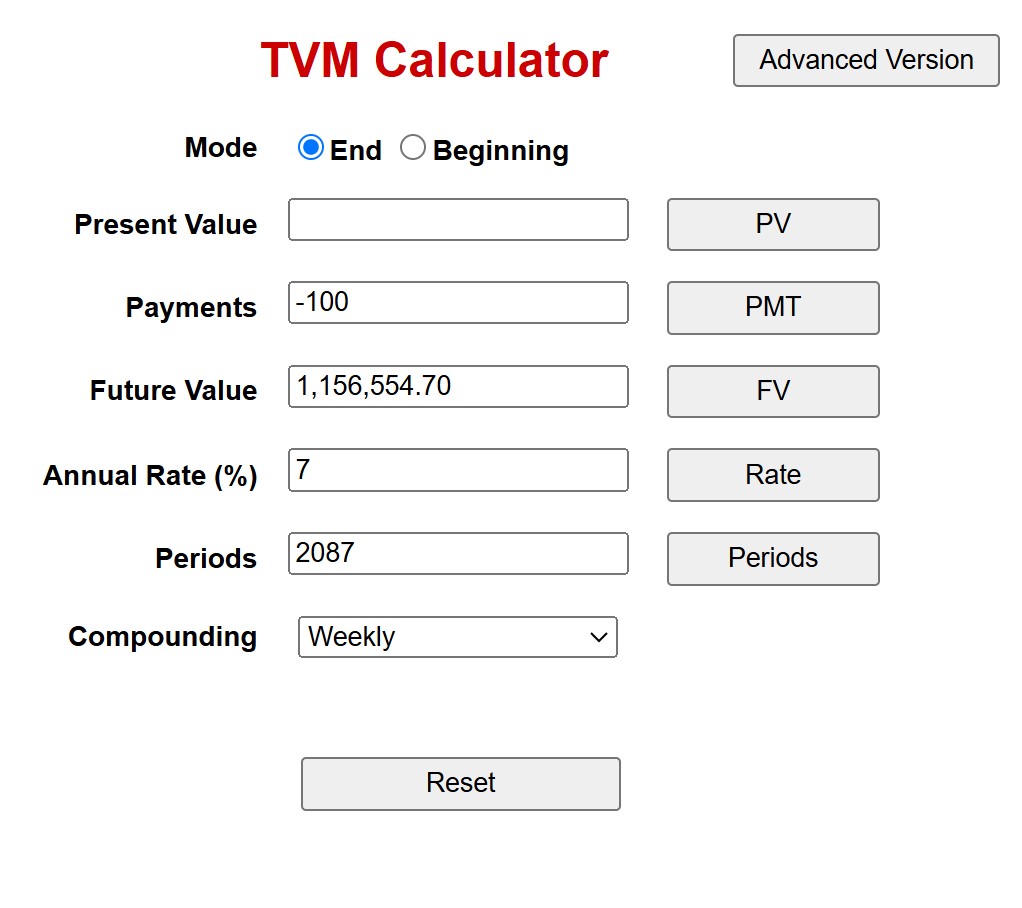
    For instance, Sarah, a 20-year-old professional, invests $100 every week in her Roth IRA account. Over 40 years, she contributes a total of $208,700. However, with an average return of 7% per year, her account grows to an impressive $1,156,554.70 by the time she’s 60.

    https://www.fncalculator.com/financialcalculator?type=tvmCalculator

    Automation also helps you avoid procrastination or skipping investments when things feel uncertain. Once you set it up, your money works for you without any extra effort.

    2. Fractional Shares and Zero Commissions: Making Recurring Investments Accessible

    Thanks to advancements in modern investing platforms, fractional shares and zero-commission trading have made recurring investment plans more accessible than ever. Fractional shares allow you to buy a portion of a stock or fund, meaning you don’t need thousands of dollars to invest in expensive funds like those tracking the S&P 500 or companies like Amazon and Alphabet. For example, even with just $10, you can start building a position in high-value investments, making it easier for anyone to get started with investing.

    Zero-commission trading has further reduced barriers by eliminating transaction fees, allowing you to invest small amounts frequently without worrying about costs eating into your returns. Together, these innovations enable you to set up recurring investment plans with minimal amounts, automating contributions to funds that align with your goals. Whether it’s $5 a day or $50 a week, fractional shares and commission-free platforms empower you to steadily grow your wealth, even with a modest budget.

    This accessibility ensures that anyone, regardless of income level, can begin their investment journey and benefit from consistent contributions over time.

    3. Diversification Makes Investing Safer

    Choosing the right investments can feel overwhelming, but diversification makes it easier to build a portfolio that balances growth and stability. Diversification means spreading your investments across different asset classes—such as stocks, bonds, and cash—to reduce the overall risk of your portfolio. By not putting all your eggs in one basket, you minimize the impact of any single investment performing poorly.

    For example, many people invest in a diversified index fund, like one tracking the S&P 500, which gives exposure to 500 of the largest U.S. companies. However, diversification can go a step further by including bonds alongside stocks. Bonds tend to be more stable than stocks and provide a buffer during market downturns, making them a great choice for those seeking to lower overall risk.

    Investing in a fund that blends stocks and bonds—such as a balanced fund or target-date fund—can help align your portfolio with your financial goals and risk tolerance. A younger investor saving for retirement might choose a fund with a higher proportion of stocks for growth, while someone nearing retirement might prefer a fund with more bonds for stability.

    A recurring investment plan can also be set up with a desired fund that matches your goals and risk preferences. This means you can automate your contributions to a specific diversified fund, ensuring consistency and eliminating the need for manual adjustments. Whether you aim for aggressive growth, steady income, or a mix of both, choosing the right fund for your recurring investment plan allows your portfolio to grow while staying aligned with your objectives.

    By combining diversification with the automation of recurring investments, you create a strategy that’s both effective and easy to maintain, helping you achieve long-term financial success.

    4. Rebalancing Your Recurring Investment Plan

    As life changes, so do your financial goals and circumstances. It’s important to periodically review and rebalance your recurring investment plan to ensure it aligns with your current life situation. Rebalancing involves adjusting the allocation of your investments to maintain the right mix of assets, such as stocks, bonds, and cash. For example, a young professional might prioritize higher-growth investments like stocks, while someone nearing retirement might shift to more stable assets like bonds to preserve wealth.

    Additionally, major life events—such as getting married, having children, or receiving a promotion—may require increasing or modifying your contributions. For instance, if your income rises, you can increase your weekly or monthly investment amount to accelerate your wealth-building goals. Conversely, during challenging times, you might reduce contributions temporarily but should aim to stay consistent when possible.

    Rebalancing ensures your investment strategy evolves with your needs, helping you stay on track toward long-term financial security.

    Simple Steps to Start a Recurring Investment Plan

    Getting started is easy:

    1. Pick the Right Account: Decide whether a brokerage account, IRA, or 401(k) aligns with your goals. Many brokers now let you start with as little as $1, making it easy to take the first step.
    2. Choose a Diversified Fund: Look for low-cost index funds or ETFs. They’re simple and effective.
    3. Set Up Automation: Schedule automatic transfers from your bank account or paycheck into your investment account. Decide if you want to invest daily, weekly, or monthly.
    4. Stick to the Plan: Focus on your long-term goals and avoid reacting to short-term market changes.

    Bonus Tips to Grow Your Wealth

    • Reinvest Dividends: Instead of taking dividends as cash, use them to buy more shares. This speeds up growth through compounding.
    • Use Fractional Shares: Invest small amounts in big companies by buying fractions of shares. For example, even with $50, you can own a piece of companies like Amazon.
    • Take Advantage of Zero Fees: Many platforms now offer commission-free trades, so you can invest without extra costs.

    Why Simple Strategies Work

    Investing doesn’t have to be overwhelming. A recurring investment plan reduces the complexity of wealth building, focusing on steady contributions, diversification, and compounding. By removing the stress of market timing and stock picking, you create a sustainable strategy for financial freedom.

    Whether you’re starting with $50, $100, or $1,000 a month, what matters is getting started and staying consistent. Over time, your efforts will pay off, and you’ll be on the path to financial freedom.

    Your Mantra for Success: Save Consistently. Invest Smartly. Retire Richly.

    Legal Disclaimer for Build Wealth Retire Rich Blog/Website

    The information provided on the “Build Wealth Retire Rich” blog/website is for educational purposes only and should not be construed as financial, investment, or legal advice. While every effort is made to ensure the accuracy and reliability of the information presented, Build Wealth Retire Rich and its contributors, including AI tools used in the creation of some content, do not guarantee its completeness or timeliness. Users are encouraged to consult with a qualified financial advisor or legal professional to discuss their specific financial situation and to obtain advice tailored to their individual circumstances.

    Build Wealth Retire Rich is not responsible for any decisions made based on the information provided on this website. All financial products, investment strategies, and other content discussed are presented for informational purposes only, and no guarantees are made regarding the performance or suitability of any particular investment or strategy.

    The views and opinions expressed on “Build Wealth Retire Rich” are those of the authors and do not necessarily reflect the views of the website’s owner or any affiliated institutions. “Build Wealth Retire Rich” does not endorse or promote any particular investment, financial product, or institution unless explicitly stated.

    Risk Disclosure: Investing involves risk, including the potential loss of principal. Past performance is not indicative of future results. Always do your own research and consider your financial goals and risk tolerance before making any financial decisions.

    By using this website, you agree that Build Wealth Retire Rich and its affiliates are not liable for any losses or damages incurred as a result of using the information provided. Users are solely responsible for their financial decisions and should seek independent advice when necessary.

  • Congratulations, College Students! Your Next Milestone: Becoming a 401(k) Millionaire

    Graduating college is a monumental achievement, marking the culmination of years of dedication and hard work. As you step into the next chapter of life, it’s time to set your sights on another milestone—becoming a 401(k) millionaire. While the number might sound daunting, it’s absolutely achievable with the right plan and mindset.

    Here’s how you can turn your first paycheck into a foundation for financial independence and a future filled with opportunities.


    Why Aim for a 401(k) Millionaire Status?

    A 401(k) plan is one of the most powerful tools for building wealth over time. By contributing regularly, taking advantage of employer matching, and letting compound interest work its magic, you can grow your retirement savings significantly. Becoming a 401(k) millionaire doesn’t just mean retiring in comfort; it means having the freedom to live life on your terms.

    Here’s why aiming for $1 million in your 401(k) is a practical goal:

    • Compound Growth: Investing early allows your money to grow exponentially over time.
    • Tax Advantages: Contributions to a traditional 401(k) are pre-tax, reducing your taxable income today, while Roth 401(k) contributions grow tax-free.
    • Employer Matching: Many employers contribute additional funds to your 401(k), supercharging your savings.

    How to Get Started

    1. Sign Up for Your Employer’s 401(k) Plan Immediately
      • As soon as you start your first job, make enrolling in your company’s 401(k) plan a priority.
      • Many employers offer matching contributions—essentially free money. For example, if your employer matches 50% of contributions up to 6% of your salary, contributing at least that amount ensures you don’t leave money on the table.
      • Example: David earns $60,000 annually and chooses to save 6% of his salary in his 401(k). Over 40 years, with an assumed annual return of 7%, his retirement savings would grow to $1,118,482.41 if his employer matches 50% of his contributions. Without the employer match, his total savings would be $745,654.94. Read the article for calculation on the benefits of company matching https://wallstreetsim.com/retiring-a-millionaire-a-simple-path-for-everyday-people/
    2. Start Small but Stay Consistent
      • If you can’t contribute the maximum right away, don’t worry. Start with 5%-10% of your paycheck and increase it annually or when you get a raise.
      • Remember, even a small amount can grow significantly over time thanks to compound interest.
    3. Choose Investments Wisely
      • Most 401(k) plans offer target-date funds, which automatically adjust your investments based on your retirement timeline.
      • If you prefer to choose your investments, consider a mix of index funds that balance growth and risk.
    4. Maximize Contributions
      • For 2024, the elective deferral limit for 401(k) plans is $23,000. If you’re under 50, aim to contribute as much as you can afford.
      • If you’re self-employed, look into a Solo 401(k) plan for even higher contribution limits.
    5. Understand the Power of Compounding
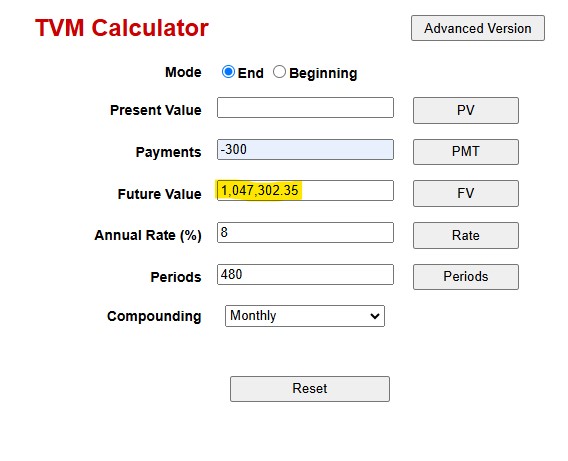
      • Contributing $300 per month starting at age 22 can grow to more than $1 million by the time you turn 62, assuming an average annual return of 8%.
      • The earlier you start, the less you’ll need to contribute over time.

    https://www.fncalculator.com/financialcalculator?type=tvmCalculator


    Overcoming Common Challenges

    • Student Loan Payments: Make paying off high-interest debt a priority, but don’t delay saving for retirement entirely. Even a small contribution early on can have a big impact.
    • Lifestyle Inflation: Resist the urge to upgrade your lifestyle as your income increases. Instead, funnel raises and bonuses into your 401(k).
    • Market Volatility: It’s normal for markets to fluctuate. Stay focused on your long-term goals and avoid the temptation to pull your money out during downturns.

    Celebrate the Milestones Along the Way

    Reaching $1 million in your 401(k) might seem far off, but setting smaller milestones—like your first $10,000 or $100,000—can keep you motivated. Celebrate these achievements and remind yourself that every contribution brings you closer to financial freedom.


    Inspiring Statistics

    • According to Fidelity, the number of 401(k) accounts with balances of $1 million or more reached an all-time high in 2024, climbing to 544,000 accounts, up 9.5% from 497,000 in the previous quarter.
    • The average contribution rate for 401(k) plans, including both employee and employer contributions, stands at 14.1%, comprising 9.4% from employees and an average employer match of 4.7%. This strong savings behavior has played a key role in the growth of 401(k) balances, contributing to the record number of millionaire accounts in 2024.

    Final Words: Your Future Starts Today

    As a college graduate, you’ve already proven your ability to work hard and achieve great things. Building a robust 401(k) is your next big goal, and it starts now. Whether you’re dreaming of early retirement, starting your own business, or traveling the world, a well-funded retirement account can make it possible.

    Remember: “The best time to start was yesterday. The second-best time is today.” So take that first step and set yourself up for a financially secure future. Congratulations, and here’s to your journey toward becoming a 401(k) millionaire!

    Our Newsletter Can Help You Build Wealth and Retire Rich!

    Sign up for our free newsletter!

    Want actionable tips and expert advice to grow your wealth, save smarter, and retire comfortably? Sign up for the Build Wealth Retire Rich newsletter to receive weekly updates packed with personal finance strategies and insights—delivered straight to your inbox!

    By submitting your information, you`re giving us permission to email you. You may unsubscribe at any time.

    Legal Disclaimer for Build Wealth Retire Rich Blog/Website

    The information provided on the “Build Wealth Retire Rich” blog/website is for educational purposes only and should not be construed as financial, investment, or legal advice. While every effort is made to ensure the accuracy and reliability of the information presented, Build Wealth Retire Rich and its contributors, including AI tools used in the creation of some content, do not guarantee its completeness or timeliness. Users are encouraged to consult with a qualified financial advisor or legal professional to discuss their specific financial situation and to obtain advice tailored to their individual circumstances.

    Build Wealth Retire Rich is not responsible for any decisions made based on the information provided on this website. All financial products, investment strategies, and other content discussed are presented for informational purposes only, and no guarantees are made regarding the performance or suitability of any particular investment or strategy.

    The views and opinions expressed on “Build Wealth Retire Rich” are those of the authors and do not necessarily reflect the views of the website’s owner or any affiliated institutions. “Build Wealth Retire Rich” does not endorse or promote any particular investment, financial product, or institution unless explicitly stated.

    Risk Disclosure: Investing involves risk, including the potential loss of principal. Past performance is not indicative of future results. Always do your own research and consider your financial goals and risk tolerance before making any financial decisions.

    By using this website, you agree that Build Wealth Retire Rich and its affiliates are not liable for any losses or damages incurred as a result of using the information provided. Users are solely responsible for their financial decisions and should seek independent advice when necessary.
  • 3 Simple Steps to Building Retirement Wealth

    Retirement planning is a critical part of financial wellness, yet it often seems complicated. However, building a solid retirement nest egg doesn’t require a master’s degree in finance or hours of stock market analysis. Instead, you can create a reliable and growing retirement fund by following a straightforward three-step process: opening a Roth IRA, picking low-cost index funds, and setting up a recurring investment plan to take advantage of compound interest and dollar cost averaging. Additionally, reinvesting dividends can further accelerate your wealth-building efforts.

    Let’s dive into each step and explore how they work together to secure your financial future.

    Step 1: Open a Roth IRA Account

    What is a Roth IRA?

    A Roth Individual Retirement Account (IRA) is a retirement savings account that offers unique tax advantages. Unlike traditional IRAs, contributions to a Roth IRA are made with after-tax dollars, meaning you don’t receive a tax deduction when you contribute. However, the significant benefit is that your investments grow tax-free, and qualified withdrawals during retirement are also tax-free.

    Why Choose a Roth IRA?

    1. Tax-Free Growth and Withdrawals: The primary advantage of a Roth IRA is the ability to grow your investments without being taxed on the gains. When you reach retirement age, you can withdraw the money tax-free, provided certain conditions are met.
    2. Flexibility: Roth IRAs offer more flexibility in terms of withdrawal rules. Unlike traditional IRAs, you can withdraw your contributions (not the earnings) at any time without penalties or taxes.
    3. No Required Minimum Distributions (RMDs): Traditional IRAs require you to start taking distributions at age 73, but Roth IRAs do not have RMDs during your lifetime, allowing your investments to continue growing tax-free for as long as you live.

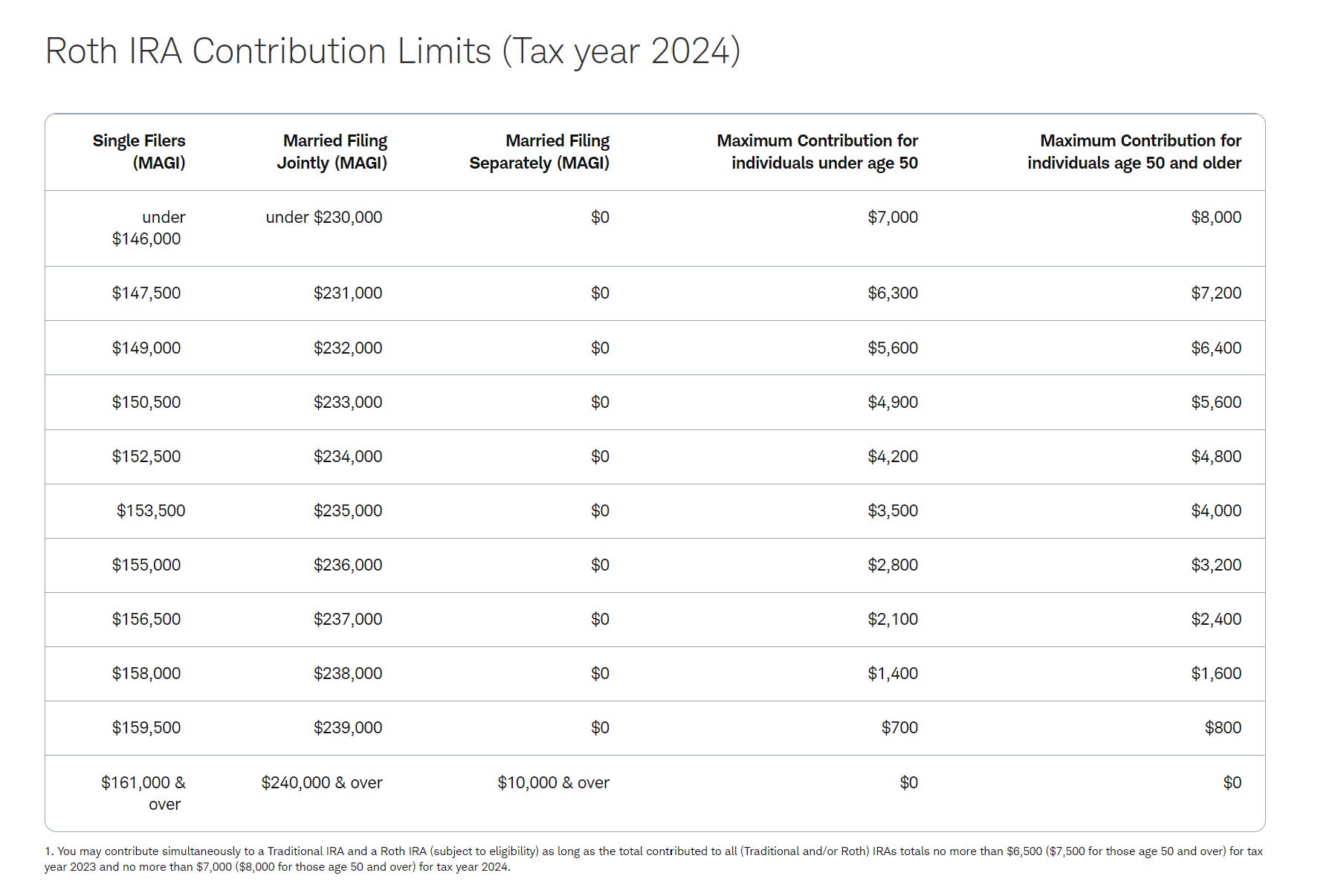
    Income Eligibility for a Roth IRA

    While Roth IRAs offer significant advantages, not everyone is eligible to contribute directly due to income restrictions. Understanding these limits is crucial to determine if you can take advantage of a Roth IRA or if you need to consider alternative strategies.

    Source: https://www.schwab.com/ira/roth-ira/contribution-limits#:~:text=Tax%20Year%202024%20%2D%20%247%2C000%20if,re%20age%2050%20or%20older.

    Backdoor Roth IRA

    If your income exceeds the Roth IRA limits, you can still contribute to a Roth IRA indirectly through a strategy known as the “Backdoor Roth IRA.” This involves making a non-deductible contribution to a Traditional IRA and then converting it to a Roth IRA. While this method can be beneficial, it’s essential to be aware of potential tax implications and consult with a financial advisor to ensure it aligns with your financial situation.

    How to Open a Roth IRA

    Opening a Roth IRA is a straightforward process:

    1. Choose a Provider: Select a financial institution that offers Roth IRAs. Consider factors like fees, investment options, and customer service. Popular providers include Vanguard, Fidelity, and Charles Schwab.
    2. Complete the Application: Provide personal information such as your Social Security number, employment details, and beneficiary information.
    3. Fund Your Account: You can start with an initial deposit and set up automatic contributions from your bank account. For 2024, the maximum contribution limit is $7,000 per year ($8,000 if you’re 50 or older).
    4. Select Your Investments: Once your account is funded, you can choose where to invest your money. This leads us to the next crucial step.

    Step 2: Pick Low-Cost Index Funds

    What are Index Funds?

    Index funds are a type of mutual fund or exchange-traded fund (ETF) designed to replicate the performance of a specific market index, such as the S&P 500. Instead of actively managed portfolios, index funds passively track the index, holding all (or a representative sample) of the securities in that index.

    Benefits of Low-Cost Index Funds

    1. Diversification: By investing in an index fund, you gain exposure to a broad range of companies across various sectors, reducing the risk associated with individual stocks.
    2. Low Fees: Index funds typically have lower expense ratios compared to actively managed funds because they don’t require extensive research or frequent trading. Lower fees mean more of your money stays invested and grows over time.
    3. Consistent Performance: While they may not outperform the market, index funds generally provide consistent returns that mirror the market’s performance, making them a reliable long-term investment.
    4. Simplicity: Managing a portfolio of index funds is straightforward, requiring less time and effort compared to selecting individual stocks or actively managed funds.

    Choosing the Right Index Funds

    When selecting index funds for your Roth IRA, consider the following:

    1. Expense Ratio: Look for funds with low expense ratios, ideally below 0.10%.
    2. Diversification: Ensure the fund covers a broad spectrum of the market. Funds that track the S&P 500, total stock market, or international markets can provide comprehensive diversification.
    3. Tracking Error: This measures how closely the fund follows its benchmark index. Lower tracking errors indicate better performance in mirroring the index.
    4. Fund Size and Liquidity: Larger funds with higher trading volumes tend to have better liquidity, making it easier to buy and sell shares without significant price fluctuations.

    Step 3: Set a Recurring Investment Plan

    The Power of Compounding

    Compounding is the process where the earnings on your investments generate their own earnings. Over time, this can lead to exponential growth in your investment portfolio. By consistently investing, you allow your money to grow not just on the initial contributions but also on the accumulated earnings.

    Dollar-Cost Averaging

    Dollar-cost averaging (DCA) is an investment strategy where you invest a fixed amount of money at regular intervals, regardless of market conditions. This approach reduces the impact of market volatility by spreading out your investment over time, potentially lowering the average cost per share.

    How to Implement a Recurring Investment Plan

    1. Automate Contributions: Set up automatic transfers from your bank account to your Roth IRA. Automating your investments ensures consistency and removes the temptation to time the market.
    2. Determine Contribution Amount: Decide how much you can comfortably invest each month. Even small, regular contributions can add up significantly over time.
    3. Reinvest Dividends: Ensure that any dividends paid by your index funds are automatically reinvested. Reinvesting dividends accelerates the compounding process, as dividends purchase additional shares that can generate their own earnings.
    4. Monitor and Adjust: Periodically review your investment plan to ensure it aligns with your retirement goals. Adjust your contributions or investment choices as needed, especially as your financial situation or market conditions change.

    Example of a Recurring Investment Plan

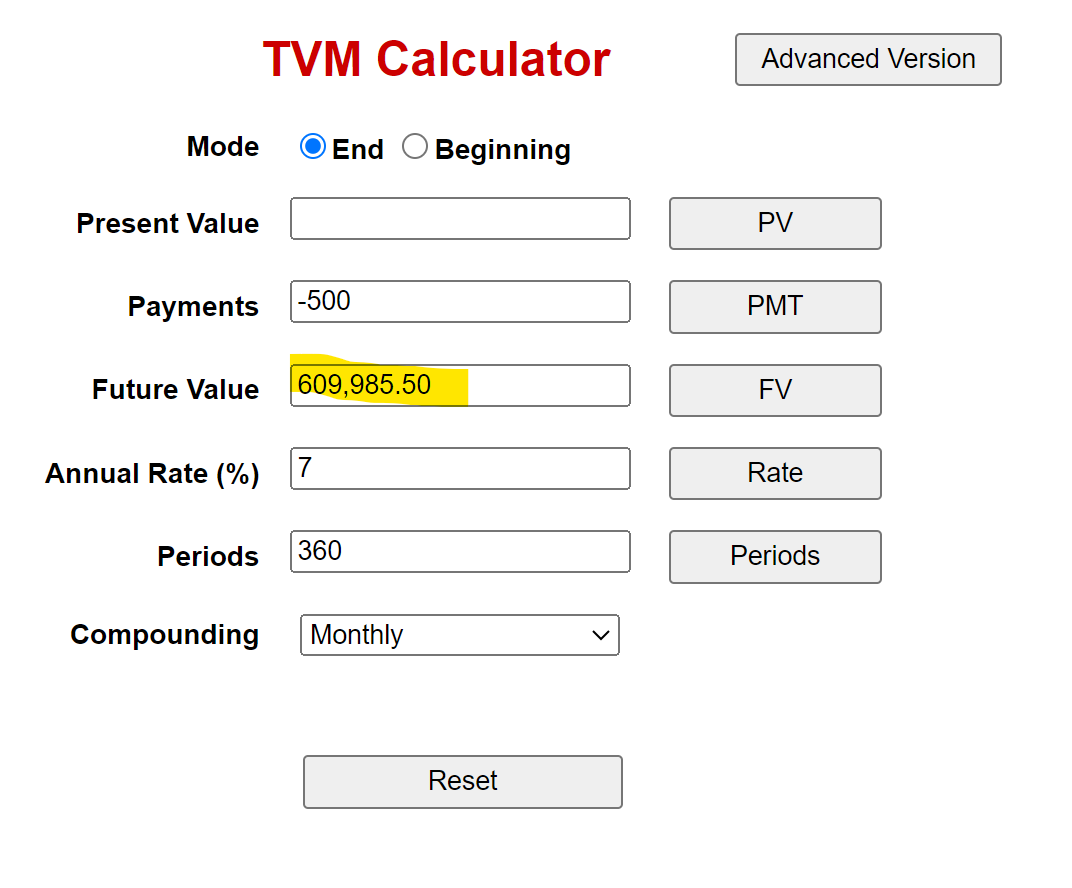
    Let’s say you contribute $500 monthly to your Roth IRA, invested in a low-cost index fund with an average annual return of 7%. Over 30 years, your investments would grow to approximately $600,000, thanks to the power of compounding and consistent contributions. If you start early and increase your contributions over time, the potential for growth becomes even more substantial.

    Calculator source: https://www.fncalculator.com/financialcalculator?type=tvmCalculator

    Reinforcing the Strategy: Reinvesting Dividends

    Dividends are portions of a company’s earnings distributed to shareholders. Reinvesting dividends means using these payouts to purchase additional shares of the fund, rather than taking them as cash. This practice enhances the compounding effect, as each dividend payment contributes to buying more shares that can generate future dividends and capital gains.

    Benefits of Reinvesting Dividends

    1. Enhanced Growth: Reinvested dividends buy more shares, increasing your ownership in the fund and amplifying potential future returns.
    2. Cost Efficiency: Reinvesting dividends automatically allows you to take advantage of buying additional shares without incurring transaction fees, especially if your provider offers free reinvestment options.
    3. Time Efficiency: Automated dividend reinvestment saves you the time and effort of manually reinvesting, ensuring that your investments continue to grow seamlessly.

    How to Reinvest Dividends

    Most brokerage accounts offer an automatic dividend reinvestment option. To enable this:

    1. Log into Your Account: Access your Roth IRA account through your provider’s website or mobile app.
    2. Navigate to Dividend Settings: Look for settings related to dividends or income distribution.
    3. Select Reinvest Dividends: Choose the option to automatically reinvest dividends into the same fund or another fund of your choice.
    4. Confirm Your Selection: Save your settings to ensure that dividends are reinvested automatically.

    Putting It All Together

    Building retirement wealth is a marathon, not a sprint. By following these three steps—opening a Roth IRA, selecting low-cost index funds, and setting up a recurring investment plan—you establish a solid foundation for long-term financial security. Reinvesting dividends further accelerates your wealth-building journey by leveraging the full potential of compound interest and dollar-cost averaging.

    Additional Tips for Success

    1. Start Early: The sooner you begin investing, the more time your money has to grow through compounding. Even small contributions made early can lead to significant wealth over decades.
    2. Stay Consistent: Regular contributions, regardless of market conditions, help smooth out the effects of volatility and keep your investment plan on track.
    3. Educate Yourself: Continuously educate yourself about investing and personal finance. Understanding how markets work and staying informed about economic trends can help you make informed decisions.
    4. Avoid Emotional Investing: Stick to your investment plan and avoid making impulsive decisions based on short-term market fluctuations. Staying disciplined is key to long-term success.
    5. Consult a Financial Advisor: If you’re unsure about any aspect of your investment strategy, consider consulting a financial advisor. They can provide personalized advice tailored to your specific financial situation and retirement goals.

    Conclusion

    Building retirement wealth may seem daunting, but by adhering to a simple three-step process, you can create a robust and effective investment strategy. Opening a Roth IRA provides a tax-advantaged vehicle for your savings. Selecting low-cost index funds ensures diversification and cost efficiency, while setting up a recurring investment plan leverages the power of compound interest and dollar-cost averaging. By reinvesting dividends, you maximize the growth potential of your investments.

    Remember, the key to successful retirement planning is consistency and patience. Start today, stay committed to your plan, and watch your wealth grow over time. With thoughtful planning and disciplined investing, you can achieve a secure and comfortable retirement, enjoying the fruits of your labor without financial worries.


    Legal Disclaimer:

    The content shared on “Build Wealth Retire Rich” or “BWRR” is intended solely for informational and educational purposes and should not be construed as financial advice. It does not represent an offer, recommendation, or endorsement of any specific investment product or strategy. BWRR provides general insights and does not aim to offer personalized financial, legal, tax, or other professional advice. The owners of BWRR are not certified financial advisors. For guidance tailored to your unique situation, it is recommended that you consult with an independent financial advisor.

    Our Newsletter Can Help You Build Wealth and Retire Rich!

    Want actionable tips and expert advice to grow your wealth, save smarter, and retire comfortably? Sign up for the Build Wealth Retire Rich Newsletter to receive weekly updates packed with personal finance strategies and insights—delivered straight to your inbox!

    Sign up for our free newsletter!

    By submitting your information, you`re giving us permission to email you. You may unsubscribe at any time.


  • Two Mantras of Financial Success

    In a world where financial decisions shape our futures, adopting the right habits early on can be the key to long-term security and prosperity. At “Build Wealth Retire Rich“, we believe in simplifying financial wisdom into actionable principles that anyone can follow.

    Our guiding mantra is clear and concise: “Spend Wisely, Invest Early.”

    1. Spend Wisely

    The foundation of financial success begins with smart spending. This mantra emphasizes the importance of mindful consumption and prioritizing needs over wants. Here’s how you can adopt this principle in your daily life:

    • Create a Budget: Track your income and expenses to identify where your money is going. Tools like spreadsheets or budgeting apps can help you stay organized.

    • Distinguish Needs from Wants: Before making a purchase, ask yourself if it’s a necessity or a luxury.

    • Avoid Impulse Buying: Give yourself a cooling-off period for major purchases to ensure they align with your financial goals.

    • Seek Value, Not Just Price: Opt for quality over quantity when it comes to products and services. Spending on durable items can save money in the long run.

    • Eliminate Debt: High-interest debts like credit cards can erode your wealth. Pay them off systematically and avoid accumulating new ones.

    Spending wisely doesn’t mean living a life of deprivation—it’s about making informed choices that bring long-term benefits.

    2. Invest Early

    If spending wisely is the foundation, investing early is the accelerator of financial success. Time is the most valuable asset in investing, thanks to the power of compounding. Here’s why starting early matters:

    • Harness the Power of Compounding: When you invest, your returns generate further returns over time. Starting early gives your money decades to grow exponentially.

    • Build Wealth Gradually: Even small contributions add up. A monthly investment of $200 starting at age 25 can grow significantly compared to starting at age 40.

    • Reduce Financial Stress: Early investments create a safety net for emergencies, retirement, and life goals, reducing financial anxiety.

    • Take More Risks: Younger investors have the luxury of time to recover from market fluctuations, allowing them to take calculated risks for higher returns.

    Simple Steps to Start Investing Early

    1. Set Financial Goals: Define what you’re saving for—retirement, a home, education, or financial independence.

    2. Start Small: Begin with an amount you’re comfortable with, even if it’s just $50 a month.

    3. Leverage Tax-Advantaged Accounts: Use accounts like IRAs, 401(k)s, or ABLE accounts (for special needs planning) to maximize tax benefits.

    4. Diversify Your Portfolio: Spread your investments across various assets like stocks, bonds, and mutual funds to reduce risk.

    5. Automate Contributions: Set up automatic transfers to your investment accounts to ensure consistency.

    Why These Mantras Work Together

    The beauty of “Spend Wisely” and “Invest Early” lies in their interdependence. Wise spending creates the surplus necessary to invest, while early investments multiply your savings. Together, they form a powerful strategy to achieve financial independence.

    For instance:

    • By cutting unnecessary expenses (spend wisely), you can contribute more to your retirement accounts or save for a dream vacation.

    • Starting investments in your 20s instead of your 30s could potentially double or triple your wealth at retirement age.

    Conclusion

    The “Build Wealth Retire Rich” mantra—“Spend Wisely, Invest Early”—is more than just advice; it’s a way of life that empowers you to take control of your finances. By adopting these principles today, you’re setting yourself up for a future of financial freedom and security.

    Take the first step toward financial success. Evaluate your spending habits, set aside an investment fund, and let the journey begin. Remember, the sooner you start, the better your results will be.